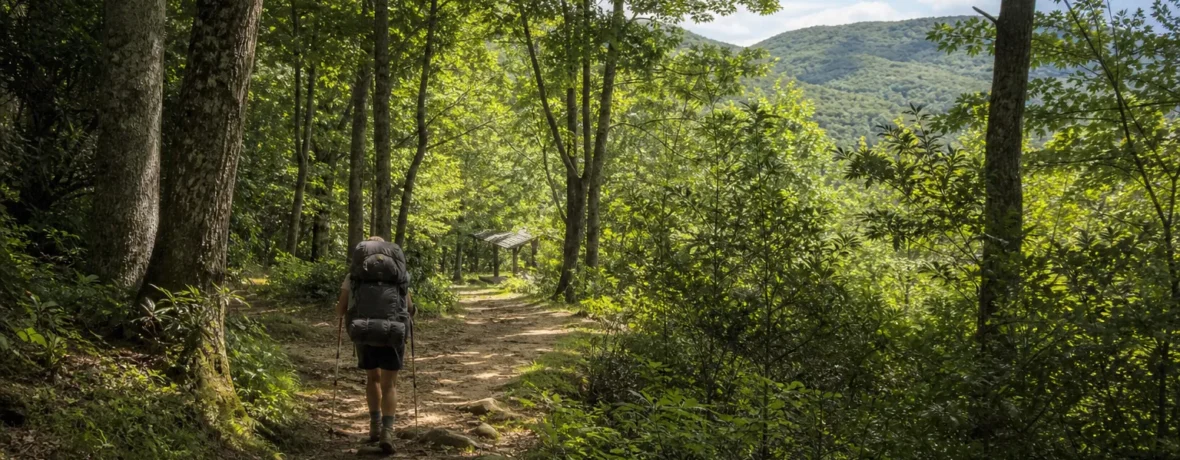
Plan for 2,197.9 miles [3,537 km], 5 to 7 months on foot, 14 states, separate permits in key parks, and a gear system you trust in rain. Yes, you can thru-hike it—if your time, budget, body, and logistics line up.
How long is the Appalachian Trail and how many months does it take?
The Appalachian Trail is 2,197.9 miles [3,537 km] long as of 2026. The route runs from Springer Mountain, Georgia, to Katahdin in Baxter State Park, Maine, and the official mileage changes as the footpath is relocated or remeasured; check the Appalachian Trail Conservancy’s A.T. basics page before you lock in plans.
A full thru-hike usually takes around six months. Fast hikers finish sooner, but speed is not the whole game. You need enough time to wait out storms, heal sore feet, travel into trail towns, replace broken gear, and still reach Katahdin before seasonal closures can affect your finish.
Think in phases, not one giant march. Georgia warms you up. North Carolina and Tennessee test your legs. Virginia teaches patience. The Mid-Atlantic brings heat, rocks, and road crossings. New England gets steeper, wetter, colder, and slower just when you think you have the trail figured out.
What is the best direction to hike the Appalachian Trail?
Most first-time thru-hikers choose northbound, but it is not the only smart option. Your best direction depends on your start date, fitness, comfort with cold weather, and tolerance for crowds.
| Direction | Best for | Tradeoff |
|---|---|---|
| Northbound | First-time thru-hikers who want the classic Georgia-to-Maine build | Busy shelters and campsites during the early-season bubble |
| Southbound | Hikers who want a quieter trail and a harder start | Maine and New Hampshire come before your trail legs are fully built |
| Flip-flop | Hikers with flexible travel plans who want better weather windows | More transportation planning and less of a single straight-line story |
Northbound hikers often start in late winter or early spring and work toward Maine before Baxter’s hiking season tightens. Southbound hikers usually need to wait until Katahdin and northern Maine trails are open and stable. Flip-floppers can start in the middle, avoid peak crowding, and chase gentler weather.
How to hike the Appalachian Trail step by step?
Start with the calendar, then build the hike around time, money, gear, permits, and shakedown trips. A thru-hike is simple on paper: wake, walk, eat, sleep, repeat. The planning keeps that simple rhythm from falling apart.
- Choose your route style. Pick northbound, southbound, flip-flop, or section hiking. Do this before you buy flights or request time off.
- Set your rough dates. Work backward from seasonal constraints, especially Katahdin if you plan to finish in Maine.
- Build a real budget. Include trail food, town meals, laundry, lodging, shuttles, replacement shoes, gear failures, permits, and travel home.
- Buy and test your core gear. Your pack, shelter, sleep system, rain gear, shoes, and stove should be proven before Springer or Katahdin.
- Take shakedown hikes. Spend at least a few nights out with your loaded pack. Rain is a bonus. It exposes weak gear fast.
- Plan permits and registration. The A.T. has no single thru-hiker permit, but specific parks require permits.
- Map your first resupplies. You do not need every town planned, but you should know how you will eat for the first two weeks.
- Train your feet and joints. Walk hills, stairs, uneven trails, and back-to-back days. Gym strength helps, but walking makes hikers.
- Make an exit plan. Carry emergency contacts, know how to reach help, and keep enough money to leave the trail if needed.
- Start conservatively. Your first week is not the time to prove anything. Let your body adapt before you push bigger mileage.
What permits and fees do you need for an Appalachian Trail thru-hike?
You do not need one trail-wide permit for the Appalachian Trail. As of November 2026, permits are required in specific places, and rules can change, so verify each one close to your start date.
| Area | What you need | As of November 2026 |
|---|---|---|
| Great Smoky Mountains National Park | A.T. Thru-Hiker Permit if you qualify | The Recreation.gov Smokies A.T. Thru-Hiker Permit page lists a $44.50 non-refundable, non-transferable permit fee and a 30-day entry window around your estimated date. |
| Shenandoah National Park | Backcountry camping permit | The National Park Service Shenandoah backcountry page lists a $9 per person fee plus a $6 reservation fee, with permits handled through Recreation.gov. |
| Baxter State Park | Long-Distance Hiker Permit before Katahdin | The Baxter State Park A.T. page says long-distance A.T. hikers must secure the permit in person at Katahdin Stream Campground Ranger Station; the permit itself has no fee. |
Also register your long-distance hike with ATCamp if you can. It is not the same as a required park permit, but voluntary registration helps reduce crowding and can put trail alerts in your inbox.
How much money should you budget for an Appalachian Trail thru-hike?
Budget for the whole hike, not just gear and groceries. The sneaky costs are town stops, replacement shoes, shuttles, medical care, weather delays, and getting home from Maine or Georgia.
Your spending will depend on how often you sleep indoors, how much restaurant food you eat, and how well your gear survives. A bare-bones hiker who avoids motels will spend differently from someone who takes weekly zero days in town. Neither is morally superior. One is just cheaper.
Build your budget in these buckets:
- Pre-trail gear: pack, shelter, quilt or sleeping bag, pad, clothing, stove, water treatment, electronics, repair kit.
- On-trail food: grocery resupplies, fuel, snacks, town meals, coffee, replacement bottles or bags.
- Lodging and laundry: hostels, motels, showers, washer/dryer, loaner clothes, rest days.
- Transportation: getting to the start, shuttles into towns, buses, flights, rides home.
- Contingency: urgent care, dental problems, lost gear, broken phone, family emergency travel.
Leave a cushion. Running out of money is one of the least romantic ways to end a thru-hike.
What gear do you need to hike the Appalachian Trail?
You need gear that keeps you dry, warm, fed, hydrated, and moving. Fancy gear is optional. Reliable gear is not.
Your core kit should handle cold rain in Georgia, humid nights in Virginia, rocky tread in Pennsylvania, exposed weather in New Hampshire, and mud in Maine. The A.T. is not remote every day, but weather can still turn a sloppy mistake into a real problem.
- Pack: big enough for your full kit and food, comfortable under load.
- Shelter: tent, tarp, hammock, or other system you can pitch in rain.
- Sleep system: sleeping bag or quilt, insulated pad, sleep clothes, dry storage.
- Footwear: trail runners or boots, plus socks that work when wet.
- Rain gear: jacket, pack liner or dry bags, and a plan for wet hands and feet.
- Cooking: stove, fuel, pot, lighter, spoon, food bag.
- Water: bottles or bladder, filter or treatment drops, backup treatment method.
- Navigation: phone app, battery bank, cable, and a basic paper backup for critical sections.
- Safety: headlamp, first-aid kit, whistle, repair tape, knife or scissors, emergency contact info.
- Food storage: bear canister or hanging system where allowed, plus discipline every night.
Do not bring fear gear. If an item is only in your pack because you are anxious, test whether you truly need it. Weight punishes you every step.
How do you plan food and resupply on the Appalachian Trail?
Plan your first stretch, then adjust as your appetite and pace change. Most hikers resupply in trail towns, small groceries, outfitters, gas stations, hostels, and mailed boxes where options are limited.
Early on, carry food you know you can eat even when tired. Your appetite may lag during the first hard days, then roar back later. Dense, low-fuss foods win: tortillas, peanut butter, tuna packets, instant potatoes, ramen, couscous, olive oil, bars, candy, dried fruit, nuts, and instant coffee.
Mail drops can help if you have dietary restrictions, need specialty items, or want specific gear sent ahead. Do not mail every resupply unless you enjoy being chained to post office hours. Trail towns already exist because hikers need food.
A good resupply plan answers four questions:
- How many days until the next reliable food stop?
- Is there a climb or hard section that will slow you down?
- Can you buy fuel there?
- What happens if weather delays you by one day?
How fit do you need to be to thru-hike the Appalachian Trail?
You need durable fitness more than elite fitness. The trail rewards hikers who can walk again tomorrow after a hard day today.
Train with back-to-back hikes when you can. One heroic Saturday hike does not teach your knees, ankles, hips, and feet what the A.T. asks of them. Two moderate days in a row are often better preparation than one huge day followed by six days of sitting.
Useful training includes:
- Walking hills or stairs with a loaded pack.
- Strength work for glutes, calves, hamstrings, quads, and core.
- Balance work on uneven ground.
- Long walks in the shoes and socks you plan to wear.
- Practice hiking in rain so wet weather does not rattle you.
Start the trail below your maximum. Sore is normal. Sharp pain is a warning. The strongest thru-hikers are often the ones who know when to stop early, eat more, sleep hard, and save the push for later.
How do you stay safe and healthy on the Appalachian Trail?
Stay dry, manage heat, check for ticks, protect your feet, and treat small problems early. Most trail trouble starts tiny, then gets ignored.
Ticks are common along much of the A.T. The CDC recommends preventing tick bites with treated clothing or EPA-registered repellents, checking your body after being outdoors, and removing attached ticks promptly; read the CDC tick prevention guidance before you hike through brushy or grassy sections.
Heat can hit hard in the Mid-Atlantic and southern Appalachians. The CDC’s heat-related illness guidance lists heat stroke as a medical emergency and recommends urgent care for serious or worsening heat illness symptoms. On trail, that means you stop, cool down, hydrate, get shade, and do not try to “walk it off” when your body is failing.
Cold rain is another classic A.T. hazard. A 45°F [7°C] rain with wind can be more dangerous than a crisp dry day below freezing. Keep one dry sleep layer sealed away. Eat before you are empty. Put on rain gear before you are soaked through.
Foot care is daily maintenance. Change socks when you can, air your feet at breaks, tape hot spots before they become blisters, and size shoes with swelling in mind. Many hikers need larger shoes later in a thru-hike because feet spread and swell after weeks of pounding.
When to see a doctor
See a doctor when symptoms are severe, spreading, persistent, or tied to injury, infection, heat illness, or a tick bite. Do not use a hiking guide to diagnose yourself.
Get medical help fast if you have chest pain, trouble breathing, confusion, fainting, signs of heat stroke, a deep wound, a rapidly spreading rash, red streaking from a wound, pus, fever, severe allergic symptoms, or pain that changes how you walk. After a tick bite, watch for fever, rash, body aches, facial droop, or joint swelling, and contact a clinician if symptoms appear.
If foot pain forces you to limp, stop early. Limping changes your stride and can trigger a stack of new injuries. A rest day, clinic visit, or short shuttle is better than turning a fixable problem into the end of your hike.
What should your first week on the Appalachian Trail look like?
Your first week should feel controlled, not crushed. The goal is to reach week two healthy.
Keep mileage modest while your body adapts to climbing, descending, sleeping outside, and carrying food. Eat before you bonk. Drink before you are dry. Stop before dark until your camp routine is smooth. Learn how long it takes you to filter water, cook dinner, hang or store food, patch a blister, and pack in the morning.
Do not chase other hikers. You will meet people moving faster, starting earlier, carrying less, and posting bigger days. Let them go. The Appalachian Trail is full of strong starters who burn out and quiet hikers who keep showing up until Maine.
Related reading
- How Long Is the Appalachian Trail? Miles, States and Time
- Where Does the Appalachian Trail Start and End?
- How Long Does It Take to Hike the Appalachian Trail?
- What States Does the Appalachian Trail Go Through?
FAQ
Can a beginner hike the Appalachian Trail?
Yes, a beginner can hike the Appalachian Trail if they prepare honestly. You should know how to use your gear, camp in rain, filter water, manage food, and handle basic first aid before starting.
Do you have to hike the Appalachian Trail all at once?
No, you can section hike the Appalachian Trail over multiple years. A thru-hike means completing the full trail within 12 months, while section hiking lets you finish it in pieces on your own schedule.
Do you need a permit to thru-hike the Appalachian Trail?
No single trail-wide permit exists for an A.T. thru-hike. As of November 2026, you still need separate permits for places such as Great Smoky Mountains National Park, Shenandoah National Park, and Baxter State Park.
What is the hardest part of the Appalachian Trail?
For many hikers, the hardest terrain comes in New Hampshire and Maine. The climbs are steeper, the tread is rougher, the weather can turn fast, and your body is already carrying months of fatigue.
How many miles should you hike per day on the Appalachian Trail?
Start with mileage your body can repeat, not your dream number. Many hikers build gradually, then increase daily miles after their feet, knees, and recovery improve.
Is it safe to hike the Appalachian Trail alone?
Yes, many people hike the A.T. alone, but solo does not mean careless. Share your plan, carry emergency contacts, pay attention to weather, protect your food, trust your gut around people, and leave town with enough food and battery power.