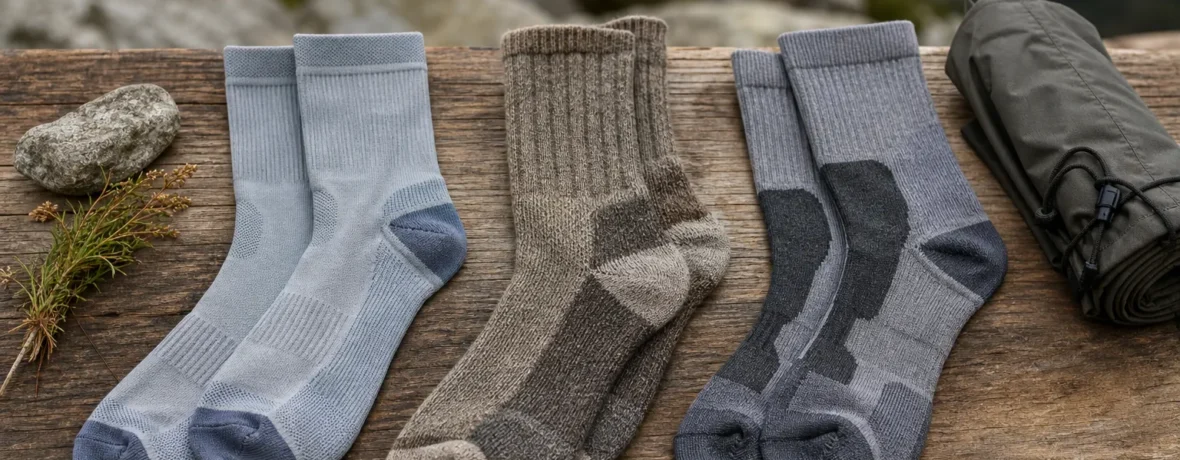
To choose hiking socks, match three things to your hike: fabric, cushion, and height. Pick merino wool or a synthetic blend, use light cushion for hot trails and heavy cushion for cold or loaded trips, and choose a sock at least as tall as your shoe collar.
How to choose hiking socks for your hike?
Choose hiking socks by starting with your footwear, weather, pack weight, and feet.
Socks are not an afterthought. They sit between your skin and the shoe doing the dirty work: managing sweat, reducing rubbing, adding warmth, and filling tiny fit gaps inside the boot. Get them wrong and a mellow 6-mile [9.7-km] loop can turn into a heel-chewing slog.
Use this simple order when shopping:
- Match the height to your footwear. The sock cuff should reach above the shoe or boot collar so your ankle and heel are not rubbing on leather, mesh, or padding seams.
- Match the cushion to the load and temperature. Thin socks breathe better. Thick socks protect better. More cushion also takes up more room inside the shoe.
- Pick the fabric for moisture and climate. Merino wool blends work for most hikers. Synthetic blends dry fast and shine in wet or very sweaty conditions.
- Check the fit inside your actual shoes. A great sock that makes your toe box tight is the wrong sock for that shoe.
- Carry a dry spare when conditions are wet, cold, or long. Dry socks can save your feet when sweat, stream crossings, or rain stack up.
What fabric is best for hiking socks?
Merino wool blends are the best all-around hiking sock fabric for most trails.
Merino wool is soft, manages odor well, insulates when damp, and handles a wide temperature range. That is why so many serious hiking socks use merino mixed with nylon and elastane or spandex. The wool brings comfort and temperature control; the nylon adds durability; the stretch fiber helps the sock hug your foot without sagging.
Synthetic socks, usually nylon, polyester, acrylic, or polypropylene blends, are strong choices for hot weather, wet trips, fast drying, and high-output hiking. They do not hold as much warmth when damp as wool, but they dry quickly and often feel slicker against the skin.
Cotton is the weak link. It soaks up moisture, dries slowly, and can leave your skin soft and friction-prone. Save cotton socks for town, not trails.
| Fabric | Best for | Watch out for |
|---|---|---|
| Merino wool blend | Most day hikes, backpacking, cool weather, mixed weather | Can dry slower than thin synthetics |
| Synthetic blend | Hot trails, wet routes, sweaty feet, fast hiking | Can hold odor faster than wool |
| Silk or synthetic liner | Extra friction control under a main sock | Can make shoes feel tighter |
| Cotton | Casual wear after the hike | Holds moisture and dries slowly |
REI’s hiking sock guidance also breaks sock choice into height, cushioning, fabric, and fit, which is a clean way to shop without getting buried in brand jargon: REI Expert Advice on choosing hiking socks.
How much cushion do hiking socks need?
Your hiking socks need only enough cushion to protect your foot without crowding your shoe.
Cushion is the thicker, looped material underfoot, around the heel, and sometimes up the shin. It softens impact, fills space, and adds warmth. It also traps more heat and can make your feet sweat. More is not always better.
Think of cushion like boot stiffness or pack size. Match it to the job.
- No cushion or ultra-light cushion: Best for trail runners, hot days, short hikes, and people whose shoes already fit snugly.
- Light cushion: A strong default for day hiking from spring through fall. It adds comfort without much bulk.
- Medium cushion: Good for rocky trails, heavier hikers, moderate backpacking loads, and boots with a little extra room.
- Heavy cushion: Best for cold weather, winter boots, long descents, and heavy packs. Too warm for many summer hikes.
If your toes feel squeezed, your forefoot tingles, or the shoe’s flex point bites the top of your foot, your sock may be too thick for that footwear. Switch to lighter cushion before blaming the boot.
What height hiking socks should you wear?
Wear hiking socks tall enough to cover every spot your shoe or boot touches.
This is the easiest sock decision and one of the most ignored. Your sock cuff should rise above the collar of your footwear. If the collar is bare against your skin, rubbing starts fast, especially when grit, sweat, and downhill braking join the party.
| Sock height | Pairs well with | Best use |
|---|---|---|
| No-show | Low trail runners | Short, dry hikes with no ankle rubbing |
| Ankle | Trail runners, low hiking shoes | Warm weather and maintained trails |
| Quarter | Low shoes, some mids | Extra ankle coverage without much warmth |
| Crew | Mid and high hiking boots | Most backpacking and boot-based hiking |
| Over-the-calf | Winter boots, mountaineering boots | Cold weather, snow, tall boot cuffs |
Crew socks are the safe middle ground. They work with most hiking boots, protect the shin from boot tongues, and still feel normal under pants. If you hike in low trail runners, quarter socks often hit the sweet spot: lighter than crew socks, but high enough to block ankle collar rub.
Should hiking socks be tight or loose?
Hiking socks should fit snugly, never tight enough to restrict your toes and never loose enough to wrinkle.
A good hiking sock feels smooth from toe to heel. The heel pocket lands on your heel. The toe seam does not sit under your toenails or across the tips of your toes. The arch band hugs without pinching. When you take your shoe off, the sock is still where you put it.
Bad fit shows up fast:
- Too big: wrinkles under the ball of the foot, heel fabric creeping upward, bunching inside the toe box.
- Too small: toes pulled back, heel pocket sitting low, cuff digging into the calf, numbness or tingling.
- Too thick: tight toe box, hot spots across the forefoot, pressure on top of the foot.
- Too thin: sliding inside the shoe, more impact feel, empty space around the heel.
Try socks with the exact shoes you plan to wear. Lace up, walk downhill if you can, and pay attention to your toes. On descents, your feet slide forward. If the sock crowds your toes during a quick store try-on, it will not get kinder after 8 miles [12.9 km].
How do hiking socks prevent blisters?
Hiking socks help prevent blisters by reducing friction, moving moisture, and keeping your foot stable inside the shoe.
Blisters usually come from repeated rubbing. Moisture makes the skin more vulnerable, and poor fit adds movement. Your sock cannot fix a badly fitted shoe, but it can reduce the damage zone.
Build your blister-prevention system like this:
- Choose snug socks with no wrinkles under the heel, arch, or ball of the foot.
- Use moisture-wicking merino or synthetic blends instead of cotton.
- Match cushion to shoe volume so your foot is held securely.
- Trim toenails before long hikes so they do not hit the front of the sock or shoe.
- Stop early when you feel a hot spot. Do not wait for pain.
- Carry a spare dry pair on long hikes, wet trails, and overnight trips.
For blister care, Mayo Clinic recommends protecting an intact blister and watching for infection signs such as increasing pain, pus, warmth, or spreading color change: Mayo Clinic first aid for blisters.
What socks should you wear for hot weather hiking?
For hot weather hiking, wear thin or light-cushion merino or synthetic socks that breathe well and dry fast.
Hot feet swell. Sweaty feet slide. Thick socks can turn a breathable trail runner into a little swamp, especially on exposed trails above 80°F [27°C]. Go lighter unless you need padding for rocky terrain or a loose shoe fit.
Good hot-weather choices:
- Light-cushion quarter socks with low hiking shoes
- Thin synthetic socks for very sweaty feet
- Light merino blend socks for mixed heat, shade, and odor control
- A dry backup pair for hikes longer than half a day
If your shoes are roomy, do not automatically jump to a thick sock in summer. Try a light-cushion sock with a secure heel lock lace pattern first. Cooler feet usually hike happier.
What socks should you wear for cold weather hiking?
For cold weather hiking, wear warm merino-blend socks that fit without compressing your toes.
Cold-weather sock mistakes usually come in pairs: socks that are too thin for the temperature, or socks so thick they squeeze circulation and make feet colder. Your toes need insulation and room to move. If a heavy sock makes your boot tight, use a thinner sock or a roomier winter boot.
Moisture control matters even more in the cold. Sweat can chill you once you slow down. The CDC says hypothermia can occur at temperatures above 40°F [4°C] when a person is wet and chilled, and it advises removing wet clothing immediately in cold conditions: CDC guidance on frostbite and hypothermia prevention.
For freezing trips, pack spare socks in a dry bag. Change before your feet get numb, not after. The Wilderness Medical Society’s frostbite guidance includes protecting skin from moisture, wind, and cold and avoiding wet extremities: Wilderness Medical Society frostbite prevention guidance.
Do you need sock liners for hiking?
You need sock liners only if they solve a specific problem, such as friction, moisture, or fit.
A liner is a thin inner sock worn beneath a hiking sock. The idea is simple: some rubbing happens between the two sock layers instead of between sock and skin. Liners can help hikers who get recurring heel or toe blisters, but they also add warmth and bulk.
Use liners when:
- You get blisters in the same place despite good shoes and socks.
- Your boots have enough room for two sock layers.
- You want a thin layer to move moisture off your skin.
- You are hiking in cold weather and can keep both layers dry.
Skip liners when they make your shoes tight, wrinkle underfoot, or overheat your feet. A single well-fitting sock beats two sloppy layers every time.
How many pairs of hiking socks do you need?
For a day hike, wear one pair and carry one spare if the trail is wet, cold, sandy, or long.
For backpacking, many hikers rotate two hiking pairs and keep one dry sleeping pair. That gives you a trail pair, a drying pair, and a clean pair that never leaves the tent or sleeping bag. The sleep pair is sacred. Treat it that way.
For multi-day trips, do not pack one pair per day unless conditions demand it. Socks are small, but wet socks multiply inside a pack. Bring enough to rotate, dry, and protect your feet without turning your clothing bag into a sock drawer.
Hiking sock buying checklist
Use this checklist before you buy, not after the first blister.
- The sock cuff rises above your shoe or boot collar.
- The heel pocket sits directly on your heel.
- No wrinkles form under the arch, heel, or forefoot.
- Your toes can spread inside the shoe.
- The cushion level matches the weather and trail surface.
- The fabric is merino, synthetic, or a blend — not cotton.
- The sock does not make your shoe feel tighter than it should.
- You have a dry spare for wet, cold, or long hikes.
When to see a doctor
Get medical help if foot pain, skin damage, numbness, or signs of infection do not improve after you stop hiking and care for your feet.
Do not try to tough out worsening foot problems on trail. Seek care promptly if a blister has spreading redness, warmth, pus, red streaks, or increasing pain. Get urgent help for numb, pale, gray, waxy, hard, or non-warming toes after cold exposure, or if confusion, severe shivering, or unusual drowsiness appears in cold conditions.
If you have diabetes, poor circulation, neuropathy, immune suppression, or a history of serious foot wounds, treat sock fit as health gear, not comfort gear. Check your feet during and after hikes, and ask a clinician for foot-care guidance before long trips.
Related reading
- How to Choose a Sleeping Bag: Temperature Ratings, Fill and Shape
- How to Choose a Hiking Backpack: Volume, Torso Length and Fit
- How to Choose a Tent: Capacity, Seasons and Weight
- How to Choose Hiking Poles: Length, Locks and Materials
FAQ
Are wool socks better for hiking?
Yes, wool-blend socks are better for most hiking because they manage odor, cushion well, and insulate across changing temperatures. Merino wool blends are softer than old-school wool and usually include nylon for durability.
Are thick or thin socks better for hiking?
Thin socks are better for hot weather and snug shoes; thick socks are better for cold weather, rocky trails, and roomier boots. Pick the thinnest sock that gives you enough protection for the trail.
Should hiking socks be higher than hiking boots?
Yes, hiking socks should be higher than the boot collar. If the boot touches bare skin, the collar can rub your ankle or shin raw during climbs, descents, and sidehilling.
Can you wear running socks for hiking?
Yes, you can wear running socks for short hikes in trail runners if they fit well and cover the shoe collar. For boots, cold weather, backpacking, or rough trails, hiking socks usually give better height, cushion, and durability.
How often should you change hiking socks?
Change hiking socks whenever they are soaked, gritty, bunched, or causing hot spots. On overnight trips, switch to dry socks at camp and let damp trail socks air out whenever weather allows.
What socks should you avoid for hiking?
Avoid cotton socks, loose socks, socks with bulky seams, and socks that make your shoes tight. Any sock that bunches, traps moisture, or crowds your toes can turn a good shoe into a blister machine.