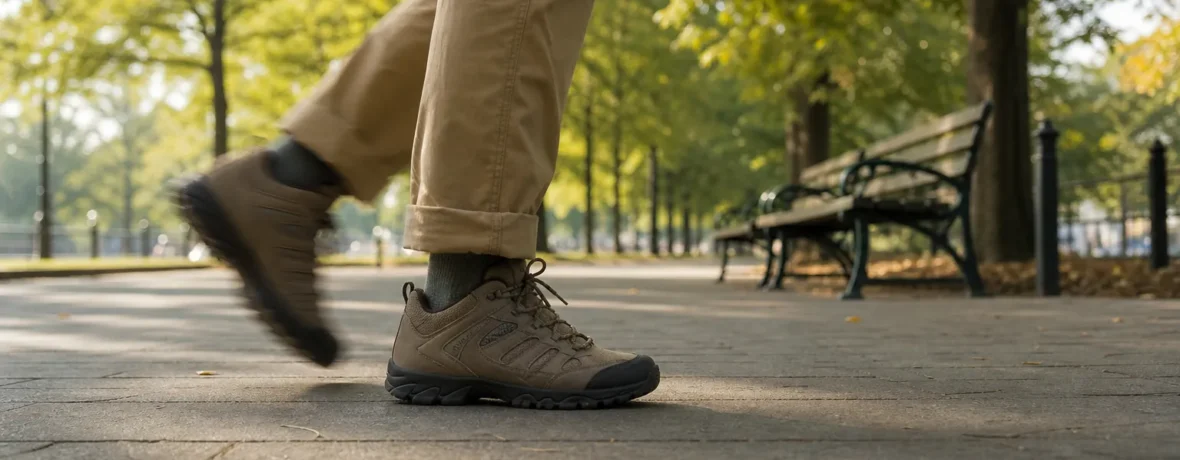
Yes, hiking shoes can be good for walking if they fit well, flex at the forefoot, and do not feel overly stiff or heavy. For daily pavement walks longer than 2 miles [3.2 km], choose low-cut hiking shoes or trail shoes over bulky boots.
Are hiking shoes good for walking every day?
Yes, for many people, they work well.
Hiking shoes sit in a useful middle ground: more grip and protection than most casual sneakers, less weight and ankle restriction than traditional boots. That makes them a strong pick if your daily walk includes cracked sidewalks, gravel paths, wet grass, dirt shortcuts, dog parks, or uneven shoulders.
The catch? A shoe built for rocky trail abuse can feel clunky on flat pavement. Big lugs slap the ground. Stiff midsoles may fight your stride. Waterproof liners can trap heat when you are just walking to work or logging neighborhood miles.
For everyday walking, look for hiking shoes with:
- A low-cut or mid-cut design, not a tall boot
- Moderate cushioning under the heel and forefoot
- A sole that bends where your toes bend
- Shallow to medium tread instead of deep, aggressive lugs
- A roomy toe box so your toes can spread
- A locked-in heel that does not rub
The best daily hiking shoe should disappear on your foot after 10 minutes. If you keep noticing the weight, heat, stiffness, or heel slip, that pair belongs on rougher trails, not your daily loop.
Can you wear hiking shoes everyday?
Yes, you can wear hiking shoes everyday if they match your surface and your feet stay comfortable.
That does not mean every hiking shoe should become your Monday-through-Sunday shoe. A waterproof leather hiker built for mud, roots, and shoulder-season backpacking will usually run hotter and stiffer than you need for errands, commuting, and paved walks. A breathable synthetic hiking shoe or trail runner is usually easier to live in.
Use this quick comparison before you make one pair do everything:
| Daily use | Best choice | Watch out for |
|---|---|---|
| Paved neighborhood walks | Light hiking shoe or walking shoe | Stiff soles and loud lugs |
| City commuting | Low-cut hiker with mild tread | Waterproof heat buildup |
| Gravel paths and parks | Trail shoe or light hiker | Too little cushioning |
| Wet, muddy routes | Water-resistant hiking shoe | Slow drying indoors |
If your feet sweat easily, skip full waterproof membranes for dry-weather daily walking. Breathable mesh dries faster, smells less, and feels better over an 8-hour day. Save waterproof shoes for rain, snow slush, muddy trailheads, and wet grass.
Are hiking boots good for walking?
Sometimes, but they are usually more shoe than you need for normal walking.
Hiking boots shine when the ground is rough, the weather is bad, or you are carrying weight. Their higher cuffs can add support, their midsoles can protect your feet from rocks, and their outsoles can bite into loose dirt. That is useful on a mountain trail. It can feel like overkill on a grocery run.
For everyday walking, boots can cause three common problems:
- Extra weight: More material means more work with every step.
- Less natural flex: A stiff boot may shorten your stride on pavement.
- More heat: Leather uppers and waterproof liners can run warm indoors.
If you love the stable feel of boots, choose a lightweight mid-cut model with a flexible forefoot. If your walks are mostly sidewalks, paved paths, and office floors, a hiking shoe will usually feel smoother.
What makes hiking shoes different from walking shoes?
Hiking shoes are built for grip and protection; walking shoes are built for smooth, repetitive motion.
A walking shoe usually has a softer ride, a smoother outsole, and a shape that rolls easily from heel to toe. Hiking shoes usually add tougher uppers, toe bumpers, firmer midsoles, and deeper tread. That helps on dirt and rock, but can feel less fluid on pavement.
Walking shoes also tend to breathe better and weigh less. Hiking shoes tend to last longer against abrasion and give you more confidence on uneven ground. Neither is automatically better. The right answer depends on where your steps happen.
For shoe fit, trusted medical guidance lines up with common trail sense: MedlinePlus recommends comfortable, supportive shoes with good cushioning, arch support, toe room, and a wide toe box for walking comfort and foot pain prevention. You can read its foot-care guidance at MedlinePlus on foot pain.
How should hiking shoes fit for walking?
They should feel snug at the heel, roomy at the toes, and stable without squeezing.
A good walking fit leaves enough space in front of your longest toe for downhill movement and foot swelling. For most people, that means roughly a thumb’s width. Your heel should not lift with every step, and the widest part of your foot should sit in the widest part of the shoe.
Follow these steps before buying or keeping a pair:
- Try them on late in the day. Feet often swell after hours of standing and walking.
- Wear your real socks. Thin dress socks and thick hiking socks change the fit.
- Check toe space while standing. Your foot spreads under body weight.
- Walk on hard flooring. Listen for heel slip, slapping lugs, or pressure points.
- Test the bend. The shoe should flex near the ball of your foot, not in the middle.
- Use stairs or a ramp if possible. Your toes should not ram the front on descents.
Mayo Clinic also stresses proper fit, support, and a roomy toe box when choosing shoes for healthy feet; see Mayo Clinic’s shoe fit advice.
Are waterproof hiking shoes good for daily walking?
Only in wet conditions.
Waterproof hiking shoes are great for rain, puddles, soggy grass, and shoulder-season trails. For dry daily walking, they can feel hot and clammy because the liner slows airflow. Once water gets inside from sweat or over the collar, waterproof shoes can also take longer to dry than mesh shoes.
Pick waterproof hiking shoes if your normal walk includes:
- Wet grass every morning
- Frequent rain
- Light snow or slush
- Muddy trails
- Cold, damp conditions
Pick breathable non-waterproof hiking shoes if your routine is mostly dry sidewalks, gym floors, packed dirt, or warm-weather travel.
Can hiking shoes hurt your feet when walking?
Yes, if they are too stiff, too narrow, too hot, or poorly fitted.
Foot trouble usually comes from mismatch. A stiff backpacking-style shoe can overload your calves on pavement. A narrow toe box can rub your toes. A loose heel can create blisters. A hard underfoot platform may feel protective on rocks but harsh after several miles of concrete.
Do not try to “tough out” sharp pain, numbness, or burning. Shoes should break in slightly, not punish you. If a pair causes hot spots in the store or around the house, a 5-mile [8 km] walk will not magically fix it.
Also change gradually. The CDC’s physical activity guidance recommends increasing activity over time to reduce injury risk, and walking is listed as a lower-impact activity than running in typical adult amounts. See the CDC Physical Activity Guidelines for broader activity guidance.
When to see a doctor
See a doctor promptly if pain is severe, sudden, follows an injury, or keeps you from bearing weight.
Also get medical help if you have swelling that does not improve, signs of infection, numbness, tingling, burning pain, or foot pain that keeps returning despite changing shoes and reducing mileage. Mayo Clinic’s symptom guidance for foot or ankle pain in adults gives clear warning signs for when to seek care.
This article can help you choose footwear, but it cannot diagnose plantar fasciitis, tendon problems, stress fractures, nerve issues, or arthritis. If pain changes how you walk, stop guessing and get checked.
So, should you buy hiking shoes for everyday walking?
Buy them if your walks leave smooth pavement.
Hiking shoes make sense if your daily route mixes sidewalks with gravel, dirt, rain, parks, travel, light trails, or uneven ground. They are also handy if you want one shoe for dog walks, weekend hikes, errands, and road trips.
Skip them if you only walk indoors or on clean pavement and want the softest, lightest ride. A dedicated walking shoe or road running shoe may feel better for that.
The sweet spot is a lightweight, breathable, low-cut hiking shoe with moderate tread. Not a mountaineering boot. Not a fashion sneaker with fake lugs. A real trail-capable shoe that still bends, breathes, and lets you walk naturally.
Related reading
- Are Trail Running Shoes Good for Hiking? Pros, Cons and When to Switch
- Hiking Shoes vs Walking Shoes: Key Differences
- Can You Hike in Running Shoes? What Actually Changes on the Trail
- Are Merrell Hiking Shoes Good? Moab and Beyond Reviewed
FAQ
Are hiking shoes better than sneakers for walking?
They are better on rough, wet, or loose surfaces. Sneakers are usually better for smooth pavement, indoor walking, and long days where low weight and soft cushioning matter most.
Can I wear hiking shoes to work?
Yes, if your workplace allows casual footwear and the shoes are clean, low-profile, and comfortable. Choose mild tread and neutral colors if you want them to pass as everyday shoes.
Do hiking shoes need to be broken in?
Yes, but only a little. Wear them around the house, then take short walks before using them for a full day; serious rubbing or pinching means the fit is wrong, not unfinished.
Are hiking shoes good for standing all day?
They can be, if they have enough cushioning and are not too stiff. For hard floors, a work shoe or walking shoe may feel better than a rugged trail hiker.
Should hiking shoes be waterproof for everyday use?
No, not unless you often walk in rain, wet grass, mud, or slush. For dry daily use, breathable non-waterproof hiking shoes usually feel cooler and dry faster.