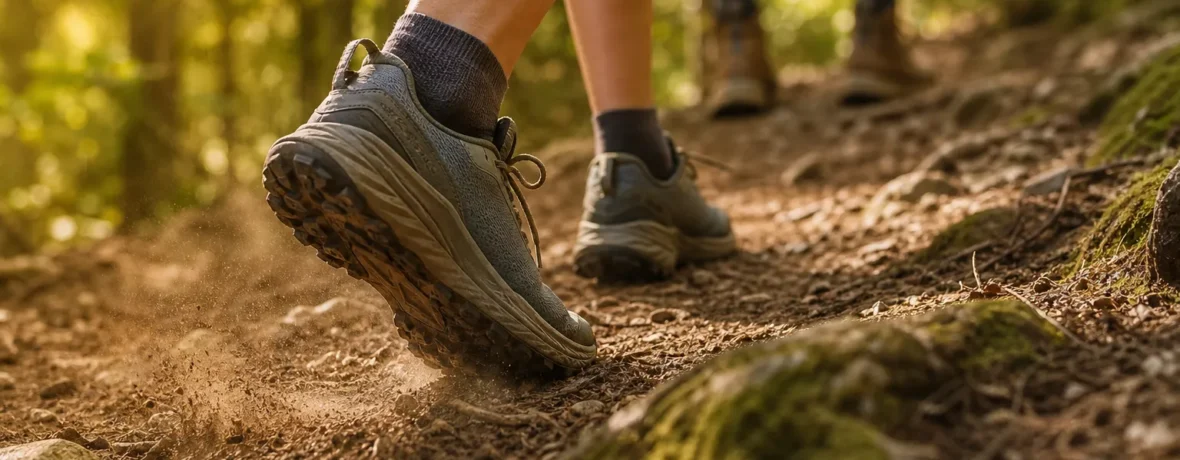
Yes. If you’re asking “are trail running shoes good for hiking,” the answer is yes for most dry day hikes, fast hikes, and lightweight backpacking trips under 25 lb [11 kg]. Switch to hiking shoes or boots for heavy packs, snow, sharp scree, off-trail travel, or ankle support needs.
Are trail running shoes good for hiking for most people?
Yes, for many hikers they work better than boots on easy to moderate trails.
Trail running shoes are light, grippy, flexible, and quick to dry. That combo feels great when you’re hiking 3-12 miles [5-19 km], carrying a small daypack, and moving on maintained trails. Less weight on your feet also means less leg fatigue by the end of the day. Your stride feels cleaner. Your feet feel less boxed in.
The catch? Trail runners are not magic. They give up protection, stiffness, long-term durability, and ankle coverage. If the trail is full of sharp rock, slick roots, cactus spines, talus, snow, mud, or stream crossings, you may want more shoe under you.
The National Park Service recommends proper walking shoes and points hikers toward sturdy, rubber-soled hiking boots with ankle support for dirt and gravel trails in its Hike Smart guidance. That does not mean trail runners are wrong. It means footwear should match the trail, weather, and load.
Can you use trail running shoes for hiking?
Yes, you can use trail running shoes for hiking when the trail and your pack weight are reasonable.
Use them when you want speed, comfort, and breathability. They shine on packed dirt, forest paths, desert trails, rolling singletrack, and summer mountain trails where you are not kicking steps in snow or hauling a huge load.
Here is a simple way to decide:
- Check the trail surface. Smooth dirt and moderate rock favor trail runners. Loose scree, boulder fields, and off-trail brush favor sturdier footwear.
- Weigh your pack. Under 25 lb [11 kg], trail runners usually make sense. Over 35 lb [16 kg], boots or stiff hiking shoes start looking smarter.
- Look at the weather. Warm and dry is trail-runner territory. Cold rain, slush, and snow demand more protection.
- Know your ankles. If you often roll an ankle or need extra support, do not force a low-cut shoe into the job.
- Test before the big hike. Wear them on a 3-5 mile [5-8 km] local trail before trusting them on a long day.
Are trail runners good for hiking on rocky trails?
Sometimes, but rocky trails expose their biggest weakness.
A trail runner with a rock plate, firm midsole, and sticky outsole can handle plenty of rocky hiking. A soft, minimal shoe can feel painful fast. If you feel every pointy rock through the sole, your feet will tense up, your stride will shorten, and the downhill will get ugly.
For rocky trails, look for:
- A protective rock plate or firm midsole
- Deep lugs for loose dirt and gravel
- A toe bumper for stubbing rocks
- A snug heel that does not lift
- Enough width for toe swelling on descents
If the route includes miles of talus, sharp lava rock, or steep loose scree, a hiking shoe or boot is the safer pick. Trail runners can do rock. They just do not shield your feet the same way.
Trail running shoes vs hiking shoes vs hiking boots: what is the real difference?
Trail runners are light and flexible; hiking boots are supportive and protective.
| Footwear | Best for | Main tradeoff |
|---|---|---|
| Trail running shoes | Fast day hikes, dry trails, light packs | Less protection and ankle coverage |
| Hiking shoes | Rocky day hikes, moderate packs, mixed terrain | Heavier and less breathable than trail runners |
| Hiking boots | Heavy packs, snow, mud, off-trail travel | Heavier, hotter, and slower to dry |
If you hate boots because they feel clunky, try hiking shoes before jumping straight to ultra-light trail runners. Hiking shoes split the difference: more underfoot armor than a runner, less bulk than a boot.
What are the pros of hiking in trail running shoes?
The biggest advantage is comfort over long miles.
Trail running shoes flex with your feet, breathe well, and usually need less break-in time than boots. That matters when your feet swell after several hours on trail. They also dry faster after rain or creek crossings, especially non-waterproof models with mesh uppers.
The main benefits:
- Lower weight: Less weight on your feet helps your legs feel fresher.
- Better breathability: Mesh uppers release heat and sweat faster.
- Faster drying: Non-waterproof trail runners drain and dry quicker than soaked boots.
- Natural stride: Flexible soles can feel smoother on rolling trails.
- Good traction: Aggressive lugs grip dirt, mud, and loose gravel well.
What are the cons of hiking in trail running shoes?
The biggest downside is reduced protection.
Your toes, arches, ankles, and soles take more abuse in trail runners. Thin uppers can rip on sharp rock. Soft midsoles can collapse faster under a heavy backpack. Low collars let in sand, gravel, snow, and mud unless you add gaiters.
Watch for these problems:
- Sore soles after long rocky descents
- Stubbed toes from thin toe protection
- Wet feet in cold weather
- Less edge control on steep sidehills
- Shorter lifespan than burlier hiking footwear
Blisters can happen in any footwear. MedlinePlus explains that friction, rubbing, or pressure can cause blisters, and recommends reducing the rubbing and keeping the blister clean; see its blister guidance. The Wilderness Medical Society also connects blister prevention with proper footwear and a dry foot environment in its austere wound management guidelines.
When should you switch from trail runners to hiking boots?
Switch when the trail gets rough, the pack gets heavy, or the weather gets cold and wet.
Trail runners are a smart tool, not a loyalty test. Change footwear when conditions ask for it.
- Pack over 35 lb [16 kg]: More load calls for more structure.
- Snow or slush: Boots protect better and pair better with gaiters or traction devices.
- Cold rain: Wet mesh shoes can chill your feet fast.
- Off-trail hiking: Brush, deadfall, sidehilling, and sharp debris punish soft shoes.
- Sharp desert terrain: Thorns, cactus spines, and abrasive rock can shred light uppers.
- Recurring ankle rolls: Choose footwear and support based on your injury history.
How should trail running shoes fit for hiking?
They should fit snug in the heel and roomy in the toes.
Your heel should stay planted on climbs. Your toes should not slam the front on descents. Leave enough room for swelling, but not so much that your foot slides around. Try shoes with the socks you hike in, and test them on a ramp if the store has one.
Use this fit checklist:
- Thumb-width space in front of your longest toe
- No heel lift when walking uphill
- No toe bang when walking downhill
- No pinching across the forefoot
- No arch pressure that feels sharp or hot
- Secure lacing without numbness
If you wear orthotics or insoles, bring them. If your feet swell on long hikes, try shoes late in the day when your feet are already a little larger.
Should hiking trail runners be waterproof?
Usually no for warm-weather hiking, yes for cold and wet conditions.
Waterproof trail runners block light rain and wet grass, but they also trap sweat. Once water gets in over the cuff, they dry slowly. Non-waterproof mesh shoes get wet faster, then dry faster. In summer, that is often the better deal.
Pick waterproof trail runners for cold shoulder-season hikes, muddy routes, and short wet walks. Pick breathable non-waterproof shoes for hot trails, desert hiking, and routes with repeated stream crossings.
When to see a doctor
Get medical help if pain, swelling, infection signs, or loss of function shows up after a hike.
For ankle injuries, Mayo Clinic says to contact a healthcare professional if you have pain and swelling and think you may have a sprain, since symptoms can overlap with more serious injuries; see its sprained ankle guidance. For blisters, MedlinePlus advises contacting a provider if a blister looks infected, you have a fever, you have several unexplained blisters, or you have diabetes or circulation problems.
Do not diagnose yourself on the trail. If you cannot bear weight, have spreading redness, warmth, pus, fever, numbness, or severe pain, stop hiking and get care.
Related reading
- Can You Hike in Running Shoes? What Actually Changes on the Trail
- Are Hiking Shoes Good for Everyday Walking?
- Are Merrell Hiking Shoes Good? Moab and Beyond Reviewed
- Are Oboz Good Hiking Shoes? Fit, Footbeds and Durability
FAQ
Are trail running shoes better than hiking boots?
Yes, for light and fast hikes on maintained trails. Hiking boots are better for heavy packs, snow, mud, off-trail travel, and rough terrain that demands more protection.
Can beginners hike in trail running shoes?
Yes, beginners can hike in trail running shoes on easy or moderate trails. Start with short hikes, carry a light pack, and choose shoes with good grip and enough toe room.
Do trail running shoes prevent blisters?
No shoe can guarantee blister prevention. A good fit, moisture-wicking socks, low friction, and stopping early to treat hot spots matter more than the shoe category.
Are trail runners okay for backpacking?
Yes, trail runners can work for lightweight backpacking. Keep total pack weight under 25-30 lb [11-14 kg] and avoid routes that demand heavy ankle and sole protection.
How long do trail running shoes last for hiking?
They usually last fewer trail miles than hiking boots because the midsoles and uppers are lighter. Replace them when the outsole is worn smooth, the midsole feels flat, or your feet start feeling unusually beat up.
Should you wear gaiters with trail running shoes?
Yes, if you hike through sand, gravel, snow, or brush. Low gaiters keep debris out without adding much weight, which makes trail runners more practical on messy trails.