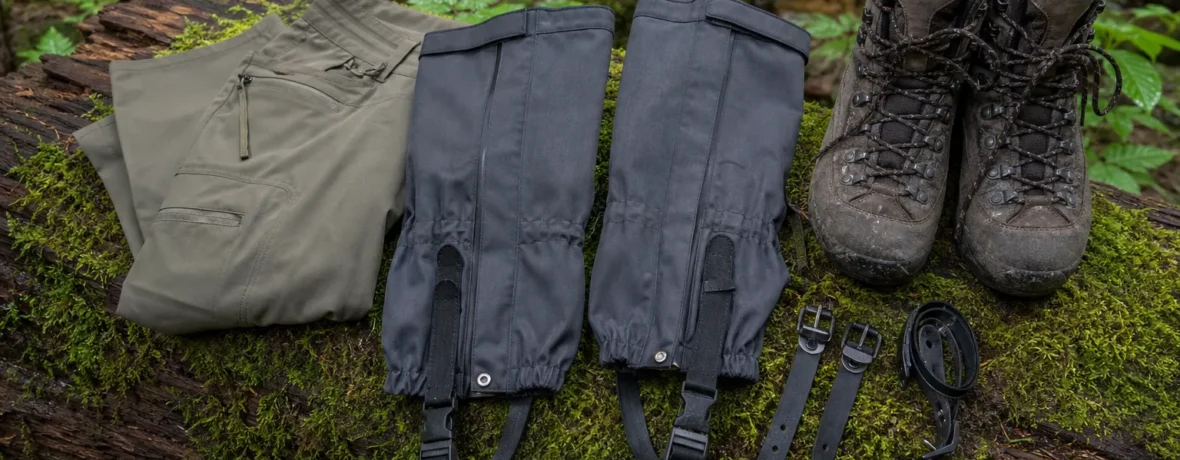
What are gaiters? Gaiters are protective fabric sleeves that cover the gap between your shoes and pants to block rocks, snow, mud, seeds, and light moisture. You need them for snowy, muddy, brushy, or scree-heavy hikes; you can skip them on dry, clean trails under mild conditions.
What are gaiters for hiking?
Gaiters are trail shields for your ankles and lower legs.
They wrap around your footwear and lower pant legs, then fasten with a front closure, top cinch, instep strap, and sometimes a lace hook. The goal is simple: keep junk out of your shoes and off your socks. That junk might be pea gravel, cheatgrass, wet leaves, slush, volcanic dust, burrs, or snow that wants to melt straight into your boot collar.
A hiking gaiter does not turn a mesh trail runner into a waterproof boot. It does not make a low-cut shoe support your ankle. It does not replace rain pants in a storm. But for one small piece of gear, it solves a very specific trail problem: the open gap where your foot, shoe, sock, and pant cuff all meet.
For a broad gear overview, REI’s guide to choosing and using gaiters breaks them down by height, fabric, and intended conditions.
Do you really need gaiters for hiking?
You need them when trail conditions are trying to get inside your shoes.
On a clean, dry, packed-dirt path, gaiters may be dead weight. On a muddy spring trail, a snowy approach, a desert wash full of grit, or a brushy route with scratchy stems, they earn their keep fast. The question is not “Are gaiters good?” The better question is “What am I walking through?”
Bring them when you expect:
- Snow deeper than your shoe collar
- Loose gravel, scree, sand, or volcanic grit
- Mud that will splash onto your socks and pant cuffs
- Wet grass, brush, or low vegetation
- Burrs, foxtails, or seed heads
- Light bushwhacking on faint trails
- Ticks, chiggers, or biting insects in grassy areas
Leave them home when the route is dry, maintained, and low on debris. No shame. Every ounce matters when it is not doing a job.
What types of gaiters are best for different hikes?
The best type depends on height, fabric, and trail conditions.
| Type | Best for | Tradeoff |
|---|---|---|
| Trail-running ankle gaiters | Sand, pebbles, dust, dry trails | Minimal water and brush protection |
| Low hiking gaiters | Three-season hiking, gravel, light mud | Less coverage in snow or tall brush |
| Mid-calf gaiters | Wet grass, muddy trails, shallow snow | Warmer and less breathable |
| Knee-high gaiters | Deep snow, mountaineering, heavy brush | Bulkier and usually overkill for easy trails |
For summer hiking, low or ankle-height models usually make the most sense. They keep grit out without trapping too much heat. For winter hiking, taller waterproof models protect your pants and help block snow from spilling into your boots. The National Park Service winter hiking tips list gaiters with waterproof boots as useful footwear for keeping snow and mud out.
Are gaiters waterproof?
Some are waterproof, but none are magic.
Waterproof gaiters help shed rain, wet grass, slush, and snow. They usually use coated nylon, waterproof-breathable fabric, or tougher lower panels around the boot. That is excellent for winter, shoulder-season mud, and wet alpine trails.
But water can still enter from below, through mesh shoes, over the top if the cuff is loose, or during stream crossings. If you step into water deeper than your shoe or boot opening, your feet may still get wet. Gaiters slow water down. They do not seal your footwear like a dry bag.
Breathable non-waterproof gaiters are better for hot, dusty hikes. They block grit and seeds without cooking your ankles. Choose those for desert trails, dry forest paths, and trail-running shoes.
How do you choose hiking gaiters?
Match the gaiter to your footwear, weather, and terrain.
Start with height. Ankle-height models are best for trail runners and low-cut hiking shoes. Mid-calf models pair well with hiking boots and sloppy three-season trails. Knee-high models belong in snow, talus, brush, or winter routes.
Then look at these details:
- Fit: The bottom edge should sit snugly over your shoe or boot without gapping.
- Instep strap: A replaceable strap is better than a fixed one, especially on rocky trails.
- Closure: Hook-and-loop fronts are easy; zippers can be smoother but may clog with mud.
- Lace hook: This keeps the front edge from riding up.
- Top cinch: It should seal gently around your calf without cutting circulation.
- Lower fabric: Tough nylon or reinforced panels help against rocks, crampons, and brush.
- Breathability: Hot hikes call for lighter fabric; snowy hikes call for weather protection.
If you use trail runners, check compatibility before buying. Some running gaiters attach with hook-and-loop patches on the heel or special shoe attachment points. Traditional hiking gaiters usually use an underfoot strap and work better with boots or sturdy hiking shoes.
How do you wear gaiters correctly?
Put them over your pants and footwear with the buckle or closure facing forward.
- Put on your hiking socks, pants, and shoes or boots first.
- Open the gaiters fully so you can wrap them around your lower legs.
- Place the reinforced panel toward the inside of each ankle if the pair is shaped left and right.
- Hook the front clip to your boot laces, usually near the lower laces.
- Run the instep strap under the sole, in front of the heel and behind the forefoot tread.
- Close the front hook-and-loop strip, zipper, or buckle from bottom to top.
- Tighten the top cinch so debris cannot fall in, but keep it comfortable.
- Walk 20 steps, then recheck the strap tension and lace hook.
A common mistake is wearing the instep strap too far forward. It will get chewed up by rock and tread. Tuck it into the arch area where it touches less ground.
Do gaiters help with ticks, bugs, and brush?
They help reduce exposed gaps, but they are not complete protection.
Gaiters can make it harder for ticks, chiggers, and scratchy plants to reach your socks and skin. They also keep pant cuffs from flapping open in tall grass. That said, you still need a full prevention routine in tick country: stay near the center of the trail, check clothing, and follow repellent guidance from the CDC’s tick bite prevention advice.
For brush, pick tougher fabric. Thin running gaiters are fine for dust and pebbles, but they can snag or tear on thorny routes. If your hike includes manzanita, blowdowns, sharp grass, or off-trail travel, choose a heavier hiking or mountaineering style.
Are gaiters worth it for summer hiking?
Yes, if the trail is dusty, sandy, buggy, or full of loose debris.
Summer hikers often picture gaiters as winter gear, but low models shine in dry conditions. They stop the annoying pebble-in-shoe routine. They keep sand out during desert hikes. They block grass seeds from working into your socks. They also help keep trail dust from grinding between your sock and skin.
Go light in warm weather. A breathable ankle gaiter is usually enough. Save waterproof knee-high models for cold wet trips, because heavy fabric can trap heat and sweat when temperatures climb.
Related reading
- How to Use a Compass for Hiking
- How to Waterproof a Tent: Seams, Rainfly and Floor
- How to Choose a Sleeping Bag: Temperature Ratings, Fill and Shape
- What Is Merino Wool and Why Hikers Swear By It
FAQ
What are gaiters used for?
Gaiters are used to keep debris, mud, snow, seeds, and light moisture out of your shoes and away from your lower legs. They are most useful when the trail surface is loose, wet, snowy, or overgrown.
Do gaiters go over or under pants?
Gaiters usually go over your pants. This setup keeps pant cuffs contained and helps shed snow, mud, and brush instead of funneling it inside.
Can you wear gaiters with trail runners?
Yes, you can wear gaiters with trail runners. Choose lightweight ankle gaiters or running-specific models, and check that the attachment system works with your shoes.
Do gaiters keep your feet dry?
Gaiters can help keep your feet drier in wet grass, mud, rain splash, and snow. They will not keep feet dry if water enters through mesh shoes, over the top, or during deep stream crossings.
Are tall gaiters better than short gaiters?
Tall gaiters are better for snow, brush, mud, and rough off-trail travel. Short gaiters are better for warm weather, trail running, and keeping sand or pebbles out without adding much heat.
Should beginners buy gaiters?
Beginners should buy gaiters if their planned hikes include snow, mud, sand, scree, ticks, or brush. If you mostly hike dry, maintained trails near home, spend the money on comfortable footwear and socks first.