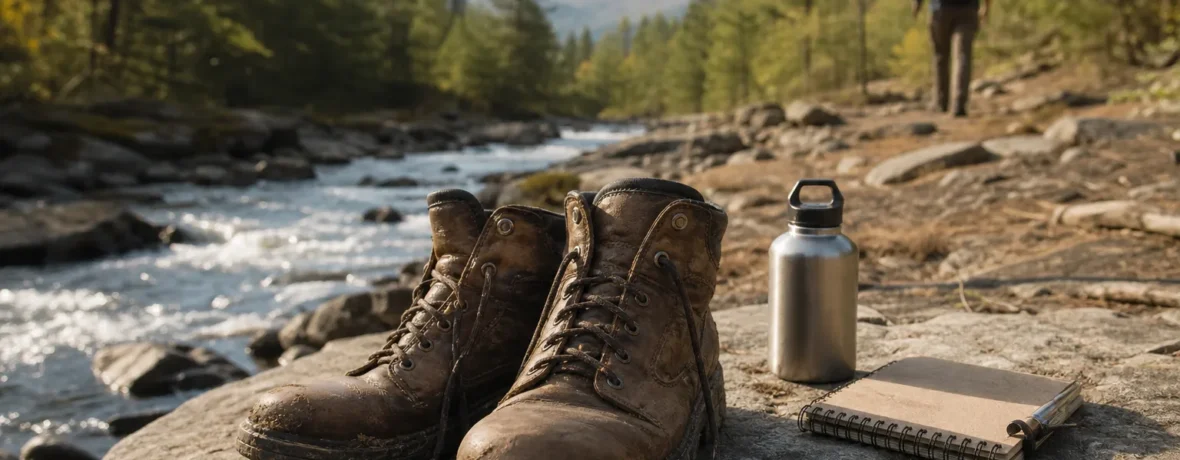
Yes for short dry-to-muddy day hikes under 5 miles [8 km], especially Timberland hiking models. Classic 6-inch Timbs are too heavy, warm, and stiff for long climbs, hot weather, backpacking, or slick rock.
Are Timberlands good for hiking?
Sometimes, but choose the right Timberland for the right trail.
Timberland makes more than one kind of boot. That matters. The classic yellow 6-inch boot was built as a waterproof lifestyle/work-style boot, not as a dedicated hiking boot. Timberland’s own product page lists the men’s Premium 6-Inch Waterproof Boot with waterproof leather, 400 grams of PrimaLoft insulation, a steel shank, and rubber lug outsole; one listed men’s size 9 weighs 2.10 lb [951 g] per boot on some current product pages. That is sturdy. It is also heavy on a climb. See Timberland’s specs for the Men’s Timberland Premium 6-Inch Waterproof Boot.
For a casual forest path, muddy dog walk, fall overlook hike, or short local loop, classic Timberlands can work. For 10 miles [16 km], hot weather, talus, wet granite, or a loaded pack, you will feel their weight, heat, and limited trail-specific flex.
The better answer: Timberland hiking boots are fine for moderate day hiking. Classic Timbs are acceptable in a pinch, but they are not the first pick for serious trail miles.
Are Timberland boots good for hiking compared with real hiking boots?
Dedicated Timberland hiking boots are better for hiking than classic Timberland fashion/work boots.
Look at the job each boot is built to do. A hiking boot should grip dirt, flex naturally, protect underfoot, hold your heel, drain sweat, and stay comfortable when your feet swell. REI’s hiking boot guidance breaks footwear choice down by fit, outsole, support, and intended terrain, and also points out that stiffer boots need break-in time before backcountry use. Read REI’s guide to choosing hiking boots and hiking shoes.
| Boot type | Best use | Trail downside |
|---|---|---|
| Classic Timberland 6-inch boot | Short cool-weather walks, mud, town-to-trail use | Heavy, warm, stiff, slow to dry |
| Timberland hiking boot | Moderate day hikes, wet dirt, roots, maintained trails | Still bulkier than trail runners |
| Modern hiking shoe or trail runner | Fast day hikes, dry trails, warm weather | Less ankle coverage and less leather protection |
Timberland’s Mt. Maddsen line is closer to a real hiking boot. Timberland describes the Men’s Mt. Maddsen 2.0 Hiking Boot with waterproof leather, a TimberDry waterproof membrane, OrthoLite footbed, compression-molded EVA midsole, and rubber lug outsole. Those are trail features, not just street style.
Are Timbs good for hiking on muddy trails?
Yes, Timbs can handle mud better than sneakers, but they are not magic.
Classic Timberlands have a lugged rubber outsole and waterproof leather, so they make sense when the trail is damp, soft, and not too steep. They protect your feet from puddles, wet grass, and sloppy shoulder-season paths. That is their sweet spot.
Where they struggle is slippery rock, steep descents, and long sidehill walking. A heavy leather boot can feel secure at first, then clumsy once fatigue sets in. If the tread is worn smooth, the boot loses its biggest trail advantage. No tread, no bite.
- Good match: muddy park loops, wet gravel paths, short woodland hikes.
- Bad match: slick granite slabs, loose scree, long desert hikes, summer climbs.
- Hard no: technical scrambling where sticky approach-shoe rubber is the safer tool.
How comfortable are Timberlands after a few miles?
Comfort depends on fit, break-in, socks, and heat.
Classic leather Timbs can feel plush around town, then less friendly once the trail tilts upward. The stiff upper can rub the ankle. The insulated versions can run hot. The weight adds up because every step lifts that boot again. A pound on your foot feels different from a pound in your pack.
Fit is the deal-breaker. Timberland says some Premium 6-Inch Waterproof Boots run large and recommends sizing down a half size on certain product pages. That may work for street wear, but hiking creates swelling and downhill toe pressure. You need enough room for your toes without heel slip.
Try them on with the exact socks you will hike in. Walk downhill if the store has a ramp. Kick your heel back, lace them firmly, and check for heel lift. If your toes touch the front while descending stairs, do not talk yourself into them.
How do you test Timberlands before taking them on a real hike?
Test them in stages before you trust them far from the trailhead.
- Wear your hiking socks and lace the boots firmly, not painfully tight.
- Walk 1 mile [1.6 km] on pavement and check for heel rub, toe pressure, or ankle bite.
- Climb stairs for 10 minutes to expose hot spots faster.
- Walk a dirt path for 2 miles [3.2 km] with your normal day pack.
- Test wet grass or shallow mud to judge traction, then dry the boots slowly at room temperature.
- Do one 4- to 5-mile [6.4- to 8-km] local hike before using them on a remote trail.
If they rub during step two, they will not become dream boots by mile eight. Leather softens, yes. Bad fit usually stays bad.
What are the biggest pros of hiking in Timberlands?
The biggest pros are protection, water resistance, durability, and ankle coverage.
Timberlands feel protective. That is why many hikers like them for rough little trails near home. The leather upper shrugs off brush better than mesh. The tall collar blocks debris. The waterproof builds handle wet sidewalks, slush, and muddy trailheads without drama.
- Protection: leather uppers guard against sticks, rocks, and light brush.
- Weather coverage: waterproof models help in rain, wet grass, and shallow mud.
- Supportive feel: a stiff boot can feel stable under casual loads.
- Durability: leather can take abuse if cleaned and dried correctly.
- Style: they look good before and after the hike. That counts for town-to-trail days.
What are the biggest cons of hiking in Timberlands?
The biggest cons are weight, heat, break-in, and traction limits.
Heavy boots cost energy. Insulation traps heat. Waterproof leather blocks rain but also breathes less than light mesh. On a cool November trail, that may feel great. On a July climb, your socks can turn into a swamp.
American Hiking Society tells hikers to think about traction, support, and protection when choosing footwear, not just looks. Their 10 Essentials of Hiking list puts appropriate footwear right at the top for a reason.
Watch for these red flags:
- Your heel lifts more than a little on climbs.
- Your toes hit the front on descents.
- The collar rubs your ankle bone.
- Your feet overheat in the first 30 minutes.
- The outsole feels slick on wet rock or roots.
When to see a doctor
See a doctor if foot pain, swelling, numbness, or an infected blister shows up after hiking.
Do not diagnose trail pain from a gear article. A boot can cause rubbing, but persistent pain can come from many issues. Mayo Clinic says to seek medical care for a blister that looks infected, including spreading color change, increasing pain, pus, or warm skin; see Mayo Clinic’s blister first aid guidance.
Stop hiking and get medical help sooner if you have diabetes, poor circulation, loss of feeling, a deep wound, or pain that changes your gait. Your boots should not make you limp. Toughing it out is how small foot problems become trip-ending foot problems.
So, should you hike in Timberlands?
Yes, if the hike is short, cool, and not technical.
Use classic Timberlands for easy local trails, wet parks, and casual hikes where comfort has already been proven. Use Timberland’s hiking-specific boots for moderate day hikes if they fit well and the outsole has enough bite. Skip classic Timbs for long mountain days, backpacking trips, hot-weather hiking, or terrain where traction failure has consequences.
The trail does not care how iconic a boot looks. It cares about grip, fit, temperature, and fatigue. If your Timberlands pass those tests, lace them up. If they fail one, choose real hiking footwear before your feet file a complaint.
Related reading
- Is Merino Wool Good for Summer Hiking?
- Are Trail Running Shoes Good for Hiking? Pros, Cons and When to Switch
- Can You Hike in Running Shoes? What Actually Changes on the Trail
- Are Hiking Boots Good for Snow? Insulation, Traction and Limits
FAQ
Are Timberlands good for long-distance hiking?
No, classic Timberlands are not a strong choice for long-distance hiking. Their weight, warmth, and stiffness can wear you down over repeated miles, especially with elevation gain.
Can you hike in Timberland Premium 6-Inch boots?
Yes, you can hike short, non-technical trails in Timberland Premium 6-Inch boots. Keep the distance conservative, wear hiking socks, and avoid hot days or slick rock until you know how they grip.
Are Timberland hiking boots waterproof?
Some Timberland hiking boots are waterproof, but not every Timberland boot has the same construction. Check the product name and specs for waterproof leather, seam sealing, or a waterproof membrane before buying.
Do Timberlands need to be broken in before hiking?
Yes, most leather Timberlands need break-in time before trail use. Start with short walks and stairs, then move to a short dirt trail before committing to a bigger hike.
What socks should you wear with Timberlands for hiking?
Wear synthetic or merino wool hiking socks, not cotton. Cotton holds moisture, which can increase friction and make blisters more likely.
Are Timberlands better than sneakers for hiking?
For mud, wet grass, and foot protection, Timberlands are usually better than casual sneakers. For dry, warm, fast hiking, a lighter hiking shoe or trail runner will usually feel better.