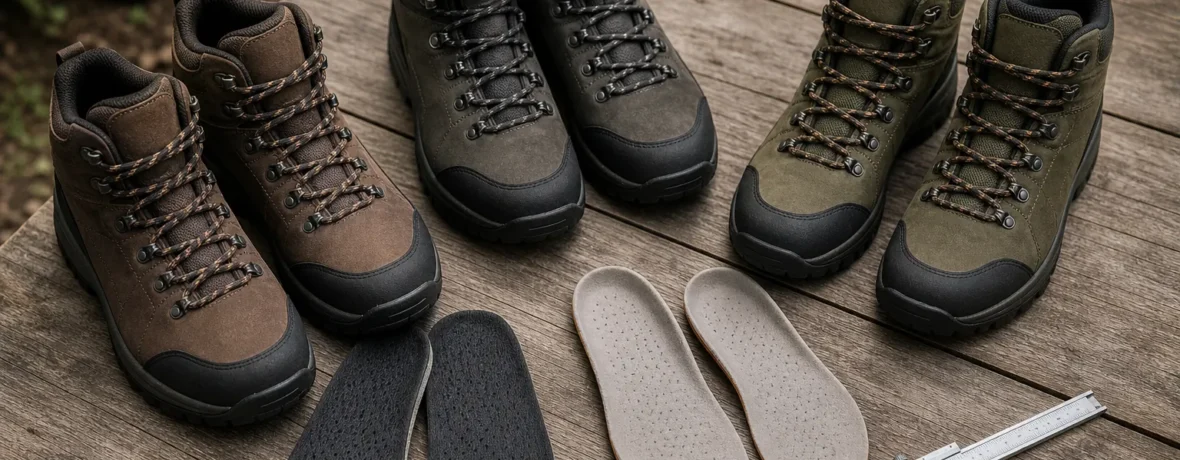
The best hiking boots for wide feet are the Merrell Moab 3 Mid Waterproof Wide for most day hikers: true wide sizing, 5 mm lugs, a stable midsole, and a 17.45 oz [495 g] per-shoe weight. Choose a roomier toe-box shoe instead if your toes splay but your heel is narrow.
We may earn a commission when you buy through links on this page.
What are the best hiking boots for wide feet?
The best pick is the boot that gives your forefoot space without letting your heel swim.
Wide feet are not all the same. Some hikers need a true 2E or EE width through the forefoot. Others need a rounded, anatomical toe box but a standard-width heel. That split matters. A boot can be “wide” on paper and still pinch your little toe, or it can feel roomy up front while staying locked down through the midfoot.
| Category | Model | Weight | Key feature |
|---|---|---|---|
| Best overall | Merrell Moab 3 Mid Waterproof Wide | 17.45 oz [495 g] per shoe | True wide option, Vibram outsole, budget-to-mid-range tier |
| Best durable day hiker | KEEN Targhee IV Waterproof | 20.11 oz [570 g] per shoe | Roomy KEEN fit, abrasion-resistant outsole, mid-range tier |
| Best support | Oboz Sawtooth X Mid Waterproof Wide | 19.4 oz [550 g] per shoe | EE forefoot in wide, supportive insole, mid-range tier |
| Best lightweight waterproof boot | Salomon X Ultra 5 Mid Wide GTX | 16 oz [454 g] per shoe | Wide fit, agile chassis, premium tier |
| Best classic leather boot | LOWA Renegade Evo GTX Mid Wide | 20.8 oz [590 g] per shoe | Wide option, nubuck leather, premium tier |
| Best zero-drop boot | Altra Olympus 6 Hike Mid GTX | 18.6 oz [528 g] per shoe | Original FootShape toe box, high cushion, premium tier |
| Best natural toe splay | Topo Athletic Trailventure 2 WP | 15.9 oz [451 g] per shoe | Roomy toe box, rock plate, mid-range tier |
| Best town-to-trail boot | Danner Mountain 600 | 18-19.5 oz [510-553 g] per shoe | Wide option, leather build, premium tier |
| Best wide hiking shoe | New Balance Hierro v9 GORE-TEX | 12.2 oz [345 g] per shoe | 2E men’s wide, waterproof trail-shoe feel, mid-range tier |
How we chose
We chose these models by comparing specs, materials, verified owner feedback, and expert reviews.
This is not a hands-on test. The picks below come from current manufacturer specifications, width availability, construction details, outsole design, stated weights, fit notes, and repeated owner-feedback patterns around toe-box space, heel hold, break-in, waterproofing, durability, and long-walk comfort.
Priority went to boots and shoes that meet at least one wide-foot need:
- Available in a true wide width, such as 2E or EE.
- Built on a naturally roomy last with a broad toe box.
- Stable enough for rocky trails and uneven dirt.
- Sold by established outdoor footwear brands with clear specs.
- Not so sloppy in the heel that wide-foot hikers lose control on descents.
What are the best hiking boots for wide feet right now?
The strongest all-around picks balance width, hold, traction, and trail protection.
Merrell Moab 3 Mid Waterproof Wide – Best for most hikers
The Merrell Moab 3 Mid Waterproof Wide suits day hikers who want a familiar fit, real wide sizing, and enough support for moderate trails without a stiff backpacking-boot feel.
- Weight: 17.45 oz [495 g] per shoe
- Drop: 11.5 mm
- Lug depth: 5 mm
- Upper: pig suede leather and mesh
- Waterproof: yes, Merrell waterproof membrane
The Moab line stays popular because it feels normal fast. The wide version gives more room across the forefoot than the standard model, while the padded collar and molded arch shank keep it from feeling like a floppy sneaker. The Vibram TC5+ outsole is built for mixed hiking, not mountaineering, which is exactly what most wide-foot hikers need for weekend loops, muddy park trails, and rocky day hikes.
Pros
- True wide option is easy to find.
- Comfortable underfoot without a long break-in.
- Good toe and heel protection for the weight.
- 5 mm lugs handle dirt, roots, and loose gravel well.
Cons
- Waterproof membrane runs warmer than non-waterproof mesh.
- Not stiff enough for heavy backpacking loads.
- Bulkier than trail-runner-style hikers.
- Soft cushioning may feel less precise on steep talus.
Skip it if… you want a light, fast hiking shoe or a stiff boot for heavy pack weight.
KEEN Targhee IV Waterproof – Best for roomy everyday hiking
The KEEN Targhee IV Waterproof suits hikers who like a broad forefoot, a cushioned ride, and a protective boot that can handle sloppy trail days.
- Weight: 20.11 oz [570 g] per shoe
- Drop: 12 mm
- Stack height: 1.1 in [28 mm]
- Upper: leather and textile
- Waterproof: yes, KEEN.DRY membrane
KEEN has long been a safe place for wide-ish feet, especially feet that feel crushed in pointed toe boxes. The Targhee IV uses KEEN.FUSION construction instead of traditional glue bonding, plus a KEEN.RUGGED outsole meant to resist abrasion. It is not the lightest boot here. It is, however, a good match for hikers who care more about space, cushioning, and durability than gram-counting.
Pros
- Broad forefoot shape works well for toe splay.
- Protective toe bumper shrugs off trail scuffs.
- Stable enough for rocky day hikes.
- PFAS-free brand construction is a plus for many buyers.
Cons
- Heavier than several other mid-height boots.
- Roomy fit can feel loose on narrow heels.
- Warm in hot summer conditions.
- Not as nimble as Salomon or Topo options.
Skip it if… your heel is narrow and you usually struggle with heel lift in roomy boots.
Oboz Sawtooth X Mid Waterproof Wide – Best for support
The Oboz Sawtooth X Mid Waterproof Wide suits hikers who want a secure heel, a supportive insole, and a wider forefoot for long day hikes.
- Weight: 19.4 oz [550 g] per shoe
- Drop: 8 mm
- Width: wide option with EE forefoot
- Upper: waterproof leather and textile
- Waterproof: yes, B-DRY membrane
Oboz is a good call when soft boots leave your feet tired. The Sawtooth X Mid Waterproof Wide has a form-hugging heel cup, sculpted midfoot, and generous forefoot, so it works for hikers who need width up front but still want the boot to hold the rearfoot on sidehill sections. The O FIT insole is more structured than the thin sockliners found in many boots.
Pros
- Wide version uses an EE forefoot.
- Supportive insole helps with all-day structure.
- 8 mm drop feels more moderate than traditional 11-12 mm boots.
- Good match for medium-high volume feet.
Cons
- Supportive shape may feel too sculpted for flat, high-volume feet.
- Waterproof build reduces breathability.
- Not as soft underfoot as HOKA-style hikers.
- Fit can feel snug through the midfoot at first.
Skip it if… you need a very soft, flexible boot with minimal arch feel.
Salomon X Ultra 5 Mid Wide GORE-TEX – Best lightweight waterproof boot
The Salomon X Ultra 5 Mid Wide GORE-TEX suits hikers who want a quick, stable boot for steep trails but need more forefoot room than standard Salomon sizing.
- Weight: 16 oz [454 g] per shoe
- Drop: 11 mm
- Width: wide
- Upper: Matryx, PU-coated leather, and textile
- Waterproof: yes, GORE-TEX
Salomon’s regular hiking footwear can run trim, but the X Ultra 5 Mid Wide gives wide-foot hikers a real option in a fast, technical package. The Advanced Chassis adds lateral support on descents and rough ground, while All Terrain Contagrip keeps the outsole versatile. This boot feels more athletic than the Moab or Targhee. Less couch, more cockpit.
Pros
- Light for a waterproof mid boot.
- Good lateral stability on uneven terrain.
- Wide version fixes the main fit issue for many Salomon fans.
- Precise feel works well on rocky trails.
Cons
- Still not as roomy as Altra or Topo in the toe box.
- Less plush than heavier leather hikers.
- 11 mm drop may feel tall if you prefer low-drop footwear.
- Waterproof membrane can feel clammy in hot weather.
Skip it if… your foot is very high-volume or you want a big rounded toe box above all else.
LOWA Renegade Evo GTX Mid Wide – Best premium leather boot
The LOWA Renegade Evo GTX Mid Wide suits hikers who want a more traditional, supportive leather boot with a wide option and a refined trail feel.
- Weight: 20.8 oz [590 g] per shoe
- Upper: Heinen Terracare nubuck leather
- Midsole: Double Injection DuraPU/DynaPU
- Outsole: Vibram RENE TRAC
- Waterproof: yes, GORE-TEX
The Renegade has been a go-to hiking boot for years because it blends structure with walkability. The Evo GTX Mid Wide keeps that formula but adds updated materials and a wider fit option. It is more expensive and more boot-like than the Moab. That is the point. If your hikes involve rougher trails, shoulder-season mud, and full-day outings, the extra structure can pay off.
Pros
- Wide option in a durable leather hiker.
- Supportive without feeling like a mountaineering boot.
- GORE-TEX protection for wet trails.
- Good underfoot stability for long hikes.
Cons
- Premium price tier.
- Heavier than fast-hiking models.
- Leather upper needs more break-in than mesh-heavy boots.
- May be too much boot for mellow local trails.
Skip it if… you want a soft, sneaker-like boot right out of the box.
Altra Olympus 6 Hike Mid GTX – Best zero-drop wide-toe boot
The Altra Olympus 6 Hike Mid GTX suits hikers who want max cushion, waterproofing, and Altra’s Original FootShape toe box.
- Weight: 18.6 oz [528 g] per shoe
- Drop: 0 mm
- Stack height: 33 mm
- Upper: leather and GORE-TEX Invisible Fit
- Outsole: Vibram Megagrip
This is not a formal 2E boot, but it belongs in a wide-feet guide because the toe box is genuinely roomy. The Olympus 6 Hike Mid GTX gives toes space to spread while adding a high-cushion platform and a grippy Vibram outsole. The catch is the zero-drop geometry. If you are used to 10-12 mm hiking boots, transition gradually; your calves and Achilles will notice the difference.
Pros
- Original FootShape toe box gives excellent toe room.
- High cushion helps on long, hard-packed trails.
- Vibram Megagrip outsole is a strong wet/dry traction choice.
- Zero-drop stance feels natural for hikers already used to it.
Cons
- Zero-drop design is not for everyone.
- Not a true wide-width size.
- High stack can feel less precise on awkward rock steps.
- Waterproof leather build runs warmer than mesh trail shoes.
Skip it if… you have never worn low-drop footwear and need a boot for a big trip next week.
Topo Athletic Trailventure 2 WP – Best for natural toe splay
The Topo Athletic Trailventure 2 WP suits hikers who want a roomy toe box, secure heel, waterproofing, and a lighter boot that still has underfoot protection.
- Weight: 15.9 oz [451 g] per shoe in men’s size 9
- Drop: 5 mm
- Stack height: 33 mm heel / 28 mm forefoot
- Rock plate: yes, full-length ESS
- Waterproof: yes, eVent waterproof bootie
Topo’s fit is the reason to look here. You get a broad anatomical toe box without the totally flat zero-drop stance of Altra. The 5 mm drop is easier for many hikers to adapt to, and the rock plate helps when the trail turns sharp underfoot. It is a strong choice for wide forefeet, bunion-prone toes, and hikers who hate narrow toe caps.
Pros
- Roomy toe box without a sloppy heel.
- Lightweight for a waterproof mid.
- Rock plate adds protection on roots and stone.
- 5 mm drop feels natural but not extreme.
Cons
- Not a formal 2E width.
- Less ankle structure than leather boots.
- Waterproof liner reduces airflow.
- Trail-runner feel may be too soft for heavy packs.
Skip it if… you need a stiff boot for carrying a heavy backpack over rough terrain.
Danner Mountain 600 – Best town-to-trail boot
The Danner Mountain 600 suits hikers who want a wide-available leather boot that looks casual but has real trail traction.
- Weight: 37-39 oz [1,049-1,106 g] per pair, depending on color/material
- Height: 4.5 in [11.4 cm]
- Upper: suede or full-grain leather, depending on version
- Outsole: Vibram Fuga with Megagrip
- Waterproof: yes, Danner Dry on standard Mountain 600 models
The Mountain 600 is not the most technical boot in this guide, but it hits a sweet spot for travel, easy hikes, wet sidewalks, and moderate trails. The wide option helps broader feet, and the leather upper gives it a more classic look than mesh-heavy hikers. The flexible outsole feels friendly on packed dirt and mellow terrain.
Pros
- Available in wide sizing on many versions.
- Cleaner look than most technical boots.
- Vibram Megagrip outsole boosts wet and dry traction.
- Comfortable for mixed travel and trail use.
Cons
- Less technical support than the LOWA or Salomon.
- Leather needs care after wet, muddy hikes.
- Not ideal for long rocky backpacking routes.
- Some versions vary in weight and materials.
Skip it if… you want a purpose-built technical hiker for steep, loose, rocky terrain.
New Balance Hierro v9 GORE-TEX – Best hiking shoe for wide feet
The New Balance Hierro v9 GORE-TEX suits hikers who want the best hiking shoes for wide feet more than they want ankle coverage.
- Weight: 12.2 oz [345 g] per shoe for men’s model
- Drop: 4 mm
- Width: men’s wide 2E available
- Midsole: dual-density Fresh Foam X
- Waterproof: yes, GORE-TEX
If boots feel like overkill, this is the wide-foot hiking shoe to try first. It has a 2E option, a cushioned trail-running platform, a gusseted tongue, toe protection, and a Vibram Megagrip outsole. It will not brace your ankle like a mid boot, but many hikers prefer the lighter feel and easier stride.
Pros
- True men’s 2E wide option.
- Much lighter than mid-height boots.
- Good cushioning for hard-packed trails.
- GORE-TEX version handles wet grass and shallow puddles.
Cons
- No ankle collar support.
- Less underfoot stiffness than a hiking boot.
- Waterproof low shoes can trap water if submerged.
- Not built for heavy loads.
Skip it if… you need ankle coverage, a tall cuff, or a boot for rough backpacking.
How should wide hiking boots fit?
Your toes should spread, your heel should stay down, and your longest toe should not hit the front on descents.
Fit wide boots late in the day, with the socks you actually hike in. Feet swell during long walks. A boot that feels perfect at breakfast can turn mean by mile 8. You want space across the ball of the foot and toe box, but not so much volume that your foot slides forward.
- Measure both feet while standing, then fit the larger foot.
- Try boots with your hiking socks and any aftermarket insoles you use.
- Lace the forefoot snug, not tight, then lock the heel with the upper hooks.
- Walk downhill or use a ramp. Your toes should not bang the front.
- Check heel lift. A small amount is normal; rubbing is not.
- Stand on one foot and edge side to side. Your foot should not roll inside the boot.
- Wear the boots indoors long enough to catch pressure points before the trail does.
Should you buy wide, half-size up, or both?
Start with wide width before jumping up in length.
Going a half-size up can help if your toes hit the front, but it can also put the flex point in the wrong place and create heel slip. If your pressure is across the ball of the foot, little toe, bunion area, or top of the forefoot, try wide first. If your longest toe touches the end, then add length.
| Fit problem | Likely fix | Watch out for |
|---|---|---|
| Little toe rubs the side | Wider forefoot or anatomical toe box | Heel slipping in oversized boots |
| Toes hit front downhill | Half-size up or better heel lock | Too much length causing sloppy flex |
| Top of foot feels crushed | Higher-volume boot or different lacing | Over-loosening the whole boot |
| Heel blisters | Narrower heel fit, heel-lock lacing, sock change | Buying wider than needed |
What width do wide hiking boots use?
Men’s wide is often 2E or EE, while women’s wide is often D.
Brands do not all use the same last, so the letter only gets you close. Oboz lists its men’s wide forefoot as EE on the Sawtooth X Mid Waterproof. New Balance lists men’s wide as 2E on the Hierro v9 GORE-TEX. Altra and Topo focus more on toe-box shape than classic width letters, which can be better for toe splay but less helpful if your whole foot is wide.
What are the best hiking shoes for wide feet?
The best hiking shoes for wide feet are low-cut models with true 2E width or anatomical toe boxes.
If you do not need ankle coverage, hiking shoes can be more comfortable than boots. They flex more naturally, dry faster when not waterproof, and reduce weight with every step. The tradeoff is less cuff protection in mud, scree, brush, and snow.
Pick the New Balance Hierro v9 GORE-TEX if you want a true wide trail shoe with waterproofing. Pick the Altra Lone Peak Hiker 3 or similar Altra models if you want a wide toe box and zero-drop geometry. Pick Topo if your toes need space but your heel still needs a snug hold.
Do waterproof boots work well for wide feet?
Waterproof boots work well for wet trails, but they feel warmer and less breathable.
A waterproof membrane can make any boot feel slightly more structured and less airy. That matters for wide feet because heat and swelling add pressure. If you hike in the Pacific Northwest, wet shoulder seasons, muddy forests, or cold rain, waterproof boots make sense. If you hike mostly in hot, dry conditions, a non-waterproof wide hiking shoe may keep your feet happier.
GORE-TEX, eVent, B-DRY, KEEN.DRY, and Danner Dry: what changes?
The big change is brand and construction, not magic.
All waterproof membranes aim to block outside water while letting some vapor escape. In real hiking, breathability depends on temperature, humidity, sock choice, pace, and how much your feet sweat. A low waterproof shoe can also flood over the collar; once water gets inside, it drains slowly.
When to see a doctor
See a medical professional if foot pain, numbness, wounds, or swelling do not settle with better-fitting footwear.
Do not use a boot guide to self-diagnose foot problems. Tight boots can aggravate hot spots, bunions, numb toes, and bruised nails, but they are not the only cause. Mayo Clinic says blister infection signs can include spreading skin color changes, increasing pain, pus, or warm skin; get medical care if those show up after a hike. Read their guidance on blister first aid.
For bunion-related pain, MedlinePlus advises avoiding narrow shoes that compress the toes and seeking care if the problem prevents you from finding shoes that fit. Their plain-language overview of bunions and shoe pressure is a helpful starting point. Numbness, tingling, burning, or weakness can have many causes; the National Institute of Neurological Disorders and Stroke explains that nerve symptoms often begin in the feet in some neuropathies. See its overview of peripheral neuropathy if those symptoms sound familiar, then talk with a clinician.
How do these wide hiking boots compare?
The right model depends on how much width, cushion, waterproofing, and support you want.
| Model | Best use | Fit style | Waterproof? |
|---|---|---|---|
| Merrell Moab 3 Mid Waterproof Wide | Most day hikes | True wide, familiar boot fit | Yes |
| KEEN Targhee IV Waterproof | Roomy everyday hiking | Broad KEEN forefoot | Yes |
| Oboz Sawtooth X Mid Waterproof Wide | Supportive long day hikes | EE forefoot, secure heel | Yes |
| Salomon X Ultra 5 Mid Wide GTX | Fast, rocky trails | Wide but precise | Yes |
| LOWA Renegade Evo GTX Mid Wide | Premium leather support | Wide traditional boot | Yes |
| Altra Olympus 6 Hike Mid GTX | Zero-drop cushioned hiking | Roomy FootShape toe box | Yes |
| Topo Athletic Trailventure 2 WP | Natural toe splay | Anatomical toe box, snug heel | Yes |
| Danner Mountain 600 | Travel and moderate trails | Wide option, casual boot feel | Yes |
| New Balance Hierro v9 GORE-TEX | Light hiking and trail walking | Men’s 2E wide shoe | Yes |
Related reading
- How to Clean Hiking Boots Without Ruining Leather or Membranes
- Hiking Shoes vs Hiking Boots: Which Should You Buy?
- How Should Hiking Boots Fit? The Thumb Rule and Other Checks
- How to Break In Hiking Boots (and How Long It Takes)
FAQ
Are wide hiking boots better than sizing up?
Yes, if the pressure is across your forefoot. Sizing up adds length, not just width, and can cause heel slip or toe bang if the boot flexes in the wrong place.
What brand makes the widest hiking boots?
There is no single widest brand for every foot. Merrell, Oboz, New Balance, LOWA, and Salomon offer true wide options, while Altra and Topo are better known for roomy toe boxes.
Should wide hiking boots feel loose at first?
No, they should feel roomy, not loose. Your toes need space to spread, but your heel and midfoot should stay controlled when walking downhill or sidehilling.
Are Altra hiking boots good for wide feet?
Yes, especially if your main issue is toe-box squeeze. Altra’s FootShape fit gives toes room, but many models are not true 2E wide, so very wide midfeet may still need a different brand.
Do waterproof hiking boots stretch wider?
Only a little. Leather may relax with wear, but waterproof liners and synthetic overlays limit stretch, so do not buy a painfully tight boot hoping it will transform.
What is the best budget wide hiking boot?
The Merrell Moab 3 Mid Waterproof Wide is the safest budget-to-mid-range pick for most hikers. It has true wide sizing, solid traction, and enough support for regular day hikes without moving into premium pricing tiers.