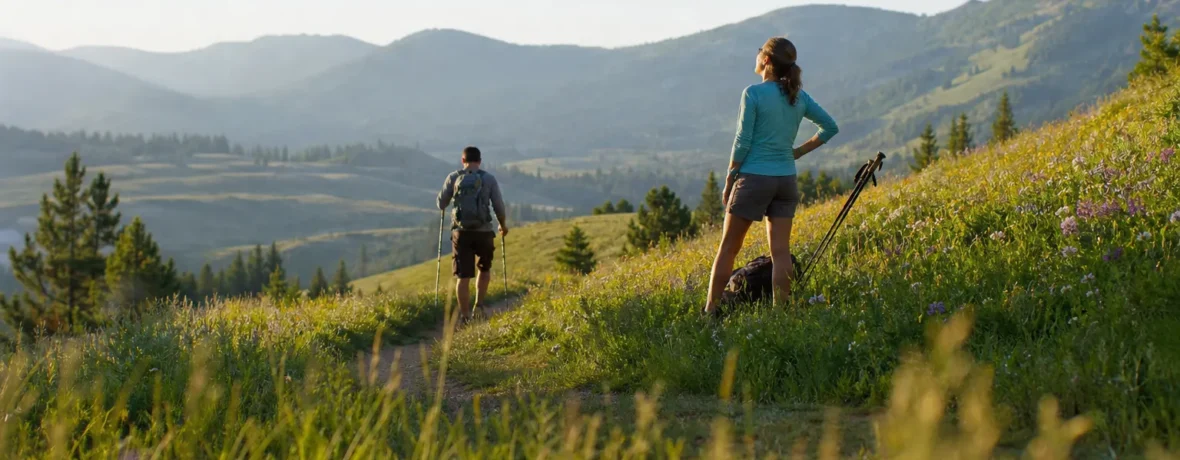
Slow hiking means choosing a pace you can sustain for hours: often 1 to 2 miles per hour [1.6 to 3.2 km/h] on rough terrain, faster on easy tread. Yes, it still counts. If your breathing stays controlled, your feet stay honest, and you finish wanting more trail, you’re doing it right.
What is slow hiking?
Slow hiking is hiking with pace as a tool, not a trophy.
It is not dawdling by accident. It is not being unfit. It is not failing to “crush” the trail. Slow hiking is the deliberate choice to move at a speed that lets you notice the place you came to see, manage your energy, and keep the day from turning into a spreadsheet with blisters.
That may mean stopping to identify a birdcall, stepping carefully through wet roots, letting a climb take 45 minutes instead of 25, or sitting on a rock long enough for your shoulders to drop. It may also mean hiking fewer miles and remembering more of them.
Trail culture loves numbers. Miles. Vert. Split times. Start times. Finish times. Peak counts. Gear weights measured to the ounce [gram]. Numbers are useful. They keep you safe, help you plan, and tell you when you need to turn around. But when numbers become the whole point, the hike shrinks. The map gets bigger than the mountain.
Slow hiking pushes back. Good.
Is slow hiking better than fast hiking?
Slow hiking is better when the point is attention, steadiness, safety, or joy.
Fast hiking has its place. If weather is coming in, daylight is running out, or you’re training for a long-distance objective, move with purpose. There is nothing noble about lingering under a thunderhead. But many hikers rush when nothing is chasing them. They hurry through wildflower meadows, hammer down descents, and treat lunch like a pit stop in a race no one entered.
That habit steals the best part of hiking: contact. You came outside to be where you are. Not where the trail ends. Not where the app says you should be. Here.
The strongest argument for slow hiking is not softness. It is precision. A slower pace gives you more time to read the trail surface, adjust layers before sweat soaks your shirt, drink before you’re dragging, and notice when a hot spot on your heel is about to become a problem. You make fewer sloppy decisions when you are not panting through them.
| Approach | Best for | Tradeoff |
|---|---|---|
| Fast hiking | Training days, big mileage, tight daylight, approaching storms | Less time to notice details; higher chance of rushing food, water, and foot care |
| Moderate hiking | Most day hikes, group trips, rolling terrain | Can still become autopilot if you never pause |
| Slow hiking | Nature watching, rough tread, recovery days, new hikers, reflective trips | Requires honest planning so you finish before dark |
How slow should you hike?
You should hike slowly enough that you can speak in short sentences without gasping.
For many hikers, that means 1 to 2 miles per hour [1.6 to 3.2 km/h] on rocky, steep, muddy, snowy, or rooty trails. On smooth paths, 2 to 3 miles per hour [3.2 to 4.8 km/h] may still feel relaxed. Elevation gain changes everything. A 3-mile [4.8 km] climb with 2,000 feet [610 m] of gain is not the same animal as 3 flat miles [4.8 km] along a lake.
Forget the pace you think you should hold. Use the trail’s feedback instead:
- If you keep tripping, slow down.
- If you stop enjoying the view because you’re watching only your boots, slow down.
- If your group is stretching into a long, quiet line, slow down and regroup.
- If every break turns into a collapse, slow down before the next break.
- If you finish with enough energy to make dinner, stretch, and smile, you nailed it.
A good slow hike is not lazy. It is controlled. There is a difference.
How do you plan a slow hike without wasting the day?
Plan fewer miles and give those miles more room.
The fear behind slow hiking is usually this: “If I go slower, I won’t do enough.” But enough for what? If the goal is a summit, fine. Build a plan that matches the summit. If the goal is a day outside that leaves you steadier than when you started, then ten rushed miles [16 km] may be less successful than four attentive ones [6.4 km].
Use this simple planning method:
- Pick the real goal. A viewpoint, a lake, a ridge, a waterfall, a lunch spot, or simply two hours outside.
- Cut the route before you need to. Choose a turnaround point in advance, not while tired and bargaining with yourself.
- Add time for stops. Build in 10 minutes each hour for water, layers, photos, snacks, map checks, and looking around.
- Start earlier than pride requires. An extra hour of daylight makes slow hiking feel luxurious instead of risky.
- Track daylight, not ego. If sunset is close, turn around. The mountain does not care how close you were.
The trail does not hand out refunds for rushing. You do not get a better forest because you moved through it faster.
What do you notice when you slow down on trail?
You notice the trail becoming a place instead of a corridor.
At high speed, a forest can blur into green. Slow down and it splits open: bark patterns, old burn scars, moss on the north side of a boulder, deer tracks pressed into mud, the colder air pooled near a creek. You hear water before you see it. You smell pine pitch warming in sun. You catch the small shift when a drainage turns damp, or when wind starts moving ahead of weather.
This is not sentimental fluff. Observation is a hiking skill. The more you notice, the better you move. You spot loose rock before your ankle does. You notice clouds stacking over the ridge. You see where other hikers have widened a muddy section and choose the durable line instead. You catch your own fatigue before it turns you careless.
Slow hiking makes you a better witness and, often, a better steward. People who actually see a place are less likely to treat it like a treadmill with trees.
Is slow hiking good exercise?
Yes, slow hiking can be solid exercise when it keeps you moving for sustained time.
The CDC recommends adults get 150 minutes of moderate-intensity aerobic activity each week, plus 2 days of muscle-strengthening activity. Hiking can help meet that aerobic target when your effort reaches a moderate level. The CDC describes moderate intensity as effort where you can talk but not sing, which is a useful field test on the trail.
Slow does not mean effortless. A gentle pace up a steady grade with a pack can raise your breathing and warm your legs without turning the day into punishment. That matters because the best exercise is the kind you will repeat. If “training” makes you dread the trail, you have built a poor system.
Slow hiking also spreads effort across more time. Instead of spiking hard early, you stay in the work. Knees, lungs, and mood often prefer that bargain.
What gear makes slow hiking easier?
The best gear for slow hiking keeps you comfortable during movement and stops.
When you move slowly, you may sweat less on climbs but cool faster during pauses. That makes layer management more noticeable. Pack for the pace you intend to keep, not the pace your most restless friend prefers.
- Light insulating layer: Useful for long snack breaks, windy overlooks, and shaded rests.
- Sit pad: A small luxury that turns damp logs and cold rocks into decent seats.
- Trekking poles: Helpful for rhythm, balance, creek crossings, and controlled descents.
- Paper map or offline map: Slow hikers still need to know where they are.
- Extra snacks: A longer day at lower intensity still needs steady fuel.
- Small first-aid kit: Especially blister care. Slow does not make your heels invincible.
- Headlamp: Bring one even for day hikes. Slow plans still meet delays.
Do not overpack in the name of comfort. Carrying 35 pounds [15.9 kg] for a mellow day hike is one way to make slow hiking feel like moving furniture uphill. Bring what supports the day. Leave the rest.
When to see a doctor
Get medical help right away for chest pain, fainting, or severe shortness of breath during a hike.
Slow hiking is not medical treatment, and a trail is a bad place to test symptoms you do not understand. The Mayo Clinic says unexplained shortness of breath needs prompt evaluation, especially when paired with chest pain, dizziness, fainting, nausea, or vomiting. Stop hiking and seek urgent help if those signs appear.
If you have a chronic condition, are returning after a long break, or feel pain or pressure in your chest, jaw, neck, or arms during activity, talk with a health professional before pushing harder. Keep the advice boring and alive: start gradually, listen early, and do not try to tough out warning signs.
Why slow hiking deserves more respect
Slow hiking deserves respect because it keeps the heart of hiking intact.
The outdoor world has borrowed too much language from productivity culture. Crush the hike. Bag the peak. Knock out the miles. Send it. There is energy in that language, and sometimes it fits. But use it too often and the trail becomes another place to perform.
You do not owe the internet a heroic pace. You do not owe your hiking partners a version of yourself that ignores sore knees, hunger, weather, or wonder. You owe the land your attention and yourself a day you can actually inhabit.
There is a quiet confidence in going slow. It says you are not embarrassed to look around. It says you can enjoy effort without worshiping suffering. It says the mountain is not a prop in your fitness diary.
Walk slower. Stop more. Let the loud hikers pass. Let the watch judge someone else. If you come home with mud on your cuffs, air in your lungs, and a clear memory of where the light hit the ridge, that was not a lesser hike.
That was the point.
Related reading
- Type 2 Fun: Why Hard Hikes Feel Good Later
- The Seven Summits Explained
- What Is Geocaching?
- What Is Hiking, Really? A Definition Worth Arguing About
FAQ
What is considered slow hiking?
Slow hiking is usually a deliberate pace of 1 to 2 miles per hour [1.6 to 3.2 km/h] on rough or steep terrain. On easier trails, it may be faster, but the key is steady breathing, regular awareness, and enough energy to finish well.
Is slow hiking still a workout?
Yes, slow hiking can still be a workout if it keeps you moving at moderate effort for sustained time. Use the talk test from the CDC’s physical activity guidance: if you can talk but not sing, you are likely working at moderate intensity.
How do I hike slower with faster friends?
Set the pace expectation before you start. Agree on regroup points, turnaround times, and a no-shame rule: nobody gets mocked for hiking at the speed that keeps them safe and happy.
Does slow hiking mean taking more breaks?
Not always. Slow hiking often means fewer desperate breaks because your effort stays controlled. Short, planned pauses for water, snacks, layers, and looking around usually work better than grinding until you crash.
Can slow hiking help beginners?
Yes, slow hiking is one of the best ways for beginners to build confidence. It gives new hikers time to learn footing, pacing, clothing adjustments, hydration habits, and basic trail judgment without feeling rushed.
When should I not hike slowly?
Do not hike slowly when conditions require efficient movement: incoming storms, fading daylight, extreme cold, route uncertainty, or a medical concern. Slow hiking is a choice for better days outside, not an excuse to ignore risk.