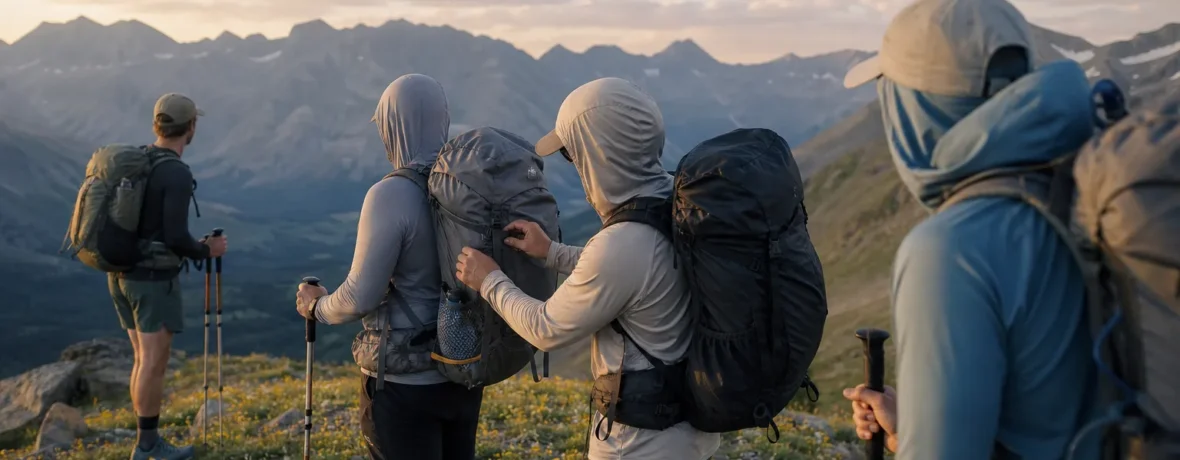
To learn how to become a backpacking guide, build solid personal trail experience, earn wilderness medicine training, practice group leadership, and work for an established outfitter before guiding on your own. Most entry-level guides need strong backpacking judgment, a current WFR or WFA, local terrain knowledge, and the stamina to carry group responsibility for full days.
How do you learn how to become a backpacking guide?
Start by becoming the person other hikers already trust outdoors.
A backpacking guide is not just a strong hiker with a map app. You are the trip planner, weather watcher, pace setter, cook coach, blister manager, campsite scout, group therapist, and the calm voice when the sky goes black at 3 p.m. That mix takes time.
- Build your own backpacking base. Take overnight trips in different seasons, on different terrain, with different partners. Learn what breaks, what rubs, what gets wet, and what actually matters after 10 miles [16 km].
- Get wilderness medical training. Many employers prefer Wilderness First Responder for overnight guides. NOLS lists its WFR as an 80-hour course, as of November 2026, through its Wilderness First Responder certification.
- Learn group management. Guiding is people work in muddy shoes. Practice pacing mixed-speed groups, explaining choices clearly, and spotting tired hikers before they say they are cooked.
- Study the land. Know the trails, water sources, weather patterns, wildlife rules, fire restrictions, and permit systems for the area where you want to guide.
- Work under a legal outfitter first. This is the cleanest path. You get mentoring, insurance coverage, operating procedures, and real clients without having to build the whole business on day one.
- Keep a professional trip log. Track dates, locations, distance, elevation gain, weather, group size, incidents, and lessons learned. A tight log helps with job applications and future permits.
The shortcut is not a magic certificate. The shortcut is stacking lots of small, real field decisions before you are paid to make them for strangers.
What does a backpacking guide actually do?
A backpacking guide turns a wild place into a safe, organized, meaningful trip for paying guests.
That starts long before boots hit dirt. Guides help screen guests, pack group gear, check food, review medical forms, plan routes, monitor forecasts, confirm permits, and create backup plans. On trail, you manage pace, morale, breaks, water, meals, navigation, campsite selection, sanitation, Leave No Trace practices, and risk.
You also teach. Not with a lecture voice. With short, useful moments: how to adjust a hip belt, where to pitch a tent in wind, why a water source may be unreliable in late summer, how to hang back without making a slower hiker feel like a problem.
- Plan daily mileage and turnaround options
- Check guest gear before departure
- Carry or manage group safety gear
- Monitor weather and changing trail conditions
- Teach low-impact camping and sanitation
- Cook or supervise backcountry meals
- Handle minor injuries within your training
- Communicate with dispatch, rangers, or emergency contacts when needed
- Write incident reports after the trip
The best guides make all of that look relaxed. It is not. It is constant attention, delivered with an easy face.
What qualifications do you need to be a backpacking guide?
You need field judgment, medical training, fitness, communication skill, and legal permission to guide where you work.
There is no single national backpacking guide license in the United States. Requirements shift by employer, state, land agency, activity, and location. A guide leading overnight trips in the Grand Canyon, Alaska, the Sierra Nevada, or the White Mountains may face very different hiring standards and land-use rules.
| Qualification | Why it matters | How to build it |
|---|---|---|
| Backpacking experience | You need judgment in weather, fatigue, gear failure, water planning, and camp selection. | Take repeated overnight trips and log each one with route, conditions, and lessons. |
| Wilderness medicine | Overnight trips put you hours from help. | Take WFA for basic roles or WFR for stronger overnight employability. |
| Navigation | Guests expect you to know where you are without guessing. | Practice map, compass, GPS, route notes, and off-route decision-making. |
| Group leadership | Mixed abilities, nerves, hunger, and weather can strain a group fast. | Lead volunteer hikes, youth trips, club outings, or assistant-guide days. |
| Permits and compliance | Commercial guiding on public land usually needs authorization. | Work for an outfitter or learn agency rules before selling trips. |
Fitness counts, but not in the flashy way. You need durable legs, a strong back, and the ability to think clearly after hours of climbing with a loaded pack. You do not need to be the fastest hiker. You need to be the most reliable one.
Do you need a degree to become a backpacking guide?
No, you usually do not need a college degree to guide backpacking trips.
Outdoor recreation, environmental studies, education, biology, parks management, and tourism degrees can help, especially if you want year-round work in outdoor education or program management. But many working guides are hired because they have a clean field resume, strong references, medical certification, local knowledge, and a calm way with guests.
If you are choosing between a degree and direct experience, be honest about your goal. Want to guide seasonally for an outfitter? Field time and certifications may move you faster. Want to manage programs, write curriculum, work for a land agency, or build a long-term outdoor career with benefits? A degree may open more doors.
Either way, you still need dirt time. No classroom replaces walking a tired group into camp before dark, getting dinner going, checking feet, watching weather, and making tomorrow’s plan while everyone else crawls into a sleeping bag.
What certifications should a backpacking guide get?
Get the certifications that match the remoteness and risk of the trips you want to lead.
For overnight backpacking, Wilderness First Responder is the big one. Some entry-level roles accept Wilderness First Aid, especially for frontcountry or short trips, but WFR is stronger for multi-day backcountry work. CPR is commonly paired with wilderness medicine training.
Useful certifications and trainings include:
- Wilderness First Responder: Best fit for multi-day backcountry guiding and remote settings.
- Wilderness First Aid: A shorter starting point for assistant roles, day hikes, and less remote programs.
- CPR/AED: Often required with first-aid credentials.
- Leave No Trace training: Guides should be fluent in the 7 Principles of Leave No Trace, not just able to recite them.
- Food handling training: Useful when preparing group meals for clients.
- Activity-specific training: Add climbing, paddling, skiing, or mountaineering credentials only if your trips include those activities.
Do not collect certificates like stickers on a bear can. Pick the ones that match the work. A hiring manager would rather see one current, relevant certification backed by logged field days than a pile of cards with no real experience behind them.
How much experience do you need before guiding overnight trips?
You need enough experience that normal backcountry problems do not rattle you.
There is no universal number of nights. Still, if you have only taken a few personal trips, you are not ready to be the lead guide for paying guests. You may be ready to assist. That is the sweet spot for many new guides.
Before applying, build a resume that shows:
- Multiple overnight backpacking trips in the region where you want to work
- Trips in rain, heat, cold, wind, or shoulder-season conditions
- Experience carrying a loaded pack for several consecutive days
- Comfort cooking, filtering water, and managing camp after dark
- Practice with map, compass, GPS, and paper route notes
- Examples of leading people, not just hiking alone
Guiding adds pressure because guests do unpredictable things. They overpack. They underpack. They hide hot spots until they become blisters. They forget to eat. They get quiet when scared. Your job is to notice early and fix small things before they turn into the story of the trip.
How do you get hired as a backpacking guide?
Apply before the season, show a clean field resume, and make yourself easy to trust.
Most backpacking guide jobs are seasonal. Hiring often happens months before summer, so do not wait until the trails melt out. Look at outfitters, outdoor schools, summer camps, conservation corps programs, youth expedition programs, and park concessioners.
Your application should be plain and strong. Skip the misty language. Say what you have done.
- List your wilderness medicine certification and expiration date
- Include your trip log summary: regions, nights, terrain, group sizes
- Name relevant skills: navigation, meal planning, bear-country travel, desert water planning, snow travel, youth leadership
- Share customer service experience, even if it came from restaurants, retail, teaching, or camp counseling
- Give references who have seen you lead, not just friends who know you hike
In interviews, expect scenario questions. What would you do if a guest refuses to drink water? What if lightning starts near a pass? What if one hiker is too slow to reach the planned campsite before dark? Employers listen less for heroic answers and more for calm process: assess, communicate, adjust, document.
Do you need permits to guide backpacking trips?
Yes, if you sell guided trips on public land, you usually need commercial authorization.
This is where many new guides get tripped up. Taking friends backpacking is one thing. Charging clients is another. On National Park Service land, a Commercial Use Authorization allows certain commercial visitor services inside a park, as described by the National Park Service CUA program, as of November 2026. On National Forest System lands, outfitting and guiding generally falls under special-use authorization; the Forest Service describes the process in its temporary outfitter and guide permit application guidance, as of November 2026.
Rules vary by unit. A permit for one forest, park, wilderness area, or district does not automatically cover another. Some places cap commercial use. Some require insurance. Some require operating plans, first-aid standards, guide lists, annual reports, or approved itineraries. Some areas are not accepting new operators for certain activities.
If you want to guide independently, call the land manager before you advertise a trip. Ask direct questions:
- Is commercial backpacking allowed in this area?
- What authorization is required?
- Are applications currently open?
- What insurance, operating plan, and medical requirements apply?
- Do overnight wilderness permits still need to be reserved separately?
- Are there group-size limits or campsite restrictions?
The clean beginner move is to work for an existing permitted outfitter. You learn the business while someone else handles the paperwork, insurance, agency reporting, and compliance deadlines.
What skills separate a great backpacking guide from a strong hiker?
A great guide reads people as well as terrain.
Strong hikers think about their own pace, food, layers, and goals. Guides think about everyone’s pace, food, layers, fears, feet, digestion, sleep, and confidence. That is a different game.
Work on these skills deliberately:
- Briefing: Tell guests what matters before they need it. Short, clear, no rambling.
- Pacing: Keep the group moving without making slower hikers feel punished.
- Observation: Watch gait, mood, speech, appetite, and decision quality.
- Teaching: Give one useful tip at a time. Then let people try.
- Risk management: Change the plan before conditions force you to change it.
- Conflict control: Handle snoring, speed gaps, food issues, fear, and ego early.
- Local interpretation: Know plants, geology, wildlife, fire history, and cultural context well enough to make the trail richer.
Guests remember the summit, sure. They also remember the guide who noticed they were cold, fixed a pack strap, made hot drinks before morale crashed, and never made them feel foolish.
How much do backpacking guides make?
Backpacking guide pay varies by employer, season, location, tips, and responsibility level.
Entry-level assistant guides usually earn less than lead guides. Guides with WFR, strong local knowledge, clean driving records, cooking skills, youth leadership experience, or specialty credentials tend to be more competitive. Multi-day guides may also receive meals during trips, staff housing, pro-deal access, or gratuities, depending on the company.
Ask employers these questions before you accept:
- Is pay hourly, daily, per trip, or salaried?
- Are pre-trip packing and post-trip cleaning paid?
- Are tips pooled or individual?
- Is staff housing available?
- Who pays for recertification?
- Are travel days paid?
- What is the expected number of field days per month?
The money can be seasonal and uneven. The career becomes more stable when you stack skills: backpacking in summer, snowshoeing or skiing in winter, outdoor education in spring and fall, operations work between trips, or program management once you have enough field credibility.
When to see a doctor
Get medical help fast for severe symptoms, worsening symptoms, or anything beyond your training.
Guides are not doctors. Your job is to recognize trouble, use your training, stop the trip from getting worse, and activate the right help. For heat illness, the CDC lists danger signs such as confusion, altered mental status, slurred speech, seizures, loss of consciousness, and very high body temperature as reasons to seek immediate care, as of November 2026, in its heat-related illness guidance.
Use your wilderness medicine protocols and your company emergency plan. If a guest has chest pain, trouble breathing, fainting, severe allergic reaction symptoms, major trauma, suspected heat stroke, severe cold injury, altered mental status, or symptoms that keep getting worse, stop treating the day like a normal hiking problem. Call for help.
Related reading
- How to Become a Mountain Guide
- How to Become a Hiking Guide: Certifications and Work
- How to Become a Park Ranger: Education, Steps and Timeline
- How to Become a Forest Ranger
FAQ
Here are the quick answers future guides ask most.
Can I become a backpacking guide with no professional experience?
Yes, but start as an assistant guide, intern, camp counselor, outdoor educator, or volunteer trip leader. You need supervised experience before you take full responsibility for paying clients overnight.
Is Wilderness First Responder required for backpacking guides?
Not everywhere, but it is one of the strongest baseline credentials for overnight guiding. Some employers accept Wilderness First Aid for entry-level or frontcountry roles, while many remote or multi-day programs prefer WFR.
Can I guide backpacking trips on my own?
Yes, but only if you have the required commercial permissions, insurance, operating plan, and business setup for the land where you work. Public land rules vary by agency and location, so verify before selling any trip.
How fit do you need to be to guide backpacking trips?
You need to hike steadily with a loaded pack while still thinking clearly and helping others. Speed matters less than endurance, recovery, balance, and the ability to work after camp chores begin.
What is the fastest path into paid guiding?
The fastest clean path is to get WFR or WFA, build a trip log, lead volunteer outings, and apply to established outfitters as an assistant guide. That gets you field mentoring and legal coverage while you learn the job.