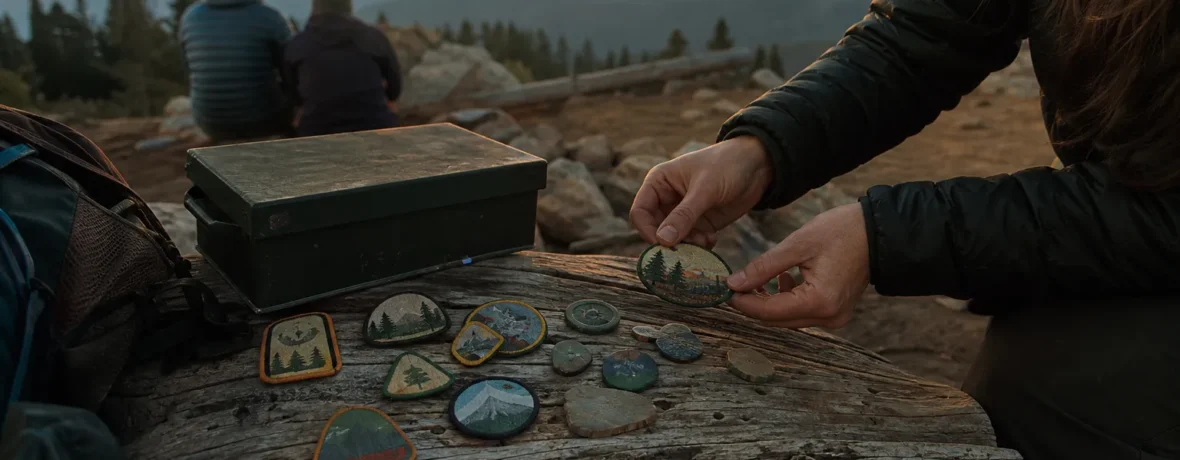
A trail name is a hiking nickname used instead of your legal name, especially on long-distance trails. You can choose one yourself or receive one from other hikers after a memorable habit, mishap, skill, or story. There is no official registry, no fee, and no rule that every hiker must have one.
What is a trail name?
A trail name is your on-trail identity.
It is the name other hikers use when they meet you at a shelter, write about you in a trail register, tag you in a group photo, or ask, “Has anyone seen Noodles today?” On trails with a strong thru-hiking culture, a trail name can follow you from town to town faster than your actual face does.
The Appalachian Trail Conservancy describes trail names as a tradition on the A.T. and in the wider hiking community, and says they may be chosen by the hiker or given by others. That covers the core of it. A trail name is informal, social, and personal. It belongs to the culture of people who spend days, weeks, or months moving through the same dirt corridor.
Trail names are common on long trails like the Appalachian Trail, Pacific Crest Trail, Continental Divide Trail, Long Trail, and John Muir Trail. You may also hear them on local backpacking trips, at hiker hostels, in shuttle vans, or during trail work weekends. Day hikers can have trail names too, but the tradition really shines when people keep running into each other over time.
Why do hikers use trail names?
Hikers use trail names because they make the trail feel like its own small world.
Out there, you may meet five Mikes, three Sarahs, and two guys named Chris before lunch. But you will remember “Pickle Jar,” “Switchback,” “Frosting,” and “Lost Sock.” A good trail name carries a story, and stories are the glue of hiking culture.
Trail names also give people a bit of freedom. For a while, you are not your job title, your inbox, your family role, or the person who has to sit in traffic every Tuesday. You are “Turtle,” and Turtle just crushed a climb, ate ramen with peanut butter, and is asleep by 8:15 p.m. That reset is part of the appeal.
They help with practical communication too. The Appalachian Trail Conservancy tells thru-hikers to share their trail name with a trusted support person when checking in, which makes sense if people along the route know you by that name rather than your legal one. See the ATC’s thru-hiker FAQs for that safety-minded advice.
How do hikers get a trail name?
Most hikers get a trail name from a story that sticks.
Sometimes another hiker gives it to you after one perfect moment. Sometimes a group jokes around for days until one name wins. Sometimes you walk into your first trail town with no name and leave with one because you ate four breakfasts, patched your pants with duct tape, or kept mispronouncing a mountain.
Common ways hikers get trail names include:
- A funny mistake. You hang your food bag upside down, take the wrong side trail twice, or call a marmot a beaver for a full week.
- A repeated habit. You always stop for coffee, always hike in a sun hoodie, always lose your spoon, or always know where the next water source is.
- A piece of gear. Your giant hat, tiny pack, bright socks, cracked trekking pole, or absurdly organized ditty bag becomes your signature.
- A food obsession. Tortillas, instant mashed potatoes, gummy bears, tuna packets, hot sauce, or Pop-Tarts can absolutely do the naming.
- A personality trait. Calm, chatty, speedy, stubborn, quiet, cheerful, dramatic, or deeply attached to afternoon naps.
- A trail event. A storm, a river crossing, a rough climb, a town stop, or a heroic blister-care session gives everyone a story to repeat.
The best trail names feel earned, but not forced. They make people grin. They are easy to say. They do not need a five-minute explanation, though the backstory can be gold around a picnic table.
Can you choose your own trail name?
Yes, you can choose your own trail name.
Some hikers prefer to wait until the trail names them. That is the old-school style: let the miles, weather, weird snacks, and campfire teasing do their work. But there is no trail court with a gavel. If you already have a nickname you like, use it.
Self-chosen names work best when they sound natural and have a reason behind them. Maybe it is a childhood nickname, a name from past hiking partners, or something tied to your pace, background, or gear. What does not work as well? A name that feels like a superhero costume you bought before touching the trail.
Here is the straight talk: if you introduce yourself with a self-given trail name, people will usually roll with it. If the name feels too polished, too tough, or too try-hard, the trail may rename you anyway.
| Type of trail name | How it happens | Best for |
|---|---|---|
| Given by other hikers | A name grows from a funny moment, habit, or shared story | Hikers who want the classic long-trail experience |
| Chosen by you | You start using a nickname that already fits | Hikers who already have a meaningful name |
| Group-created | A trail family tosses around ideas until one sticks | Hikers who spend steady time with the same people |
| Changed later | You drop an old name or accept a better one | Anyone whose first name no longer fits |
What makes a good trail name?
A good trail name is memorable, kind, and easy to use.
Short names work well because hikers are tired, hungry, and shouting across windy ridgelines. Two or three syllables are often plenty. “Rocket,” “Miso,” “Bluebird,” “Stumbles,” and “Ridgeline” all beat a name that requires a subtitle.
A strong trail name usually has at least one of these qualities:
- It tells a story. People ask about it, and the answer is fun.
- It fits the person. The name sounds right after one day, then perfect after ten.
- It is easy to spell. Trail registers, texts, and hostel whiteboards are messy enough.
- It is not cruel. Teasing is part of trail culture. Humiliation is not.
- It can be said in public. If a shuttle driver, ranger, or kid at a campground hears it, nobody has to wince.
The trail can be rowdy, but the name should still respect the person wearing it. Leave No Trace includes being considerate of other visitors as one of its core outdoor ethics; that spirit applies to people as much as campsites. The National Park Service has a clear summary of the Leave No Trace Seven Principles.
What are the unwritten rules of trail name etiquette?
The main rule is simple: the hiker gets final say.
A trail name should never feel like a brand someone else burned into your pack strap. If a name bothers you, say no. If someone else says no, drop it. No debate. No “come on, it’s funny.” A trail name only works when the person accepts it.
Use this checklist before giving or using a trail name:
- Does the hiker like it?
- Is it based on a shared story rather than an insult?
- Would it still feel okay after a hard day?
- Can the hiker introduce themselves with it without embarrassment?
- Does it avoid slurs, body shaming, race, religion, disability, and private information?
- Is it easy to say, hear, and write in a trail register?
Also, do not use a trail name to dodge accountability. Rangers, hostel owners, shuttle drivers, volunteers, and other hikers are real people doing real work. Be decent. The Pacific Crest Trail Association’s Leave No Trace guidance is aimed at land stewardship, but the same courtesy keeps trail communities healthy.
Do you need a trail name to thru-hike?
No, you do not need a trail name to thru-hike.
You can hike every mile under your given name and be just as much a hiker as anyone named “Banana Pants.” A trail name is culture, not a credential. It does not prove your toughness, distance, pace, or belonging.
That said, if you spend weeks around other long-distance hikers, a name may happen whether you planned for it or not. The trail has a way of sanding down formal introductions. After enough rain, ramen, sweat, and shared misery, nicknames start to make more sense than driver’s-license names.
How should you introduce yourself on trail?
Introduce yourself with the name you want people to use.
If you have a trail name, say it casually: “Hey, I’m Scout.” If you do not have one, say your first name. Nobody needs a speech. Nobody needs an origin story unless they ask.
In trail registers, many hikers sign with a trail name, date, direction of travel, and a short note. Keep safety in mind. Avoid writing your full legal name, home address, phone number, or exact solo camping plan in public registers. Share detailed plans with a trusted person off trail instead.
If someone tells you their trail name, use it. If you forget, ask again. That is normal. Everyone is running on snack calories and poor sleep.
Can you change your trail name?
Yes, you can change your trail name whenever you want.
Maybe the first one never fit. Maybe it came from a rough moment you would rather leave behind. Maybe another name catches on naturally after 300 miles [483 km]. That is fine. The trail is not a passport office.
If you are changing it mid-hike, make it easy for people. Say, “I’m going by Juniper now.” Sign registers consistently for a while. Tell your hiking partners and anyone back home who uses your trail name for check-ins. Then keep walking. The new name will either stick or fade.
Related reading
- What Is Trail Magic?
- Youngest and Oldest Appalachian Trail Thru-Hikers
- What Is a Trail Angel?
- Who Built the Appalachian Trail?
FAQ
What is a trail name in hiking?
A trail name is a nickname used by hikers on trail. It often comes from a habit, funny story, gear choice, food craving, or personality trait.
Who gives you a trail name?
Other hikers often give you a trail name, but you can choose your own. The best version is the one you actually like and want to answer to.
Can two hikers have the same trail name?
Yes, two hikers can have the same trail name. There is no official database, and common names like “Turtle,” “Sunshine,” or “Bear” show up on more than one trail.
Is it bad luck to name yourself?
No, naming yourself is not bad luck. Some hikers prefer the tradition of being named by others, but a self-chosen name is acceptable if it fits and you use it naturally.
What if I hate the trail name someone gives me?
Say no and move on. A trail name should be fun, not a punishment, and nobody gets to force one on you.
Do section hikers get trail names?
Yes, section hikers can have trail names. The tradition is most visible among thru-hikers, but anyone who spends time in hiking communities can use one.