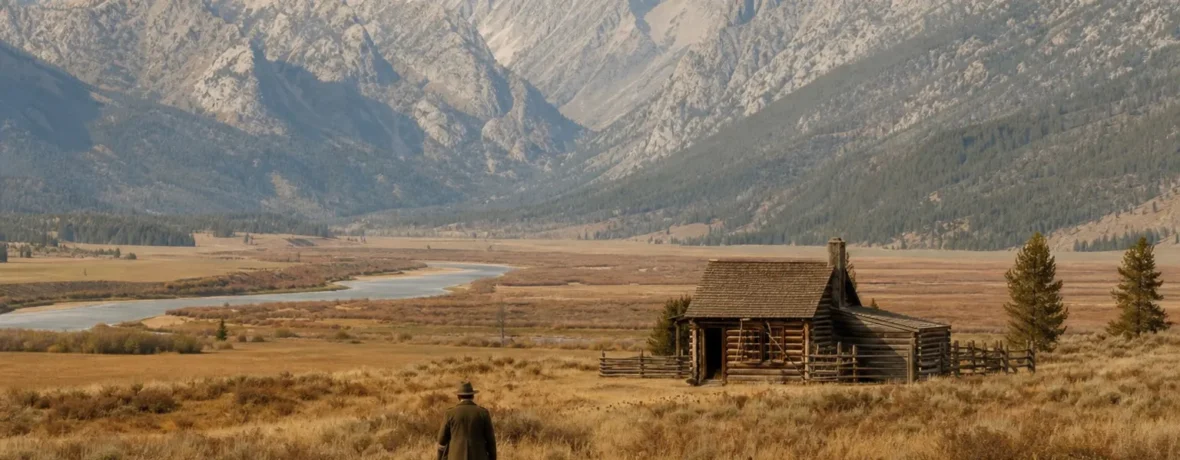
The history of national parks began with a radical 19th-century idea: some land should not be sold, mined, fenced, or owned by the rich. Yosemite was protected in 1864, Yellowstone became the first national park in 1872, and the National Park Service was created in 1916 to protect parks for public use.
What is the history of national parks in the United States?
The short version: national parks began as a public-land experiment, then became a national promise.
That promise was simple on paper and messy on the ground. The United States had vast western landscapes that politicians, railroad boosters, scientists, artists, settlers, Indigenous nations, miners, and hunters all valued for different reasons. By the mid-1800s, Americans were starting to argue that a few extraordinary places should be held back from private sale.
That argument first became law with Yosemite. On June 30, 1864, during the Civil War, President Abraham Lincoln signed legislation granting Yosemite Valley and the Mariposa Grove of giant sequoias to California for public use and preservation. The National Archives’ Yosemite Act history describes this as federal protection under state management, not yet a national park in the modern sense.
Eight years later, Congress went bigger. On March 1, 1872, President Ulysses S. Grant signed the Yellowstone National Park Protection Act. Yellowstone was set aside as a “public park or pleasuring-ground” and placed under federal control. The National Archives record of the Yellowstone Act identifies it as the first federally protected national park.
Here’s the position hikers should take: the park idea was one of America’s best public-land moves, but it was never pure. It protected mountains, geysers, forests, wildlife, and trails from private extraction. It also often erased the Native people who already knew, used, named, and cared for those places. You can love the parks harder when you tell the whole story.
Who created the first national park and why?
Congress created Yellowstone National Park in 1872 because scientists, artists, explorers, and lawmakers argued that its geysers, hot springs, canyons, and wildlife were too rare to be privatized.
Yellowstone did not happen because one person had a campfire epiphany. That tidy myth has hung around too long. The real story had survey reports, political lobbying, federal power, and persuasive images. Ferdinand Hayden’s 1871 geological survey, William Henry Jackson’s photographs, and Thomas Moran’s paintings helped convince lawmakers that Yellowstone was not just another chunk of western real estate.
The best part of that decision was its nerve. Congress looked at land that could have been carved into claims and said no. Not this one. Keep it public.
The hard part is what “public” meant in 1872. The public was not treated equally. Indigenous nations had deep connections to the Yellowstone region long before park designation, and the creation of the park was tied to forced removal and exclusion. The National Park Service now acknowledges that the Yellowstone law led to the forced removal of Indigenous Tribes from the area in its article on President Grant and the Yellowstone National Park Protection Act.
Was Yellowstone really the first national park?
Yes, Yellowstone was the first U.S. national park, but Yosemite helped create the idea before Yellowstone got the title.
This distinction matters. Yosemite was protected first, in 1864, but it was granted to the state of California. Yellowstone, in 1872, became the first national park managed by the federal government. That is why both places show up at the trailhead of the national park story.
| Place | Date | Why it matters |
|---|---|---|
| Yosemite Valley and Mariposa Grove | June 30, 1864 | First major federal action to protect scenic land for public use, under California management |
| Yellowstone National Park | March 1, 1872 | First federally protected national park |
| National Park Service | August 25, 1916 | Created a single agency to manage national parks and related federal park areas |
So if someone at a campsite says, “Yosemite was first,” don’t throw a pinecone. They’re reaching for a real point. Yosemite was first as a protected public landscape. Yellowstone was first as a national park.
How did the National Park Service begin?
The National Park Service began in 1916 because the country had parks but no unified system to run them.
For decades after Yellowstone, parks were managed unevenly. Some had little money. Some had military oversight. Some faced poaching, vandalism, grazing pressure, logging threats, and tourist development with no consistent rules. The country had protected places, but not yet a coherent park service.
That changed when President Woodrow Wilson signed the Organic Act on August 25, 1916. The law gave the new National Park Service a mission that still defines the tension every hiker feels: parks are for enjoyment, but they must be left unimpaired for future generations. The National Park Service policy summary of the Organic Act lays out that dual mandate.
That tension is not a flaw. It is the whole job. Let people in. Hold damage back. Build trails, but not everywhere. Welcome crowds, but protect wildlife. Let a kid see a Sequoia, a wolf, a desert arch, or a glacier-polished valley and still leave enough silence for the next kid.
What steps turned scenery into a national park system?
The national park system grew through law, public pressure, science, tourism, and a changing idea of what deserves protection.
- Protect one place first. Yosemite proved that scenic land could be reserved for public use instead of sold.
- Make the idea federal. Yellowstone showed that Congress could create a national park across territorial land.
- Repeat the model. More parks followed as Americans began valuing canyons, volcanoes, forests, caves, battlefields, and cultural sites as public heritage.
- Create an agency. The National Park Service gave scattered parks a shared mission and management structure.
- Broaden the story. Over time, the system expanded beyond “big scenery” to include historic places, civil rights sites, seashores, rivers, trails, and cultural landscapes.
That last step matters most now. A park system that only protects postcard views is too small for the truth. The land has geology, wildlife, water, labor history, Native history, migration stories, war stories, and recreation culture braided together. Trails cross all of it.
What is the dark side of national park history?
The dark side is that many parks were built on the removal, exclusion, or marginalizing of Indigenous peoples.
This does not cancel the value of parks. It makes the value more demanding. If you are going to hike these places, you should know whose homelands you are walking through and how “wilderness” was often marketed as empty when it was not empty at all.
Yellowstone is a clear example. The park landscape had been used by Native peoples for thousands of years for hunting, fishing, gathering plants, quarrying obsidian, and cultural practices. The NPS page on historic tribes connected to Yellowstone explains that many tribes and bands used the area before and after European American arrival.
For hikers, this should change behavior, not just language. Read the tribal history pages before a trip. Respect closures. Stay out of archaeological sites. Don’t pocket flakes, pottery, bones, or “cool old stuff.” Public land is not a souvenir bin.
How did national parks change hiking in America?
National parks made hiking a mainstream way to experience protected public land.
Before parks, walking through mountains and canyons was often work: hunting, herding, prospecting, surveying, military travel, Indigenous travel, or local movement. Parks helped turn walking for pleasure, education, health, and awe into a national habit.
They also gave hikers a shared map. Trail signs. Ranger talks. Backcountry routes. Campgrounds. Scenic roads leading to trailheads. The parks did not invent walking, of course. But they gave millions of people a reason to lace up and see public land at human speed.
That comes with responsibility. A trail is not just a dirt line to a view. It is a management tool. It concentrates impact, protects fragile ground, and tells you where your boots belong.
- Stay on established trails when they exist.
- Learn the Indigenous history of the park you visit.
- Pack out trash, food scraps, and toilet paper.
- Give wildlife distance, even when other visitors do not.
- Use shuttles or less-crowded trailheads when a park is under pressure.
- Support funding for maintenance, rangers, science, and cultural resource protection.
Why does this history still matter to hikers?
It matters because every hike in a national park rests on choices people made before you arrived.
Some choices were brilliant. Keep Yellowstone public. Protect Yosemite’s granite walls and sequoias. Create one agency with a conservation mission. Build trails that let ordinary people, not just wealthy resort guests, reach extraordinary places.
Some choices were brutal. Remove Native people. Pretend inhabited homelands were untouched wilderness. Favor tourist comfort over ecological limits. Build roads, hotels, and viewpoints first, then deal with the consequences later.
The honest position is this: national parks are worth defending because they are public, protected, and still capable of teaching humility. But defending them means refusing the cartoon version of their past. You can admire the arch, the geyser, the canyon, and the old-growth forest while also admitting the system was born from conflict, politics, displacement, and compromise.
That is not cynicism. That is grown-up gratitude.
Related reading
- Why National Parks Matter
- Underrated National Parks Worth Your Time
- Are National Parks Too Crowded?
- Should National Parks Charge More?
FAQ
When did the history of national parks begin?
The U.S. national park idea began in law with the Yosemite Grant in 1864. The first federally protected national park, Yellowstone, was created on March 1, 1872.
What was the first national park?
Yellowstone was the first U.S. national park. Yosemite was protected earlier, but it was first granted to California rather than created as a federally managed national park.
Who started the National Park Service?
Congress created the National Park Service through the Organic Act, signed by President Woodrow Wilson on August 25, 1916. The agency was created to manage national parks and related protected areas under one mission.
Why were national parks created?
National parks were created to protect exceptional natural and cultural places from private exploitation and preserve them for public use. That purpose has always carried tension: people should enjoy parks, but not use them up.
Were Indigenous people living in national park areas?
Yes, many national park landscapes were Indigenous homelands long before park boundaries existed. In several parks, preservation came with removal, exclusion, or restrictions on Native access, and that history belongs in any honest account.
What should hikers take from this history?
Hikers should treat national parks as shared inheritance, not outdoor entertainment venues. Learn the history, stay on durable routes, respect cultural sites, and push for protection that serves both the land and the full truth of the people connected to it.