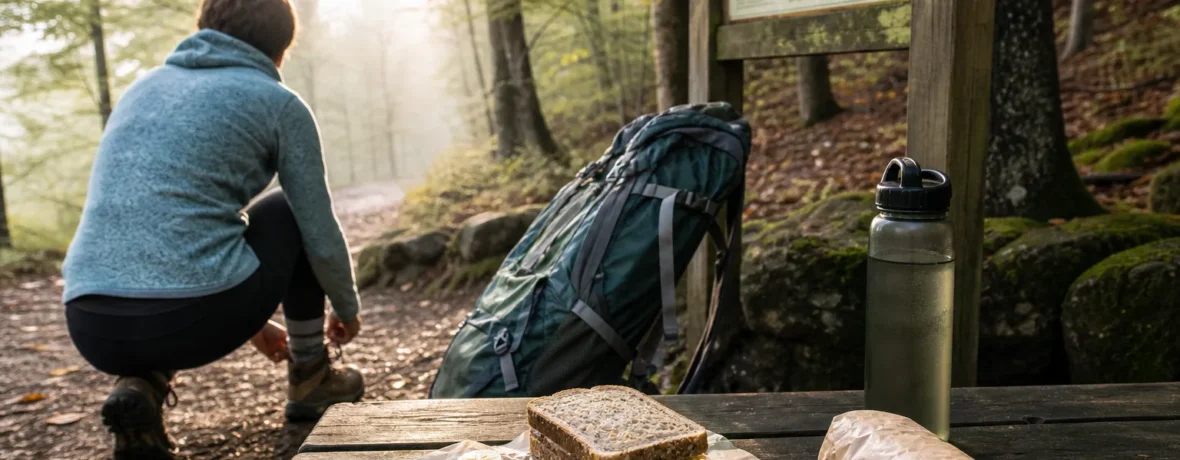
Before a hike, eat mostly carbohydrates, a little protein, low-to-moderate fat, and drink fluids. Eat a full meal 3 to 4 hours before you start, or a 150- to 300-calorie snack 30 to 60 minutes before. Keep it familiar, easy to digest, and not greasy.
What to eat before a hike for steady energy?
Eat carbs first, then add protein and a small amount of fat.
Your hiking engine runs best when you give it quick-access fuel before the first climb. Carbohydrates are the easiest fuel for your body to use during steady movement, and the NIH MedlinePlus sports nutrition guide says carbs are useful before exercise lasting longer than 1 hour. That fits most trail days.
Think simple, not fancy. A good pre-hike plate can be oatmeal with banana and peanut butter, toast with eggs and fruit, rice with chicken, or a bagel with cream cheese and a side of berries. You are not trying to win a cooking show. You are trying to leave the trailhead with energy in the tank and a calm stomach.
A strong pre-hike meal usually includes:
- Carbs: oats, rice, potatoes, pasta, tortillas, bread, bagels, cereal, fruit, or granola.
- Protein: eggs, Greek yogurt, turkey, chicken, tofu, beans, cottage cheese, or nut butter.
- Fat: avocado, nuts, seeds, olive oil, cheese, or peanut butter in small portions.
- Fluid: water, milk, tea, or a drink with electrolytes if the hike will be hot, sweaty, or long.
For a short, easy hike under 60 minutes, you may only need your normal meal pattern and water. For a long hike, big elevation gain, heat, snow travel, or a loaded backpack, eat with more intention. A bigger day burns through fuel faster.
When should you eat before a hike?
Eat a full meal 3 to 4 hours before hiking, or a small snack 30 to 60 minutes before the trailhead.
Timing matters because digestion competes with movement. If you crush a huge breakfast and start climbing 10 minutes later, your stomach may complain. If you skip food and start with an empty tank, your legs may feel flat by the first overlook.
Use this timing table as your trailhead cheat sheet:
| Time before hike | Best choice | Examples | Avoid |
|---|---|---|---|
| 3 to 4 hours | Full meal | Oatmeal, eggs, toast, fruit; rice bowl with chicken; pasta with lean protein | Huge fried meals, very spicy food |
| 1 to 2 hours | Light meal | Bagel with nut butter; yogurt with granola; turkey wrap; cereal with milk | Heavy cream sauces, large portions of beans |
| 30 to 60 minutes | Small snack | Banana, applesauce pouch, fig bar, toast with jam, pretzels | Big protein shakes, greasy breakfast sandwiches |
If your hike starts at dawn, you do not need a banquet at 4:30 a.m. Eat a solid dinner the night before, then take in a small breakfast you can tolerate: banana and toast, instant oats, a granola bar, or yogurt. Pack the rest of your calories for the trail.
What to eat before hike if you only have 30 minutes?
Choose fast carbs with little fat and little fiber.
When the car is packed, your boots are on, and the group is waiting, your best move is a small snack that gets out of your stomach quickly. Go for 150 to 300 calories. That is enough to raise energy without making you feel like you swallowed a brick.
Good 30-minute options include:
- 1 banana
- 1 applesauce pouch
- 1 slice of toast with jam
- 1 fig bar or soft oat bar
- 1 small bowl of cereal
- A few pretzels and dried fruit
- Half a bagel with honey
Skip the huge handful of almonds right before you climb. Skip the bacon-heavy breakfast burrito. Fat and fiber can be useful later in the day, but right before hiking they slow digestion. Save the dense stuff for a longer break.
What should you eat before a long hike?
Eat a larger carb-rich meal, then keep eating small amounts during the hike.
For hikes longer than 3 hours, breakfast is only the start. You need a plan that carries you past mile 4, past the steep switchbacks, and all the way back to the car. Start with a full meal 3 to 4 hours ahead when possible. Then pack snacks you can eat without stopping for a full lunch every time.
A dependable long-hike breakfast can look like this:
- Pick one main carb: oatmeal, bagel, rice, potatoes, pancakes, tortillas, or cereal.
- Add protein: eggs, yogurt, tofu, chicken, turkey, milk, or nut butter.
- Add color: banana, berries, orange, melon, or another fruit you digest well.
- Add salt if the day will be sweaty: pretzels, salted potatoes, soup, or a breakfast wrap with a salty filling.
- Drink before you leave: start hydrated, then sip to thirst on trail.
Once hiking, nibble early. Do not wait until you feel hollow, cranky, or shaky. For many hikers, a few bites every 45 to 60 minutes works better than one massive lunch. Pack foods that still sound good after they have been riding in your hip belt pocket for hours.
Trail snack ideas for long days:
- Tortillas with peanut butter and honey
- Cheese and crackers
- Trail mix with dried fruit
- Energy bars you have already tested
- Salted nuts plus fruit leather
- Boiled potatoes with salt
- Jerky plus pretzels
- Gummy candy or chews for steep climbs
What foods should you avoid before hiking?
Avoid foods that are greasy, unfamiliar, very spicy, or huge in volume.
The worst pre-hike food is not always “bad” food. It is food that hits your gut at the wrong time. A giant salad can be healthy at lunch and still be a poor choice 20 minutes before a steep climb. A greasy diner plate can taste perfect at 8 a.m. and feel terrible at 8:45.
Be careful with these before you hike:
- Greasy foods: fried chicken, heavy breakfast sandwiches, fries, and greasy pizza.
- Very high-fiber meals: giant bean bowls, huge salads, bran-heavy cereal, and large portions of lentils.
- New foods: untested bars, powders, gels, or gas-station experiments.
- Too much dairy: only if it bothers your stomach during movement.
- Alcohol: it can worsen dehydration risk, coordination, and judgment.
- Oversized meals: even good food can backfire when you eat too much right before climbing.
Coffee is personal. If you drink it every morning and it treats you well, fine. If it sends you sprinting for a bathroom, do not test your luck at a trailhead with one vault toilet and six people in line.
How much water should you drink before a hike?
Start hydrated, then drink to thirst rather than forcing water nonstop.
The CDC water guidance says fluid needs vary by activity level, heat, age, sex, pregnancy status, and other factors. Hiking adds sweat, sun, wind, altitude, and pack weight, so your needs can change from one trail day to the next.
A practical pre-hike routine: drink water with breakfast, sip during the drive, and start the trail without feeling thirsty. Your urine should usually be pale yellow, not dark amber and not clear all day. On hot hikes, salty hikes, or big climbs, bring electrolytes or salty snacks so you are not relying on plain water alone.
Do not turn hydration into a chugging contest. The Mayo Clinic overview of hyponatremia warns that drinking excessive water during endurance activities can dilute blood sodium. The Wilderness Medical Society hyponatremia guideline also identifies sustained overhydration during exercise as the main risk factor for exercise-associated hyponatremia.
Plain English: drink, but do not drown yourself. Eat salty foods when you are sweating for hours. Pay attention to your body.
What should you eat the night before a hike?
Eat a normal, satisfying dinner with carbs, protein, salt, and fluids.
The night-before meal is where many hikers either set themselves up well or make the morning harder. This is not the moment for a huge greasy feast or a brand-new spicy dish. Eat food you already know.
Good night-before dinners include:
- Rice bowl with chicken or tofu, vegetables, and soy sauce
- Pasta with tomato sauce, lean meat, and a side of bread
- Bean and rice burrito if beans sit well with you
- Salmon, potatoes, and vegetables
- Soup with noodles or rice, plus toast
- Pizza with a lighter topping load if your stomach handles it
Carbs at dinner help stock your energy stores. Protein helps repair tissue from training and daily life. Salt helps replace what you may lose in sweat the next day. Water helps, too, but again, steady sipping beats panic-chugging.
How do you choose food for different kinds of hikes?
Match your food to the hike length, intensity, weather, and your stomach.
A flat 2-mile [3.2-km] nature loop does not need the same fueling plan as a 14-mile [22.5-km] ridge hike with 3,000 feet [914 m] of gain. The harder the day, the more your food needs to be planned instead of grabbed at random.
| Hike type | Pre-hike food | Pack this |
|---|---|---|
| Easy hike under 1 hour | Normal meal or small snack | Water, small snack if desired |
| Half-day hike | Carb-rich breakfast with protein | 2 snacks, water, salty option |
| Full-day hike | Full meal 3 to 4 hours before | Snacks every 45 to 60 minutes, lunch, electrolytes if hot |
| Hot or high-sweat hike | Meal with fluids and salt | Water, electrolytes, salty snacks, easy carbs |
Cold hikes can trick you because you may sweat under layers but feel less thirsty. Hot hikes can crush appetite, so softer foods, fruit, chews, and drink mixes may go down easier. High-altitude hikes can also blunt hunger. Pack foods that are easy to eat even when you do not feel excited by lunch.
What is the best pre-hike breakfast?
The best pre-hike breakfast is familiar, carb-forward, and easy on your stomach.
If you want one default breakfast, use oats, banana, and nut butter. It is simple, packable, and easy to scale. Add a pinch of salt if you like it. Drink water or tea alongside it.
Other strong breakfasts:
- Bagel with peanut butter and sliced banana
- Greek yogurt with granola and berries
- Egg and potato breakfast bowl
- Toast with eggs and fruit
- Rice with scrambled eggs and soy sauce
- Instant oatmeal with raisins and walnuts
- Tortilla with eggs, cheese, and salsa if spice sits well with you
If you get nervous before hard hikes, keep breakfast smaller and pack extra trail snacks. A calm stomach is better than a “perfect” breakfast you cannot digest.
When to see a doctor
Get medical help fast for confusion, fainting, chest pain, severe shortness of breath, repeated vomiting, or symptoms that do not improve with rest.
Food and hydration advice cannot diagnose trail problems. Weakness, headache, nausea, dizziness, cramps, and confusion can come from different causes, including heat illness, low blood sugar, dehydration, overhydration, altitude illness, infection, or a medical condition. Some look similar in the field.
Talk with a clinician before hard hikes if you have diabetes, kidney disease, heart disease, a history of fainting, an eating disorder, severe food allergies, pregnancy-related concerns, or if you take medications that affect fluid or sodium balance. If someone develops altered mental status, collapses, has a seizure, or cannot keep fluids down, treat it as urgent and seek emergency care.
Related reading
- Cardio Before or After Weights?
- What Sherpas Eat at Altitude
- How Many Steps in a Mile (Walking vs Hiking)?
- What Is the Best Cardio for Hikers?
FAQ
Is it better to hike on an empty stomach?
No, not for most hikes longer than 1 hour. A small carb-rich snack before hiking usually gives you steadier energy than starting with nothing.
What should I eat 1 hour before hiking?
Eat a light snack with easy carbs. Good picks include a banana, toast with jam, a granola bar, applesauce, pretzels, or half a bagel.
Should I eat protein before a hike?
Yes, but keep it moderate. Protein helps you feel satisfied, but a huge protein-heavy meal right before hiking can sit heavily because carbs are the faster trail fuel.
Are energy bars good before hiking?
Yes, if you have tested them before. Choose a bar with carbs, a little protein, and ingredients your stomach already handles well.
What should I drink before a hike?
Water is the default choice. For hot, long, or sweaty hikes, an electrolyte drink or salty foods can help you replace sodium while you drink to thirst.
What foods give quick energy for hiking?
Fast carbs give quick energy. Try bananas, dried fruit, applesauce, pretzels, jam on toast, chews, or a soft bar when you need fuel close to the start or during a climb.