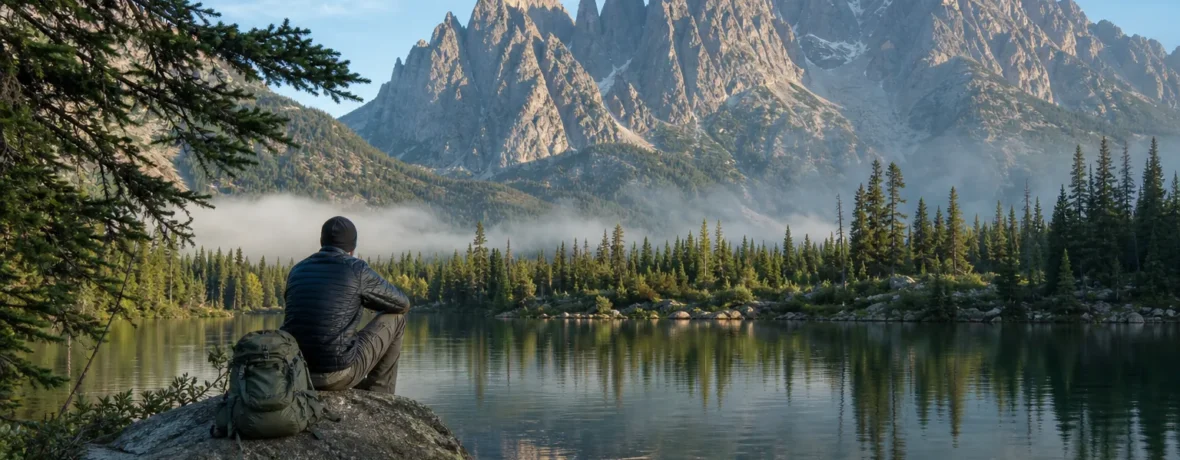
What national park is in Wyoming? Two official “National Park” units are in Wyoming: Yellowstone National Park and Grand Teton National Park. The National Park Service also lists other Wyoming units, including monuments, historic trails, a historic site, and a recreation area, but only those two carry the National Park designation.
What national park is in Wyoming?
Wyoming has Yellowstone National Park and Grand Teton National Park.
That’s the clean answer. Yellowstone sits mostly in Wyoming, with small portions in Montana and Idaho. Grand Teton is fully in northwest Wyoming, just south of Yellowstone. The National Park Service Wyoming page lists both as National Parks, alongside other NPS-managed places in the state such as Devils Tower National Monument, Fossil Butte National Monument, Fort Laramie National Historic Site, Bighorn Canyon National Recreation Area, and several national historic trails.
If you are planning a hiking trip, think of the pair like this: Yellowstone is the big, volcanic, wildlife-heavy park with geysers, thermal basins, broad valleys, and long backcountry routes. Grand Teton is the sharper mountain park, with lakes, canyons, alpine terrain, and the Teton Crest Trail pulling hard at backpackers.
How many national parks are in Wyoming?
Wyoming has 2 official national parks, as of November 2026.
Here is the fast comparison:
| Park | Best known for | Good fit for hikers |
|---|---|---|
| Yellowstone National Park | Geysers, hot springs, wildlife, canyons, broad backcountry | Day hikers, wildlife watchers, backpackers who want big mileage |
| Grand Teton National Park | Teton Range, alpine lakes, canyons, rugged mountain trails | Strong day hikers, backpackers, climbers, lake-and-peak chasers |
Don’t let the number fool you. Two parks can eat a whole vacation. Yellowstone alone takes time because the drives are long, wildlife can stop traffic, and thermal areas demand slow, careful walking. Grand Teton looks compact on a map, then hands you steep canyon trails and weather that changes its mind fast.
What other National Park Service sites are in Wyoming?
Wyoming has more NPS sites than just its 2 national parks.
As of November 2026, the NPS Wyoming page lists the following park units and trails tied to the state: Bighorn Canyon National Recreation Area, California National Historic Trail, Devils Tower National Monument, Fort Laramie National Historic Site, Fossil Butte National Monument, Grand Teton National Park, Mormon Pioneer National Historic Trail, Oregon National Historic Trail, Pony Express National Historic Trail, and Yellowstone National Park.
There is also the John D. Rockefeller, Jr. Memorial Parkway between Grand Teton and Yellowstone. The official NPS parkway page says it connects the two national parks and includes a 24,000-acre parcel dedicated by Congress in 1972.
For a hiking-focused trip, the big add-ons are Devils Tower, Fossil Butte, and Bighorn Canyon. Devils Tower gives you short trails and a huge geologic punch. Fossil Butte is quieter and better if you like geology, fossils, and open Wyoming sky. Bighorn Canyon brings desert-like edges, water, cliffs, and big-view walking.
Do you need reservations to enter Yellowstone or Grand Teton?
No vehicle reservation is required to enter Yellowstone or Grand Teton as of November 2026.
Yellowstone says you need an entrance pass, not a vehicle reservation, and the park warns that Yellowstone and Grand Teton charge separate entrance fees when you travel through the South Entrance area. The official Yellowstone fees page lists a standard entrance pass range of $20 to $35, with a $35 private vehicle pass valid for 7 consecutive days, as of November 2026.
Grand Teton lists the same 7-day private vehicle entrance price of $35, with $30 motorcycle and $20 per-person options, as of November 2026, on the official Grand Teton fees page. Grand Teton also says it is cashless as of May 1, 2026, so bring a card or mobile wallet.
Here’s the practical takeaway: buy your pass before you roll up if you can, but don’t confuse entrance passes with camping, lodging, boating, backcountry, or special-use permits. Those are separate.
Do you need permits to hike or backpack in Wyoming national parks?
You do not need a permit for ordinary day hiking, but you do need a permit for overnight backcountry camping.
In Yellowstone, a backcountry permit is required year-round for all overnight stays in the backcountry, while permits are not required for day hiking. The park also states that reservations for backcountry campsites are available through Recreation.gov. Yellowstone lists 1,114 miles [1,793 km] of trails and 299 designated backcountry campsites, as of November 2026.
In Grand Teton, backcountry camping permits are required for all overnight stays in the backcountry and in the John D. Rockefeller, Jr. Memorial Parkway. The official Grand Teton backcountry permit page lists a $20 flat permit fee plus $7 per person, per night, as of November 2026. It also says about one-third of backcountry camping permits are available by advance reservation and about two-thirds are walk-up permits.
To keep your plan from melting down at the permit desk, use this order:
- Pick your park first: Yellowstone for spread-out backcountry, Grand Teton for steep mountain routes.
- Check current NPS alerts and trail conditions before locking in dates.
- Build a route with backup camps or alternate trailheads.
- Reserve lodging, campgrounds, or backcountry permits early when reservations apply.
- Carry printed and offline maps. Cell service is not your safety plan.
What rules should hikers know before visiting Yellowstone and Grand Teton?
The big rules are simple: stay back from wildlife, keep pets off trails where required, store food properly, and follow all closures.
Wildlife distance is non-negotiable. Grand Teton tells visitors to stay at least 100 yards [91 m] from bears and wolves and 25 yards [23 m] from all other wildlife, as of November 2026. Yellowstone gives the same bear-distance guidance and tells hikers to carry bear spray where it can be reached quickly.
Pet rules are tight, especially in Yellowstone. The official Yellowstone pets page says pets are allowed only in developed areas, must stay within 100 feet [30.5 m] of roads, parking areas, and campgrounds, must be leashed no longer than 6 feet [1.8 m], and are not allowed on boardwalks, hiking trails, in the backcountry, or in thermal areas, as of November 2026.
Pack this short checklist before you hit the trail:
- Bear spray on your body, not buried in your pack.
- Map, headlamp, warm layer, rain shell, water, and snacks.
- Food and scented items stored in approved lockers, canisters, or hard-sided vehicles where required.
- A plan to turn around if storms, snow, smoke, wildlife, or daylight make the route sketchy.
- No shortcutting thermal areas. Stay on boardwalks and marked trails.
Which Wyoming national park is better for hiking?
Grand Teton is usually better for classic mountain hiking, while Yellowstone is better for variety and huge landscapes.
Choose Grand Teton if you want steep trails, alpine lakes, canyon routes, and big peak views. Trails can gain elevation fast, and lingering snow can make early-season travel more serious than it looks from town.
Choose Yellowstone if you want wildlife valleys, waterfalls, thermal features, meadows, forests, and longer backcountry options. The hiking can be less vertically dramatic than Grand Teton, but the park is wilder than many first-time visitors expect. Many Yellowstone trails sit above 7,000 feet [2,134 m], and the park says snow can linger into late May or early June, with higher passes staying snow-covered into late July.
Related reading
- National Park Pass Changes for 2026
- How Big Is Yellowstone National Park?
- Every Kid Outdoors: The Free 4th Grade National Park Pass
- How Big Is Yosemite National Park?
FAQ
What are the 2 national parks in Wyoming?
The 2 national parks in Wyoming are Yellowstone National Park and Grand Teton National Park. Yellowstone extends into Montana and Idaho, but most of the park is in Wyoming.
Is Devils Tower a national park?
No. Devils Tower is a National Monument, not a National Park. It is still managed by the National Park Service and is one of Wyoming’s signature public-land stops.
Can you visit Yellowstone and Grand Teton on the same trip?
Yes. The parks sit next to each other in northwest Wyoming, connected by the John D. Rockefeller, Jr. Memorial Parkway. Give yourself more time than the map suggests because traffic, wildlife stops, construction, and weather can slow travel.
Do Yellowstone and Grand Teton have the same entrance fee?
They have similar standard entrance prices, but they are separate parks with separate fees. As of November 2026, each lists a $35 private vehicle pass valid for 7 days on its official NPS fees page.
Can you bring a dog hiking in Wyoming national parks?
Not on most national park hiking trails. In Yellowstone, pets are not allowed on hiking trails, boardwalks, thermal areas, or in the backcountry, as of November 2026. Check each park’s pet page before you go, because rules differ outside park boundaries.