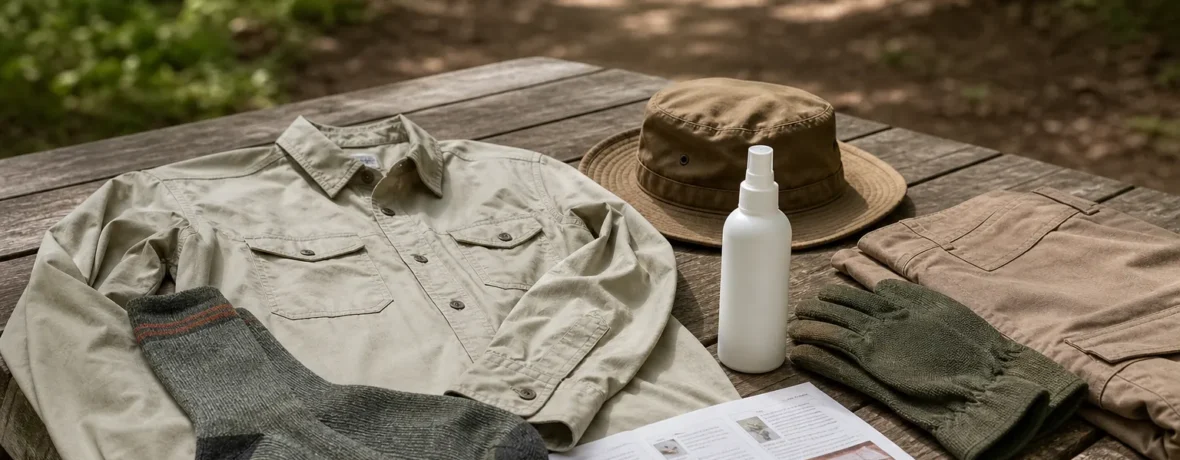
What is permethrin? It is a synthetic insecticide used on clothing and gear, not skin. Yes, permethrin-treated clothing can stop many ticks: a 2-year field trial found factory-treated clothing reduced tick bites by 58%. Use 0.5% permethrin and still do tick checks after every hike.
What is permethrin?
Permethrin is a bug-killing treatment for fabric. It belongs to the pyrethroid family, which mimics natural compounds found in chrysanthemum flowers, but the trail version you buy for hiking clothes is made for boots, pants, socks, shirts, hats, packs, and tents.
The key detail: permethrin is not a skin repellent. You do not spray it on your legs like DEET or picaridin. You apply it to clothing and gear, let everything dry fully, then wear those items as a tick barrier.
As of November 2026, the CDC tick prevention guidance recommends treating clothing and gear with products containing 0.5% permethrin. The same CDC guidance says treated boots, clothing, and camping gear can stay protective through several washings.
Does permethrin-treated clothing really stop ticks?
Yes, it helps, but it does not make you tick-proof. Permethrin can repel ticks, irritate them, knock them down, and kill them after contact with treated fabric.
The best real-world number for hikers to know comes from a randomized, placebo-controlled trial of outdoor workers in Rhode Island and southern Massachusetts. Workers wearing factory-impregnated permethrin clothing had 65% fewer tick bites in year 1 and 50% fewer in year 2, for a 58% protective effect over 2 years, according to the NIH-indexed study.
That is strong, useful protection. It is not a force field. A tick can still crawl onto untreated skin, slip under a cuff, ride home on your dog, or land on an untreated pack strap. The smart move is layering defenses: treated clothing, smart trail habits, skin repellent where needed, and a tick check before you shower.
How does permethrin compare with DEET and picaridin?
Permethrin treats fabric; DEET and picaridin treat exposed skin. You can use both kinds of protection on the same hike, just not in the same place.
| Option | Where it goes | Best use on trail |
|---|---|---|
| Permethrin | Clothing and gear only | Socks, shoes, pants, gaiters, shirts, hats, packs |
| DEET | Exposed skin, following the label | Wrists, neck, ankles, hands, and other exposed areas |
| Picaridin | Exposed skin, following the label | A less greasy skin repellent option for many hikers |
| Untreated clothing | No chemical treatment | Sun and scratch protection, but weaker tick defense |
The Wilderness Medical Society guidelines rate permethrin-treated clothing as an effective tick repellent and say combining treated clothing with a skin-based repellent such as DEET or picaridin may further reduce tick-borne illness risk.
How do you treat hiking clothes with permethrin?
Treat your clothes before the trip, not at the trailhead. Dry fabric is the finish line.
- Choose the right product. Use a permethrin product labeled for clothing and gear. Do not grab lawn, livestock, or home-pest products.
- Go outside. Spray in a ventilated area, away from wind, food, kids, pets, and water.
- Treat the high-contact zones. Hit socks, shoes, pant legs, cuffs, gaiters, shirt hems, hat brims, and pack hip belts. Ticks usually start low and crawl up.
- Moisten, don’t soak. Follow the label. More spray is not better protection if the label says stop.
- Let everything dry completely. Hang items until fully dry before wearing or packing them.
- Track retreatment. DIY treatments wear down with washing and use. Factory-treated clothing usually lasts longer, but the hang tag or label controls the timeline.
Is permethrin safe for hiking clothes?
Used as directed, permethrin-treated clothing has a strong safety record. The EPA’s review of repellent-treated clothing found factory-treated clothing unlikely to pose significant immediate or long-term hazards to people wearing it.
Still, treat it like the pesticide it is. Do not spray it on your skin. Do not spray clothes while you are wearing them. Do not treat underwear. Wash treated clothing separately from regular laundry if the product label tells you to do that.
If you live with cats, be extra careful while the spray is wet. Keep cats away from liquid permethrin, freshly treated gear, and the drying area. Once your clothing is dry, store it like hiking gear: clean, contained, and away from curious pets that chew fabric.
What should you wear for tick-heavy hikes?
Wear a system that makes ticks work harder. The goal is to keep them on the outside of your clothing where permethrin and your eyes can catch them.
- Light-colored pants so dark ticks are easier to spot.
- Permethrin-treated socks and shoes, because ticks often start at ankle height.
- Long pants tucked into socks in brushy or grassy terrain.
- A treated shirt tucked into pants when trails are narrow or overgrown.
- Gaiters if you are moving through wet grass, leaf litter, or hunting paths.
- A small mirror or phone camera for checking the backs of knees, waistline, scalp, and hard-to-see skin.
What do you do after a hike in tick country?
Check fast, then clean up. A tick check is not glamorous, but neither is finding one attached the next morning.
Before you get in the car, look over socks, pant cuffs, shoes, gaiters, pack straps, and your dog if one came along. At home, change clothes, check your body, and shower. The CDC also recommends using a dryer on high heat for 10 minutes to kill ticks on dry clothing after coming indoors.
If you find an attached tick, remove it promptly with fine-tipped tweezers. Grasp close to the skin and pull upward with steady pressure. Skip the folk remedies. Mayo Clinic’s tick bite first aid guidance also recommends cleaning the bite area and your hands after removal.
When to see a doctor
See a healthcare provider if symptoms show up after a tick bite or after time in tick habitat. Do not try to diagnose Lyme disease, Rocky Mountain spotted fever, ehrlichiosis, anaplasmosis, or any other tick-borne illness on your own.
Call a clinician if you develop a spreading rash, fever, chills, headache, unusual fatigue, muscle aches, joint pain, swollen lymph nodes, facial droop, dizziness, shortness of breath, or a bite site that becomes increasingly painful, discolored, warm, or draining. Tell the provider where you hiked, when the bite happened, how long the tick may have been attached, and whether you saved the tick or took a photo.
Related reading
- Lyme Disease Symptoms After a Hike
- Hantavirus and Camping: Cabins, Shelters and Risk
- Electrolytes for Hikers: What They Are and How Much You Need
- What Does Poison Ivy Look Like? Leaves of Three and Lookalikes
FAQ
Can you spray permethrin directly on your skin?
No. Hiking permethrin products are for clothing and gear, not skin. Use an EPA-registered skin repellent such as DEET or picaridin on exposed skin, following the label.
How long does permethrin last on hiking clothes?
It depends on the product. DIY spray treatments usually last through several washes, while factory-treated clothing often lasts longer; the label or hang tag gives the real limit.
Does permethrin kill ticks or just repel them?
It can do both. On treated fabric, permethrin can repel, irritate, knock down, and kill ticks after contact.
Should you still do tick checks if you wear permethrin-treated clothing?
Yes. Permethrin lowers risk, but ticks can reach untreated skin or ride in on gear and pets. Check clothing, skin, scalp, waistline, armpits, groin, and backs of knees after every hike.
Can you treat a tent or backpack with permethrin?
Yes, if the product label allows use on camping gear. Treat items outdoors, avoid over-spraying, and let everything dry completely before packing or using it.
Is permethrin-treated clothing enough by itself?
Not in heavy tick country. Pair it with staying near the center of the trail, avoiding tall grass and leaf litter when you can, using skin repellent on exposed areas, and checking yourself after the hike.