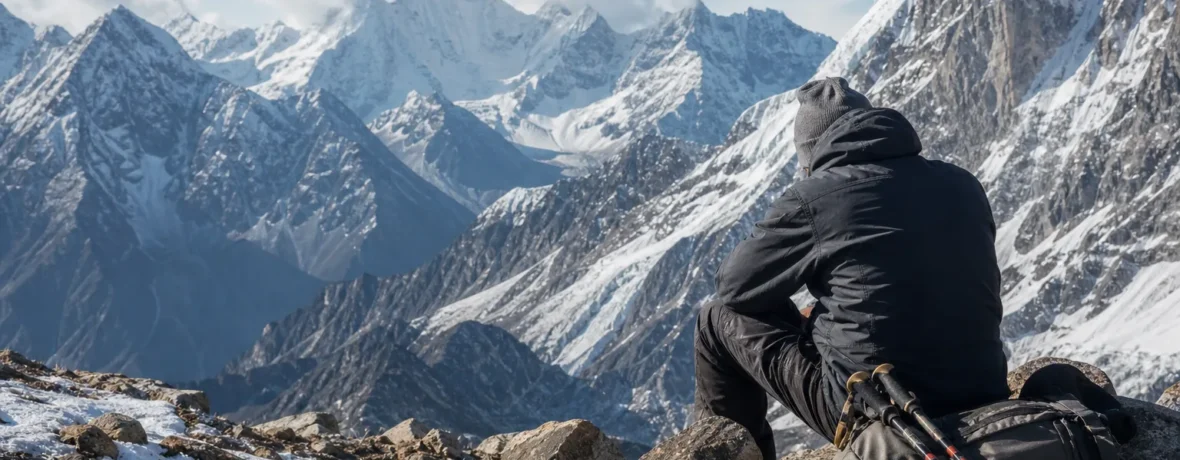
How long does altitude sickness last? Mild altitude sickness often improves within 24 to 48 hours if you stop climbing and rest at the same elevation. Symptoms can ease much faster after descending 1,000 feet [300 meters] or more. Severe symptoms can last longer and need urgent descent and medical care.
How long does altitude sickness last in hikers?
Most mild cases last 1 to 2 days.
That timeline assumes you do the smart thing: stop going higher, keep exertion low, hydrate normally, eat if you can, and sleep at the same elevation or lower. Acute mountain sickness, often called AMS, usually shows up after a quick jump to higher ground, especially above 8,000 feet [2,400 meters]. The CDC Yellow Book guidance on altitude illness says symptoms usually begin 2 to 12 hours after arrival at high altitude or after climbing higher.
Descent changes the clock. A drop of 1,000 feet [300 meters] or more can bring clear improvement, sometimes quickly. The Wilderness Medical Society says symptoms commonly resolve after descending 1,000 to 3,300 feet [300 to 1,000 meters], though each person is different.
| Situation | Typical timeline | What to do |
|---|---|---|
| Mild headache, nausea, tiredness | Often 24 to 48 hours | Stop ascending; rest at the same elevation |
| Symptoms improve after descent | Can ease the same day | Stay lower until fully well |
| Symptoms worsen at the same elevation | Do not wait it out | Descend and seek medical help |
| Confusion, trouble walking, breathlessness at rest | Emergency | Descend now; get urgent care |
What does altitude sickness feel like?
It often feels like a bad hangover.
The usual early pattern is headache plus one or more of these: nausea, poor appetite, dizziness, fatigue, or poor sleep. You may feel flat, slow, and weirdly unmotivated. Your pack feels heavier. The trail feels steeper. That is not a character flaw. It is your body reacting to lower oxygen pressure.
MedlinePlus on acute mountain sickness lists common symptoms such as headache, dizziness, fatigue, loss of appetite, nausea or vomiting, rapid pulse, and shortness of breath with exertion. Shortness of breath during hard climbing can happen at altitude, but breathlessness while sitting still is a red flag.
Can altitude sickness go away without going down?
Yes, mild symptoms can settle if you stop climbing.
If your symptoms are mild and stable, resting at the same elevation may be enough. This is where hikers get into trouble: they feel “not that bad” and keep pushing toward the pass, hut, summit, or campsite. Bad move. The CDC’s core rule is blunt: never ascend to sleep higher if you have symptoms of altitude illness.
Use the “same elevation test.” Rest, eat something simple, drink to thirst, and keep the day easy. If you feel better over the next day, your body may be catching up. If you feel worse, descend. If your hiking partner starts stumbling, acting confused, or getting breathless at rest, do not debate it over snacks. Move down and get help.
How do you recover from altitude sickness faster?
Stop climbing and descend if symptoms do not improve.
There is no macho shortcut. Fitness helps you move uphill, but it does not make you immune to altitude sickness. A trail runner from sea level can get flattened at 10,000 feet [3,050 meters]. A slower hiker who acclimatizes well may feel fine.
Use this step-by-step plan on the trail:
- Stop ascending. Do not climb higher to sleep while symptoms are present.
- Rest where you are. Reduce effort. Skip the summit push. Sit in the shade or get warm, depending on conditions.
- Check symptoms honestly. Headache plus nausea, dizziness, unusual fatigue, or poor coordination points toward altitude illness.
- Descend if symptoms worsen. Dropping at least 1,000 feet [300 meters] is often enough to feel a difference.
- Use oxygen if available. In clinics, rescue settings, or guided trips, oxygen can help while descent is being arranged.
- Ask a clinician about medication. Drugs such as acetazolamide or dexamethasone may be used for prevention or treatment in some situations, but do not self-prescribe on the trail.
The Wilderness Medical Society altitude illness guidelines identify descent as the key treatment for acute mountain sickness, high-altitude cerebral edema, and high-altitude pulmonary edema. That is the trail truth: lower is medicine.
How long after descending does altitude sickness go away?
Many hikers feel better within hours after descending.
A 1,000-foot [300-meter] drop can make a real difference, especially when you stop exerting hard. Headache and nausea may fade the same day. Fatigue can hang around longer, partly because you have been sleeping poorly, eating poorly, or grinding uphill while your body was asking for a break.
Do not treat one good hour as a green light to climb again. Stay lower until symptoms are gone. If symptoms return when you go back up, that is your answer. Your body needs more time, a slower ascent, or a different plan.
What makes altitude sickness last longer?
Going higher makes it last longer and can make it dangerous.
The biggest mistake is sleeping higher while symptoms are still present. The second biggest is pretending a headache is “just dehydration” when it appears after a fast ascent. Dehydration, sun, alcohol, poor sleep, and hard effort can all make you feel worse, but altitude illness has its own pattern: symptoms begin after gaining elevation and improve when you stop ascending or descend.
These choices can stretch a mild problem into a trip-ending one:
- Climbing more than planned because the weather window looks good
- Sleeping higher with a headache, nausea, or dizziness
- Hammering uphill instead of slowing down
- Drinking alcohol at camp
- Ignoring a partner who is unusually quiet, clumsy, or confused
- Using sleeping pills or sedating substances without medical guidance
How can you prevent altitude sickness on a hiking trip?
Gain sleeping elevation slowly.
Your body adapts while you spend time at altitude, not while you win an argument with the mountain. The cleanest plan is to build in acclimatization days, sleep lower when possible, and avoid huge jumps in sleeping elevation. If you live near sea level and fly into Denver, Salt Lake City, Mammoth Lakes, or another high base, the first day should not be your biggest day.
A practical prevention checklist:
- Spend a night or two at moderate elevation before going higher.
- Keep the first hiking day shorter and easier than your legs want.
- Plan camps so you can descend if symptoms show up.
- Do not make summit fever part of the itinerary.
- Talk with a healthcare professional before the trip if you have had altitude sickness before or have heart, lung, neurologic, or blood conditions.
When to see a doctor
Get medical help fast for severe or worsening symptoms.
Altitude illness is not something to “sleep off” if the signs are moving in the wrong direction. Mayo Clinic guidance on pulmonary edema treats breathing trouble linked with fluid in the lungs as a medical emergency. At altitude, severe breathlessness can point to high-altitude pulmonary edema, also called HAPE.
Descend and seek urgent care if you or a hiking partner has:
- Shortness of breath while resting
- Confusion, strange behavior, or extreme drowsiness
- Loss of coordination or trouble walking straight
- Chest tightness, wet cough, or coughing up blood
- Blue, gray, or very pale skin
- Symptoms that worsen despite rest at the same elevation
Do not diagnose yourself on a ridgeline. Treat serious signs as an emergency, descend as safely as possible, and involve medical professionals.
Related reading
- What Is Altitude Sickness? Symptoms and Causes
- Diamox for Altitude Sickness: What Hikers Should Know
- How to Prevent Altitude Sickness
- The 3 Stages of Altitude Sickness: AMS, HAPE, HACE
FAQ
How long does a mild altitude headache last?
A mild altitude headache often improves within 24 to 48 hours if you stop climbing. If it gets worse, comes with vomiting, confusion, or poor coordination, descend and seek medical help.
Can altitude sickness last for days?
Yes, it can last for days if you stay too high or keep ascending. Mild symptoms usually improve with rest at the same elevation or descent, but severe altitude illness can require urgent treatment and a longer recovery.
Can you get altitude sickness at 8,000 feet?
Yes, altitude sickness can happen around 8,000 feet [2,400 meters], especially after a quick ascent from low elevation. Risk rises with faster climbs, higher sleeping elevations, prior altitude sickness, and heavy exertion.
Should you keep hiking with altitude sickness?
No, do not keep climbing higher with symptoms. If symptoms are mild, stop ascending and rest; if they worsen or severe signs appear, descend.
Does drinking water cure altitude sickness?
No, water does not cure altitude sickness. Hydration helps you feel and function better, but the real fixes are stopping ascent, giving your body time, and descending when symptoms do not improve.