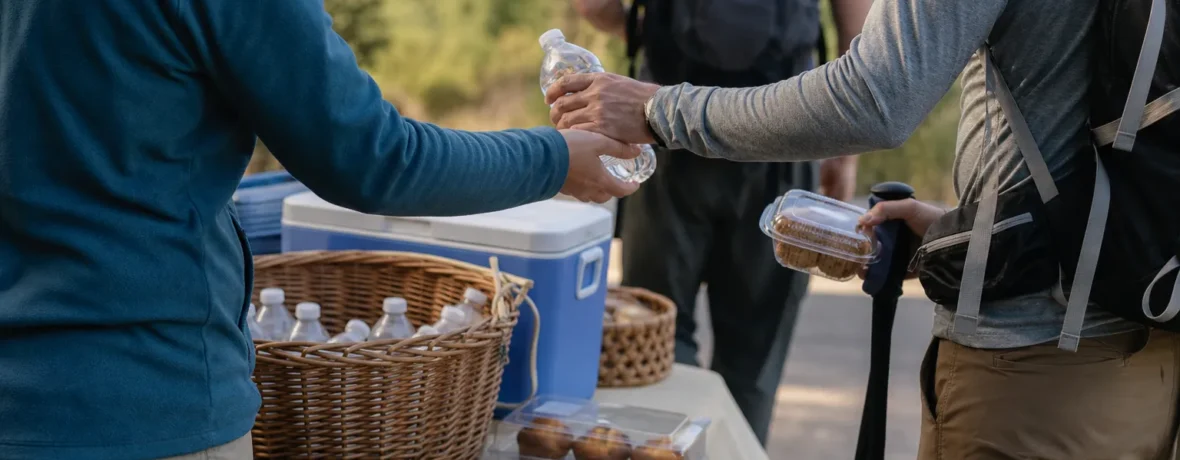
A trail angel is a person who gives hikers free, unexpected help on or near a trail: a ride to town, cold drinks, water, snacks, local advice, a campsite, or a morale boost. The short answer to “what is a trail angel” is simple: volunteer kindness, with no guarantee and no strings attached.
What is a trail angel in hiking?
A trail angel is someone who offers hikers trail magic.
That help can be tiny or trip-saving. A cooler of sodas at a road crossing. A lift 6 miles [10 km] into town. A backyard tent spot. A charging cable. A warning that the next water source is dry. On long trails, those small acts can hit like fireworks because hikers are tired, hungry, dirty, sunburned, soaked, or all five at once.
The Appalachian Trail Conservancy’s trail magic guidance describes a trail angel as a term of endearment for people who provide direct kindness and generosity to hikers. The Pacific Crest Trail Association’s guidance on trail magic and trail angels also stresses that trail angels are informal helpers, not an official service.
That last part matters. A trail angel is not your logistics plan. They are not staff. They are not obligated to answer messages, host you, drive you, feed you, or rescue a poorly planned resupply. The magic works because it is freely offered.
What is trail magic?
Trail magic is an unexpected good thing that helps a hiker at the right moment.
Sometimes it comes from a person. Sometimes it does not. A stranger hands you an orange when you have been dreaming of fruit for 3 days. A storm breaks right before a ridge. A lost glove is sitting on a post. A town driver pulls over before you even stick out your thumb. Hikers call all of that trail magic.
When people talk about trail angels, they usually mean the human side of trail magic: folks who show up with time, food, rides, water, or shelter. The best version is generous without being pushy and helpful without turning the trail into a roadside party.
What do trail angels usually do?
Trail angels usually fill practical gaps in a hiker’s day.
Common help includes:
- Rides: From a trailhead to a grocery store, hostel, motel, laundromat, post office, clinic, or restaurant.
- Food and drinks: Fresh fruit, chips, baked goods, coffee, cold soda, sandwiches, or simple hot meals.
- Water support: Water jugs at dry trailheads or road crossings where local land managers allow it.
- Local knowledge: Which store has fuel canisters, where the laundromat is, which road is closed, where cell service starts.
- Basic comfort: A shower, laundry, charging outlet, tent spot, porch, garage, or spare room.
- Emergency help: Calling for help, driving someone away from wildfire smoke, or helping a hiker reach medical care.
The vibe ranges from a low-key cooler beside a gravel road to a well-known town host who has helped hikers for years. Both count. Bigger is not automatically better.
| Type of help | Best use | Watch-out |
|---|---|---|
| Cold drinks or snacks | Quick morale boost at a road crossing | Pack out all trash and leftovers |
| Ride to town | Resupply, laundry, lodging, medical care | Use normal safety judgment before getting in |
| Water cache | Dry stretches where water access is limited | Needs permission and maintenance |
| Home hosting | Rest, shower, laundry, charging | Clear boundaries matter for both sides |
Are trail angels official trail volunteers?
No, trail angels are usually self-appointed helpers.
Some trail angels are also club members, shuttle drivers, hostel owners, maintainers, or former thru-hikers. Many are not. On the Pacific Crest Trail, the PCTA says the trail angel system is informal and not organized by the PCTA, U.S. Forest Service, National Park Service, or Bureau of Land Management.
That means you should not treat “trail angel” like a badge, license, permit, or background check. It is a community term. Most people using it mean well. You still need your own judgment.
How should hikers treat trail angels?
Treat trail angels like people, not vending machines.
You may be exhausted. You may smell like wet socks and ramen dust. Still, manners count. The next hiker behind you inherits the reputation you leave.
- Ask, don’t assume. “Do you have room for one more?” beats climbing into a car or walking into a yard.
- Be clear. Say where you need to go, how many hikers are with you, and whether you have a dog, wet gear, or a huge pack.
- Accept no gracefully. People have jobs, families, appointments, and limits.
- Offer gas money or a chore. They may decline. Offer anyway.
- Clean up fast. Trash, food scraps, wrappers, spilled drinks, toilet paper, and gear explosions are your problem.
- Do not overstay. If the offer was a ride, do not turn it into errands all afternoon unless invited.
- Say thank you. Out loud. A text later is even better.
The PCTA also warns hikers to watch for entitlement around trail magic. That is blunt advice, and good advice. You packed your pack. You chose the walk. A trail angel is a bonus, not part of your base weight.
How can you be a good trail angel?
Be useful, low-impact, and easy to say no to.
The best trail angels think like hikers and land managers at the same time. They help the person in front of them without creating a mess for the trail, the local community, wildlife, or volunteers.
Use this checklist:
- Pick legal locations. Use trailheads, public parking areas, or private property where you have permission.
- Keep it tidy. Bring trash bags, recycling bags, wipes, and a plan to haul everything away.
- Skip unattended food. Food left out can attract wildlife, insects, rodents, and loose trash.
- Make water caches responsible. Label jugs, remove empties, and check local guidance before placing water.
- Offer options. Not every hiker wants soda, beer, meat, dairy, gluten, or a ride from a stranger.
- Respect the hike. Do not pressure hikers to stay, drink, pray, pose for photos, share personal details, or change plans.
- Keep pets controlled. A friendly dog can still scare a hiker, steal food, or knock over gear.
- Follow Leave No Trace. The Leave No Trace 7 Principles are the baseline for reducing outdoor impact.
Good trail magic feels light. It appears, helps, disappears cleanly, and leaves no reason for a ridge runner, maintainer, ranger, or local resident to curse your name.
Is it safe to accept help from a trail angel?
Usually it can be, but you still need street smarts.
Trail culture can feel warm and trusting, especially after days in the woods. Do not let that switch off your brain. Anyone can call themselves a trail angel. Most are kind. A few may be careless, odd, drunk, unsafe drivers, or worse.
Use the same safety habits you would use anywhere:
- Trust your gut, even if you cannot explain the feeling.
- Travel with another hiker when you can.
- Text the vehicle description, plate number, and destination to someone if you have service.
- Sit where you can exit easily.
- Keep your phone, wallet, ID, and essentials with you, not buried in the trunk.
- Decline rides from impaired drivers.
- Leave if a host ignores boundaries, pressures you, or makes you feel trapped.
If the situation feels wrong, say no. You do not owe politeness to a bad feeling.
What should trail angels avoid?
Trail angels should avoid creating trash, crowding, wildlife problems, and dependency.
Kindness can backfire. A big roadside cookout may block parking, annoy neighbors, attract animals, leave food waste, and turn a quiet trailhead into a scene. A water cache that is not maintained becomes plastic trash. A home host with no boundaries can burn out or create awkward power dynamics.
Skip these moves:
- Leaving coolers, jugs, or food unattended for days.
- Setting up where parking is limited or emergency access is needed.
- Offering alcohol to underage hikers or pushing alcohol on anyone.
- Posting exact sensitive locations online if it will create crowding.
- Handling another person’s gear without asking.
- Turning help into content without clear consent.
Trail magic should support the trail experience, not replace it. The Appalachian Trail Conservancy cautions that some well-meant generosity can harm the primitive, self-reliant feel of the trail or create extra work for volunteers. That is the line to watch.
Do trail angels get paid?
Trail angels usually do not get paid.
The classic trail angel model is free help. Some accept donations for gas, snacks, laundry supplies, or household costs. Some refuse money. Others operate real businesses, such as hostels or permitted shuttles, and those are not the same thing as free trail magic.
Do not haggle with a business and call it trail culture. If someone is running a shuttle, hostel, restaurant, campground, or resupply service, pay the listed price and tip when appropriate. If someone gives you free help, offer thanks, help clean up, and do not act like you are owed more.
How do you find a trail angel?
You usually find trail angels through trail towns, hiker word of mouth, and local groups.
Long-distance hikers often hear names in shelters, hostels, FarOut comments, local bulletin boards, outfitters, Facebook groups, and town conversations. Some trail angels post contact details. Others prefer to help only when they are already near the trail.
Keep your ask small and specific. “Could you drive two hikers from the trailhead to the grocery store this afternoon?” is better than “Can someone help us?” Include your location, number of people, time, pets, and packs. If plans change, send a message. Nobody enjoys driving to an empty trailhead.
Related reading
- Bright Angel Trail: Distance, Turnaround Points and Water
- Is the Bright Angel Trail Open? Closures and Water
- What Is Trail Magic?
- Youngest and Oldest Appalachian Trail Thru-Hikers
FAQ
What does trail angel mean?
A trail angel is a person who gives hikers free help or kindness. That help might be food, water, a ride, a place to camp, local advice, or a needed morale boost.
What is the difference between a trail angel and trail magic?
A trail angel is the person; trail magic is the act or experience. If someone gives you a cold drink at a road crossing, the person is the trail angel and the drink is trail magic.
Can anyone become a trail angel?
Yes, anyone can become a trail angel if they help responsibly. Start small: offer snacks at a legal trailhead, give accurate local information, or drive a hiker to town only when you feel safe and willing.
Should hikers rely on trail angels?
No, hikers should not rely on trail angels for core logistics. Plan your own food, water, transportation, lodging, and safety backup, then treat any trail magic as a welcome extra.
Is trail magic allowed everywhere?
No, not everywhere. Rules vary by land manager, parking area, wilderness boundary, park unit, forest, and private property, so check official local guidance before setting up food, water, or a gathering.
What is the best trail magic to give hikers?
The best trail magic is simple, clean, and useful. Fresh fruit, cold drinks, sealed snacks, hand sanitizer, trash bags, and accurate town information often help more than a complicated setup.