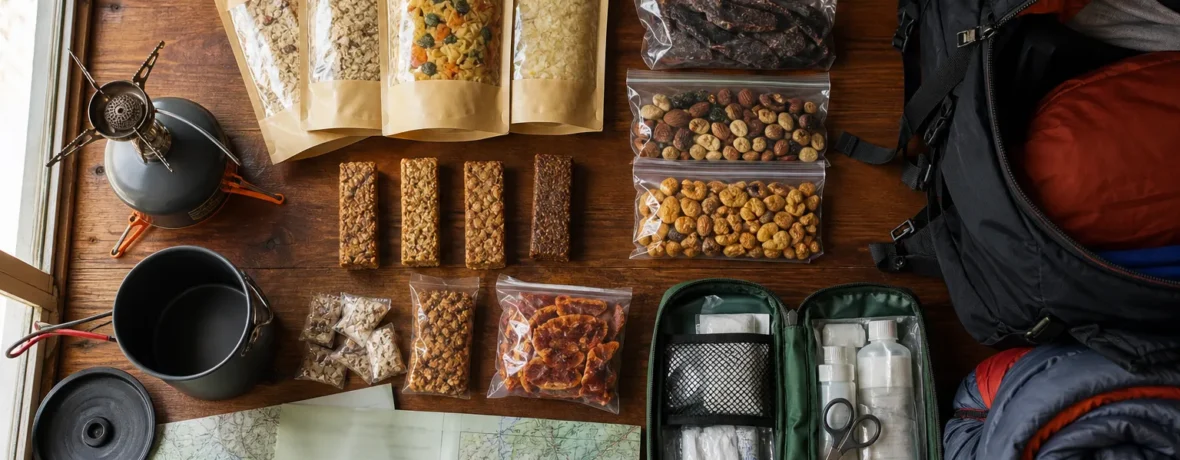
Thru hiker resupply is how you restock food, fuel, toiletries, batteries, and worn-out gear during a long trail. Most hikers carry 3 to 6 days of food, buy in trail towns when possible, and mail boxes only to remote stops, special-diet sections, or places with weak stores.
What is thru hiker resupply?
Thru-hiker resupply is the repeatable system you use to stay fed and equipped between trail towns.
You leave town with enough food to reach the next realistic stop, hike that section, then restock and do it again. Simple idea. Many moving parts.
A resupply usually covers:
- Breakfasts, lunches, dinners, snacks, drink mixes, and coffee
- Stove fuel, if you cook
- Toilet paper, hand sanitizer, toothpaste, sunscreen, and bug repellent
- Electronics needs: power bank charge time, cables, batteries, headlamp cells
- Replacement gear: socks, shoes, water filter parts, patch kits, tent stakes
- Maps, permits, or printed notes if your route needs them
The best system is boring. You know where the next town is, how many miles [kilometers] stand between you and its food, when the store is open, and what you will do if you arrive late, broke, sick, or behind schedule.
How many days of food do thru-hikers carry?
Most thru-hikers carry 3 to 6 days of food between resupplies.
Shorter carries are common on trails with frequent road crossings and trail towns. Longer carries show up in wilderness sections, remote desert stretches, high mountain zones, and routes where hitching or shuttles are unreliable.
Your food carry is not based only on mileage. It depends on pace, elevation gain, weather, town access, water sources, store hours, and how hard the miles feel. A flat 18-mile [29 km] day into town is not the same as an 18-mile [29 km] day over passes with snow, heat, blowdowns, or 5,000 feet [1,524 m] of climbing.
A workable formula looks like this:
- Find the next resupply point. Use your guide, map app, official trail resources, and recent local updates.
- Count trail miles. Measure from where you leave town to where you can buy or pick up food.
- Choose a conservative daily mileage. Use the pace you can hike when tired, not the pace you brag about at breakfast.
- Add one buffer meal. Weather, missed hitches, injury, and closed stores happen.
- Pack by meal count. Four days means four breakfasts, four lunches, four dinners, and snacks for each hiking day.
If your math says 3.2 days, pack for 4 days. If the town has one tiny store and you arrive after closing, the extra dinner becomes excellent insurance.
Do thru-hikers buy food in town or mail resupply boxes?
Most hikers use both, but buying in town works for more stops than new hikers expect.
Buying as you go keeps you flexible. You can change your appetite, mileage, gear, schedule, and route without chasing boxes across three states. Mail drops give control. They help when you need specific foods, prescription supplies, maps, shoes, specialty fuel, or food in a town with poor shopping.
| Method | Best for | Watch out for |
|---|---|---|
| Buy in town | Flexible schedules, average diets, towns with grocery stores | Small stores, high prices, weak fuel selection, limited hours |
| Mail a box | Remote stops, special diets, medication, replacement shoes | Post office hours, postage, delays, changed plans |
| Hybrid | Most long-distance hikes | Requires planning without overplanning |
A strong hybrid system might mean buying food in larger towns and mailing boxes to tiny trail communities, lodges, resorts, rural post offices, or long wilderness entries. That keeps your plan nimble without leaving you staring at one shelf of frosting, tuna, and off-brand crackers.
Mail boxes shine when you have celiac disease, severe allergies, vegan needs, religious food restrictions, or a stomach that rebels against gas station meals. They also help if you know a shoe model works and you want your next pair waiting where your current pair will be flat and shredded.
How do you send a resupply box to yourself on trail?
You send a resupply box by mailing it to a post office, hostel, outfitter, lodge, hotel, or other trail business that agrees to hold it.
Never assume a private business will hold a package. Call or email first. Ask what carriers they accept, how long they hold boxes, what name to use, and whether they charge a pickup or storage fee.
For USPS General Delivery, use the exact post office that accepts General Delivery. As of November 2026, the USPS Domestic Mail Manual says General Delivery is intended as a temporary delivery method, customers may be required to show suitable identification, and each General Delivery mailpiece is held for no more than 30 days unless the sender requests a shorter time.
A typical USPS General Delivery label looks like this:
YOUR LEGAL NAME
GENERAL DELIVERY
TOWN, STATE ZIP CODE
Add a clear note on the box: Hold for thru-hiker. ETA: Month Day. Use your legal name, not only a trail name. Bring photo ID. Track every box.
USPS also has Hold for Pickup service. As of November 2026, USPS says Hold for Pickup requires eligible mailpieces, the addressee or designee must show acceptable primary identification, and items are returned if not picked up within the listed holding window for that service. That is different from old-school General Delivery, so choose the service on purpose.
Before mailing anything, use the USPS location finder, confirm the branch, and check hours. Then call if the stop matters. A post office closed on Saturday afternoon can turn a clean town stop into two motel nights and a budget wound.
What should you put in a thru-hike resupply box?
Pack foods and supplies you know you will want when you are hungry, tired, and less romantic about trail life.
Do not build boxes from fantasy menus. Build them from food you already eat. Trail hunger can make plain food taste heroic, but it will not always rescue meals you hated at home.
- Breakfast: instant oats, granola, powdered milk, nut butter packets, bars, instant coffee
- Lunch: tortillas, crackers, tuna or salmon packets, cheese that keeps for the section, nut butters, hummus powder
- Dinner: ramen, couscous, instant rice, mashed potatoes, dehydrated meals, olive oil packets, spices
- Snacks: bars, candy, nuts, dried fruit, jerky, chips, cookies
- Drinks: electrolyte mix, tea, cocoa, instant coffee, powdered drink mix
- Small supplies: toothpaste, floss, sunscreen, lip balm, toilet paper, hand sanitizer, repair tape
- Gear swaps: socks, water filter gasket, tent cord, batteries, replacement stakes, maps, permits if needed
Repackage bulky food before mailing. Remove cardboard. Tape cooking instructions to freezer bags if you need them. Write the meal name and water amount on the bag. Squeeze out air. Protect crushable food inside a hard-sided container or pad it with socks, tortillas, or other soft goods.
Skip glass jars, heavy cans, mystery powders without labels, and giant tubs of food you will have to divide in a parking lot. Town chores already eat time. Your box should make leaving town easier.
How much food weight should you carry between resupplies?
Many backpackers plan roughly 1.5 to 2.5 pounds [0.7 to 1.1 kg] of food per hiking day, then adjust by appetite, body size, pace, and conditions.
That range is a planning tool, not a law. Cold weather, big climbs, long days, and lean bodies can push needs higher. Hot weather may crush appetite during the day, then make dinner disappear in minutes. New hikers often carry too much food during week one, then not enough once trail hunger turns on.
Think in meals first, then weight. A heavy bag full of low-calorie food is still a bad bag. Chips are bulky. Nut butter is dense. Tortillas pack better than bread. Olive oil adds calories fast, but it can leak and ruin morale, so double-bag it or use sealed packets.
A clean packing rhythm:
- Lay out food by day.
- Group each day into breakfast, lunch, dinner, and snacks.
- Add one emergency meal or at least one dense backup item.
- Remove excess packaging.
- Pack the first day’s food on top or in an outside pocket.
- Keep scented items together for proper storage at camp.
If you constantly enter town with two full dinners, reduce. If you keep eating tomorrow’s lunch before sunset, add more snacks. Your body gives clear feedback if you listen before the bonk.
How often do thru-hikers go into town?
Thru-hikers often enter town every 3 to 6 hiking days, depending on the trail and section.
Town stops are not only grocery missions. They are laundry, showers, charging, weather checks, gear repairs, trash disposal, calls home, and sleep. They can also drain hours faster than a leaking water bladder.
There are three common town styles:
- Nero: A near-zero-mile day, where you hike a short distance and spend the rest of the day handling chores.
- Zero: A no-hiking day used for rest, healing, logistics, or waiting out weather.
- In-and-out: A quick resupply where you hitch, shop, eat, charge, and return to trail the same day.
The trap is pretending every town stop will be quick. Grocery shopping while hungry is slow. Laundry is slow. Restaurant service is slow. Finding stove fuel can be slow. If the trail crosses near a decent store, a fast stop can work. If town is 12 miles [19 km] off trail with one shuttle and a post office closing soon, build slack into the day.
How do you plan a resupply schedule before a thru-hike?
Plan only the hard stops in detail, then sketch the rest.
A rigid town-by-town spreadsheet feels safe at home. On trail, your feet, weather, fire closures, snow, illness, family needs, and budget will edit it. Plan the sections where failure has teeth: remote carries, permit-tied entries, long food gaps, tiny towns, and places where a missed package creates trouble.
- Mark every possible resupply point. Include trail miles, road access, town distance, and services.
- Circle the weak spots. Look for long gaps, no grocery store, limited lodging, or seasonal businesses.
- Choose mail drops only where they solve a real problem. Do not mail 25 boxes just because it feels organized.
- Build a bounce box if needed. Use it for items you want sometimes, not every week: extra maps, chargers, town clothes, spare meds, repair parts.
- Share the plan. If someone at home mails boxes, give them addresses, ETAs, carrier notes, and permission to wait for your updated signal.
- Update on trail. Send boxes when your pace is real, not imagined.
A “bounce box” is a package you keep mailing ahead to yourself. It can be useful. It can also become an expensive box of guilt. If you open it three times and use nothing, send the contents home.
What are the biggest thru-hiker resupply mistakes?
The biggest mistake is sending too much food too far ahead.
Your tastes will change. Your appetite will change. Your mileage will change. The food that sounded perfect in your kitchen may look grim after five weeks of sweating into the same shirt.
- Mailing every box before the hike starts. You lock yourself into old guesses.
- Ignoring store hours. A closed post office or market can cost a full day.
- Using only a trail name on packages. Use your legal name so staff can match your ID.
- Packing fragile food badly. Crushed chips are fine. Exploded olive oil is not.
- Forgetting fuel rules. Fuel can be difficult or impossible to mail, depending on type and carrier rules.
- Overpacking “healthy” food you do not want. If you will not eat it, it is dead weight.
- Underestimating town distance. A resupply 10 miles [16 km] off trail is not the same as one beside the trailhead.
- Skipping a buffer meal. One storm, bad hitch, or wrong turn can stretch a section.
Another quiet mistake: packing food that needs too much cooking. Long simmer times burn fuel and patience. Choose meals that cook fast, cold-soak well, or rehydrate after boiling water and waiting.
How do you store food safely during resupply and on trail?
Keep all food, trash, and scented items controlled from the moment you leave town.
Food storage is not only a bear issue. Mice, raccoons, marmots, chipmunks, and other animals can chew through packs, tents, and food bags. In bear country, sloppy storage can put both people and bears at risk.
The National Park Service food storage guidance says regulations differ by park, some parks require food lockers or bear-resistant containers, and hikers should check local rules before taking food into the backcountry. As of November 2026, NPS also advises backpackers to store scented items properly, avoid food in tents, pack out food waste, and place bear-resistant containers on flat ground away from camp and water.
Your scented-item list is longer than dinner:
- Food and snacks
- Trash and wrappers
- Toothpaste and toothbrush
- Sunscreen and lip balm
- Bug spray
- Soap and hand sanitizer
- Cook pot, mug, spoon, and anything with food residue
Before a section, check the exact land manager rules for that area. A trail can pass through national parks, national forests, wilderness areas, state lands, tribal lands, and private corridors. The food-storage rule can change across a boundary you cross in one afternoon.
When to see a doctor
See a doctor when stomach illness, dehydration signs, or weakness is severe, persistent, or getting worse.
Trail food gets handled in parking lots, motel rooms, picnic tables, and dusty campsites. Wash hands, treat water, and be cautious with perishable food. If you develop food poisoning symptoms, the CDC advises seeking medical help for bloody diarrhea, diarrhea lasting more than 3 days, fever over 102°F [38.9°C], frequent vomiting that prevents keeping liquids down, or signs of dehydration such as little urination, dry mouth and throat, or dizziness when standing.
The NIH/NIDDK food poisoning guidance also says nervous system symptoms, severe dehydration signs, black or bloody stools, severe abdominal or rectal pain, confusion, or inability to drink enough liquids need prompt medical care. Do not try to diagnose yourself from a trail guide or a forum. If symptoms are scary, get help.
What is the simplest resupply strategy for a first thru-hike?
The simplest strategy is to buy food in most towns and mail boxes only where shopping is weak or your needs are specific.
Before you start, identify the obvious remote stops and send boxes to those. For everything else, stay flexible. Your future trail self will be smarter than your current planning self because they will know the actual pace, hunger, budget, weather, and shoe damage.
Use this checklist before leaving each town:
- Enough meals to reach the next resupply, plus one buffer meal
- Snacks placed where you can reach them while hiking
- Fuel level checked
- Water treatment working
- Phone, power bank, and headlamp charged
- Trash packed out of town, not left in a motel room for someone else
- Next town hours checked
- Package tracking saved, if a box is waiting ahead
- Food storage method legal for the next section
Then leave. That is the part new hikers delay. The grocery store will always whisper one more thing. You do not need perfect. You need enough, packed well, with a plan that survives rain, hunger, and a late hitch.
Related reading
- Who Are Thru-Hikers? Inside Long-Trail Culture
- What Does "Hiker Trash" Mean?
- How Blind Hikers Navigate Trails
- What Is Thru-Hiking? How Long-Distance Trails Work
FAQ
How do thru-hikers resupply on the Appalachian Trail?
Most Appalachian Trail hikers buy food in towns and use only a few mail drops. The trail has frequent road crossings and many trail communities, so flexibility usually beats a wall of prepacked boxes.
How do thru-hikers resupply on the Pacific Crest Trail?
Pacific Crest Trail hikers usually use a hybrid system. Many buy in larger towns and mail boxes to remote stops, mountain resorts, and places where store options are limited or seasonal.
Can you thru-hike without mailing any resupply boxes?
Yes, on some trails and with a flexible diet, you can thru-hike with few or no mailed food boxes. You may still want to mail shoes, medication, specialty items, or food to remote stops where buying is unreliable.
How early should I mail a resupply box?
Mail it early enough that it arrives before you do, but not so early that plans change and the box sits for weeks. For USPS General Delivery, confirm the exact post office and use tracking; as of November 2026, USPS states General Delivery mailpieces are held for no more than 30 days unless the sender requests a shorter period.
What food should I avoid putting in a resupply box?
Avoid glass, leaky oils, fragile packaging, unlabeled powders, heavy cans, and foods you have never tested. Also be careful with chocolate, soft candy, and other melt-prone items during hot sections.
Is a bounce box worth it for thru-hiking?
A bounce box is worth it only if you regularly use the contents. If it becomes a package you pay to mail forward without opening, send it home and keep your resupply system lean.