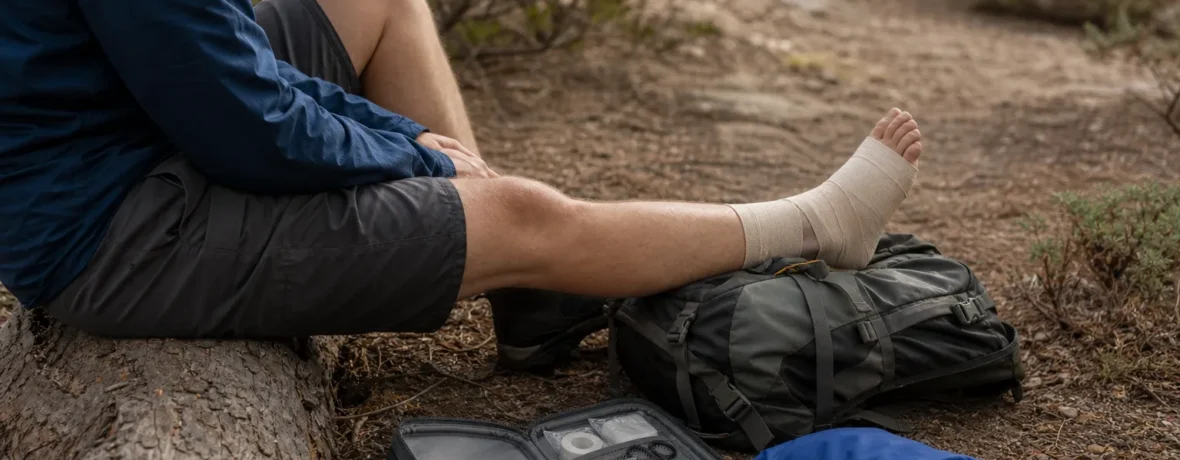
How long does a sprained ankle stay swollen? Mild sprains often swell for 2–3 days and improve within 1–2 weeks; moderate sprains can stay puffy 2–6 weeks; severe sprains may swell for several months. If swelling does not improve after 2–5 days of home care, get medical advice.
How long does a sprained ankle stay swollen by grade?
Swelling can last from a few days to several months, depending on how much ligament damage happened.
A sprain means a ligament stretched or tore. On trail, it usually happens when your foot rolls inward on a rock, root, rut, or loose gravel. The ankle balloons because your body sends fluid and blood flow to the injured tissue. That swelling is not random. It is part of the repair process. But too much swelling can make the joint stiff, painful, and clumsy.
Use the table below as a practical hiking-world guide, not a diagnosis. A clinician may grade the sprain after an exam and, if needed, imaging. The NIH’s MedlinePlus ankle sprain aftercare guide says pain and swelling often start improving within 48 hours, but worse sprains take longer.
| Sprain level | Typical swelling window | What it may feel like | Trail reality |
|---|---|---|---|
| Mild | 2–3 days of clear swelling; improving over 1–2 weeks | Sore, tender, some stiffness, able to walk carefully | Short easy walking may return first; uneven trails wait |
| Moderate | 2–6 weeks | Bruising, limping, limited range of motion, swelling around the ankle bone | Downhills, sidehills, and loaded packs are risky |
| Severe | 6 weeks to several months | Major swelling, instability, trouble bearing weight | No “walk it off” plan; get checked |
Why is my sprained ankle still swollen after a week?
One week of swelling can be normal, but swelling should be trending down.
If your ankle is still a little puffy after a week, especially after standing, driving, or walking, that can fit a normal healing pattern. Gravity pulls fluid into the foot and ankle. The joint also stiffens when you baby it too much, then swells when you suddenly ask it to do more.
Swelling that is not improving is different. If your ankle looks the same as day one, gets larger, feels unstable, or hurts sharply when you stand, get medical advice. Mayo Clinic’s guidance on ankle pain and swelling recommends scheduling a visit when swelling does not improve after 2–5 days of home treatment.
Common reasons swelling lingers include:
- You kept hiking on it after the twist.
- The sprain was moderate or severe, not mild.
- You skipped compression or elevation during the first 48 hours.
- Your boot, brace, or wrap is too tight and irritating the area.
- You returned to hills, rocks, stairs, or a heavy pack too soon.
- The injury may involve more than a simple sprain.
How can you reduce swelling after a sprained ankle?
Use protection, relative rest, ice, compression, and elevation for the first 2–3 days.
The goal is simple: calm the ankle down without turning yourself into a couch statue. Mayo Clinic’s sprain first aid recommends rest, ice, compression, and elevation, with ice limited to 20 minutes at a time. The CDC also lists ice and elevation as non-drug ways to reduce swelling and discomfort from musculoskeletal injuries in its clinical pain guidance.
- Stop the hike if your gait changes. Limping on a rough trail invites a second fall.
- Protect the ankle. Use trekking poles, a brace, a wrap, or a stiff boot if you already have one and it does not increase pain.
- Rest, but do not freeze your whole body in place. Avoid moves that spike pain. Gentle pain-free motion may help stiffness.
- Ice when you can. Use a cold pack, cold stream water in a bottle, or snow wrapped in cloth. Keep a fabric layer between cold and skin.
- Compress with care. Wrap snugly, not tightly. Loosen it if toes tingle, turn pale, feel cold, or go numb.
- Elevate above heart level. Do this at camp, in the car, and at home. A backpack under the calf works in the field.
- Reassess the next day. Less swelling and better motion are good signs. More swelling, worse pain, or instability means stop pushing.
Skip heat during the early swollen phase. A hot shower may feel nice, but heat can increase blood flow and make a fresh injury puffier.
Can you hike with a swollen sprained ankle?
Do not hike on a swollen ankle if you are limping, unstable, or unable to bear weight normally.
That answer may sting. Still, the trail does not care how close you are to the overlook. A swollen ankle has worse balance, slower reaction time, and less range of motion. Add loose dirt, wet rock, roots, creek crossings, and a loaded pack, and the odds tilt against you.
If you twist your ankle mid-hike, make a conservative call:
- Turn around if walking changes your stride.
- Use trekking poles to unload the joint.
- Shorten your steps and avoid side-sloping terrain.
- Send weight to another pack if hiking with a group.
- Call for help if you cannot move safely.
Wilderness care is different from living-room care because help may be hours away. The Wilderness Medical Society’s wilderness first aid guidelines emphasize training for assessment, splinting, evacuation decisions, and getting medical help when needed. If you hike remote routes, that training is not overkill. It is trail sense.
How do you tell if a sprained ankle is healing?
A healing ankle swells less, moves more, and handles weight with less pain.
Do not judge by one snapshot. Judge by trend. Morning stiffness can happen. End-of-day puffiness can happen. What you want is a steady move in the right direction across several days.
Good signs include:
- Swelling is smaller each morning.
- Bruising is fading from dark purple to yellow-green.
- You can move the ankle farther without sharp pain.
- You can stand evenly on both feet.
- You can walk on flat ground without limping.
- The ankle feels stable, not wobbly or loose.
Bad signs are the opposite: swelling rebounds hard after light activity, pain stays sharp, the ankle gives way, or you cannot trust it on a curb. Mayo Clinic’s sprained ankle treatment guidance says care focuses on reducing pain and swelling, helping the ligament heal, and restoring movement, strength, and stability. That last part matters for hikers. A pain-free ankle that has poor balance is still a problem on talus, slickrock, and rooty forest tread.
When to see a doctor
See a doctor promptly if swelling does not improve, pain is severe, or the ankle feels unstable.
You do not need to prove you are tough. You need an ankle you can trust ten miles from the trailhead. Get medical care if any of these apply:
- You cannot bear weight or take a few normal steps.
- Swelling does not improve after 2–5 days of home care.
- Pain is severe or worsening.
- The ankle looks deformed.
- You have numbness, tingling, cold toes, or color changes.
- The ankle repeatedly gives way.
- You heard or felt a pop and swelling came fast.
- You have swelling or pain that keeps returning after you try to resume activity.
A clinician can check for fracture, tendon injury, high ankle sprain, circulation problems, and joint instability. That is not something you can sort out by comparing photos online.
Related reading
- How to Heal a Sprained Ankle Fast: What Really Works
- How Long Does a Sprained Ankle Take to Heal?
- When to Worry About a Sprained Ankle
- How to Wrap a Sprained Ankle on the Trail
FAQ
Is it normal for a sprained ankle to stay swollen for months?
Yes, it can happen after a severe sprain, but it should be checked. Lingering swelling for months may mean the ankle has not regained strength, motion, or stability, or that the injury was more complex than expected.
Should I wrap a sprained ankle overnight?
Usually, compression is most useful while you are awake and monitoring your toes. If a clinician tells you to use a wrap or brace at night, follow that advice; otherwise avoid sleeping in anything that could become too tight.
When can I hike again after a sprained ankle?
Return when you can walk flat ground without limping, move the ankle well, and balance confidently. Start with a short, easy trail, no heavy pack, no big descent, and no rocky scramble.
Does bruising mean the ankle sprain is severe?
Bruising can happen with moderate and severe sprains, but bruising alone does not grade the injury. The bigger clues are weight-bearing ability, swelling trend, stability, pain level, and range of motion.
Should I use heat or ice for ankle swelling?
Use ice in the first swollen phase, especially during the first 2–3 days. Heat may feel good later for stiffness, but avoid it when the ankle is actively swelling or throbbing.