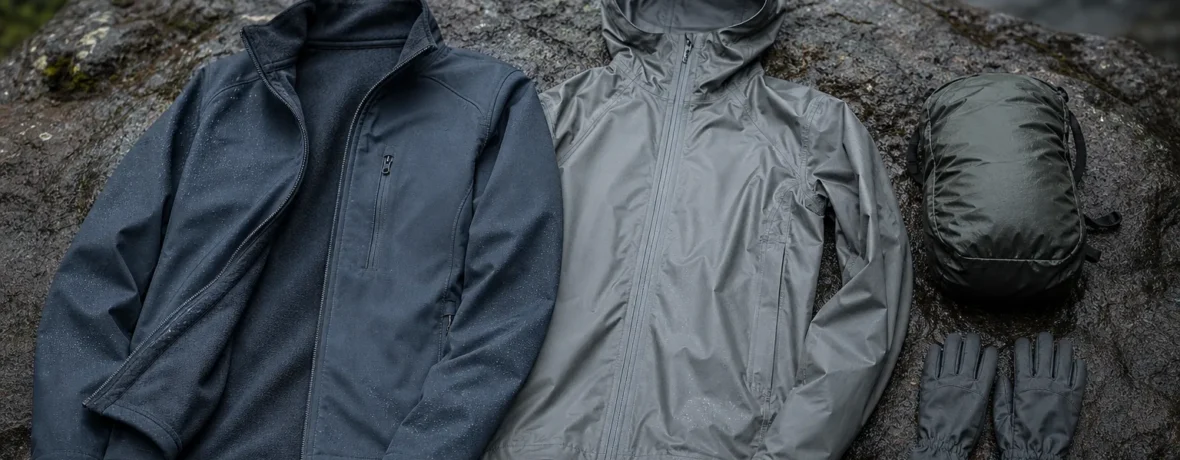
Choose a softshell for dry, windy, high-output hiking and a hardshell for steady rain, wet snow, or exposed alpine weather. A softshell breathes better and moves better. A hardshell blocks precipitation better. If rain is likely, pack the hardshell. If sweat is the bigger problem, wear the softshell.
That’s the clean answer. The trail answer has more texture. A ridgeline in 35 mph [56 km/h] wind is not the same as a muggy forest climb in light drizzle. A cold shoulder-season hike is not the same as a summer thunderstorm that parks itself over your campsite. Your jacket is not just “outerwear.” It is your weather plan.
The trick is matching the shell to the thing most likely to make you uncomfortable: outside moisture, inside moisture, wind, abrasion, or cold. Get that right and you hike longer with fewer stops. Get it wrong and you end up clammy, chilled, or fighting your own jacket all day.
Softshell vs hardshell: which jacket is better for hiking?
Neither is better for every hike.
A softshell is usually the better hiking jacket when you are moving hard, the forecast is mostly dry, and you need stretch, airflow, and comfort. Think cool desert mornings, shoulder-season climbs, breezy ridges, dry snow, scrambling, and stop-start hiking where a crinkly rain shell feels like a plastic bag.
A hardshell is the better hiking jacket when the weather can soak you. Real rain. Wet snow. Long exposure. Above-treeline travel. Multi-day trips where getting your insulation wet can turn a rough day into a serious problem. The National Park Service includes a rain shell and extra clothing in its Ten Essentials guidance, which is a good reminder: your shell is part of your safety kit, not just comfort gear.
| Trail condition | Better choice | Why it works |
|---|---|---|
| Steady rain for 30 minutes or longer | Hardshell | Waterproof fabric and taped seams keep rain out longer. |
| Cold, dry, windy hike | Softshell | Better breathability and comfort while still cutting wind. |
| Fast uphill travel | Softshell | Moves sweat vapor faster and feels less clammy. |
| Stormy alpine route | Hardshell | Best protection from wind-driven rain, sleet, and wet snow. |
| Brushy trail or scrambling | Softshell | Stretchy woven fabric usually resists snags and abrasion well. |
| Warm summer day hike with possible storms | Light hardshell in pack | Better emergency rain protection for sudden downpours. |
If you hike in the western US, where many trails are dry and windy, a softshell can become your most-worn jacket. If you hike in the Pacific Northwest, the Appalachians, Alaska, or any place where wet weather lingers, a hardshell earns its space fast.
What is a softshell jacket?
A softshell jacket is a breathable, stretchy outer layer made for movement and light weather protection.
Here is the plain answer to what is a softshell jacket: it is usually a woven synthetic jacket that blocks some wind, sheds light rain or snow, stretches with your body, and breathes better than a waterproof rain shell. Most softshells are water resistant, not waterproof. That line matters.
Softshells shine when your body is making heat. Climbing switchbacks. Snowshoeing. Pushing into wind. Moving through brush. Hiking in shoulder-season temperatures where you want one layer that can stay on without constant on-off drama.
Many softshells use a durable water repellent finish, often called DWR, so drizzle beads on the face fabric instead of soaking in right away. But DWR is not a force field. It wears down from dirt, pack straps, body oils, washing, and time. The GORE-TEX brand’s DWR care guidance explains the same basic idea: water repellency helps the face fabric shed moisture, but it needs care to keep working well.
Softshells usually fall into three trail-friendly types:
- Lightweight softshells: Best for fast hiking, mild wind, cool mornings, and dry climates. They pack smaller and breathe well.
- Midweight softshells: The sweet spot for many hikers. More wind resistance, more durability, and enough warmth for cool weather without feeling bulky.
- Insulated softshells: Warmer and heavier. Useful for cold, dry conditions, but less versatile if you heat up quickly.
The best softshell for hiking should feel like trail clothing, not armor. Raise your arms. Twist. Bend. Reach as if grabbing a trekking pole planted uphill. If the hem rides to your ribs or the shoulders bind under a pack, keep shopping.
What is a hardshell jacket?
A hardshell jacket is a waterproof, windproof outer layer built for serious weather protection.
Here is the direct answer to what is a hardshell jacket: it is a shell made with a waterproof-breathable membrane or coating, taped or sealed seams, and a face fabric designed to block rain, snow, and wind. Hardshells are the jackets hikers reach for when staying dry matters more than maximum airflow.
Most hiking hardshells use 2-layer, 2.5-layer, or 3-layer construction. A 2-layer jacket often has a separate hanging liner. A 2.5-layer jacket uses a thin inner print or coating and often packs small for day hiking. A 3-layer jacket sandwiches the membrane between a face fabric and an inner backer, which usually improves durability for backpacking, alpine hiking, and heavy pack use.
Waterproof-breathable fabrics are clever, but they are not magic. The GORE-TEX FAQ describes its products as waterproof, windproof, and breathable, with the membrane integrated between textile layers. That breathability helps, but a hardshell can still feel sweaty when you are grinding uphill in warm rain. Your sweat output can outrun the fabric.
That is why vents matter. Pit zips, two-way front zippers, chest pockets with mesh backing, adjustable cuffs, and a hem drawcord can dump heat faster than any membrane. If you run warm, buy the jacket with better ventilation, not just the flashiest fabric name.
A good hiking hardshell should have:
- A hood that fits over a beanie and adjusts without blocking side vision
- Taped seams
- A storm flap or water-resistant front zipper
- Enough hem length to cover your midlayer when you lift your arms
- Pack-compatible pockets, especially if you use a hip belt
- Room for a fleece or light puffy underneath
Hardshells can feel stiff, loud, and less forgiving than softshells. That is the trade. When rain turns sideways, you will not care that your jacket crinkles.
Is a softshell waterproof enough for rain?
No, not for sustained rain.
A softshell can handle mist, passing drizzle, dry snow, and brief showers. It can also buy you time while you pull a rain shell from your pack. But once rain keeps falling, the face fabric eventually wets out. Water stops beading. The jacket gets heavier. Breathability drops. Then you feel damp from both sides: rain outside, sweat inside.
This is where marketing can muddy the trail. Some softshells are called “weather resistant,” “water repellent,” or “storm worthy.” Those phrases do not mean waterproof. For hiking, treat softshell water resistance as short-term protection, not storm protection.
Use this field check:
- Look at the forecast. If rain is likely to last longer than a short passing shower, pack a hardshell.
- Check exposure. Forest drizzle is forgiving. Above-treeline rain with wind is not.
- Think through your exit. A 2-mile [3.2 km] loop gives you room to gamble. A 12-mile [19.3 km] ridge traverse does not.
- Protect insulation. If you are carrying down or fleece that must stay dry for camp or emergencies, bring a hardshell.
- Plan for stops. You cool down fast when you stop moving in wet wind. The NOAA wind chill chart shows how wind can make cold air feel harsher on exposed skin.
If the weather call is “maybe light drizzle,” a softshell can be great. If the call is “rain after noon,” carry the hardshell. Simple. Boring. Effective.
Does a hardshell breathe better than a softshell?
No, a softshell usually breathes better.
That single fact drives most of the softshell vs hardshell debate. A softshell is often made with air-permeable woven fabric, so heat and sweat vapor can escape more freely. A hardshell blocks liquid water and wind better, but that weather barrier slows airflow.
Breathability is not only fabric. It is the whole system:
- Fabric: Softshell woven fabric usually moves moisture faster than waterproof membranes.
- Ventilation: Pit zips and pocket vents can make a hardshell far more usable.
- Fit: A trim jacket traps less dead air; a roomy jacket layers better and vents better at the hem.
- Base layer: Cotton holds moisture. Synthetic and wool layers move sweat better.
- Pace: If you hike uphill like you are late for the last shuttle, any shell can get sweaty.
Here is the trail rule: dress so you feel slightly cool for the first 10 minutes. If you start warm at the trailhead, you will be wet inside your shell by the first climb. Open vents before you sweat hard. Roll sleeves. Loosen cuffs. Unzip the front zipper a few inches. Tiny moves early beat a soaked base layer later.
For high-output hiking in cold, dry weather, a softshell often lets you keep walking without stopping to change layers. That is its superpower. It keeps the rhythm.
Which jacket blocks wind better?
A hardshell blocks wind better, but many softshells block enough wind for hiking.
Hardshells are generally windproof because the same membrane or coating that blocks rain also blocks moving air. On a cold ridge, that can be a big deal. Wind strips heat from your body, especially when your base layer is damp.
Softshells vary. Some are highly air-permeable and feel breezy in strong wind. Others use tighter weaves or wind-blocking membranes and feel close to windproof. The more windproof a softshell gets, the less breathable it often becomes. No free lunch.
For most three-season hiking, a midweight softshell cuts enough wind to keep you comfortable while still breathing well. For winter hiking, alpine routes, or long exposed ridges, a hardshell gives you the stronger shield.
Pay attention to hood design. A jacket can have excellent fabric and still fail in wind if the hood flaps, blocks your vision, or leaves your jaw exposed. A stiff brim and rear volume adjustment are not luxury features in ugly weather. They are what keep rain off your face and your eyes on the trail.
Should you carry both a softshell and hardshell?
Sometimes, yes.
Carrying both makes sense when conditions are cold, variable, exposed, or remote. Wear the softshell while moving. Keep the hardshell in your pack for storms, long breaks, wet snow, and emergencies. This system works especially well for winter day hikes, shoulder-season backpacking, and alpine starts where the morning is cold and dry but the afternoon forecast is unstable.
For a mild summer day hike, both can be overkill. A light hardshell or rain jacket in the pack is usually the smarter backup. For a dry desert hike with no storms in the forecast, a breathable sun hoodie plus a light wind layer may beat both.
Use this packing checklist before you double up:
- Bring both if the route is exposed, the forecast includes rain or wet snow, or retreat would take hours.
- Bring only a hardshell if rain is likely, temperatures are mild, and you will not need a softshell for warmth or abrasion resistance.
- Bring only a softshell if the weather is dry, wind is likely, and the consequences of getting wet are low.
- Skip both only when the route is short, the weather is stable, and you still have an emergency layer that matches the season.
Weight matters, but judgment matters more. A softshell that stays on your body all day can be worth its weight. A hardshell that prevents your insulation from getting soaked can be worth even more.
How should a hiking shell fit over layers?
Your shell should fit over your active layers without squeezing your shoulders or lifting above your waist.
Try shells with the layers you actually hike in. Not a T-shirt in a store mirror. Wear a base layer and fleece if that is your normal cold-weather setup. If you use a light puffy during breaks, make sure your hardshell can cover it without crushing the insulation flat.
Check these fit points:
- Shoulders: No pinching when you reach forward with trekking poles.
- Sleeves: Cuffs should cover your wrists when arms are extended.
- Hem: The jacket should not expose your lower back when you bend or scramble.
- Hood: It should turn with your head, not stay pointed straight ahead.
- Collar: It should zip high enough to block wind without rubbing your chin raw.
- Pockets: Hip-belt pockets are useless if your pack belt covers them.
Softshell fit can be more athletic because stretch gives you range of motion. Hardshell fit usually needs more room because you may layer insulation underneath. If you are between sizes for a hardshell, test the larger size with a loaded pack before deciding. Extra fabric can flap in wind, but a too-tight shell kills layering.
How do you choose between softshell and hardshell jackets?
Choose by weather first, then effort level, then trip consequence.
Do not start with the brand. Start with the job. A jacket that wins gear awards can still be wrong for your trail. Use this simple decision process before buying or packing.
- Check precipitation. If sustained rain, sleet, or wet snow is likely, choose a hardshell.
- Check intensity. If you will be climbing hard in dry or lightly damp weather, choose a softshell.
- Check wind. For strong exposed wind, lean hardshell or a wind-resistant softshell.
- Check temperature. In cold dry weather, a softshell can work as your active outer layer. In cold wet weather, hardshell wins.
- Check terrain. For scrambling, brush, and rock contact, a durable softshell may feel better and resist wear well.
- Check trip length. The farther you are from the trailhead, the less you should gamble with rain protection.
For most hikers, the first shell to own should be a hardshell rain jacket. It covers more risk. After that, add a softshell if you hike often in cool, dry, windy conditions or if you want a jacket you can actually wear while climbing instead of constantly stuffing it in your pack.
If your budget allows only one jacket and you hike across mixed conditions, buy a breathable hardshell with pit zips. If you already have reliable rain protection and want more comfort on dry-weather hikes, buy a softshell.
What features matter most in a hiking shell?
The best features are the ones that keep you moving and protected.
Ignore tiny gimmicks. Focus on fabric, fit, hood, vents, pockets, cuffs, and hem. Those are the parts you notice when the weather turns.
| Feature | Softshell priority | Hardshell priority |
|---|---|---|
| Fabric | Stretchy, breathable woven nylon or polyester | Waterproof-breathable membrane or coating |
| Hood | Low-profile and wind-stable | Fully adjustable with brim and high collar |
| Vents | Nice to have | Highly valuable, especially pit zips |
| Pockets | Hand pockets and chest pocket | Pack-compatible pockets above hip belt |
| Durability | Key for brush and rock | Key for backpack straps and long storms |
For hardshells, also look for seam taping. A waterproof fabric with leaky seams is not a rain shell. For softshells, look for the balance you actually need. More stretch and airflow for hard hiking. More wind resistance for ridges and winter trails.
Color matters more than many hikers admit. Bright colors are easier for partners to spot in fog, forest, snow, or fading light. Dark colors hide grime better. Pick your priority.
How do you care for softshell and hardshell jackets?
Wash them when they are dirty and restore water repellency when water stops beading.
Dirt, sweat, sunscreen, smoke, and body oils reduce performance. A shell that looks clean can still breathe poorly if the fabric is loaded with grime. Follow the care label first. Most shells can be washed with a technical cleaner, rinsed well, and dried according to the manufacturer’s instructions.
Care basics:
- Close zippers and hook-and-loop cuffs before washing.
- Use a cleaner made for technical outerwear or a mild detergent approved by the care label.
- Avoid fabric softener. It can hurt water repellency and breathability.
- Rinse thoroughly so no cleaner residue remains.
- Reapply DWR when water soaks into the face fabric instead of beading.
- Store shells dry, not balled up wet in the trunk.
If your hardshell wets out quickly but does not leak through the membrane, the DWR may be worn down. If water comes through seams, zippers, or fabric damage, that is a different problem. Inspect high-wear zones: shoulders, cuffs, pocket edges, and the lower back where your pack rubs.
Related reading
- Hiking Shoes vs Hiking Boots: Which Should You Buy?
- Hiking Shoes vs Walking Shoes: Key Differences
- Synthetic vs Down Insulation
- Best Hiking Poles 2026: Carbon vs Aluminum, Tested on 40,000 Steps
FAQ
Can a softshell replace a rain jacket?
No, not for reliable rain protection. A softshell can shed light precipitation, but a hardshell rain jacket is the safer pick for steady rain, wet snow, and longer hikes where getting soaked has consequences.
Is a hardshell too hot for hiking?
It can be during hard climbs or warm rain. Choose a hardshell with pit zips, adjustable cuffs, and a two-way front zipper if you hike hard or run warm.
Which is warmer, softshell or hardshell?
A softshell is usually warmer by itself because the fabric is thicker and less clammy against layers. A hardshell blocks wind better, but it adds little insulation unless paired with fleece, wool, or a puffy jacket.
Do I need a 3-layer hardshell for day hiking?
Not always. A 2.5-layer hardshell can work well for day hikes and emergency rain protection, while a 3-layer hardshell makes more sense for backpacking, heavy pack use, frequent storms, and rough alpine terrain.
What should I wear under a softshell or hardshell?
Wear a moisture-wicking base layer first. Add fleece or light insulation in cold weather, then use the softshell as your active outer layer or the hardshell as your weather barrier.
If I buy only one shell, which should I get?
Buy a hardshell first. It protects you from the wider range of bad-weather problems, then you can add a softshell later for dry, windy, high-output hiking.