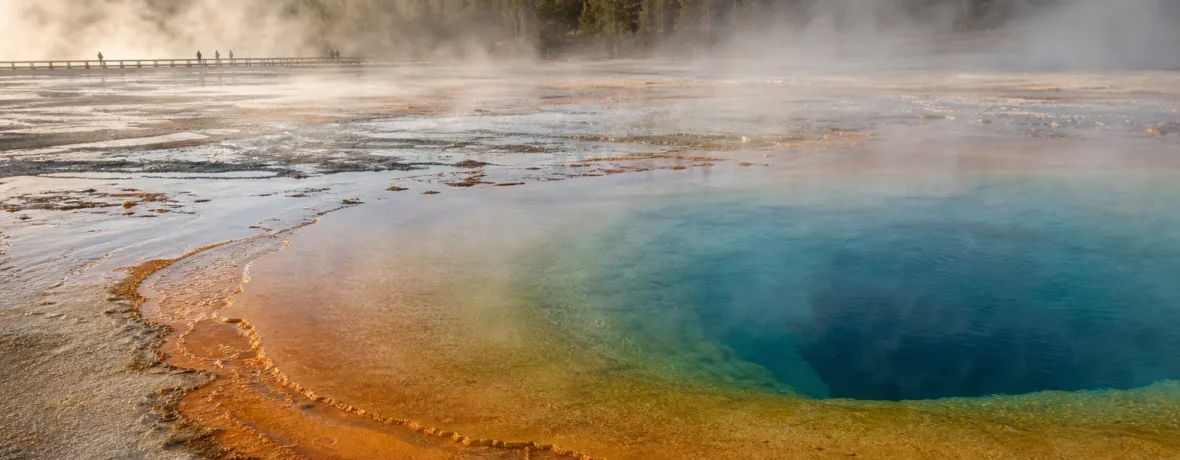
The oldest national park is Yellowstone National Park, established on March 1, 1872, when President Ulysses S. Grant signed the Yellowstone National Park Protection Act. The National Park Service calls Yellowstone the world’s first national park; Hot Springs is older as a federal reservation, but became a national park in 1921.
What is the oldest national park?
Yellowstone is the oldest national park.
That answer is simple, but the backstory has a few switchbacks. Congress created Yellowstone in 1872 as a “public park or pleasuring-ground for the benefit and enjoyment of the people,” according to the National Park Service history of Yellowstone’s establishment. The park came before the National Park Service itself, which was not created until 1916.
Yellowstone’s title rests on the formal national park designation. Other protected lands came earlier. Yosemite Valley was protected by the Yosemite Grant in 1864, but it was granted to California as a state-managed reserve before Yosemite National Park was established in 1890. Hot Springs in Arkansas was reserved by the federal government in 1832, but the NPS says it became a national park on March 4, 1921.
So if you mean “first place protected by the U.S. government,” the answer shifts. If you mean “first national park,” you’re headed to Yellowstone.
Was Hot Springs older than Yellowstone?
Yes as a federal reservation, no as a national park.
Hot Springs has a strong claim to being the oldest federally protected recreation area in the United States. President Andrew Jackson signed legislation in 1832 setting aside the hot springs and surrounding land, according to the official Hot Springs National Park history. But the same NPS history says Hot Springs was designated a national park in 1921, 49 years after Yellowstone.
That distinction matters because “oldest national park” is about the legal national park title, not simply early protection. Think of it like trailhead signs: two routes can reach the same ridge, but the official name on the map still counts.
| Place | Key official date | What the date means |
|---|---|---|
| Yellowstone | March 1, 1872 | Established as the first national park |
| Hot Springs | April 20, 1832; March 4, 1921 | Federal reservation first; national park later |
| Yosemite | 1864; October 1, 1890 | State grant first; national park later |
| Sequoia | September 25, 1890 | America’s second-oldest national park |
How old is Yellowstone National Park?
Yellowstone is 154 years old as of November 2026.
The park turned 154 on March 1, 2026, and it will turn 155 on March 1, 2027. The NPS lists Yellowstone’s establishment date as March 1, 1872, and describes it as the world’s first national park on its official Yellowstone park facts page.
That age shows on the ground in a good way. Yellowstone feels old not because it is dusty or frozen in time, but because it still protects the kind of large, wild landscape that inspired the national park idea in the first place: geysers, wildlife, forests, high country, canyons, lake country, and enough weather to humble your best-laid plan.
Where is Yellowstone, and how big is it?
Yellowstone spans Wyoming, Montana, and Idaho.
The NPS lists Yellowstone at 3,472 square miles [8,991 sq km] and 2,221,766 acres [899,116 hectares], while also stating that no area figures have been scientifically verified and confirmation work continues. The same official facts page lists the park as 96% in Wyoming, 3% in Montana, and 1% in Idaho.
For scale, the NPS says the park runs 63 air miles [102 km] north to south and 54 air miles [87 km] east to west. That means you do not “pop over” to the other side of Yellowstone after lunch unless your day is built around driving. Distances are long, wildlife jams happen, and weather can flip the script fast.
Why was Yellowstone made a national park?
Yellowstone was protected to keep its natural wonders from private development.
Expeditions, photographs, sketches, and paintings helped show Congress what was at stake. The NPS credits reports and artwork from early expeditions with helping build support for preserving the region. In 1872, Congress set the land aside instead of opening it to settlement, occupancy, or sale.
The move was bold for its time. The federal government had been transferring public land into private hands across the West. Yellowstone broke that pattern. It said, in effect: this place is too rare to carve up.
That idea now feels familiar because national parks are part of American outdoor life. Back then, it was a new kind of promise.
What rules do hikers need to know before visiting Yellowstone?
You need to treat Yellowstone like a wild park, not a theme park.
As of November 2026, the NPS says an entrance pass is required for Yellowstone, but vehicle reservations are not required. The standard private vehicle pass is $35 and covers one private, non-commercial vehicle and its passengers for seven consecutive days. Non-U.S. residents aged 16 and older must also pay a $100 nonresident fee unless admitted with an Annual Pass or America the Beautiful Pass, according to the official Yellowstone fees page.
For hiking and sightseeing, these rules are the ones to burn into your brain:
- Stay on boardwalks and designated trails in thermal areas. As of November 2026, the NPS warns that ground near hot springs may look solid but can be a thin crust over superheated water.
- Do not touch thermal features or runoff. The NPS says even runoff can be extremely hot.
- Do not swim or soak in hot springs. As of November 2026, the NPS says swimming or bathing in water entirely of thermal origin is illegal.
- Give wildlife real space. The NPS says to stay at least 100 yards [91 m] from bears, wolves, and cougars, and at least 25 yards [23 m] from all other wildlife, including bison and elk.
- Leave pets off trails and boardwalks. As of November 2026, Yellowstone’s rules prohibit pets on trails and boardwalks, with limited exceptions such as service animals.
- Do not launch a drone. As of November 2026, Yellowstone prohibits launching, landing, or operating unmanned aircraft from or on NPS-managed lands and waters unless approved in writing by the superintendent.
- Get a backcountry permit for overnight trips. As of November 2026, the NPS says a backcountry permit is required year-round for all overnight stays in Yellowstone’s backcountry; permits are not required for day hiking.
How do you plan your first visit to the oldest national park?
Start with season, roads, and a realistic map.
Yellowstone is open 24 hours a day, 365 days a year, but that does not mean every road, lodge, trailhead, or service is open every day. As of November 2026, the NPS says most park roads close to regular vehicles from early November to late April, while the road from the North Entrance at Gardiner, Montana, through Mammoth Hot Springs, Tower Junction, and toward Cooke City is generally the only year-round route for regular vehicles, weather permitting.
- Pick your season first. Summer gives you the most road access. Winter gives you quiet, snow, and limited access. Spring and fall can be beautiful, messy, and unpredictable.
- Check current road status before you drive. Yellowstone roads can close with little warning due to weather, construction, or unsafe conditions.
- Choose one or two park regions per day. Old Faithful, Canyon, Lamar Valley, Mammoth, and Yellowstone Lake are not next-door stops.
- Build hikes around daylight and weather. High elevation, storms, snow, and wildlife activity can change your pace.
- Reserve lodging or camping early when possible. Yellowstone has huge demand during peak season, and driving from gateway towns adds time.
- Carry layers, water, food, and patience. The park is big, services are spread out, and a bison jam can rewrite your schedule.
Related reading
- National Park Pass Changes for 2026
- How Big Is Yellowstone National Park?
- Every Kid Outdoors: The Free 4th Grade National Park Pass
- How Big Is Yosemite National Park?
FAQ
What is the oldest national park in the world?
Yellowstone is recognized by the National Park Service as the world’s first national park. It was established on March 1, 1872, by the Yellowstone National Park Protection Act.
What is the oldest national park in the United States?
Yellowstone is the oldest national park in the United States. Sequoia, established on September 25, 1890, is identified by the NPS as America’s second-oldest national park.
Why isn’t Hot Springs the oldest national park?
Hot Springs was protected earlier, but it was not first designated as a national park. It became a federal reservation in 1832 and a national park in 1921.
Was Yosemite a national park before Yellowstone?
No. Yosemite Valley was protected under an 1864 grant to California, but Yosemite National Park was established in 1890. Yellowstone became a national park in 1872.
Do you need a reservation to enter Yellowstone?
No vehicle reservation is required to enter Yellowstone as of November 2026. An entrance pass is required, and you should still check current road status before traveling.
Can you hike in Yellowstone without a permit?
Yes, you can day hike without a backcountry permit. A backcountry permit is required year-round for overnight stays in Yellowstone’s backcountry as of November 2026.