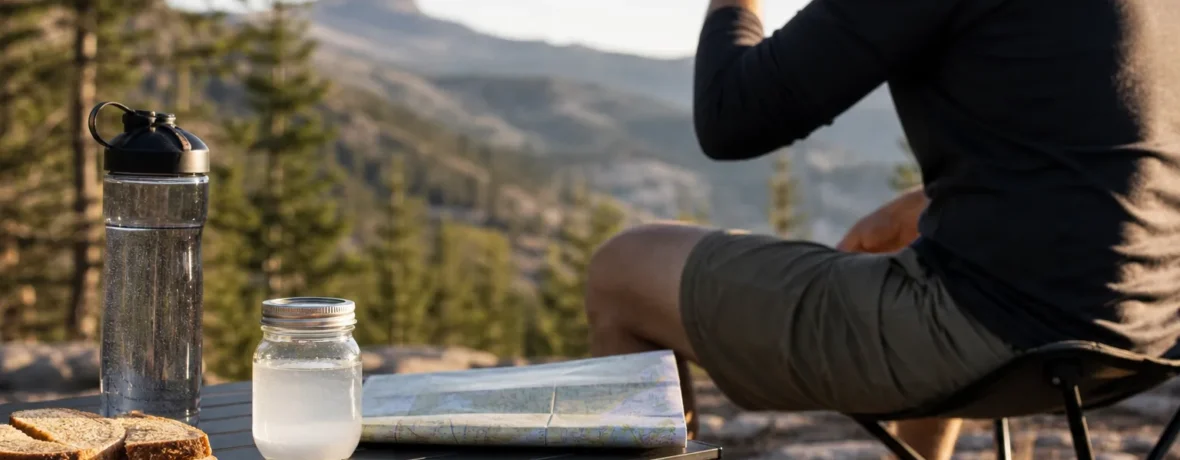
Is pickle juice good for dehydration? No, not by itself. Pickle juice may help some exercise-related muscle cramps fast, but it does not replace enough fluid to rehydrate you. For dehydration, use water plus electrolytes, and during hot hiking aim for steady fluids, such as 8 oz [237 mL] every 15–20 minutes when conditions demand it.
Is pickle juice good for dehydration on the trail?
No—pickle juice is not a real dehydration fix. It is salty, sharp, and easy to overhype, but it is not a substitute for water, an electrolyte drink, or an oral rehydration solution when you are actually low on fluids.
Dehydration means your body has lost more fluid than it has taken in. On a hot climb, that loss comes from sweat, breathing hard, sun exposure, dry air, and sometimes stomach trouble. According to MedlinePlus from the NIH, treatment means replacing lost fluids and electrolytes—not just chasing salt.
Pickle juice brings sodium and vinegar. What it does not bring is enough water. A few swigs might make your mouth pucker and your calf unclench, but your bloodstream still needs fluid volume. If your pee is dark, your head is pounding, your pace is falling apart, and your mouth feels like dust, pickle juice is the sidekick at best. Water and electrolytes are the main act.
Does pickle juice help cramps?
Yes, it may help some muscle cramps, but probably not because it “rehydrates” you. The best-known lab research found that small amounts of pickle juice shortened electrically induced cramps in dehydrated people, and the effect happened too fast to be explained by fluid or electrolyte replacement.
In one study indexed by PubMed, pickle juice reduced cramp duration compared with water, but blood chemistry did not change enough within 5 minutes to explain the result. The likely explanation is a nerve reflex triggered in the mouth and throat by the sharp vinegar taste.
That matters for hikers. If your calf locks up halfway up a sun-baked switchback, a small hit of pickle juice may help calm the cramp. But if the cramp came from hard effort, heat, poor conditioning, or too much sweat loss, the rest of your plan still needs to be boring and effective: stop, cool down, drink, eat something salty, and stretch gently.
What should you drink for dehydration instead of pickle juice?
Drink water, and add electrolytes when sweat loss is heavy or the hike runs long. Plain water is fine for many short, cool hikes. Once you are sweating for hours, climbing hard, or hiking in heat, sodium and carbohydrates can help you keep drinking and replace what you are losing.
The CDC heat illness guidance recommends water plus a snack or a drink that replaces carbohydrates and electrolytes for heat cramps. For outdoor work in heat, CDC guidance commonly uses 1 cup, or 8 oz [237 mL], every 15–20 minutes as a practical drinking pattern during moderate activity.
| Drink | Best use | Trail downside |
|---|---|---|
| Water | Short hikes, cool weather, sipping with salty snacks | Does not replace sodium by itself |
| Electrolyte drink | Hot hikes, heavy sweating, long climbs | Some are very sweet or rough on the stomach |
| Oral rehydration solution | More serious fluid loss, especially with vomiting or diarrhea | Medical-tasting; not needed for every normal hike |
| Pickle juice | Possible quick cramp relief | Not enough fluid to rehydrate you |
How do you use pickle juice safely for hiking cramps?
Use it as a cramp tool, not a hydration plan. If you carry pickle juice, treat it like you would ginger chews for nausea or tape for hot spots: useful in the right moment, useless as a cure-all.
- Stop moving. Do not try to “walk off” a hard calf, quad, hamstring, or foot cramp on sketchy terrain.
- Move into shade. Drop your pack if you can do that safely. Let your body cool.
- Take a small sip of pickle juice. You are aiming for the sharp taste, not a big salty chug.
- Stretch gently. For a calf cramp, straighten the leg and pull the toes toward your shin. No bouncing.
- Drink water or electrolytes. Follow the pickle juice with real fluids.
- Eat a salty snack. Pretzels, crackers, jerky, salted nuts, or a trail meal can help replace sodium through food.
- Restart slowly. If the cramp returns, shorten the day or turn around.
Can pickle juice make dehydration worse?
It can make you feel worse if you overdo it. Pickle juice is salty and acidic, so big gulps can upset your stomach, trigger nausea, or make you feel thirstier.
For most healthy adults, a small sip is unlikely to wreck a hike. The problem is the mindset. If you keep drinking pickle juice instead of water, you are adding salt without solving the fluid deficit. That is not smart trail math.
Be extra cautious if you have high blood pressure, kidney disease, heart disease, or you have been told to follow a low-sodium diet. Mayo Clinic’s heat cramps first aid advice says to seek medical care for heat cramps if you have heart problems, are on a low-sodium diet, or cramps do not go away within 1 hour.
What are signs you are dehydrated while hiking?
Thirst is a warning light, not a hydration strategy. By the time you feel lousy, you may already be behind.
- Dry mouth or sticky saliva
- Dark yellow urine or not peeing for hours
- Headache
- Dizziness or lightheadedness
- Fast heartbeat that feels out of proportion to the climb
- Unusual fatigue, weakness, or clumsiness
- Muscle cramps, especially with heavy sweating
- Nausea or loss of appetite
Heat illness can stack on top of dehydration. That is where things get serious. Confusion, slurred speech, fainting, seizures, or very high body temperature are emergency signs. CDC notes that heat stroke can push body temperature to 106°F [41°C] or higher within 10–15 minutes.
How do you prevent dehydration and cramps before a hike?
Start hydrated, carry enough fluid, and eat salt with your calories. Most cramp prevention is plain trail discipline, not a magic bottle of brine.
- Check heat, humidity, and sun exposure. A 6-mile [9.7-km] hike in shade is not the same as 6 miles [9.7 km] on exposed granite.
- Drink before you start. Do not begin thirsty.
- Carry more than you think you need. Dry air and wind can hide sweat loss.
- Use electrolytes for long, hot, or sweaty hikes. Tablets, powders, sports drinks, and salty foods can all work.
- Snack early. Waiting until you bonk makes cramps more likely.
- Build fitness gradually. Fatigued muscles cramp more easily.
- Ease up in heat. Slow down before your body forces the issue.
The Wilderness Medical Society heat illness guidelines support oral fluid replacement for mild and moderate heat illness when the person can drink. They also warn that overhydration can be dangerous, so do not force endless water. Drink steadily, listen to thirst, and include electrolytes when sweat loss is high.
When to see a doctor
Get medical help fast if symptoms are severe, strange, or not improving. Trail cramps are usually simple. Heat illness is not.
Call 911 or seek emergency care for confusion, fainting, seizure, slurred speech, loss of coordination, chest pain, severe weakness, or hot skin with altered mental status. Do the same if someone cannot keep fluids down, has worsening symptoms, or seems “not right.”
For cramps, get medical care if they last longer than 1 hour, keep coming back, come with swelling or redness, or happen with muscle weakness. Mayo Clinic also advises care for cramps that are severe, frequent, or not improving with self-care.
Related reading
- Is Gatorade Good for Dehydration?
- Can Dehydration Cause High Blood Pressure?
- Can Dehydration Cause Dizziness?
- Can Dehydration Cause a Fever?
FAQ
Is pickle juice better than water for dehydration?
No. Water is better for replacing fluid, and an electrolyte drink is better when you need both fluid and sodium. Pickle juice may help cramps, but it does not provide enough water to correct dehydration.
How fast does pickle juice work for cramps?
It may work within minutes for some exercise-related cramps. Research suggests the effect is too fast to come from electrolyte replacement, so the sharp vinegar taste may trigger a nerve reflex.
Should I carry pickle juice on a hike?
Carry it only if cramps are a known problem for you and your stomach tolerates it. Use a small leakproof container, and still carry water, electrolytes, and salty food.
Can I drink pickle juice every day for hydration?
No, daily pickle juice is not a smart hydration habit for most hikers. It is high in sodium and acidic, and plain water plus normal meals covers routine hydration better.
What is the best trail drink for cramps?
The best choice is usually water plus electrolytes, especially during hot or long hikes. If a cramp hits suddenly, pickle juice may help, but you should still stop, cool down, stretch gently, and rehydrate.