Is hiking expensive? No, not if you treat it as walking on dirt instead of shopping for a lifestyle. A safe day-hiking setup can start with gear you already own, and many local trails cost $0; even a U.S. resident federal annual pass is $80 as of November 2026.
Is hiking expensive compared with other hobbies?
No. Hiking is one of the cheaper outdoor hobbies once you stop confusing “prepared” with “fully outfitted.”
That is the line. Hiking can be expensive, but it does not have to be. The trail does not care if your fleece came from a boutique mountain shop or a clearance rack. It cares whether you can stay warm, dry, fed, hydrated, and found.
The expensive version of hiking is easy to spot: premium boots before you know your feet, a technical shell for a 2-mile [3.2 km] town trail, a giant backpack for day hikes, a subscription app stack, and a four-hour drive every Saturday because only famous trailheads count. That is not hiking. That is gear acquisition with scenery.
The cheap version is less flashy and much smarter: nearby trails, ordinary athletic clothes, packed snacks, a real map backup, layers you already own, and gradual upgrades after something has actually failed you. That version can keep you walking for years.
How much does hiking cost for beginners?
For a beginner, the real first cost is usually footwear, a small pack, water, snacks, and weather protection—not a closet full of technical gear.
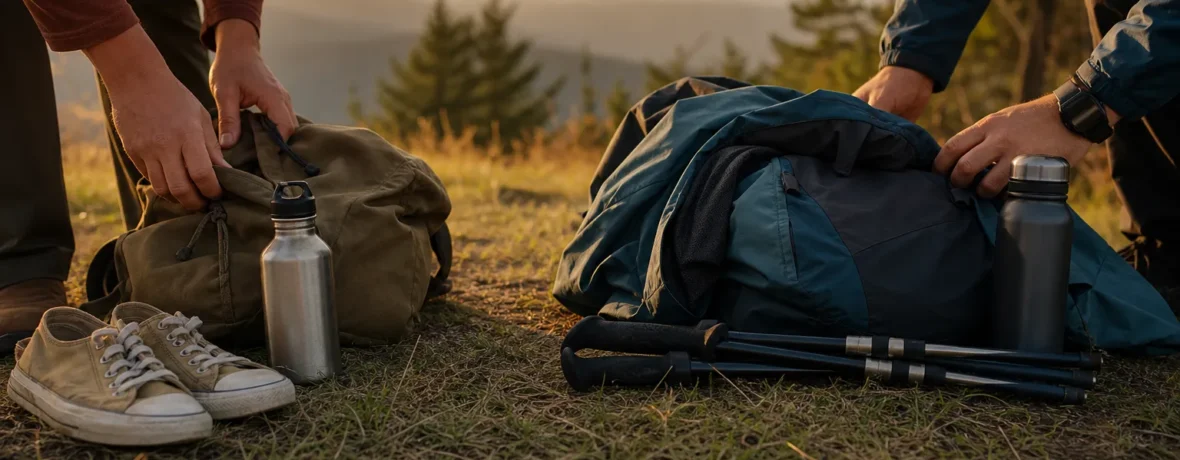
If you already own comfortable athletic shoes, a school-style backpack, a rain jacket, a warm layer, and a water bottle, your first hike may cost nothing beyond transportation. That is the honest starting point. Not glamorous. Completely valid.
Here is the part many gear guides blur: beginner hiking and backpacking are not the same purchase. A 4-mile [6.4 km] day hike near home does not require a tent, stove, quilt, bear canister, satellite messenger, or titanium spoon. Those may matter later. They do not belong in your first-cart panic buy.
| Hiking style | What you actually need first | What can wait |
|---|---|---|
| Local day hike | Comfortable shoes, water, snacks, layers, navigation | Premium boots, GPS watch, trekking poles |
| Longer day hike | Better pack, headlamp, first-aid basics, rain shell | Ultralight gear, specialty clothing |
| Backpacking | Shelter, sleep system, stove, water treatment, permits where required | Luxury camp gear, duplicate gadgets |
The National Park Service lists the Ten Essentials as navigation, sun protection, insulation, illumination, first-aid supplies, fire, repair kit and tools, nutrition, hydration, and emergency shelter; that is a better buying guide than any influencer packing list. Start there, then scale the quality to the trip. NPS Ten Essentials (nps.gov)
Can you go hiking on a budget?
Yes. Hiking on a budget is not a compromise; it is often the saner way to learn.
New hikers tend to buy fear. Fear of blisters. Fear of rain. Fear of looking unprepared. Some of that fear is useful, because mountains, heat, cold, and darkness do not grade on enthusiasm. But fear also sells $300 solutions to $30 problems.
Here is a better order:
- Hike close to home first. A 3-mile [4.8 km] county park loop teaches pacing, socks, pack comfort, and weather judgment without turning every mistake into a rescue story.
- Use what you own. Gym shorts, synthetic shirts, fleece, running shoes, baseball caps, and old backpacks can work for easy trails in fair weather.
- Borrow before you buy. Try trekking poles, water filters, bigger packs, and insulated jackets before spending real money.
- Upgrade the pain points. If your feet hurt, fix footwear. If you get soaked, buy better rain gear. If your shoulders ache, look at packs.
- Spend on safety, not status. A headlamp, whistle, map, extra layer, and water plan beat a logo-heavy outfit every time.
Cheap does not mean careless. It means refusing to buy things before the trail has proven you need them.
Are hiking permits and park fees the real cost?
Sometimes, but transportation and impulse gear usually cost more than the trail fee.
For U.S. hikers, many local, county, state, and federal trails can be free or low-cost, but famous destinations may charge entrance fees, require timed entry, or use permit systems. As of November 2026, the National Park Service lists the America the Beautiful Resident Annual Pass at $80, covering entrance fees and standard amenity day-use fees at participating federal lands; the Non-Resident Annual Pass is listed at $250. NPS entrance passes (home.nps.gov)
Reservation costs are a separate trap door. As of November 2026, Recreation.gov lists service fees such as $8 for many online campsite, day-use, group-site, cabin, lookout, and yurt reservations, $1 for tickets, and $2 for timed-entry tickets, while permit reservation fees vary by location and activity. Recreation.gov reservation policies (Recreation.gov)
So yes, fees can matter. But for most day hikers, the sneaky cost is the drive: fuel, food on the road, parking, and the habit of turning every hike into a mini vacation. The cheapest trail is often the one you can reach after work.
What hiking gear should you buy first?
Buy the items that protect your feet, temperature, water supply, and ability to get home.
That is the practical answer. Not the prettiest answer. The trail gives no prizes for matching colors.
- Footwear: Start with comfortable shoes with decent traction. Move to hiking shoes or boots only if your terrain, ankles, load, or weather demand it.
- Socks: Avoid cotton for longer hikes. Blisters turn cheap outings into miserable ones.
- Pack: Use a small pack that carries water, layers, food, and safety items without bouncing.
- Rain and warmth: A basic rain shell and insulating layer matter more than fancy pants.
- Navigation: Carry a downloaded map and a backup, especially when cell service gets unreliable.
- Light: A headlamp belongs in your bag even for daytime hikes. Sunset does not ask permission.
- Water and food: Bring more than the bare minimum, especially in heat or on exposed trails.
The best first upgrade is the thing that solves a repeated problem. If your budget is tight, do not upgrade anything that is already working.
When to see a doctor
Talk to a doctor before tougher hikes if you have a chronic condition, have been inactive, or plan to jump into vigorous activity.
Hiking is walking, until it is not. Add heat, altitude, steep grades, a heavy pack, or a long descent, and the effort changes fast. The CDC says adults with chronic health conditions or disabilities should consult a health care professional about appropriate types and amounts of physical activity, and its general adult guidance points to 150 minutes of moderate-intensity activity plus 2 days of muscle strengthening each week. CDC guidance for chronic conditions and physical activity (cdc.gov)
Stop hiking and seek medical help if you develop chest, neck, jaw, or arm pain or tightness, dizziness, faintness, severe shortness of breath, or an irregular heartbeat during exertion; Mayo Clinic lists those as symptoms that call for immediate medical care during exercise. Mayo Clinic exercise safety guidance (mayoclinic.org)
How do you keep hiking cheap without being cheap about safety?
You keep hiking cheap by cutting vanity, not essentials.
That is the whole argument. Do not skip water treatment on remote hikes. Do not skip a headlamp because your phone has a flashlight. Do not wear slick fashion sneakers on wet rock because “it is only 2 miles” [3.2 km]. Cheap hiking becomes expensive when one preventable mistake turns into an injury, a rescue, or a ruined weekend.
Cut these instead:
- Driving past 12 good trails to reach one famous trail
- Buying full-price gear before checking used racks and off-season sales
- Owning multiple items that do the same job
- Replacing serviceable gear for a lighter color or newer model
- Buying backpacking gear when you only day hike
The strongest hikers are often boring shoppers. They know their kit. They repair things. They carry snacks from home. They choose trails for the day they actually have, not the fantasy version of themselves with perfect weather and unlimited time.
So, is hiking expensive? My position is no. Hiking is not an expensive hobby by nature. It becomes expensive when you outsource judgment to marketing, chase distant trailheads, or buy advanced gear for beginner problems. Keep your trips local, build slowly, respect safety, and hiking stays what it should be: one of the most affordable ways to spend a day outside.
Related reading
- Why Is Merino Wool So Expensive and Is It Worth It?
- Type 2 Fun: Why Hard Hikes Feel Good Later
- The Seven Summits Explained
- What Is Geocaching?
FAQ
Is hiking expensive for beginners?
No. Beginners can often start with athletic shoes, a small backpack, water, snacks, layers, and a simple navigation plan. Spend first on comfort and safety, then upgrade only after you know what is limiting you.
What is the most expensive part of hiking?
For many day hikers, transportation costs more over time than gear or fees. Long drives, paid parking, road food, and destination trips add up faster than a basic pack and rain shell.
Can I hike without buying hiking boots?
Yes, for many easy and moderate day hikes, comfortable trail runners or athletic shoes with good traction can work. Boots make more sense for rough terrain, heavy packs, snow, mud, or hikers who need extra ankle support.
How can I start hiking on a budget?
Start with nearby trails, use clothing you already own, borrow gear, and buy only after a real need appears. Put money toward shoes, socks, weather protection, water, and navigation before gadgets.
Are national parks too expensive for hikers?
No, but they are not always the cheapest option. If you visit federal lands often, the annual pass may make sense; if you hike occasionally, local parks, national forests, and state-managed trails may be cheaper and less crowded.