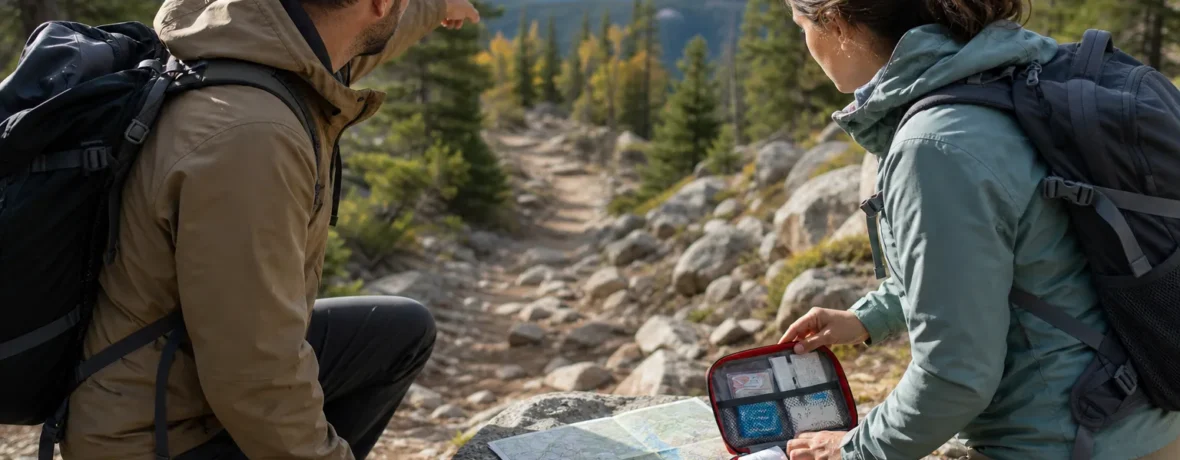
Not very: for a prepared hiker on marked trails, the risk is low. The National Park Service reported 0.11 deaths per 100,000 recreation visits in 2019, but hiking accounted for 48% of search-and-rescue activity in one NPS study. The danger rises fast when weather, terrain, fitness, or judgment fail.
Is hiking dangerous compared with everyday life?
Not usually.
That answer annoys both fearmongers and macho hikers, which is how you know it is close to the truth. Hiking is not roulette. It is walking with consequences. Most of the time, those consequences are sore calves, muddy shoes, sunburn, and the quiet humiliation of realizing the “easy” loop was not easy at all.
The numbers help cool the drama. The National Park Service mortality dashboard says, as of November 2026, its latest validated death data covers calendar years 2014 to 2019. In 2019, NPS reported 327,516,619 recreation visits and a mortality rate of 0.11 deaths per 100,000 recreation visits. That includes national park visitors broadly, not only hikers, but it gives the right scale: parks are not death traps.
Still, low risk is not no risk. A trail is not a treadmill with trees. It has loose rock, weather, distance, darkness, water crossings, heat, cold, altitude, and your own pride walking beside you like a bad coach.
My position is simple: hiking is safe enough to recommend and serious enough to respect. Treat it like a real outdoor activity, not a scenic errand.
What are the real risks of hiking?
The biggest risks are ordinary things going wrong in remote places.
That is the part people miss. The danger is rarely a bear bursting through the brush like a horror movie. More often, it is a rolled ankle 4 miles [6.4 km] from the trailhead, a wrong turn near sunset, a thunderstorm above treeline, or a hot climb with too little water.
The NPS lists motor vehicle crashes, drownings, and falls as the top three leading causes of unintentional deaths in parks. That should change how you think about risk. The drive to the trailhead matters. The creek crossing matters. The cliff selfie matters. The casual shortcut around a switchback matters.
A PubMed-indexed study of search and rescue in U.S. national parks from 1992 to 2007 found hiking was the most common activity requiring SAR assistance, at 48%. That does not mean hiking is reckless. It means hikers are numerous, mobile, exposed, and very good at underestimating how long a “quick” outing will take.
| Risk | What it usually looks like | Best prevention |
|---|---|---|
| Falls | Slipping on loose rock, snow, wet roots, or cliff edges | Slow down where a fall has consequences |
| Getting lost | Missed junctions, dead phone, fading daylight | Carry offline maps plus a paper backup |
| Heat illness | Dizziness, headache, nausea, weakness, confusion | Start early, pace down, drink, seek shade |
| Weather exposure | Lightning, hypothermia, wind, rain, sudden cold | Check forecast and carry insulating layers |
How do hikers get hurt most often?
By making small mistakes that stack.
One mistake is usually recoverable. You forgot a headlamp, but you turn around early. Fine. You underestimate the heat, but you cut the hike short. Fine. You miss a junction, but you stop, check the map, and backtrack. Fine.
Bad days usually build a little tower: late start, thin water supply, no rain shell, dead phone, tired legs, storm clouds, then a decision to keep going because the summit is “right there.” That tower falls fast.
The least glamorous safety skill is turning around. Not route-finding. Not knot tying. Not owning a satellite messenger. Turning around. A hiker who can quit at the right time is harder to kill than a hiker with expensive gear and a fragile ego.
What makes a hike dangerous?
A hike becomes dangerous when the margin for error gets thin.
A flat 2-mile [3.2 km] forest loop with cell service and mild weather gives you a wide margin. A 12-mile [19.3 km] ridge hike with 3,000 feet [914 m] of gain, afternoon thunderstorms, and no shade gives you a narrow one. Same activity. Different stakes.
Watch for these margin-killers:
- Heat: The CDC lists headache, nausea, dizziness, weakness, thirst, heavy sweating, and decreased urine output among heat exhaustion symptoms. Confusion or loss of consciousness is an emergency.
- Lightning: The CDC says no place outside is safe during a thunderstorm, and hikers should get off ridges, peaks, and elevated areas if caught out.
- Cold and wet clothing: Hypothermia can happen when rain, sweat, wind, and cold combine. You do not need deep winter for your body to lose heat.
- Water crossings: Moving water is stronger than it looks. If you cannot see the bottom, cannot unbuckle your pack, or feel your footing shift, reassess.
- Overconfidence: Fitness from roads or gyms does not automatically translate to talus, elevation, heat, or long descents.
How can you make hiking safer?
Build a bigger safety margin before you leave.
You do not need to turn every day hike into an expedition. You do need a repeatable system. The boring checklist is what saves the day when the trail stops being charming.
- Match the trail to your actual fitness. Look at distance, elevation gain, footing, exposure, and expected temperature. A 6-mile [9.7 km] hike with 2,000 feet [610 m] of gain is not the same as a 6-mile rail trail.
- Check the weather twice. Once the night before. Again before you drive. If storms are forecast for the afternoon, start early or pick a lower route.
- Tell someone the plan. Share the trailhead, route, turnaround time, and when you expect to be back.
- Carry the essentials you will actually use. Water, food, insulation, rain protection, navigation, light, first aid, sun protection, and a way to call for help.
- Set a turnaround time. Decide before emotions get involved. If you are not at the key point by that time, you turn around.
- Adjust all day. If the trail is slower, the heat is worse, or someone feels off, change the plan. The mountain does not care about your itinerary.
What should you carry on a day hike?
Carry enough to handle a delay.
That does not mean packing like you are crossing Alaska. It means asking one blunt question: if you had to sit still for 3 hours, would you be okay?
- Map downloaded for offline use, plus a paper map or route notes
- Headlamp, even for a morning hike
- Extra water or a treatment method
- Salty snacks and real calories
- Rain shell or wind layer
- Warm layer for stops, shade, or surprise weather
- Basic first-aid kit with blister care
- Sun hat, sunglasses, and sunscreen
- Whistle and emergency blanket
- Phone, backup battery, and, for remote terrain, a satellite messenger
Ticks deserve a spot in your safety thinking too. The CDC recommends checking clothing, gear, and skin after time in tick habitat, and says showering within 2 hours of coming indoors may reduce the risk of Lyme disease.
When to see a doctor
Get medical help when symptoms are severe, unusual, or not improving.
Trail judgment does not end at the parking lot. Heat illness, hypothermia, bites, falls, and sprains can worsen after the hike. Do not tough-guy your way through red flags.
- Call 911 right away for confusion, fainting, seizure, chest pain, severe shortness of breath, major bleeding, suspected spine injury, or heat stroke signs.
- Seek urgent care for a bite with spreading redness, fever, severe allergic reaction symptoms, or a rash after tick exposure.
- Get checked after a hard fall if you hit your head, blacked out, vomit, feel worsening headache, or have neck pain.
- For ankle or joint injuries, Mayo Clinic advises seeing a healthcare professional if you cannot move or bear weight on the joint, have pain directly over bone, or have numbness in the injured area. See Mayo Clinic guidance on sprains.
- For cold exposure, get immediate medical care for signs of hypothermia such as confusion, slurred speech, exhaustion, drowsiness, or fumbling hands.
So, should you be afraid of hiking?
No. You should be honest.
Fear makes people stay home or buy gear they do not know how to use. Honesty makes people check the forecast, start earlier, turn around sooner, and carry a headlamp. Honesty is useful.
The trail does not need to be sanitized into a sidewalk. That is not the deal. Part of hiking’s value is that it asks you to pay attention. Your feet matter. The sky matters. Your water bottle matters. Your pace matters. So does the quiet voice that says, “This is enough for today.”
Is hiking dangerous? Sometimes. Usually not. The difference is rarely luck alone. It is preparation, humility, timing, and the willingness to make the less dramatic choice before the day turns dramatic for you.
Related reading
- Type 2 Fun: Why Hard Hikes Feel Good Later
- The Seven Summits Explained
- What Is Geocaching?
- What Is Hiking, Really? A Definition Worth Arguing About
FAQ
Is hiking dangerous for beginners?
No, not if beginners choose short, well-marked trails and prepare properly. Start with modest mileage, mild weather, daylight, and a route where turning around is easy.
What is the most dangerous part of hiking?
The most dangerous part is often decision-making. Falls, heat, weather, and getting lost become worse when hikers ignore warning signs or push past a smart turnaround point.
Is it safe to hike alone?
Yes, solo hiking can be safe on suitable trails with good planning. Tell someone your route and return time, carry navigation and light, and choose terrain that matches your skill.
Are wild animals a major hiking danger?
Usually no. Wildlife gets attention because it is dramatic, but falls, weather, water, heat, and medical problems are more common concerns for hikers.
How do I know when to turn around?
Turn around when you hit your preset turnaround time, weather worsens, water runs low, the route feels beyond your ability, or anyone in the group is struggling. The summit is optional; getting home is not.