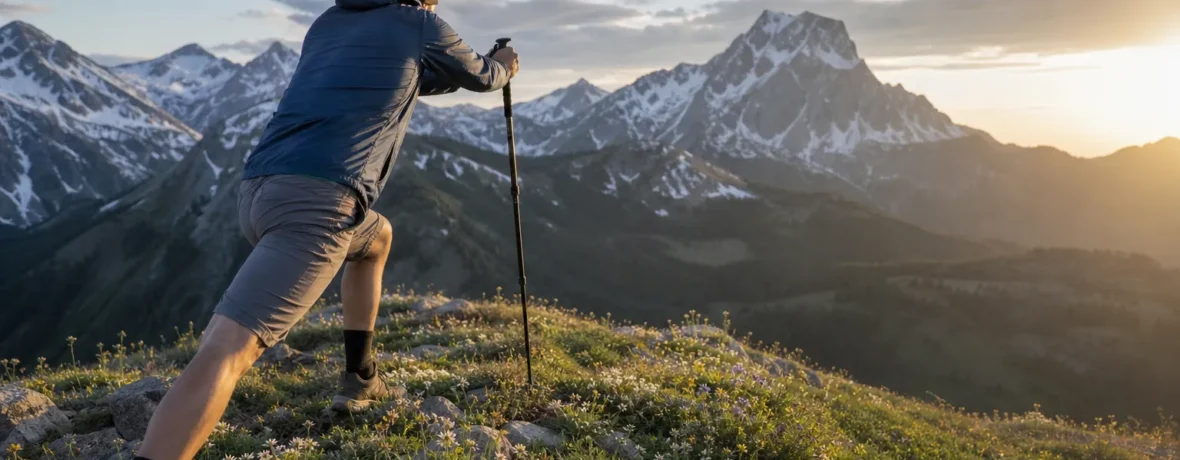
To prevent leg cramps, start with steady pacing, trained legs, enough fluids, salty snacks on hot days, and quick stretching when muscles tighten. Drink to thirst, take 5-minute breaks every hour, ease into climbs, and stop immediately if cramping comes with heat illness symptoms.
A leg cramp can turn a clean ridge walk into a teeth-grinding shuffle. One minute you’re moving well. The next, your calf grabs like a bear trap, your quad locks, or your hamstring feels like a twisted rope.
The fix is rarely one magic tablet. Long-hike cramps usually come from a pileup: fatigue, heat, sweat loss, poor pacing, tight muscles, hard climbs, long descents, shoes that change your gait, or a pack that makes every step cost more. You prevent them by reducing that pileup before it tips over.
What causes cramps while hiking?
Most hiking cramps come from muscle fatigue, heat stress, fluid loss, salt loss, or a mix of all four.
A cramp is a sudden, involuntary muscle contraction. On trail, it usually hits the muscles doing the hardest work: calves on steep climbs, quads on descents, hamstrings when you’re overstriding, and feet when your shoes are tight or your arch is working overtime.
MedlinePlus lists dehydration, overuse, muscle strain, and low levels of minerals such as potassium, calcium, or magnesium among possible causes of muscle cramps. The CDC heat illness guidance also flags muscle cramps or pain as a possible sign of heat-related illness, especially when paired with heavy sweating.
On long hikes, watch for these common triggers:
- Starting too fast: Your legs burn through early energy, then rebel later.
- Big elevation gain: Climbing loads calves, glutes, and hip flexors hard.
- Long descents: Downhill steps hammer quads through braking force.
- Heat and humidity: Sweat loss climbs, and your body works harder to cool itself.
- Low sodium intake: Plain water without salty food can leave heavy sweaters feeling worse.
- Overhydration: Drinking far beyond thirst can dilute blood sodium, which can be dangerous.
- New footwear: New boots, stiff soles, or different drop can change muscle load.
- Heavy pack: Extra weight increases strain on every step.
- Poor conditioning: A 12-mile [19 km] mountain day is not the place to discover your calves needed more prep.
How to prevent leg cramps before a long hike?
Build fatigue resistance before the hike, then start the day hydrated, fed, warmed up, and paced below your redline.
Prevention starts days before your boots touch dirt. You want legs that can handle repeated contractions for hours, not just one heroic push up the first hill. That means training calves, quads, hamstrings, glutes, and feet with the same demands the trail will throw at them: climbing, descending, uneven steps, and time under load.
- Train with hills or stairs 2-3 times per week. Use steady climbs and controlled descents. Descending is where many hikers cook their quads.
- Add loaded walks. Carry your hiking pack with the weight you expect on trail. Start light and build gradually.
- Strength-train the big trail muscles. Squats, step-ups, calf raises, lunges, and hip bridges all match hiking demands.
- Break in footwear early. Wear your shoes or boots on shorter hikes before a long day. Hot spots and cramped toes can change how you walk.
- Check your pack weight. Remove duplicates, luxury extras, and “just in case” clutter that you do not truly need.
- Eat a real pre-hike meal. Choose familiar foods with carbohydrates and some salt. Do not experiment at the trailhead.
- Warm up for 5-10 minutes. Walk easy before pushing pace. Save the hero stride for later.
Warm muscles behave better than cold, startled ones. Start the first mile [1.6 km] slower than you think you need to. If you feel silly going that easy, good. That is the point.
How much water should you drink to avoid leg cramps on a hike?
Drink to thirst, and pair fluids with food or electrolytes when you sweat heavily.
The old advice to force constant water can backfire. The Wilderness Medical Society heat illness guidelines discuss the risk of exercise-associated hyponatremia, a dangerous low-sodium state that can occur when fluid intake outpaces sodium balance. Translation for hikers: do not turn your stomach into a sloshing reservoir just because the day is hot.
A practical trail rhythm looks like this:
- Drink when you feel thirsty.
- Take small, regular sips instead of chugging a quart [0.95 L] at once.
- Carry enough water between reliable sources.
- Use salty snacks or an electrolyte drink during hot, sweaty, high-effort hikes.
- Pay attention to your body: headache, nausea, confusion, dizziness, or unusual weakness are not normal trail discomfort.
Your sweat rate changes with temperature, humidity, altitude, shade, pace, pack weight, and fitness. A cool forest hike and an exposed desert climb are different animals. Plan water based on the route, then adjust by thirst and conditions.
| Trail condition | What changes | Smart move |
|---|---|---|
| Cool, shaded trail | Lower sweat loss | Drink to thirst and eat normal trail snacks |
| Hot, exposed climb | Higher sweat and salt loss | Slow pace, sip often, add salty food or electrolytes |
| Long downhill | Quad fatigue rises | Shorten stride, use poles, take standing breaks |
| Heavy pack day | More muscular load | Reduce pace and stop before cramps start |
Do electrolytes help prevent hiking leg cramps?
Electrolytes can help when cramps are linked to heavy sweating, salt loss, or hot conditions, but they do not replace pacing and conditioning.
Sodium is the main electrolyte lost in sweat. Potassium, calcium, and magnesium matter for muscle function too, but most trail problems are not solved by dumping random capsules into your bottle. If you are sweating through your shirt, hiking for hours, or leaving salt crust on your clothes, salty foods can be your friend.
Good trail options include:
- Salted pretzels
- Crackers with cheese
- Peanut butter sandwiches
- Jerky
- Trail mix with salted nuts
- Electrolyte drink mix you have tested before
- Soup or broth at camp on overnight trips
Do not wait until your calf is already locked to think about sodium. Eat and drink steadily. A small snack every 60-90 minutes works better for many hikers than one giant lunch after the damage is done.
Skip trail experiments with high-dose supplements. Magnesium gets hyped for cramps, but the evidence is mixed, and supplements can bother your gut. If you take prescription medications, have kidney disease, heart disease, high blood pressure, or a condition that affects electrolytes, ask a clinician before using concentrated electrolyte products.
What pace prevents leg cramps on steep climbs?
The best pace is the fastest pace you can hold while breathing under control and keeping your stride short.
Cramps love ego. They show up after you chase a faster group, hammer the first switchbacks, or refuse to pause because the summit looks close. On climbs, shorten your stride before your calves complain. A short step keeps effort smoother and reduces the hard push-off that can light up your lower legs.
Use this climb pacing method:
- Start in an easy gear. For the first 10 minutes, hold back.
- Shorten your stride. Keep steps small enough that you are not lunging uphill.
- Keep your heels dropping when terrain allows. This reduces constant calf contraction.
- Use trekking poles. Poles shift some workload to your upper body and improve rhythm.
- Take micro-breaks. Stand for 30-60 seconds before the burn becomes a cramp.
- Fuel early. Eat before you feel hollow, shaky, or irritable.
If your calves twitch or flutter, treat that as a warning shot. Slow down right then. Do not bargain with a cramp. You will lose.
What stretches stop leg cramps on the trail?
Gentle, steady stretching of the cramped muscle is the first trail-side move.
MedlinePlus recommends stopping activity, stretching, and massaging the muscle when a cramp hits. For exercise-associated cramps linked to repetitive motion and muscle fatigue, the Wilderness Medical Society notes that passive stretching may relieve cramps better than fluids alone.
Try these trail-side fixes:
- Calf cramp: Stand facing uphill, place the cramped leg behind you, keep the heel down, and lean forward gently. Hold 20-30 seconds.
- Quad cramp: Stand tall, hold a tree or trekking pole, bend the knee, and bring your heel toward your butt without yanking. Hold 20-30 seconds.
- Hamstring cramp: Place your heel on a low rock or log, keep the knee slightly bent, and hinge forward from the hips. Hold 20-30 seconds.
- Foot cramp: Loosen your laces, spread your toes, massage the arch, and gently pull toes upward.
After the cramp releases, do not blast off at full speed. Walk easy for 5-10 minutes. If it returns, your muscle is telling you the workload is still too high. Reduce pace, shorten stride, cool down, drink if thirsty, and eat something salty if you have been sweating hard.
Can gear and footwear trigger leg cramps?
Yes, gear can trigger cramps when it changes your stride, overloads your legs, or restricts your feet.
Start with shoes. Too-tight toe boxes can make the small foot muscles work harder. A stiff boot can change ankle motion. A worn-out midsole can make every step sloppy. A sudden switch from high-drop boots to low-drop trail runners can load your calves more than usual.
Check these before a long hike:
- Your toes can wiggle when standing downhill.
- Your heel does not slide with every climb step.
- Your laces are snug, not tourniquet-tight.
- Your socks are not bunching under the arch.
- Your insoles do not create pressure points.
- Your trekking poles are adjusted so your elbows sit near a 90-degree bend on level ground.
- Your pack rides close to your back, with most weight supported by the hip belt.
Pack weight matters. Ten extra pounds [4.5 kg] is not just ten extra pounds on your shoulders. It is extra force through your hips, knees, ankles, calves, and feet for thousands of steps. If you cramp late in the day, trim weight before blaming your body.
What should you do if a leg cramp hits miles from the trailhead?
Stop, get safe, stretch the cramped muscle, cool down, and restart only after the muscle relaxes.
Do not keep walking through a hard cramp on exposed terrain. A locked calf on loose rock can turn into a fall. Move off the trail if you can do it safely, drop your pack, and give the muscle a chance to settle.
- Stop moving. Continuing can tighten the cramp further.
- Find shade or a cooler spot. Heat can make everything worse.
- Stretch gently. Hold the stretch steady; do not bounce.
- Massage the muscle. Use light pressure around the knot, not painful grinding.
- Drink if thirsty. Do not force fluids if your stomach feels full or sloshy.
- Eat a salty snack if you have been sweating. Keep it simple and familiar.
- Restart slowly. Short steps, lower pace, more breaks.
If cramps keep returning, change the plan. Turn around, shorten the route, skip the summit, or take the easier trail out. The mountain will survive your decision.
When to see a doctor
Get medical help when cramps are severe, repeated, unexplained, linked to heat illness symptoms, or different from your usual trail cramps.
Most short-lived muscle cramps do not need medical treatment. Still, some patterns deserve professional care. The Mayo Clinic advises medical care for cramps that cause severe discomfort, are associated with leg swelling, redness, or skin changes, are associated with muscle weakness, happen often, do not improve with self-care, or are not clearly linked to an obvious cause such as strenuous exercise.
On trail, treat these as red flags:
- Confusion, fainting, slurred speech, or seizure
- Hot skin, severe weakness, or collapse
- Chest pain or trouble breathing
- One-sided leg swelling, redness, warmth, or severe tenderness
- Dark urine after heavy exertion
- Cramps that continue after rest, cooling, food, and gentle stretching
- Cramps after starting a new medication
For possible heat illness, stop hiking and cool the person quickly. The CDC says heat cramps can be part of heat exhaustion, and severe symptoms need urgent care. If a hiking partner is confused, collapses, or cannot walk normally, call emergency services instead of trying to “walk it off.”
Related reading
- How to Prevent Tick Bites While Hiking
- How to Prevent Frostbite on Winter Hikes
- How to Prevent Altitude Sickness
- How Many Leg Exercises Per Workout?
FAQ
What is the fastest way to stop a leg cramp while hiking?
Stop walking and gently stretch the cramped muscle. Hold the stretch for 20-30 seconds, massage lightly, drink if thirsty, and restart at an easy pace only after the muscle releases.
Are bananas enough to prevent leg cramps?
No, bananas alone are not enough. They provide potassium, but hiking cramps often involve fatigue, pacing, heat, hydration, sodium balance, footwear, and conditioning.
Should I take salt tablets for hiking cramps?
Do not use salt tablets as a default fix. Salty foods or a tested electrolyte drink are safer choices for many hikers, and anyone with blood pressure, heart, kidney, or medication concerns should ask a clinician first.
Why do my calves cramp on uphill hikes?
Uphill hiking keeps your calves working hard with every push-off. Shorten your stride, drop your heels when terrain allows, slow your pace, and train with calf raises and hill walks before big climbing days.
Why do my quads cramp on downhill hikes?
Downhill hiking forces your quads to brake your body weight step after step. Use trekking poles, shorten your stride, take more breaks, and train descents before long mountain routes.
Can drinking too much water cause cramps?
Yes, drinking far beyond thirst can contribute to low sodium, which can become dangerous. Balance fluids with food, listen to thirst, and watch for headache, nausea, confusion, or unusual weakness during long hot hikes.