Yes, you can walk on a sprained ankle if you can bear weight, pain stays manageable, and the ankle feels stable. Stop or get help if you cannot take 4 steps, the ankle looks deformed, numbness appears, pain spikes, or swelling rises fast within the first 20 minutes.
Can you walk on a sprained ankle?
Sometimes, but walking should be a safety move, not a toughness test.
On trail, the question is not “Can I finish the hike?” It is “Can I get to help without making this worse?” A mild ankle sprain may let you hobble out under your own power. A more serious injury can feel unstable, buckle under you, or hide a fracture behind swelling and adrenaline.
A sprain means ligaments have been stretched or torn. MedlinePlus ankle sprain aftercare says pain and swelling often improve within 48 hours, but that does not mean every trail ankle is minor. If the ankle cannot support you, treat it like a trip-ending injury.
How do you know if it is safe to walk out?
Walk only if you can take slow, controlled steps without the ankle collapsing.
Use this quick trail check before moving:
- You can take 4 steps, even ugly ones, without sharp worsening pain.
- Your foot is warm and normal colored.
- You can feel light touch in your toes.
- You can wiggle your toes.
- The ankle shape looks normal, not bent or out of line.
- Pain settles when you stop and rest.
If those checks pass, shorten the route. Turn around. Skip the summit. Flat dirt back to the trailhead beats a heroic limp over rock, roots, and downhill switchbacks.
What are the signs you should not walk on it?
Do not walk if the ankle is unusable, unstable, numb, deformed, or getting worse fast.
Red flags mean you stop hiking and start planning an assisted exit:
- You cannot take 4 steps.
- The ankle or foot looks crooked.
- You heard or felt a crack at the time of injury.
- Pain is severe at rest.
- Swelling balloons quickly.
- Numbness, tingling, or blue/pale skin shows up.
- You have pain directly over ankle bones, not just soft tissue.
Mayo Clinic’s broken ankle guidance lists severe pain, swelling, bruising, deformity, and trouble bearing weight as signs that may come with a fracture. You cannot confirm “just a sprain” beside the trail. Act conservatively.
What should you do first after rolling an ankle on trail?
Stop, protect the ankle, and reassess before you take more steps.
- Get out of the hazard zone. Move only as far as needed to avoid rockfall, water, traffic, lightning, or cold exposure.
- Sit down and breathe. Give the first pain wave a minute to settle.
- Keep the boot on at first. A boot can work like a splint. Taking it off may let swelling surge, and you may not get it back on.
- Check circulation, sensation, and motion. Look at color and warmth, feel for sensation, and gently wiggle toes.
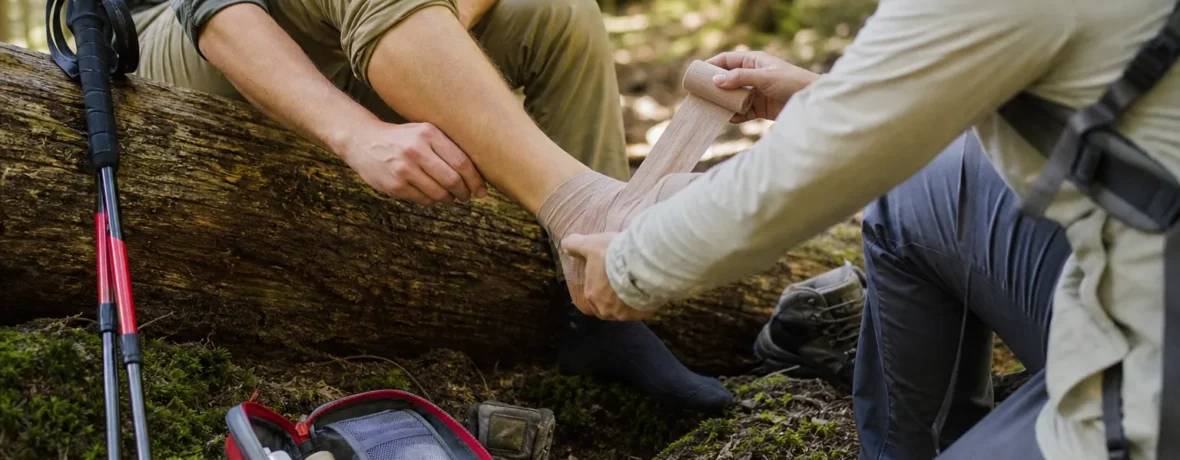
- Compress if you can. Use an elastic wrap, bandana, or spare layer. Snug is good. Numb or blue toes mean it is too tight.
- Cool it during breaks. Use a cold stream bottle, snow in a bag, or a wrapped cold pack. Do not put ice directly on skin.
- Decide: walk, wait, or call for help. Make the call before daylight, weather, or morale runs out.
The Mayo Clinic first-aid guidance for sprains recommends rest, ice, compression, and elevation, and says not to use ice for more than 20 minutes at a time.
Should you use PRICE or RICE for a sprained ankle?
Use protection first, then rest, ice, compression, and elevation when conditions allow.
On a couch, RICE is simple. On a ridge at 9,000 feet [2,743 m], you need the trail version: protect the injury, reduce movement, and get out safely. The Wilderness Medical Society acute pain guideline supports PRICE-style care for acute musculoskeletal injuries in remote settings and says patients can ambulate if necessary for evacuation.
| Step | Trail version | Goal |
|---|---|---|
| Protection | Boot, brace, trekking poles, splint, slower route | Limit further damage |
| Rest | Stop hiking hard; take weight off during breaks | Calm pain and swelling |
| Ice | Wrapped cold pack or cold water bottle for 15-20 minutes | Ease pain |
| Compression | Elastic wrap, sock, or bandana | Control swelling |
| Elevation | Foot on pack during breaks | Reduce throbbing |
How do you hike out with a sprained ankle?
Move slowly, unload the ankle, and choose the easiest exit.
If you can walk, turn your hike into an evacuation. That sounds dramatic. Good. It changes the plan.
- Use trekking poles as crutches. Plant both poles, step with the injured foot, then bring the good foot forward.
- Shorten your stride to half-length steps.
- Loosen speed goals. A safe limp beats a second fall.
- Shift pack weight to a partner if you have one.
- Avoid sidehilling, talus, wet roots, and steep descents when another route exists.
- Take standing breaks every few minutes and seated breaks when pain rises.
- Keep the ankle warm in cold weather; swelling plus chill can make boots and socks miserable fast.
Downhill is usually the bully. Face slightly sideways on steep sections if that feels steadier, but do not twist the injured ankle to force a stride. If each step gets worse, stop. Call for help, send two people if you are in a group, or use a satellite messenger if cell service is dead.
Should you wrap or brace a sprained ankle before walking?
Yes, if wrapping or bracing makes the ankle feel steadier without cutting off circulation.
An ankle wrap is not magic tape. It is a reminder and a little support. Start near the ball of the foot, wrap toward the ankle, make figure-eight turns around the joint, and keep pressure even. Check toes after 5 minutes. They should stay warm, pink, and normal-feeling.
If you carry a foam pad, pack stays, or a sit pad, you can improvise a splint for an ankle that should not bend much. Pad hard edges. Secure above and below the joint. Recheck circulation, sensation, and motion after every adjustment.
Can walking on a sprained ankle make it worse?
Yes, especially if the ankle is unstable or you keep hiking on rough ground.
Ligaments do not love “just one more mile.” Walking through sharp pain can increase swelling, trigger compensations in the knee and hip, and raise the chance of another roll. A mild sprain may tolerate a careful exit. A bad sprain needs protection and rest.
Mayo Clinic’s sprained ankle treatment page says a healthcare professional may use movement tests and imaging when needed, and ongoing pain or instability should be evaluated. That is the key word for hikers: instability. If it feels wobbly, do not trust it on uneven trail.
When to see a doctor
See a doctor if you cannot bear weight, symptoms worsen, or the ankle still feels unstable after self-care.
Get medical help promptly if you have deformity, numbness, poor color, severe swelling, severe pain, or pain over the bones of the ankle or foot. You should also get checked if you limp off trail and the ankle does not improve over the next 24-48 hours.
Do not try to diagnose the injury yourself based on bruising alone. Bruising can look wild with sprains, fractures, and soft-tissue injuries. A clinician can decide whether you need imaging, a boot, crutches, physical therapy, or another treatment plan.
What should you carry to handle ankle injuries on hikes?
Carry enough to protect the joint, slow swelling, and contact help.
- Elastic wrap or self-adhering wrap
- Trekking poles
- Small cold pack on short day hikes, if practical
- Bandana or triangular bandage
- Blister kit and tape
- Headlamp, even on day hikes
- Satellite messenger or PLB for remote routes
- Extra warm layer
- Simple first-aid card with emergency contacts
Training matters more than gear. A wilderness first aid course teaches patient assessment, splinting, evacuation decisions, and how to avoid turning one injury into two.
Related reading
- How to Heal a Sprained Ankle Fast: What Really Works
- How Long Does a Sprained Ankle Take to Heal?
- When to Worry About a Sprained Ankle
- How to Wrap a Sprained Ankle on the Trail
FAQ
Can you walk on a sprained ankle the next day?
Yes, if pain is mild, swelling is controlled, and you can walk without limping hard. If pain is worse the next day or you cannot bear weight, get medical care instead of testing it on another trail.
How long should you stay off a sprained ankle?
Stay off it during the early painful phase, then return to weight-bearing gradually as comfort and stability allow. Mild sprains may improve in days, while more serious sprains can take weeks or longer to fully settle.
Is it better to keep a hiking boot on after an ankle sprain?
Often, yes, at least until you have assessed the injury and reached a safe place. The boot can limit motion, but remove it if circulation, sensation, or swelling becomes a problem.
Can a sprained ankle feel like a broken ankle?
Yes, a sprain and fracture can feel similar on trail. Severe pain, deformity, bone tenderness, numbness, or inability to take 4 steps should push you toward medical evaluation.
Should you stretch a sprained ankle on trail?
No, not right after the injury. Protect it, limit painful motion, and save rehab exercises for after a clinician’s guidance or after the acute pain and swelling have calmed.