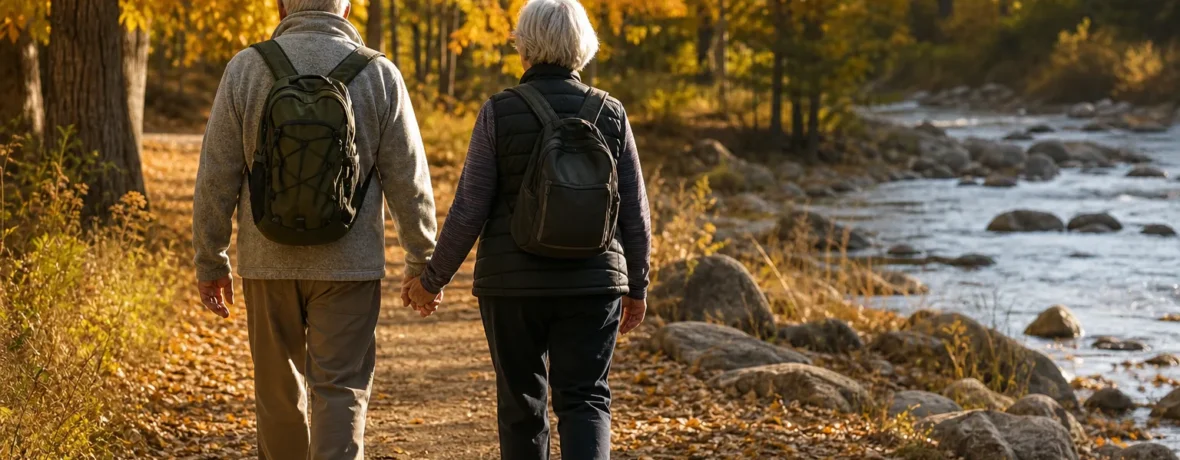
Hiking in retirement is one of the smartest moves you can make if you start small: choose easy trails under 3 miles [4.8 km], add distance slowly, carry water and layers, and ask your clinician first if you have heart, balance, lung, or joint concerns. Retirement gives you time to recover and repeat.
Is hiking in retirement a good idea?
Yes, and the reason is simple: retirement gives you the one resource most hikers never have enough of—time.
Not speed. Not fancy gear. Not a heroic tolerance for blisters. Time.
You can go on a Tuesday morning instead of fighting a Saturday crowd. You can turn around after 20 minutes and still call it a win. You can build a habit without squeezing it between work, errands, and a dinner you forgot to thaw. That changes everything.
The best argument for starting now is not that you have something to prove. You do not. The argument is that hiking fits this stage of life unusually well. It gives structure without a boss, challenge without competition, and solitude without isolation. A trail is not asking for your résumé. It asks you to put one foot down, then the next.
That is a fair bargain.
What are the benefits of hiking for older adults?
Hiking gives you movement, balance practice, sunlight, fresh air, and a reason to keep your legs useful.
The CDC recommends adults 65 and older get 150 minutes of moderate-intensity aerobic activity each week, plus muscle-strengthening and balance work. Hiking can help with the aerobic piece, and uneven trail surfaces nudge your balance and stabilizing muscles in ways a flat sidewalk often does not.
No, a trail is not a magic cure. It will not erase aging. But it can push back against the shrinking of your world, which is one of the sneakiest traps in retirement. First you stop driving at night. Then you avoid hills. Then you stop going places that require “too much walking.” Your map gets smaller.
Hiking expands the map again.
- Body: steady walking, hill climbing, step-ups, and controlled downhill movement.
- Mind: route choices, changing terrain, weather awareness, and attention to footing.
- Mood: quiet, rhythm, daylight, and a break from indoor routines.
- Community: hiking clubs, volunteer trail days, walking groups, and ranger-led outings.
That last point matters. Retirement can be lonely even when life looks full from the outside. A weekly hike gives you a place to be and people to recognize. Sometimes that is as valuable as the miles.
How do you start hiking after 60?
Start with short, easy, repeatable hikes before you chase views.
The mistake is picking the postcard trail first. The famous overlook. The waterfall with 900 stone steps. The ridge everyone talks about. Save those. Your first goal is to finish feeling like you could do it again in two days.
- Walk on flat ground for 20 to 30 minutes. Do this several times before you add trail surfaces.
- Choose a trail under 3 miles [4.8 km]. Look for low elevation gain, clear signage, and a bailout option.
- Use trekking poles if balance is questionable. They are not a badge of age. They are four-wheel drive.
- Keep the pace conversational. If you cannot speak in full sentences, back off.
- Rest before you are tired. Waiting until you are cooked is how easy hikes become hard hikes.
- Add one variable at a time. Go longer, steeper, hotter, colder, or rockier—not all at once.
The right beginner hike may feel almost too easy. Good. Repeat it. Learn how your feet feel after the second mile. Learn which pack rubs. Learn how much water you actually drink. Confidence built on boring success lasts longer than confidence built on one lucky sufferfest.
How far should a retired beginner hike?
A retired beginner should usually start with 1 to 3 miles [1.6 to 4.8 km] on easy terrain.
Distance is only one part of the load. A 2-mile [3.2 km] trail with roots, loose rock, and 500 feet [152 m] of climbing can feel tougher than 4 flat miles [6.4 km] on packed dirt. Heat, altitude, mud, and downhill pounding also change the day.
| Trail choice | Best use | Watch for |
|---|---|---|
| Flat loop, 1 to 2 miles [1.6 to 3.2 km] | First hikes, testing shoes, building rhythm | False confidence; still carry basics |
| Rolling trail, 2 to 4 miles [3.2 to 6.4 km] | Building stamina and leg strength | Downhill knee strain and fatigue |
| Steep overlook trail | Later goal after several easier hikes | Loose footing, heavy breathing, slower return |
A blunt rule works: if the hike out takes more energy than expected, turn around before halfway. The trail does not care about your plan. You should.
What gear do retirees need for hiking?
You need comfortable shoes, weather protection, water, navigation, and a small safety kit before you need specialized gear.
Start practical. Trail runners or light hiking shoes work for many easy trails. Heavy boots make sense when you need ankle support, carry weight, or hike rough terrain, but they are not mandatory for every retired beginner. Fit beats tradition.
- Shoes or boots with good traction and enough toe room
- Moisture-wicking socks, plus a spare pair
- Daypack with water and snacks
- Rain shell or wind layer
- Sun hat, sunglasses, and sunscreen
- Paper map or downloaded offline map
- Fully charged phone
- Small first-aid kit, blister supplies, and any personal medical items
- Headlamp, even for short hikes
- Trekking poles if they improve confidence or comfort
The National Institute on Aging advises older adults to plan for outdoor exercise conditions, including weather, safe walking surfaces, and visibility. That advice sounds plain because it is. Plain keeps you out of trouble.
When to see a doctor
See a doctor before hiking if you have medical concerns, new symptoms, or a long break from exercise.
This is not about asking permission to enjoy your life. It is about getting useful guardrails. If you have heart disease, diabetes, lung disease, chronic joint pain, a history of falls, recent surgery, dizziness, fainting, or chest discomfort, talk with a healthcare professional before you start pushing distance or elevation.
Mayo Clinic notes that people with chronic conditions can often exercise safely with the right plan, and that symptoms such as chest pain, unusual shortness of breath, dizziness, or an irregular heartbeat during activity should be taken seriously. Do not diagnose yourself on the trail. Stop, rest, and seek medical help when symptoms call for it.
Also ask about balance, medications that affect heat tolerance or hydration, and what warning signs should end your hike immediately. A 10-minute conversation can save you months of avoidable setbacks.
How do you stay safe hiking alone in retirement?
You stay safe by making conservative choices before the hike starts.
Solo hiking can be wonderful. It can also punish wishful thinking. The answer is not fear; it is discipline. Pick trails with cell coverage when possible. Tell someone your route and return time. Sign trail registers when they exist. Turn around early when weather, footing, or energy changes.
Heat deserves special respect. The Wilderness Medical Society’s heat illness guidance emphasizes acclimatization, hydration, reducing exertion, and cooling as key parts of prevention and response. In plain trail language: do not make your hardest hike on the hottest day your first hot-weather outing.
A safe solo plan looks like this:
- Start early in warm weather.
- Carry more water than you expect to need.
- Know the turn-around point before you start.
- Avoid new rough trails when you are alone.
- Keep one layer dry for wind or a long rest stop.
- Leave the headphones low enough to hear bikes, people, dogs, and weather.
The strong move is turning around while the hike still feels good. Pride has caused more trail misery than weak legs ever did.
Why retirement may be the best time to become a beginner again
Retirement is ideal because you can learn without rushing.
That is the heart of it. You can become a beginner on purpose. Not because you failed at something else. Because you finally have room for a pursuit that rewards patience.
Hiking is not a young person’s sport that older adults are borrowing. It is a human movement that scales beautifully. One person is chasing a 14er. Another is walking a half-mile [0.8 km] boardwalk through cedar swamp and hearing birds for the first time in weeks. Both are hiking. Both count.
The trail gives honest feedback. Too fast? You feel it. Wrong shoes? Your feet report back. Not enough food? The last mile gets cranky. But the feedback is usable. Adjust, return, improve.
That is why retirement and hiking fit so well together. You do not need to be the fastest person in the parking lot. You need to be the person who comes back next week.
Start there.
Related reading
- Type 2 Fun: Why Hard Hikes Feel Good Later
- The Seven Summits Explained
- What Is Geocaching?
- What Is Hiking, Really? A Definition Worth Arguing About
FAQ
Am I too old to start hiking?
No, age alone does not rule out hiking. Start with easy trails, get medical guidance if you have health concerns, and build distance gradually instead of copying someone else’s pace.
Is hiking better than walking for retirees?
Hiking is not automatically better, but it can offer more variety. Trails add uneven surfaces, hills, scenery, and decision-making, while neighborhood walking is easier to repeat and control.
How often should retirees hike?
One to three hikes per week is a realistic starting range for many beginners. Mix hikes with rest days, strength work, balance practice, or easy walks so your body has time to adapt.
Should I hike alone or with a group?
Start with a group if you are unsure about navigation, balance, pace, or trail choice. Solo hiking can come later, once you know your limits and have a reliable safety routine.
What is the biggest mistake retirees make when starting hiking?
The biggest mistake is doing too much too soon. A short hike you repeat for six weeks will do more for your confidence than one brutal outing that leaves you sore, discouraged, or injured.