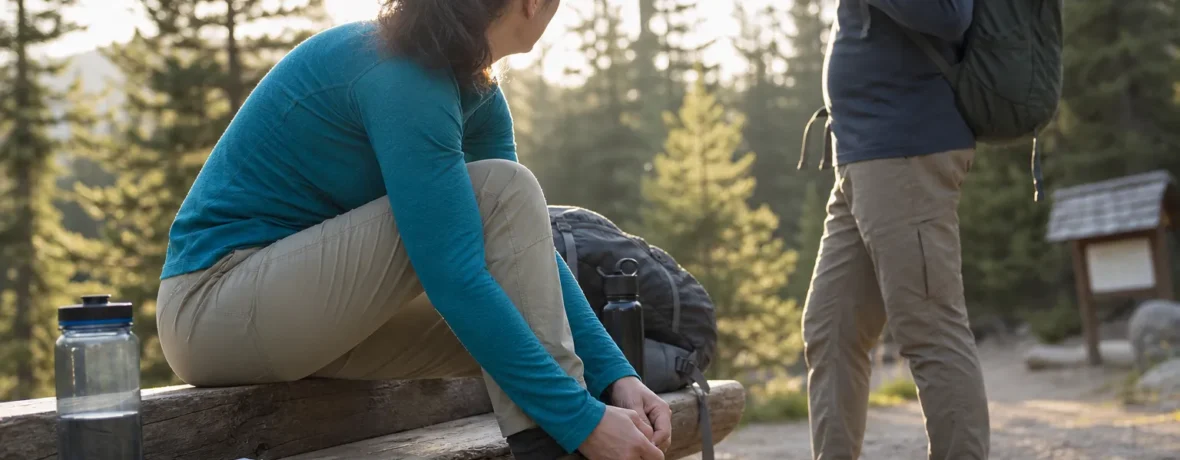
Yes, starting to hike over 40 is safe for most healthy adults if you start with 1–3 miles [1.6–4.8 km], stay on easy trails, and add distance slowly every 2–4 weeks. Keep the first month conversational: no gasping, no racing, no heavy pack, and no shame in turning around.
Can you start hiking in your 40s, 50s, or 60s?
Yes, you can start hiking at 40, 50, 60, and beyond.
The trick is not pretending you are 22 with borrowed knees and a granola bar. Your body can get stronger, steadier, and more trail-capable, but it needs a clean ramp-up. Tendons, feet, hips, and calves often need more time than your lungs do. You may feel good on the climb and then feel the descent two days later. That is normal feedback, not failure.
Think of hiking as walking with variables: uneven ground, hills, weather, roots, rocks, mud, and a pack. That means your first goal is not speed. It is control. Can you keep your breathing steady? Can you step down from a rock without wobbling? Can you finish the hike and still walk normally the next morning?
The CDC adult physical activity guidelines recommend 150 minutes of moderate-intensity aerobic activity each week, plus 2 days of muscle-strengthening activity. Hiking can help you build toward that target, but you do not need to hit it on day one.
What is the best hiking for beginners over 40 plan?
The best plan is short, repeatable, and boring enough to keep you uninjured.
Use this 6-week starter plan if you have been walking some but have not been hiking regularly. If you are starting from zero, repeat Week 1 for 2–3 weeks before moving on.
- Week 1: Walk 20–30 minutes on flat ground, 3 days. Add one easy trail walk of 1 mile [1.6 km] with minimal elevation.
- Week 2: Walk 30 minutes, 3 days. Hike 1–2 miles [1.6–3.2 km] on a marked trail. Keep the pack light.
- Week 3: Add gentle hills. Hike 2 miles [3.2 km] with 200–400 feet [61–122 m] of elevation gain.
- Week 4: Repeat the same distance, but practice pacing. Start slower than you want. Finish with energy left.
- Week 5: Hike 2–3 miles [3.2–4.8 km]. Add trekking poles if descents bother your knees or balance feels shaky.
- Week 6: Try 3–4 miles [4.8–6.4 km] with moderate hills, only if Weeks 4 and 5 felt good.
Do not increase distance, elevation, and pack weight all at the same time. Pick one. If you go longer this week, keep the trail easy. If you add steeper hills, keep the hike short. If you carry more water or layers, do not also chase a personal record.
How fit do you need to be to start hiking?
You need enough fitness to walk, talk, and recover well.
A simple test: during an easy hike, you should be able to speak in full sentences. If you can only spit out two words, slow down. If you feel lightheaded, unusually short of breath, or unsteady, stop and reassess.
The National Institute on Aging advises starting with lower-intensity activity that fits your current fitness level, then building slowly. That advice is perfect for hiking because trails punish big jumps. Your muscles might vote yes. Your joints may file a complaint.
| Current baseline | Start with | Wait before increasing |
|---|---|---|
| You rarely walk for exercise | 20-minute flat walks, then 1-mile [1.6 km] nature paths | 2–3 weeks |
| You walk 30 minutes several days a week | 1–3 miles [1.6–4.8 km] on easy trails | 1–2 weeks |
| You already do hills or stairs | 3–5 miles [4.8–8 km] with moderate elevation | 2 weeks |
| You run, cycle, or strength train | Still start easy; trail impact is different | 1–2 hikes |
What gear do you need for your first hikes over 40?
You need comfortable feet, weather protection, water, and a way to get back.
Do not buy half a gear shop before your first trail. Start with day hikes near home, then upgrade based on what actually bothers you. Hot spots? Fix socks and shoe fit. Sore shoulders? Look at the pack. Slipping on descents? Consider poles or grippier footwear.
- Footwear: Trail shoes or light hiking boots with enough room for toes on descents.
- Socks: Wool or synthetic hiking socks. Skip cotton if your feet sweat or the trail is wet.
- Pack: A small daypack that carries water, snacks, layers, and first-aid basics.
- Water: Carry more than you expect to drink, especially in heat, wind, or exposed terrain.
- Layers: A breathable shirt, insulating layer, and rain shell when conditions call for it.
- Navigation: Downloaded map, paper map, or both. Cell service is a bonus, not a plan.
- Sun protection: Hat, sunglasses, and sunscreen for open trails.
- Small first-aid kit: Blister care, bandages, personal medications, and any supplies your clinician recommends.
- Light: A headlamp, even for a short afternoon hike. Delays happen.
How do you avoid knee pain, sore feet, and overuse injuries?
Start shorter than your pride wants.
Most beginner hiking problems come from too much descent, too much speed, too much pack weight, or shoes that looked fine in the store and turned nasty after mile two. Downhill hiking is often harder on knees than climbing because your legs brake every step. Slow down. Shorten your stride. Use poles if they help you stay controlled.
Build simple strength twice a week. You do not need a gym membership to begin. Step-ups, sit-to-stands, calf raises, glute bridges, and easy balance work prepare you for trail movement. Keep the effort smooth. If a movement causes sharp pain, stop.
For feet, handle friction early. A warm spot on your heel is not a cute trail quirk. It is a blister warming up. Stop, dry the area if needed, and cover it before skin breaks.
- Trim toenails before hikes with long descents.
- Lace shoes snug at the midfoot so toes do not slam forward.
- Use trekking poles on steep or loose trails.
- Take 5-minute breaks before you feel cooked.
- Leave one full recovery day after your first hilly hike.
When to see a doctor
See a doctor before hiking if you have symptoms, known medical risks, or a long break from activity combined with concerns.
Healthy adults who increase activity gradually often do not need medical clearance first, according to federal physical activity guidance shared by NIH sources. But “gradual” is doing real work in that sentence. A first hike should not be a hot, steep, remote grind with a heavy pack.
Talk with a health care professional before increasing hiking intensity if you have heart disease, diabetes, lung disease, fainting episodes, uncontrolled blood pressure, recent surgery, significant joint problems, or a history of heat illness or altitude illness. Also ask for guidance if you take medications that affect heart rate, balance, hydration, or heat tolerance.
Stop exercising and seek immediate medical care if you feel chest, jaw, neck, or arm pain or pressure; dizziness; faintness; or severe shortness of breath. Mayo Clinic gives similar warning signs in its exercise guidance for people managing blood pressure and heart risk: see Mayo Clinic exercise safety advice.
How do you pick safe beginner hiking trails?
Pick trails by distance, elevation, surface, weather exposure, and bailout options.
A 3-mile [4.8 km] trail can feel easy on packed dirt and brutal on loose rock with 1,000 feet [305 m] of gain. Distance is only one number. Elevation gain, heat, footing, and shade matter just as much.
For your first month, choose trails with clear signage, steady cell coverage when possible, low consequence terrain, and a loop or out-and-back route you can shorten. Avoid trails described as “scramble,” “exposed,” “route finding,” “steep loose descent,” or “unmaintained” until you have more trail time.
- Start with trails rated easy or moderate by the managing agency.
- Keep early hikes under 4 miles [6.4 km].
- Keep elevation gain under 500 feet [152 m] at first.
- Check the forecast before leaving home.
- Turn around if storms, heat, smoke, ice, or fatigue change the plan.
- Tell someone where you are going and when you expect to return.
If a trail requires a permit, timed entry, parking reservation, or seasonal road access, check the official land manager before you go. Use the park, forest, state park, city, county, or recreation agency website rather than old blog posts or social media comments.
What should you eat and drink on beginner hikes?
Bring water and simple snacks before you think you need them.
For hikes under 2 hours in mild weather, many people do fine with water and a snack. For longer hikes, hot days, cold windy days, or routes with climbs, bring more food than your normal walk requires. Hiking uses steady energy, and small dips can turn into sloppy footwork.
Good trail snacks are easy to chew, easy to pack, and familiar to your stomach. Try nuts, trail mix, bars, jerky, crackers, dried fruit, or a sandwich. New hikers often under-eat because they are focused on reaching the viewpoint. Eat before you are shaky.
Heat deserves respect. The Wilderness Medical Society heat illness guidelines emphasize cooling, rest, and fluid replacement for minor heat illness, with urgent care for severe symptoms. On the trail, your safer move is prevention: start early, choose shade, slow down, and turn back before heat drains your judgment.
How do you stay motivated when you are starting later?
Make hiking easy to repeat.
Big dramatic goals sound exciting, then they break your schedule. Better: one local trail after work, one weekend morning walk, one simple strength session, one longer hike per month. Stack wins. Let your body learn the rhythm.
Track what matters: trail name, distance, elevation, weather, shoes, pack weight, and how you felt the next day. That last part is gold. If your knees ache for 3 days after a rocky descent, your next hike should not be longer and steeper. If you finish feeling strong, add a small challenge.
Do not compare your pace to people who have been hiking for 20 years. Trail fitness is specific. The person cruising past you may know that route, carry less, or train every week. Your job is cleaner: finish safe, learn something, come back.
Related reading
- Sedona Hiking for Beginners: A 3-Day Plan
- Trail Running for Beginners: From Hiking to Running
- A Walk in the Woods: Bill Bryson's AT Story vs Reality
- Kids' Hiking Boots: How to Size and When to Buy
FAQ
Is 40 too old to start hiking?
No, 40 is not too old to start hiking. Start with short, easy trails and build distance over several weeks so your feet, knees, hips, and lungs adapt together.
How many miles should a beginner hiker over 40 start with?
Start with 1–3 miles [1.6–4.8 km] on easy terrain. If you feel good during the hike and recover well the next day, add distance slowly after 1–2 similar hikes.
Are trekking poles worth it for beginner hikers?
Yes, trekking poles can help with balance and reduce strain on descents for many hikers. They are most useful on steep, rocky, muddy, or uneven trails.
How often should beginners hike?
One hike per week plus 2–3 walking days is a strong start. Add simple strength work twice weekly if your schedule allows, especially for legs, hips, calves, and balance.
What is the biggest mistake new hikers over 40 make?
The biggest mistake is doing too much too soon. A long hike with big elevation, new shoes, hot weather, and a heavy pack is not ambitious; it is a pile of risk factors.
Can hiking help you get in shape after 40?
Yes, hiking can improve aerobic fitness, leg strength, balance, and confidence when done consistently. Pair it with gradual progression and basic strength work for better long-term results.