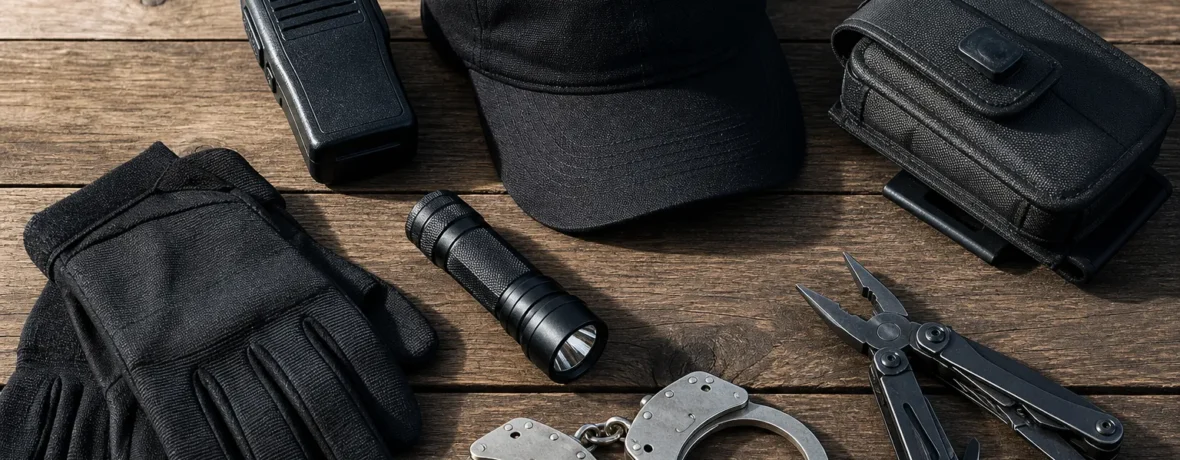
Do park rangers carry guns? Yes—law enforcement park rangers do. In the National Park Service, commissioned law enforcement rangers are federal officers who are required to carry a gun, make arrests, and conduct investigations. Interpretive rangers, campground hosts, trail crews, and many seasonal visitor-service staff usually are not armed.
Do park rangers carry guns in national parks?
Yes, commissioned law enforcement rangers in national parks carry firearms.
The key word is commissioned. The National Park Service has many kinds of rangers: the person leading a geology talk, the ranger checking a backcountry permit, the rescue specialist on a litter carry, and the officer responding to a drunk driver in a campground may all wear the arrowhead. They do not all have the same job.
As of November 2026, the National Park Service says successful law enforcement ranger candidates become fully commissioned federal law enforcement officers and are required to carry a gun, make arrests, and conduct investigations. You can see that on the NPS page for law enforcement ranger training and employment.
So if you see a ranger with a badge, duty belt, radio, body armor, handgun, and patrol vehicle, you are probably looking at a law enforcement ranger. If you see a ranger giving a Junior Ranger program, staffing a visitor center desk, or explaining wildflower blooms, that person may not be armed at all.
Are all park rangers police officers?
No, many park rangers are not police officers.
“Park ranger” is a broad job title, not a single law enforcement rank. Some rangers are educators. Some manage trails, permits, wildlife closures, fires, campgrounds, or search-and-rescue work. Some are sworn officers with arrest authority. The uniform can look similar from 40 ft [12 m] away, which is why visitors often mix them up.
| Ranger type | Typical role | Armed? | Can enforce laws? |
|---|---|---|---|
| Law enforcement ranger | Patrols roads, trails, campgrounds, incidents, and crime scenes | Yes | Yes, within their authority |
| Interpretive ranger | Talks, walks, education, visitor questions | Usually no | Usually no police authority |
| Backcountry or wilderness ranger | Permits, resource protection, trail contacts, campsite checks | Depends on agency and commission | Depends on commission |
| Volunteer or campground host | Visitor help, light campground support, reporting problems | No | No |
Outside national parks, the answer gets more local. State park rangers, county park rangers, conservation officers, and forest officers may have very different powers depending on the state, agency, and job classification. In one state, a ranger may be a fully sworn peace officer. In another, that same-looking job may focus on maintenance, education, or fee compliance.
Can park rangers arrest you?
Yes, law enforcement rangers can arrest you when the law gives them that authority.
For National Park Service areas, the authority is federal. As of November 2026, federal law authorizes designated NPS officers and employees to carry firearms and make warrantless arrests for federal offenses committed in their presence, or for certain federal felonies when they have reasonable grounds, within the National Park System or when a person is fleeing from it. That authority appears in 54 U.S.C. § 102701.
In plain trail language: a law enforcement ranger is not just “park staff.” If you are stopped for suspected DUI, disorderly conduct, assault, theft, illegal hunting, resource damage, or a serious closure violation, treat the contact like any other police encounter.
NPS regulations also carry legal weight. As of November 2026, the Park Service explains that regulations can be punishable by fines, imprisonment, or both on its laws, policies, and regulations page. That does not mean every mistake turns into handcuffs. A ranger may give a warning, citation, mandatory court notice, or arrest depending on the violation and the facts in front of them.
Why would a ranger need a gun on a hiking trail?
A ranger’s firearm is mainly for law enforcement threats, not routine wildlife encounters.
National parks and public lands are wild, but they are also public places with the same human problems you find anywhere: impaired driving, domestic violence, theft, illegal firearms activity, assaults, missing persons, drugs, vandalism, and people making terrible decisions after dark in a campground loop.
Law enforcement rangers may respond miles from backup. A road closure might be 30 minutes from the nearest town. A backcountry incident might be 7 miles [11 km] up a trail with no cell service. Their job sits at the messy intersection of police work, medical response, search and rescue, resource protection, and visitor management.
That does not mean every ranger contact is hostile. Most are ordinary: “Where is your permit?” “Please leash your dog.” “That area is closed for nesting birds.” “You cannot camp here.” The gun is there for the rare contact that goes bad fast.
Can visitors carry guns in national parks?
Sometimes, but the rules are not the same as a ranger’s rules.
As of November 2026, NPS guidance says a visitor may possess a firearm in a national park if they are not otherwise prohibited from possessing one and if possession complies with the law of the state where that park unit is located. But federal facilities are different: firearms are generally prohibited in places such as visitor centers, ranger stations, government offices, and fee buildings. NPS also says that, unless authorized, using or discharging a firearm in a park area is prohibited. Read the NPS overview on firearms in national parks before you bring one.
For hikers, the practical takeaway is simple:
- Know the state law for the park you are entering.
- Check the specific park’s website before your trip.
- Do not carry a firearm into a posted federal facility.
- Do not assume a firearm is an approved wildlife defense tool.
- Use bear spray where recommended and legal, and know how to use it.
What should you do if a law enforcement ranger stops you?
Stay calm, keep your hands visible, and do not argue on the roadside or trail.
A ranger contact can feel strange because you may be wearing muddy boots instead of sitting in a car. Still, the basics are the same.
- Stop when asked. Walking away can turn a small problem into a bigger one.
- Keep your hands where the ranger can see them. Do not dig into a pack, glove box, hipbelt pocket, or jacket until asked.
- Listen first. You may not know the rule you are being contacted about.
- Give required documents when requested. That might include a driver’s license, permit, pass, reservation, hunting license, or boat registration.
- Say what you need clearly. If you are reaching for a permit in your pack, say so before moving.
- Do not physically resist. If you think the ranger is wrong, fight it later through the proper court or agency process.
- Ask for clarification. “Am I free to go?” and “What rule are you citing?” are better than shouting.
Most ranger contacts end quickly when you are straight, calm, and not trying to hide the obvious. The fastest way to make it worse is to be cute, evasive, drunk, or belligerent.
What laws do park rangers enforce?
Law enforcement rangers enforce federal park rules, and sometimes other laws depending on jurisdiction.
In national parks, many everyday visitor rules come from Title 36 of the Code of Federal Regulations. That is where you see rules on pets, camping, closures, alcohol, weapons, natural and cultural resources, and public behavior. Individual parks also use superintendent’s compendiums to list local closures, permit requirements, and area-specific restrictions.
Common trail and campground issues include:
- Entering closed areas
- Camping without the required permit
- Improper food storage in bear country
- Dogs where pets are not allowed
- Driving under the influence
- Disorderly conduct in campgrounds
- Illegal fires during restrictions
- Collecting artifacts, antlers, plants, rocks, or fossils where prohibited
- Harassing wildlife or getting too close for photos
National forests are a little different. The U.S. Forest Service has its own law enforcement officers and special agents, and its recreation rules are separate from NPS rules. State parks are different again. The sign at the trailhead matters. So does the agency logo on it.
How can you tell if a ranger is law enforcement?
Look for the duty belt, badge, patrol vehicle, and the way the contact is handled.
A law enforcement ranger often carries a sidearm, radio, handcuffs, defensive tools, and a body-worn camera. They may arrive in a marked patrol vehicle or be the ranger responding to a complaint, accident, illegal campfire, fight, or traffic stop.
But do not play guessing games. If a ranger gives you a lawful order, asks you to stop, or tells you an area is closed, take it seriously. If you are unsure what kind of ranger you are speaking with, you can ask politely: “Are you a law enforcement ranger?” Keep it calm. Tone matters.
Related reading
- How to Become a Park Ranger: Education, Steps and Timeline
- What Does a Park Ranger Do? A Day in the Job
- The Park Ranger Hat: History of the Flat Hat
- How to Become a National Park Ranger (NPS)
FAQ
Do interpretive park rangers carry guns?
Usually no. Interpretive rangers focus on education, walks, talks, visitor centers, and public programs, not patrol arrests or criminal investigations.
Can a ranger search your backpack?
Sometimes, but searches depend on legal authority and the facts of the contact. A law enforcement ranger may ask for consent, act under probable cause, use a warrant, or rely on another lawful exception depending on the situation.
Are park rangers the same as game wardens?
No, though their work can overlap. Game wardens usually focus on wildlife, hunting, fishing, and boating laws, while park rangers may focus on park rules, visitor safety, resource protection, and public land incidents.
Can a ranger give you a ticket?
Yes, a law enforcement ranger can issue citations for violations within their authority. Depending on the violation, that ticket may carry a fine, require a court appearance, or both.
Should you call a ranger or 911 in an emergency?
Call 911 for immediate threats to life, injury, fire, violence, or serious crime. In many parks, dispatch can reach rangers, EMS, search and rescue, or county deputies faster than you can sort out which agency owns the land.