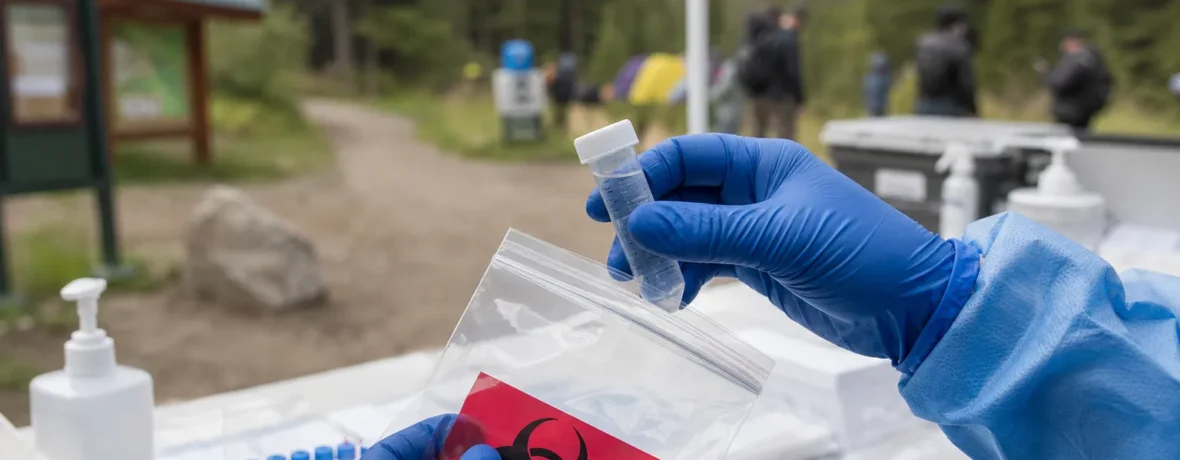
No, not with your eyes. Not realistically. Giardia is microscopic: cysts commonly measure 8–19 micrometers [0.0003–0.0007 in]. You may see clues like greasy, floating, foul-smelling diarrhea, but confirmation needs a stool test, often with multiple samples collected over several days.
Can you see giardia in stool with the naked eye?
No. Giardia is too small to spot in the toilet, on toilet paper, or in a cathole. The parasite has two forms that matter here: cysts, which can pass in stool and spread infection, and trophozoites, which live in the intestine. Lab workers can identify them with specialized stool testing, but you cannot eyeball them after a backpacking trip.
The CDC’s Giardia DPDx page describes Giardia cysts and trophozoites as diagnostic stages found in feces. That sounds dramatic, but the key word is “diagnostic.” You need lab tools, not a brighter headlamp.
What you can see are changes in stool. Giardia can cause diarrhea that looks pale, greasy, loose, or foamy. It may float. It may smell especially foul. Those signs can point your doctor toward testing, but they do not prove Giardia on their own. Food poisoning, viral stomach bugs, inflammatory bowel issues, and other parasites can overlap.
What does Giardia poop look like?
Giardia poop often looks loose, greasy, and foul-smelling.
According to the CDC’s Giardia symptoms guidance, common symptoms include diarrhea, gas, smelly greasy poop that can float, stomach cramps or pain, nausea, and dehydration. Symptoms often start 1–2 weeks after swallowing Giardia germs and typically last 2–6 weeks.
| What you notice | What it can mean | Does it confirm Giardia? |
|---|---|---|
| Greasy stool that floats | Fat is not being absorbed well | No |
| Watery diarrhea | Gut irritation or infection | No |
| Strong, foul odor | Digestive upset or infection | No |
| Visible worms or rice-like pieces | Something other than Giardia may be possible | No — call a clinician |
Giardia is sometimes nicknamed “beaver fever,” but don’t pin every bad gut day on beavers, alpine lakes, or that one suspicious creek crossing. You can pick it up from untreated water, contaminated food, surfaces, person-to-person spread, or swallowing lake or river water while swimming.
Can a stool test find Giardia?
Yes. Stool testing is the standard way to check for Giardia.
The CDC explains that healthcare providers may ask for one or more stool samples, and several samples collected over several days may be needed because Giardia is not passed in every bowel movement. That part surprises a lot of hikers. One negative test does not always end the story if symptoms keep rolling.
Labs may use different methods, including microscopy, antigen tests, or molecular tests. The CDC’s clinical guidance says direct fluorescent antibody testing is a gold-standard method for diagnosing giardiasis, while other stool tests may also be used depending on the lab.
Here is the trail-to-clinic version:
- Write down when symptoms started and when you drank untreated water, swam, traveled, or shared food.
- Call a healthcare provider and ask whether stool testing makes sense.
- If asked for samples, follow the collection instructions exactly. Messy, yes. Useful, also yes.
- Keep drinking fluids while you wait for results.
- Do not start leftover medications or someone else’s pills. Treatment choice belongs with your clinician.
How long after a hike would Giardia symptoms show up?
Symptoms usually show up 1–2 weeks after exposure.
That delay is why Giardia can be sneaky. You may feel great on the hike, drive home, wash the socks that could stand up by themselves, return to work, and then get hit with diarrhea, gas, cramps, and fatigue days later. The timing can make it hard to connect the dots.
Think back over the previous 2 weeks. Did you drink from a lake, creek, spring, or shallow well without treatment? Did your filter freeze overnight? Did you rinse a bottle in untreated water and then drink from the threads? Did you swim and swallow water? Those details help a clinician decide what to test for.
One more straight answer: not every post-hike stomach problem is Giardia. Big mileage, greasy trail food, stress, alcohol after the trip, and a plain old stomach virus can also wreck your gut. The stool test is what moves the conversation from trail gossip to useful medical information.
Can Giardia go away on its own?
Sometimes, but you should still talk to a healthcare provider if symptoms fit.
Some Giardia infections cause mild symptoms or no symptoms. Others drag on, come and go, or cause dehydration and weight loss. The CDC says treatment options should be discussed with a healthcare provider, especially if you have diarrhea or other symptoms that suggest Giardia.
Do not try to diagnose yourself from stool appearance. Also do not try to “tough it out” if you are getting weak, dizzy, dry-mouthed, or unable to keep fluids down. On trail, dehydration can turn a stomach problem into a safety problem fast. At home, it still deserves attention.
When to see a doctor
See a doctor if symptoms last more than a week, are severe, or you show signs of dehydration.
Mayo Clinic advises calling a healthcare professional if loose stools, stomach cramping, bloating, and upset stomach last more than a week, or if you become dehydrated. That fits hikers well: if your gut is still off after the trip is over and your normal food routine is back, get help rather than guessing.
Call sooner if any of these are true:
- You have signs of dehydration: dizziness, very dark urine, dry mouth, or not peeing much.
- You are pregnant, older, immunocompromised, or caring for an infant or young child with diarrhea.
- You have a high fever, severe belly pain, or blood in stool.
- Symptoms improve, then return days or weeks later.
- Several people from the same trip get sick.
Bring the boring details: dates, water sources, treatment method, foods shared, swimming, travel, and anyone else who got sick. Boring details are gold in a clinic.
How can hikers lower the risk of Giardia?
Treat water and keep poop away from hands, food, and water.
Giardia prevention is not glamorous. It is filter maintenance, clean bottle threads, and not letting your snack hand become your bathroom hand. The CDC’s hiking and camping water treatment guidance says boiling is the best way to kill germs in water and that filters with an absolute pore size of 0.3 micron or smaller can remove bacteria and parasites, though not viruses.
- Use a water filter rated for Giardia and maintain it as directed.
- Do not let untreated water touch the clean side of your bottle, bladder, cap, or filter outlet.
- Boil water when your filter is broken, frozen, clogged, or suspect.
- Wash or sanitize hands after pooping and before eating.
- Keep human waste far from water, camp, and trails, following local land-manager rules.
- Avoid swallowing water while swimming in lakes, rivers, or pools.
Chemical treatments vary in how well they work against protozoa, contact time, water temperature, and cloudiness. If your plan depends on drops or tablets, read the label before the trip, not during a cold rainstorm with numb fingers.
Related reading
- Giardia: Symptoms After Drinking Untreated Water
- How Do Dogs Get Giardia on Hikes?
- What to Do If You See a Bear on a Hike
- Can Humans Get Giardia From Dogs?
FAQ
Can you see Giardia parasites in human stool?
No. Giardia parasites are microscopic and cannot be seen with the naked eye. A lab can look for Giardia in stool using specific testing methods.
Does floating stool mean Giardia?
No. Floating, greasy, foul-smelling stool can happen with Giardia, but it can also happen for other digestive reasons. If it comes with diarrhea, gas, cramps, and a recent untreated-water exposure, ask a healthcare provider about stool testing.
How many stool samples are needed to test for Giardia?
Sometimes more than one. The CDC says several stool samples collected over several days may be requested because Giardia may not appear in every bowel movement.
Can Giardia spread from person to person?
Yes. Giardia can spread when microscopic stool contamination reaches hands, surfaces, food, water, or mouths. Careful handwashing matters, especially around bathrooms, diapers, shared camp kitchens, and sick trip partners.
Should I cancel hiking if I might have Giardia?
Yes, if you have active diarrhea or feel dehydrated. You also risk spreading germs to partners and contaminating shared spaces, so get medical advice and recover before heading back out.