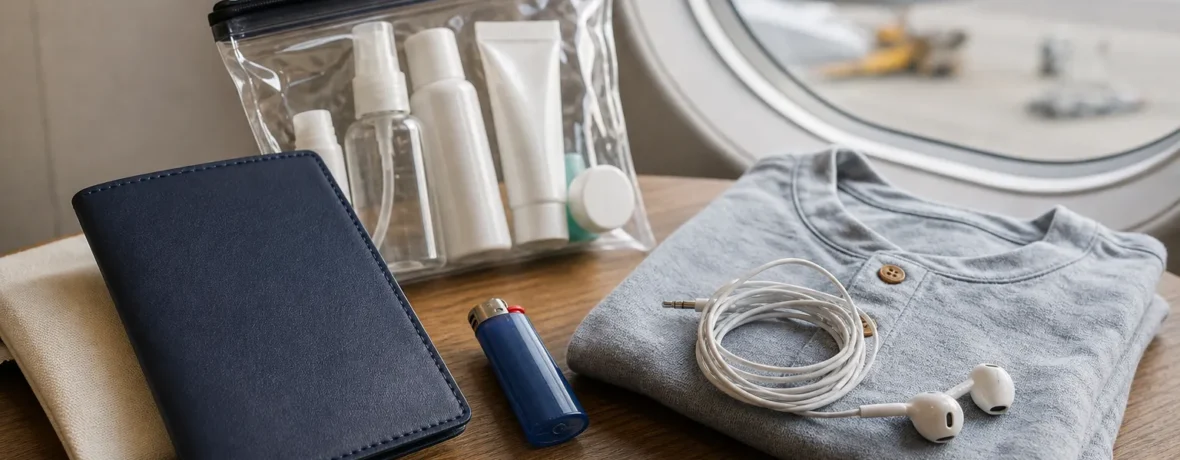
Yes. As of November 2026, U.S. rules allow 1 common disposable or Zippo-style lighter in your carry-on or on your person. Do not pack torch lighters, lighter fluid, refills, or camping fuel in carry-on or checked bags.
Can you bring a lighter on a plane in your carry-on?
Yes, you can bring 1 common lighter in your carry-on or pocket. The FAA PackSafe lighter rules say absorbed-liquid and butane lighters, including Zippo-type and disposable lighters, are limited to 1 per passenger in carry-on baggage or on your person, as of November 2026.
That means your basic BIC-style lighter or soft-flame Zippo is usually fine through U.S. airport security. Keep it easy to find. If your carry-on gets gate-checked, the FAA says you must remove the lighter and keep it with you in the cabin.
The clean hiking answer: carry one simple lighter, not a fancy one. No fuel bottle. No refill can. No torch.
Which lighters are allowed, and which are banned?
Common soft-flame lighters are allowed; torch lighters are not. As of November 2026, the FAA and TSA rules treat lighter types differently, so check the flame style before you pack.
| Item | Carry-on | Checked bag | Trail advice |
|---|---|---|---|
| Disposable or Zippo-style lighter | Yes, 1 per passenger | Do not pack fueled lighters | Best choice for flying |
| Arc, plasma, electronic, or lithium lighter | Yes, with activation protection | No | Pack only if it has a safety cap or lock |
| Torch, jet-flame, or blue-flame lighter | No | No | Leave it home |
| Safety matches | Yes, 1 packet | No | Good backup |
| Strike-anywhere matches | No | No | Do not fly with them |
For battery-powered arc and plasma lighters, the FAA says they are carry-on only, must be protected from accidental activation, cannot be recharged onboard, and must stay within battery limits: 100 watt-hours for lithium-ion batteries or 2 grams of lithium for lithium-metal batteries, as of November 2026.
Can you pack a lighter in checked luggage?
Don’t pack a fueled lighter in checked luggage. As of November 2026, the FAA PackSafe chart lists common lighters as not allowed in checked bags, while the TSA What Can I Bring list says disposable and Zippo lighters without fuel are allowed in checked bags and fueled lighters require special DOT-approved packaging.
That mismatch is exactly why hikers should keep this simple. Put one normal lighter in your carry-on or pocket. If you are checking a backpack, don’t tuck your lighter into a hip-belt pocket and forget it.
Can you bring lighter fluid, butane, or camping fuel on a plane?
No. Lighter fluid, lighter refills, butane refills, and camp stove fuel are not allowed in carry-on or checked bags. The FAA PackSafe fuels page says camp stove fuels are forbidden in both carry-on and checked baggage, including compressed fuel canisters, liquid fuels, solid fuel tabs, and containers or gear with residual fuel, as of November 2026.
This catches backpackers all the time. That little isobutane canister for your stove? No. White gas? No. Alcohol stove fuel? No. Esbit-style solid fuel tabs? Also no under FAA camp stove fuel guidance.
Your move is boring but reliable: fly with an empty, clean stove if allowed, then buy fuel near the trailhead. The FAA outdoor equipment page says camping stoves and fuel bottles are allowed only when they contain no residual fuel, vapors, or other hazardous materials, as of November 2026. Some airlines can still say no to used gear, so check your airline before you gamble with a favorite stove.
How should you pack fire-starting gear for a fly-in camping trip?
Pack one legal ignition source and buy fuel after you land. Keep your system plain, visible, and easy for a TSA officer to understand.
- Carry 1 soft-flame disposable or Zippo-style lighter in your carry-on or pocket.
- Skip torch lighters, cigar lighters, jet-flame lighters, and novelty gun-shaped lighters.
- Do not pack lighter fluid, butane refills, stove fuel, fuel tablets, or used fuel canisters.
- If flying with a stove, clean and air it out until there is no fuel smell or residue.
- Buy stove fuel at your destination, preferably before you drive into a remote park or forest.
- Check local fire restrictions the same day you arrive.
What camping fire rules apply in national parks and forests?
Fire rules are local. As of November 2026, the National Park Service campfire guidance says each park has its own rules for where and when you can have a campfire, and visitors should check park rules and current fire conditions before starting one.
That means a lighter being legal on the plane does not make a campfire legal at camp. A campground fire ring, a backcountry zone, a beach site, and a high-country basin can all have different rules. Wind, drought, red flag warnings, and active fires can change the answer fast.
For national forests, the U.S. Forest Service fire guidance says to check with the forest, grassland, or ranger district for fire restrictions or area closures before hiking or camping, as of November 2026. It also recommends using alternatives to campfires during periods of high fire danger, even when no restriction is posted.
Can you use a lighter during a fire ban?
Maybe for a stove, maybe not for an open flame. Fire bans are written locally, and the exact wording controls what you can do.
Some orders ban campfires but allow certain contained stoves. Others restrict charcoal, wood fires, smoking, or any open flame outside specific developed sites. Don’t guess from a social post or an old forum thread. Read the current park, forest, county, or BLM order before you strike the lighter.
What is the smart fire checklist before you camp?
Use this before every trip, even if you have camped there before. Dry grass does not care how experienced you are.
- Check the official land manager page for current fire restrictions.
- Ask the ranger station, campground host, or visitor center if rules are unclear.
- Use existing fire rings only where fires are allowed.
- Keep tents, packs, and dry gear at least 15 feet [4.6 m] from the fire area, following NPS guidance.
- Keep water nearby while the fire is burning.
- Never leave a campfire unattended.
- Drown, stir, and feel the ashes before you leave. If it is too hot to touch, it is too hot to leave.
Related reading
- Can You Bring a Pocket Knife on a Plane?
- Can You Bring Hiking Poles on a Plane? Carry-On vs Checked
- Camping Checklist: What to Bring
- Backpacking Checklist: What to Bring on Your First Trip
FAQ
Can you bring a BIC lighter on a plane?
Yes. As of November 2026, a common disposable soft-flame lighter is allowed in carry-on baggage or on your person, limited to 1 per passenger under FAA guidance.
Can you bring a Zippo on a plane?
Yes, if it is a standard Zippo-style lighter and not a torch insert. Carry it in your carry-on or pocket, and do not pack lighter fluid or refills.
Are torch lighters allowed on planes?
No. As of November 2026, FAA guidance says torch lighters, including butane, blue-flame, and jet-flame lighters, are not allowed in the cabin or checked baggage.
Can you fly with matches for camping?
Yes, but only safety matches in limited form. FAA guidance allows 1 packet of safety matches in carry-on baggage or on your person; strike-anywhere matches are forbidden in carry-on and checked bags.
Can you bring camp stove fuel on a plane?
No. Camp stove fuel, including compressed canisters, liquid fuels, solid fuel tabs, and containers with fuel residue, is forbidden in carry-on and checked baggage under FAA guidance.
Can you have a campfire in a national park?
Only where that park allows it. National Park Service guidance says each park sets its own campfire rules, so check the official park page, alerts, campground rules, or visitor center before lighting anything.