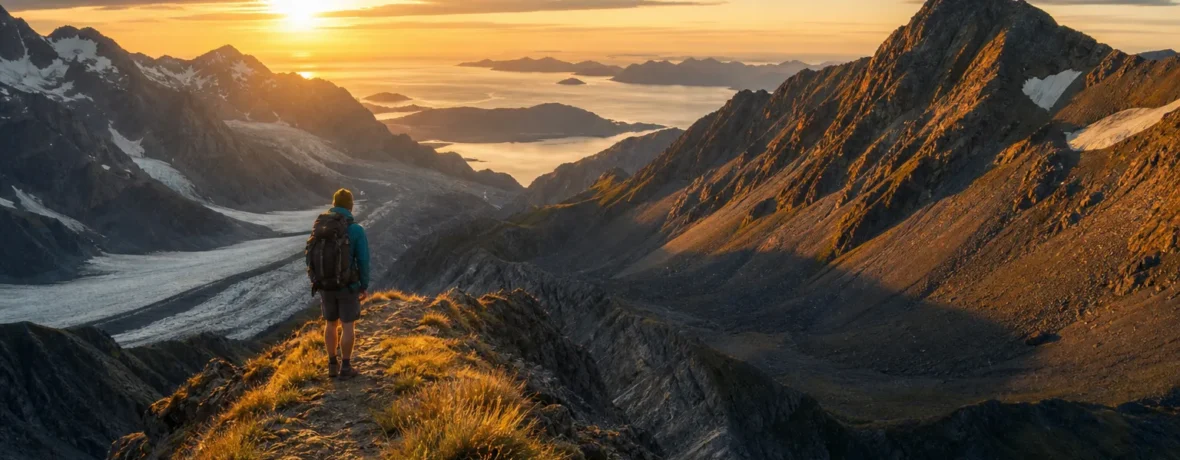
The best bucket list hikes are not the longest or most punishing; they are the trips that change the scale of your memory. Start with 12: Grand Canyon Rim-to-Rim, Half Dome, Inca Trail, Tour du Mont Blanc, Everest Base Camp, Kilimanjaro, Torres del Paine, Milford Track, Overland Track, Laugavegur, GR20, and Kungsleden.
What are the bucket list hikes worth planning a life around?
Pick hikes with a singular payoff, not just a famous name.
Here is the position: a true bucket-list hike should give you something you cannot fake on a treadmill or collect from a viewpoint parking lot. Scale. Weather. Culture. Commitment. A landscape that makes your everyday worries look tiny. If the route is famous only because it is hard, it does not belong here. If it is famous because it asks you to move through a place with care, patience, and sweat, now we are talking.
These are not ranked by difficulty or social-media shine. They are ranked by staying power. The good ones stick.
-
Grand Canyon Rim-to-Rim, USA
This is the cleanest argument for hiking as humility.
Grand Canyon Rim-to-Rim is not a mountain hike. It is an upside-down mountain hike, which is what makes it so sneaky. You descend first, lose shade, cross heat, then climb out when your legs have already spent the money. The route is commonly done from the North Rim to the South Rim using the North Kaibab and Bright Angel or South Kaibab trails. The National Park Service says the canyon is a vertical mile from South Rim to river near Grand Canyon Village, and the rim-to-rim crossing by way of the North and South Kaibab trails is 21 miles [34 km], as of November 2026, on its Grand Canyon National Park FAQ.
The reason it belongs here is simple: you read the planet in layers. Every switchback is time made visible. This hike is not a conquest. It is a reminder that stone keeps better records than people.
-
Half Dome, Yosemite, USA
Half Dome is the classic American fear-and-focus hike.
Plenty of hikes are prettier mile for mile. Few are more memorable in the final act. The cables turn a long Yosemite day into a full-body conversation with exposure, grip, traffic, weather, and judgment. That last part matters most. Half Dome rewards fitness, but it punishes ego.
Do not treat it as a casual add-on to a Yosemite trip. As of November 2026, the National Park Service says a permit is required to hike Half Dome when the cables are up; check the official Half Dome day-hike permit page before building plans around it. If storms are in the forecast, the mountain does not care how far you traveled.
-
Inca Trail to Machu Picchu, Peru
The Inca Trail earns its reputation through story, not mileage.
Many famous hikes end at a view. This one ends at a city that appears after days of stone steps, cloud forest, passes, and ruins that feel less like stops than chapters. The Inca Trail is not the only way to reach Machu Picchu, and that is part of the point. Choose it if you want the approach to matter as much as the arrival.
This route also exposes the lazy side of bucket-list culture. You cannot treat a living cultural landscape like a backdrop. Go with a reputable operator, respect the rules, and give yourself time in Cusco before starting. The altitude is real. So are the porters, cooks, guides, farmers, and communities tied to the route.
-
Tour du Mont Blanc, France, Italy, and Switzerland
The Tour du Mont Blanc is the great hut-to-hut mountain education.
If your idea of a dream hike includes glaciers above you, espresso below you, and a different country underfoot every few days, this is the one. The standard circuit loops around the Mont Blanc massif through France, Italy, and Switzerland. It gives you big alpine terrain without requiring technical climbing, though bad weather can still make the mountains feel very large.
The real magic is rhythm. Climb hard. Eat well. Sleep in a village or refuge. Wake under cowbells and rock walls. Repeat. It is civilized in the best sense: not easy, not soft, but built around the old truth that walking and hospitality belong together.
-
Everest Base Camp Trek, Nepal
Everest Base Camp is less about the endpoint than the slow rise into thin air.
The sign at base camp is not the soul of this trek. The soul is the Khumbu: suspension bridges, prayer flags, mani stones, yak trains, cold mornings, tea houses, and the daily discipline of going slower than your pride wants to go. That restraint is the difference between a memorable trip and a miserable one.
This trek belongs on the list because the landscape changes your sense of vertical space. Peaks do not sit on the horizon. They dominate it. Still, the best version of this hike is not rushed. Add acclimatization days. Listen when your body gets loud. Strong hikers can still get flattened at altitude.
-
Mount Kilimanjaro, Tanzania
Kilimanjaro is a walk-up summit with expedition consequences.
That is the tension. No ropes for standard routes. No technical climbing for most trekkers. Yet the summit stands at 19,341 feet [5,895 m], and the altitude can turn fit people into wobbly, nauseated versions of themselves. The mountain is not hard because the trail is complex. It is hard because the air gets stingy.
Choose a longer route when you can. The mountain has ecological drama few hikes can match: cultivated lower slopes, forest, moorland, alpine desert, then a frozen summit zone. It feels like walking from equator to arctic without changing continents. That is not hype. That is Kilimanjaro’s strongest case.
-
Torres del Paine W Trek, Chile
The W Trek is Patagonia in sharp, efficient form.
Some places are subtle. Torres del Paine is not. Granite towers, wind-lashed lakes, hanging glaciers, and skies that change their mind every few minutes give this hike a restless energy. The W Trek is popular because it distills the park’s headline scenery into a manageable multi-day route.
Its weakness is also its warning: popularity can flatten wonder if you book too late, pack poorly, or expect solitude at every viewpoint. Go anyway. The scenery is that good. Just bring patience, waterproof layers, and a sense of humor about wind. Patagonia has a way of editing your plans in real time.
-
Milford Track, New Zealand
The Milford Track is a wet, green cathedral with a booking system attached.
This is one of the best arguments for letting a trail be short and still huge. New Zealand’s Department of Conservation lists the Milford Track as 53.5 kilometers one way, which is 33.2 miles [53.5 km], and says it is walked in one direction over 3 nights and 4 days; during the Great Walks season, huts and transport must be booked, as of November 2026, on the official Milford Track page.
The route moves through glacial valleys, rainforest, pass country, waterfalls, and finally Milford Sound/Piopiotahi. It is polished by Great Walk standards, but do not confuse polished with tame. Fiordland rain is not decorative. It is a force. Pack like you believe the forecast could be wrong.
-
Overland Track, Tasmania, Australia
The Overland Track is for hikers who want wild texture, not postcard perfection.
Tasmania’s Cradle Mountain-Lake St Clair country feels old in the bones: buttongrass plains, rainforest, alpine tarns, dolerite ridges, wet boardwalk, mud, and weather with teeth. Parks & Wildlife Service Tasmania says walkers commonly cover 65 kilometers, or 40.4 miles [65 km], from Ronny Creek to Narcissus, with many completing it in six days; during the booking season, walkers need to confirm their booking and receive an Overland Track Pass, as of November 2026, through the official Overland Track information.
This is not a glossy alpine parade. That is why it works. The Overland Track asks you to enjoy rough edges. It rewards hikers who find beauty in moss, mist, and weathered timber as much as summits.
-
Laugavegur Trail, Iceland
Laugavegur looks like the earth forgot to choose one color palette.
Rhyolite hills. Black sand. Steam vents. Snow patches. Neon moss. Wide river crossings. The Laugavegur Trail from Landmannalaugar toward Þórsmörk is not long by global trekking standards, but it feels geologically loud from the first day. You do not go for forests or wildlife density. You go for raw landforms and weather that can make a short stage feel serious.
This hike belongs here because it proves a route does not need extreme length to feel complete. Four strong days can be enough when each day looks built by a different planet.
-
GR20, Corsica, France
The GR20 is the hard one that actually deserves its hard reputation.
Some trails get called difficult because they are long. The GR20 gets called difficult because it is rugged, rocky, steep, exposed, and relentless. It crosses Corsica’s mountains from north to south, and the northern sections in particular have a reputation for scrambling, slow footing, and big days that do not let you mentally coast.
Do not put this on your list just to prove something. Put it there if rough mountain travel makes you sharper and happier. The GR20’s gift is not comfort. It is concentration. Every foot placement matters, and that can be addictive in the right body and the right weather.
-
Kungsleden, Sweden
Kungsleden is the quiet northern answer to overstuffed adventure lists.
The King’s Trail runs through Swedish Lapland, with tundra, birch forest, broad valleys, lakes, huts, and long light in season. It does not shout like Patagonia or tower like Nepal. That restraint is its strength. You settle into distance. You notice small changes. You learn that drama can be horizontal.
For hikers tired of routes that feel like a queue with scenery, Kungsleden is a reset. It offers room. The best bucket-list hikes are not always the loudest ones. Sometimes the trail that stays with you is the one that gives your thoughts enough space to stretch out.
What are the best hikes in the world for different hikers?
The right hike depends on the kind of challenge you actually want.
| What you want | Best fit | Why it works |
|---|---|---|
| Huge scenery in a shorter trip | Laugavegur or Milford Track | Big visual payoff without needing two full weeks on trail |
| A classic alpine hut walk | Tour du Mont Blanc | High passes, villages, refuges, and strong food culture |
| A physical test with exposure | Half Dome or GR20 | Both demand judgment, balance, and comfort with consequences |
| A high-altitude goal | Everest Base Camp or Kilimanjaro | The main challenge is acclimatization, pacing, and patience |
Here is the blunt version: do not choose from the best hikes in the world like you are shopping for trophies. Choose the route that matches your nervous system. If exposure rattles you, Half Dome may not be the dream. If damp cold breaks your spirit, Fiordland and Tasmania may not love you back. If altitude has treated you badly before, do not pretend Kilimanjaro will be different because you trained harder.
How do you choose a bucket-list hike without getting suckered by hype?
Choose the experience, then choose the trail.
Use this simple filter before you book flights:
- Name the feeling you want. Awe, solitude, cultural depth, alpine comfort, rugged self-reliance, or a clean physical test.
- Match the season to the route. A great trail in the wrong season can become a rescue story or a gray blur.
- Check the hardest day, not the average day. One brutal pass or river crossing can define the trip.
- Respect logistics. Permits, huts, ferries, shuttles, guides, and weather windows are part of the hike.
- Build in margin. Add rest days before and after. Tight itineraries punish hikers.
- Train for the specific stress. Stairs for descents, loaded pack time for hut routes, heat for desert canyons, slow climbs for altitude.
The best list is not the most dramatic list. It is the list you can hike well. That means arriving prepared, staying flexible, and knowing when turning around is the strongest decision of the trip.
What should you pack for once-in-a-lifetime hiking trips?
Pack for failure points, not for fantasy weather.
A bucket-list trip often fails in boring ways: blisters, soaked insulation, dead headlamp, no appetite, bad layering, poor sleep, missing paperwork. The mountain does not need to defeat you. Small neglect can do it first.
- Broken-in footwear suited to the terrain
- Rain shell and warm layer, even on routes sold as summer hikes
- Sun protection: hat, sunglasses, sunscreen, and lip balm
- Headlamp with spare power
- First-aid kit built for blisters, cuts, stomach trouble, and your known needs
- Water treatment or a route-specific water plan
- Paper map or offline navigation backup
- Passport, permits, hut bookings, insurance details, and emergency contacts
- Extra food for delays
- Dry bags or liners for sleep gear and warm layers
Do not pack like the brochure. Pack like the third day will be wet, windy, and slower than planned.
When to see a doctor
See a clinician before high-altitude trips if you have medical conditions or a history of altitude problems.
Everest Base Camp, Kilimanjaro, high Andean routes, and other trips that sleep above 8,000 feet [2,438 m] deserve medical planning, especially if you have heart, lung, sleep, blood, or circulation concerns. The CDC says travelers with underlying medical conditions should consult a physician familiar with high-altitude medical issues before such travel, and it advises gradual acclimatization for high routes; read the CDC’s high-altitude travel guidance before you finalize an itinerary.
On a trip, seek urgent help for severe headache, confusion, trouble walking straight, breathlessness at rest, chest symptoms, blue lips, or symptoms that worsen instead of improving. Do not self-diagnose your way through serious altitude symptoms. Descending and getting professional help beats finishing a route every time.
Related reading
- Hiking Essentials 2026: The Gear List That Covers Every Day Hike
- Type 2 Fun: Why Hard Hikes Feel Good Later
- The Seven Summits Explained
- What Is Geocaching?
FAQ
What is the number one bucket-list hike?
There is no honest single number one. If forced to choose for broad appeal, Tour du Mont Blanc gives the best mix of scenery, culture, logistics, and achievable challenge for many fit hikers.
What is the hardest hike on this list?
The GR20 is the hardest for sustained rough terrain. Kilimanjaro and Everest Base Camp can be harder on the body because altitude changes the rules, even for strong hikers.
Which bucket-list hike is best for a first international trek?
Tour du Mont Blanc is the safest bet for many first-time international trekkers. The infrastructure is strong, the scenery is constant, and you can choose guided, self-guided, hut-based, or luggage-transfer versions.
Which hike has the biggest scenery payoff in the shortest time?
Laugavegur and Milford Track are the strongest picks. Both deliver distinctive landscapes fast, though neither should be treated as casual if the weather turns.
How far ahead should you plan these hikes?
Plan 6 to 12 months ahead for routes with permits, huts, guides, or tight seasons. For famous trails like Milford Track, Half Dome, Inca Trail, and Patagonia routes, earlier planning gives you better choices.
Are bucket-list hikes worth the crowds?
Yes, if the route is famous for the right reasons and you go in with realistic expectations. Start early, choose shoulder seasons when sensible, and remember that a crowded great trail can still be better than an empty forgettable one.