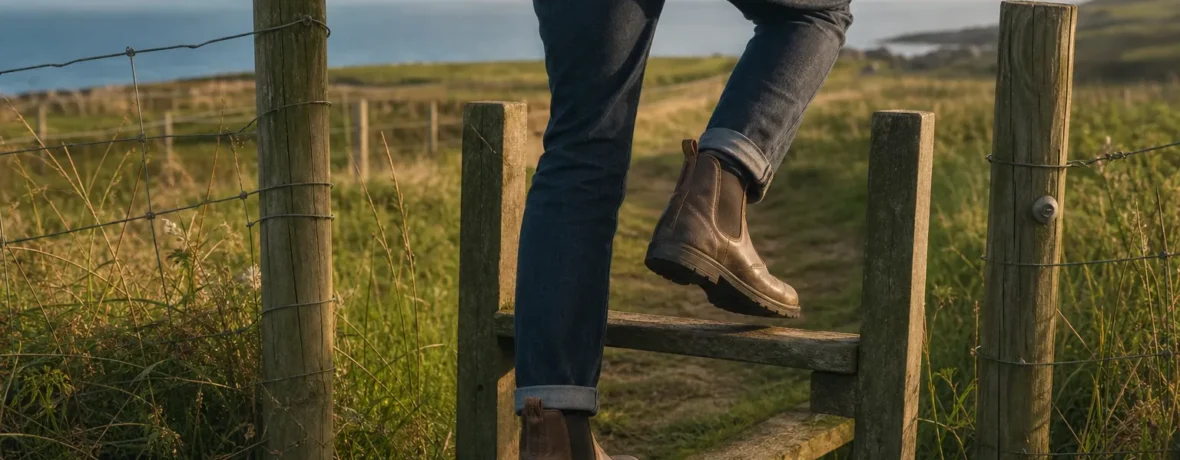
Are Blundstones good for hiking? Yes, but only for easy dirt paths, dry park trails, travel days, and short hikes around 3-5 miles [5-8 km]. No, they are not the right pick for steep descents, loose rock, mud, snow, heavy packs, or all-day mountain routes.
Are Blundstones good for hiking on real trails?
Blundstones are fine for casual trails, not technical hiking.
Think packed dirt, gravel paths, mellow forest loops, campground walks, and low-consequence terrain where a slip is annoying rather than dangerous. Their appeal is obvious: pull-on convenience, tough leather uppers, decent comfort, and a look that works at the trailhead, brewery, airport, and office.
But a Blundstone Chelsea boot is not built like a dedicated hiking boot. Most models lack laces, a locked-in heel, a tall protective cuff, a rock plate, and aggressive trail lugs. That matters when the trail tips downhill or turns rough. Your foot can slide forward inside the boot, your heel can lift, and your toes can jam the front. On rocky tread, the flexible sole can also let more ground feel through than you want after several miles.
Blundstone describes many of its classic boots as using water-resistant leather and durable TPU outsoles, with removable comfort footbeds and shock-absorbing heel cushioning depending on the series. That is useful for daily wear and light outdoor use, but it is different from a boot designed specifically for uneven backcountry terrain. See Blundstone’s own series comparison and waterproofing guidance for the brand’s current wording.
When does hiking in Blundstones make sense?
Wear them when the hike is short, dry, and low-angle.
Blundstones work best when you are mixing town time with a little trail time. They are useful for road trips, national park viewpoints, dog walks, easy nature preserves, farm lanes, desert pullouts, and cabin weekends where you may walk a few miles but you are not carrying a full pack or moving fast over broken ground.
Good Blundstone hiking conditions look like this:
- Dry or mostly dry trail surface
- Firm dirt, gravel, boardwalk, pavement, or smooth forest path
- Short route: roughly 3-5 miles [5-8 km]
- Light daypack under 10 lb [4.5 kg]
- Mild grades without long steep descents
- No stream crossings, lingering snow, wet roots, or slick clay
The National Park Service tells hikers to choose footwear with traction and to carry the right essentials for the route, weather, and terrain. Blundstones can fit that bill on easy walks, but they should not be treated as one-boot-does-everything mountain footwear. For broader trip planning, check the NPS Hike Smart safety guidance.
Where do Blundstones fail on the trail?
They fail when you need foot security, bite, and protection.
The no-lace Chelsea design is the big tradeoff. It feels great when you are pulling boots on at the door. It feels less great when you are side-hilling across loose gravel and your foot moves inside the boot. Laces let you snug the forefoot, lock the heel, loosen the ankle, or adjust for swelling. Blundstones give you elastic panels and a fixed fit. If that fit is not perfect, the trail exposes it fast.
| Trail problem | How Blundstones handle it | Better choice |
|---|---|---|
| Steep downhill | Foot may slide forward; toes can hit the front | Laced hiking shoe or boot |
| Loose rock | Limited underfoot protection and edge control | Hiking shoe with firm midsole |
| Mud and wet roots | Traction depends on model; classic soles are not deep trail lugs | Aggressive lugged outsole |
| Heavy pack | Less support and adjustability | Mid or high hiking boot |
REI’s footwear guidance points out that fit, lacing, traction, and boot stiffness all affect hiking performance. That is exactly where a pull-on lifestyle/work boot starts to show its limits compared with a purpose-built hiking shoe. See REI’s hiking boot selection guide for a solid breakdown of boot types and fit.
Are Blundstones waterproof enough for hiking?
No, most Blundstones are water-resistant, not fully waterproof.
That difference matters. Water-resistant leather can shrug off dew, light rain, and a few shallow puddles if the boots are cared for. It does not make the boot a rubber rain boot or a waterproof hiking boot with a membrane. The elastic side panels are also a weak point in sustained wet conditions.
Blundstone says its leather has water-resistant properties from the tanning process, and the company recommends letting wet leather boots dry naturally at room temperature. The brand also sells waterproof or more weather-focused models in certain series, but you should check the specific product rather than assuming every pair is waterproof.
For shoulder-season hiking, wet grass can soak a boot faster than a quick puddle. Snow is worse. It melts, creeps into seams, chills your socks, and leaves leather stiff if you dry it badly. The National Park Service recommends waterproof boots and added traction devices for winter hiking conditions, along with gaiters where snow and mud can enter footwear. See the NPS winter hiking tips before treating Blundstones like snow boots.
Do Blundstones have enough traction for hiking?
Sometimes, but not for slick or technical ground.
Classic Blundstone soles are made for mixed daily wear: sidewalks, shop floors, gravel, damp grass, and general utility. Some newer or lugged versions have more bite, and those are better outdoors. Still, even the lugged models are not the same as a hiking outsole designed for mud shedding, rock grip, edging, and braking on loose descents.
Traction is not just tread depth. Rubber compound, lug shape, lug spacing, sole stiffness, and the way the boot holds your foot all matter. A boot can have a chunky sole and still feel vague on wet rock if your heel lifts or your foot twists inside the upper.
How should Blundstones fit if you plan to hike in them?
They should feel secure, with no heel slap and no toe bang.
A little room at the toes is fine. Sloppy volume is not. Since you cannot cinch the boot with laces, the fit has to come from the shape of the boot, the insole, and your sock thickness.
- Try them on with the socks you will actually wear on trail.
- Walk uphill and downhill if the store has a ramp; stairs work in a pinch.
- Check for heel lift. A small amount is normal in Chelsea boots, but repeated slap is a blister warning.
- Kick your heel back, then walk downhill. Your toes should not hit the front.
- Test with the extra footbed if your model includes one, or use a supportive insole if the boot has too much volume.
- Reject hot spots early. Leather may soften, but bad trail fit rarely becomes magic.
Are Blundstones better than hiking boots?
No, not for hiking performance.
Blundstones beat hiking boots on convenience and everyday style. You can pull them on fast, wear them with jeans, walk through town, and handle a mellow path without looking like you are dressed for a summit push.
Hiking boots beat Blundstones on trail control. Laces hold the foot. Deeper lugs bite. Midsoles protect against sharp rock. Higher cuffs can add coverage in brush and scree. Waterproof hiking boots, when maintained, usually handle wet trail days better than water-resistant leather Chelsea boots.
| Use case | Blundstones | Hiking footwear |
|---|---|---|
| Town-to-trail travel | Excellent | Good |
| Short dry nature trail | Good | Excellent |
| Rocky mountain hike | Poor | Excellent |
| Wet, muddy, snowy trail | Limited | Better with the right model |
Which Blundstones are best for light hiking?
Choose the grippiest, most weather-ready model that fits your foot.
If you already own classic Blundstones and they fit well, use them for easy trails first. Do not buy them as your primary hiking boot unless your “hikes” are mostly park paths and travel walks.
If you are set on the brand, look for:
- A lugged outsole rather than the smoother classic sole
- Water-resistant or waterproof construction stated on the product page
- A removable insole so you can tune volume and support
- A snug instep fit that keeps the boot from sliding around
- Enough toe room for downhill walking
Blundstone’s lug boot line is marketed with water-resistant leather and higher-traction lug soles, which makes it more trail-friendly than the sleeker classics. Still, “more trail-friendly” does not mean “backpacking boot.”
How do you make Blundstones work better for easy hikes?
Dial in socks, insoles, and expectations.
Start with wool or synthetic hiking socks. Cotton holds moisture and can make rubbing worse. If your heel lifts, a higher-volume sock or supportive insole may help, but do not stuff the boot so tight that your toes go numb.
Keep the leather clean and conditioned, and refresh water repellency with products suitable for your leather type. Blundstone’s boot care guidance recommends regular cleaning and waterproofing to help protect the leather. Mud left on leather shortens its life. Heat drying near a stove, fire, or radiator can damage it.
Most of all, turn around early if the trail gets steeper, wetter, or rougher than expected. Your footwear is part of your margin. When that margin shrinks, pride is useless.
When to see a doctor
See a doctor if foot pain, swelling, numbness, or skin damage does not improve after rest.
Blisters, bruised toenails, arch pain, and ankle tweaks can come from poor fit or overuse, but this article cannot diagnose injuries. Get medical care promptly for severe pain, inability to bear weight, spreading redness, drainage, fever, numbness, or a wound that is not healing. For general blister care basics, use medical sources such as Mayo Clinic’s blister first aid.
Related reading
- Is Merino Wool Good for Summer Hiking?
- Are Timberlands Good for Hiking? An Honest Trail Test
- Are Trail Running Shoes Good for Hiking? Pros, Cons and When to Switch
- Can You Hike in Running Shoes? What Actually Changes on the Trail
FAQ
Can you hike in Blundstones?
Yes, you can hike in Blundstones on easy, dry, short trails. Keep them off steep, wet, rocky, or snowy routes where traction and foot lockdown matter more.
Are Blundstones good for long hikes?
No, they are not ideal for long hikes. Once you get into all-day mileage, rough tread, or heavy packs, a laced hiking shoe or boot is the better tool.
Are Blundstones slippery on trails?
They can be slippery on mud, wet roots, smooth rock, and loose descents. Lugged versions grip better than classic soles, but they still are not a substitute for aggressive hiking outsoles.
Can Blundstones be used as hiking boots?
Only for light-duty use. Treat them as durable casual boots that can handle easy paths, not as technical hiking boots for mountain terrain.
Are Blundstones good for national park trips?
Yes, if your trip is mostly overlooks, visitor centers, short nature trails, and town walking. Pack real hiking footwear if your itinerary includes steep canyon trails, wet forest routes, snow, or rocky climbs.
What should you wear instead of Blundstones for serious hikes?
Wear a laced hiking shoe, trail runner, or hiking boot with good traction and a secure fit. Pick the stiffness, waterproofing, and ankle height based on terrain, weather, and pack weight.