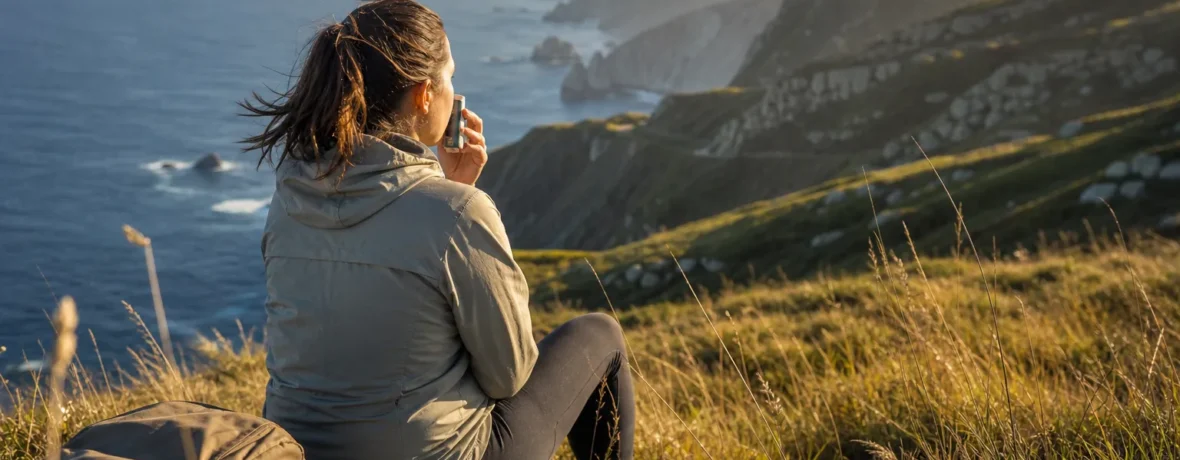
Yes, hiking with asthma can be safe when your symptoms are controlled, your clinician has cleared harder exercise, and you carry your prescribed reliever inhaler plus a written action plan. Start with easy trails under 3 miles [4.8 km], warm up slowly, avoid smoke and high pollen, and turn back early.
Can you go hiking with asthma safely?
Yes—many people with asthma can hike safely with planning and honest pacing. The key is not toughness. The key is control: controlled symptoms, known triggers, the right medication plan from your clinician, and a route that lets you bail out before a small breathing problem becomes a backcountry problem.
Asthma symptoms can flare with physical effort, cold dry air, pollen, wildfire smoke, air pollution, respiratory infections, and fast breathing. The CDC asthma action plan recommends paying attention to weather, air quality, pollen, and wildfire conditions before outdoor activity. For hikers, that means checking the sky and the forecast, not just the mileage.
Hiking is also different from gym exercise. You may be farther from help. You may climb into colder wind. You may breathe harder under a pack. You may meet dust, smoke, grass pollen, campfire residue, or a sudden thunderstorm. That does not mean you stay home. It means you stack the odds your way.
What should you do before hiking with asthma?
Build the hike before you build the ego. Pick a trail that matches your current asthma control, your current fitness, and the day’s conditions.
- Review your asthma action plan. Your plan should tell you what to do when symptoms start, which medicines to use, and when to call for help. The National Heart, Lung, and Blood Institute says an asthma action plan should cover triggers, attack signs, medicines, and emergency contacts.
- Choose a short route first. If you have not hiked recently, choose a loop or out-and-back under 3 miles [4.8 km] with modest elevation gain and easy turnaround points.
- Tell someone your plan. Share the trailhead, route, start time, expected finish time, and the time they should call for help if you do not check in.
- Check your inhaler. Bring your prescribed reliever inhaler, know where it is, and make sure your hiking partner knows where it is too. Do not bury it under snacks, rain gear, and a camera.
- Warm up slowly. Walk the first 10 minutes at an easy pace. MedlinePlus says warming up before exercise and cooling down afterward can help with exercise-induced bronchoconstriction.
- Set a turnaround rule. Turn back if symptoms appear early, if smoke moves in, if wind turns cold and dry, or if you need your rescue plan sooner than expected.
What asthma triggers should you check before a hike?
Check air, weather, pollen, smoke, and sickness before you lace up. These are the trail variables that can turn a mellow walk into a hard breathing day.
| Trigger | Trail clue | Practical move |
|---|---|---|
| Wildfire smoke or air pollution | Hazy horizon, smoke smell, air quality alerts | Pick a different day, hike indoors on a treadmill, or choose a cleaner-air location |
| Pollen | High seasonal pollen, blooming grasses, windy trailheads | Hike after rain, choose forested routes, and follow your clinician’s allergy plan |
| Cold, dry air | Cold morning starts, exposed ridgelines, winter wind | Wear a buff or mask over your mouth and nose to warm the air you breathe |
| Hard effort | Steep climbs, heavy pack, fast group pace | Slow down before symptoms hit, shorten stride, and take standing breaks |
The CDC list of common asthma triggers includes air pollution, wildfire smoke, pollen, cold dry air, thunderstorms, high humidity, infections, and physical exercise. That list reads like a hiker’s weather briefing. Use it that way.
How should you pace yourself on the trail?
Go slower than your legs want for the first half mile [0.8 km]. Your lungs need time to settle into the effort, especially if the trail starts uphill.
Use the talk test. You should be able to speak in short sentences without fighting for air. If you can only push out one or two words, slow down. If you are coughing, wheezing, or feeling chest tightness, stop and follow your action plan.
Hiking pace is not a moral test. Short steps beat big surges. A steady 1.5 mph [2.4 km/h] on a climb is better than sprinting for 5 minutes, coughing for 10, and pretending that was the plan.
- Start each hike with an easy warm-up.
- Keep climbs conversational.
- Take breaks before you feel desperate.
- Loosen your shoulder straps if your pack restricts chest movement.
- Use trekking poles to smooth out steep grades.
- Cool down by walking gently for several minutes at the end.
What should you pack for asthma on a hike?
Pack your asthma gear where your hand can reach it fast. A rescue inhaler in the bottom of your pack is not trail-ready.
Your personal medication plan comes from your clinician, not from a gear list. Still, the way you carry that plan matters. Put your reliever inhaler in a hipbelt pocket, shoulder strap pocket, pants pocket, or the top pocket of your pack. Keep it protected from crushing and extreme heat or cold.
- Your prescribed reliever inhaler
- A spacer if your clinician recommends one and it is practical for your route
- A written or saved asthma action plan
- Emergency contact information
- Any controller or allergy medicines your clinician told you to bring
- A buff, scarf, or mask for cold dry air or dusty trailheads
- Water and salty snacks
- Phone, map, headlamp, and the rest of your basic hiking safety kit
If you hike with a partner, tell them two things before you start: where your inhaler is and when you want help called. That conversation takes 20 seconds. Have it in the parking lot, not halfway up the hill.
What should you do if asthma symptoms start on the trail?
Stop early and follow your action plan. Do not “walk it off” when your breathing is already going sideways.
- Stop moving. Step off the trail where it is safe. Sit or stand in a position that lets you breathe easiest.
- Tell your partner. Say the symptoms out loud: coughing, wheezing, chest tightness, or shortness of breath.
- Use your prescribed medicine exactly as your action plan says. Do not guess, double up, or borrow someone else’s inhaler.
- Move away from the trigger if you can. Leave smoke, dust, cold wind, fresh-cut grass, or heavy pollen exposure.
- Do not resume uphill hiking just because you feel slightly better. Turn back if symptoms interrupted the hike.
- Call for help if symptoms do not improve or breathing feels severe. In the backcountry, waiting can cost time you do not have.
The Wilderness Medical Society-related field protocol hosted by Wildsafe describes severe asthma as a high-risk wilderness problem, especially when distress continues after a rescue inhaler. Red flags include trouble speaking in sentences, confusion, sweating, unwillingness to lie down, or breathing faster than 30 breaths per minute.
Is hiking at altitude safe with asthma?
It can be, but altitude adds strain and removes margin. Thin air, cold wind, dry conditions, and steep climbs can all push your breathing harder.
If you live near sea level, do not make your first comeback hike a 10,000-foot [3,048 m] summit. Start lower. Sleep lower if you can. Add elevation gain in steps, not leaps. A trail that feels easy at 1,000 feet [305 m] can feel sharper at 8,000 feet [2,438 m], especially with a pack and a dry wind.
Use simple rules: shorten mileage, reduce pack weight, keep the pace gentle, and turn around at the first pattern of symptoms. If you have needed urgent care for asthma recently, get medical guidance before high-altitude hiking.
How do you hike in cold weather with asthma?
Warm the air before it hits your lungs. Cold, dry air is a common exercise trigger, and winter hiking adds wind, harder breathing, and frozen-rest-stop temptation.
Wear a buff, neck gaiter, or cold-weather mask over your mouth and nose. Breathe through your nose when the pace allows. Start with a flatter warm-up rather than charging straight up a frozen climb. Keep your inhaler accessible under outer layers, not sealed inside a pack you must unpack with numb fingers.
- Choose a route with wind protection.
- Avoid exposed ridgelines on bitter, gusty days.
- Keep breaks short enough that you do not chill hard.
- Carry dry gloves so you can use your inhaler without fumbling.
- Turn around if coughing or wheezing starts in the first section of trail.
When to see a doctor
See a doctor before hiking harder if exercise triggers symptoms or your asthma feels less controlled. You want a trail plan that fits your lungs, not a lucky guess.
Make an appointment if you cough, wheeze, feel chest tightness, or get short of breath during hikes; if symptoms are more frequent than usual; if you avoid activity because of breathing; or if you are unsure how to use your inhaler. Mayo Clinic recommends seeing a healthcare professional for symptoms of exercise-induced asthma because other conditions can cause similar symptoms.
Get emergency help if breathing or wheezing is getting worse quickly, if your prescribed rescue treatment is not helping, if you cannot speak normally, if lips or nails look blue, if confusion appears, or if walking at a normal pace becomes difficult. Do not drive yourself from a remote trailhead if you feel unstable. Call 911.
What is the best trail choice for your first hike back?
Pick boring on purpose. Boring is underrated when you are testing asthma control outside.
A good first trail has cell service, shade, clean air, low elevation gain, and easy exits. A bad first trail has a steep opening climb, exposed wind, wildfire haze, no turnaround options, and a group that treats breaks like weakness.
Try a familiar park loop, rail trail, lake path, or short nature trail. Keep the first outing short enough that you finish with energy left. If that goes well, add distance or elevation next time, not both.
Related reading
- Lyme Disease Symptoms After a Hike
- Hantavirus and Camping: Cabins, Shelters and Risk
- Electrolytes for Hikers: What They Are and How Much You Need
- What Does Poison Ivy Look Like? Leaves of Three and Lookalikes
FAQ
Can hiking make asthma worse?
Yes, hiking can trigger symptoms if effort, cold dry air, pollen, smoke, or pollution affect your airways. That does not mean hiking is off-limits; it means you need a trigger check, an action plan, and a pace you can sustain.
Should I use my inhaler before hiking?
Use it only as your clinician has directed. Some people are told to use reliever medicine before exercise, but the timing and medication choice should come from your personal asthma plan.
Is it safer to hike alone or with a partner if I have asthma?
A partner is safer, especially on remote trails. If you hike solo, choose a short route with cell service, share your plan, carry your inhaler within reach, and turn back sooner than you would with company.
What weather is worst for hiking with asthma?
Cold dry wind, wildfire smoke, high pollution, high pollen, thunderstorms, and very humid days can all be rough for some hikers with asthma. Your own trigger history matters most, so track which conditions cause symptoms.
Can kids with asthma hike?
Yes, many kids with asthma can hike when their clinician and caregivers have a clear plan. Keep routes short, build in breaks, carry prescribed medicine, and make sure the adults know the child’s symptoms and emergency steps.
When should I turn around?
Turn around when symptoms start, when air quality worsens, when cold wind triggers coughing, or when you need your action plan earlier than expected. The summit, overlook, or waterfall will still be there another day.