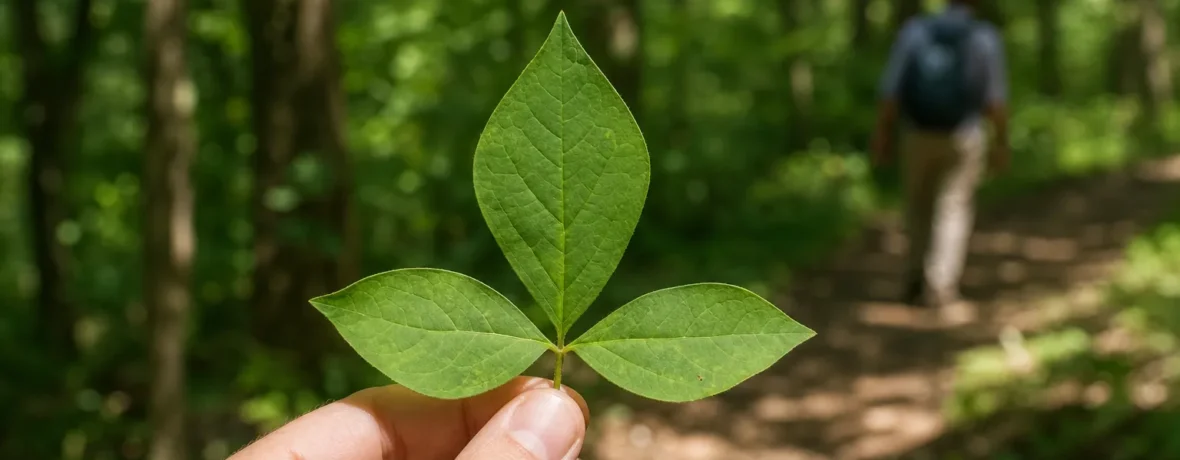
How long does poison ivy take to show up? Usually 12 to 48 hours after skin touches urushiol oil, but the range is wider: a few hours if you’re highly sensitive, 4 to 48 hours if you’ve had it before, and 2 to 3 weeks for a first reaction.
How long does poison ivy take to show up after exposure?
Most poison ivy rashes show up within 12 to 48 hours.
That timing comes from the allergic reaction your skin has to urushiol, the oily resin in poison ivy, poison oak, and poison sumac. The Mayo Clinic poison ivy guide says the reaction usually develops 12 to 48 hours after exposure and lasts 2 to 3 weeks.
Trail reality can look messier. You may brush a vine at 10 a.m., feel fine at dinner, then wake up itchy the next morning. Or one wrist flares first, then your shin and ankle light up later because those spots got less oil or reacted slower.
| Situation | Typical rash timing | What you may notice |
|---|---|---|
| You’ve had poison ivy before | 4 to 48 hours | Itching, redness, streaks, bumps, or blisters |
| First known reaction | 2 to 3 weeks | Delayed itch and rash that can surprise you |
| Heavy urushiol contact | A few hours to 2 days | Faster, stronger rash in the contact area |
| Oil left on gear or clothing | New rash after re-contact | Fresh patches where contaminated items touch skin |
Can poison ivy show up days later?
Yes, poison ivy can show up days later.
The CDC/NIOSH poisonous plants page lists symptoms as a red rash within a few days of skin contact, plus bumps, red patches or streaking, weeping blisters, swelling, and itching. The American Academy of Dermatology also explains that a first poison ivy, oak, or sumac rash can take 2 to 3 weeks to appear.
That delayed timing does not mean the rash is moving through your bloodstream. It means your immune system is reacting at different speeds in different places, or you touched urushiol again from boots, trekking poles, dog fur, gloves, or dirty laundry.
What does poison ivy look like when it first starts?
Early poison ivy usually starts as intense itch, redness, and small bumps or streaks.
Streaks are common because the plant brushes across your skin in a line. If the oil comes from a sock cuff, shirt sleeve, pack strap, or pet fur, the rash may look patchy instead of striped.
- Itch that starts before the rash is obvious
- Red patches where skin touched the plant oil
- Raised bumps or tiny blisters
- Lines or streaks on ankles, calves, wrists, or forearms
- Swelling in the exposed area
- Blisters that may leak clear fluid and later crust over
Blister fluid does not spread poison ivy. The CDC says the fluid in blisters will not cause blisters to spread to you or to someone else. The problem is urushiol oil, not the watery fluid from the rash.
How fast should you wash after touching poison ivy?
Wash as soon as you can, ideally before the oil sits on your skin.
On trail, speed matters. Urushiol is sticky. It can cling to skin, fingernails, socks, laces, pant cuffs, trekking pole grips, pack hip belts, and dog coats. The NIH MedlinePlus poison ivy page recommends washing skin and clothing right away after contact.
- Move away from the plant so you do not brush it again.
- Rinse exposed skin with lots of cool water.
- Use soap, poison plant wash, or a grease-cutting cleanser if you have it.
- Clean under your fingernails with a brush or cloth.
- Remove contaminated clothing without dragging it across clean skin.
- Bag dirty socks, pants, gaiters, gloves, and shirts until you can wash them.
- Wash boots, poles, tools, and your dog’s coat if they may have touched the plant.
Do not burn poison ivy at camp or at home. CDC/NIOSH warns that burning poison ivy, oak, or sumac can put urushiol-containing particles in the air, which can irritate the lungs.
Why does my poison ivy rash seem to keep spreading?
It usually is not spreading from the blisters.
Poison ivy often looks like it spreads because new patches appear later. That can happen for three trail-common reasons:
- Different skin areas react at different speeds. Thin skin may flare before thicker skin.
- Some areas got more urushiol. A heavy swipe can show up faster than a light brush.
- You touched contaminated gear. Urushiol can stay on clothing, tools, footwear, and pet fur until it is washed off.
If a “new” rash appears exactly where your sock cuff, watch band, pack strap, or boot tongue sits, think gear contamination. Wash the item before the next hike.
How long does poison ivy last?
Poison ivy usually lasts 2 to 3 weeks.
Mild cases may calm down sooner. Strong reactions can stay angry longer, especially if you keep scratching, sweat under tight clothing, or re-expose yourself to oil on gear. Scratching can also break skin, which raises the chance of infection.
For comfort, Mayo Clinic and dermatology sources commonly point to cool compresses, cool showers, calamine-type lotions, colloidal oatmeal baths, and over-the-counter anti-itch products. Do not use prescription-strength treatments or oral medicines without a clinician’s guidance, especially for children, pregnancy, large rashes, face rashes, or repeated severe reactions.
When to see a doctor
See a doctor if the reaction is severe, widespread, infected-looking, or near sensitive areas.
Get emergency medical care if you inhaled smoke from burning poison ivy and have trouble breathing. Mayo Clinic also advises medical care if the rash affects your eyes, mouth, or genitals; your skin keeps swelling; blisters ooze pus; you develop a fever over 100°F [37.8°C]; the rash is severe or widespread; or it does not improve within a few weeks.
On a backpacking trip, play it safer when the rash is on your face, swelling closes an eye, itching prevents sleep, or the rash covers multiple body areas. Remote settings stretch small problems. If you are far from the trailhead and symptoms are escalating, turn around and get help.
How do you avoid poison ivy on hikes?
The best prevention is keeping urushiol off your skin and gear.
Poison ivy can grow as a low plant, a shrub, or a hairy climbing vine. The old “leaves of three, let it be” rule helps, but do not bet your skin on one rhyme. Plant shape changes by region and season.
- Wear long pants on overgrown trails.
- Use gaiters when pushing through brush.
- Stay on the tread instead of cutting switchbacks.
- Do not grab vines, roots, or trailside brush for balance.
- Keep dogs out of poison ivy patches when you can.
- Wash exposed clothes after brushy hikes.
- Clean trekking pole grips, boot uppers, and tools after trail work.
- Never burn unknown vines or brush piles.
Related reading
- What Does Poison Ivy Look Like? Leaves of Three and Lookalikes
- How Long Does Poison Ivy Last?
- Is Poison Ivy Contagious?
- What Does a Poison Ivy Rash Look Like?
FAQ
Can poison ivy show up overnight?
Yes, poison ivy can show up overnight. If you were exposed during the day, a 12-to-48-hour reaction window makes next-morning itching and redness very plausible.
Can poison ivy show up after a week?
Yes, poison ivy can show up after a week, especially if it is your first reaction or if you touched contaminated gear later. A first rash can take 2 to 3 weeks to appear.
Is poison ivy contagious?
No, the rash itself is not contagious. You can, however, spread urushiol oil from skin, clothes, pets, or gear before it is washed off.
Does scratching make poison ivy spread?
Scratching does not spread poison ivy from blister fluid. Scratching can break skin, worsen irritation, and raise the chance of infection.
Can you get poison ivy from your dog?
Yes, you can get poison ivy from urushiol on your dog’s fur. The dog may not react, but the oil can transfer to your hands, legs, car seats, or sleeping bag.
What should I do first if I touched poison ivy on trail?
Rinse the skin with lots of cool water, then wash with soap or poison plant wash if available. Clean under your nails and isolate contaminated clothing until you can launder it.