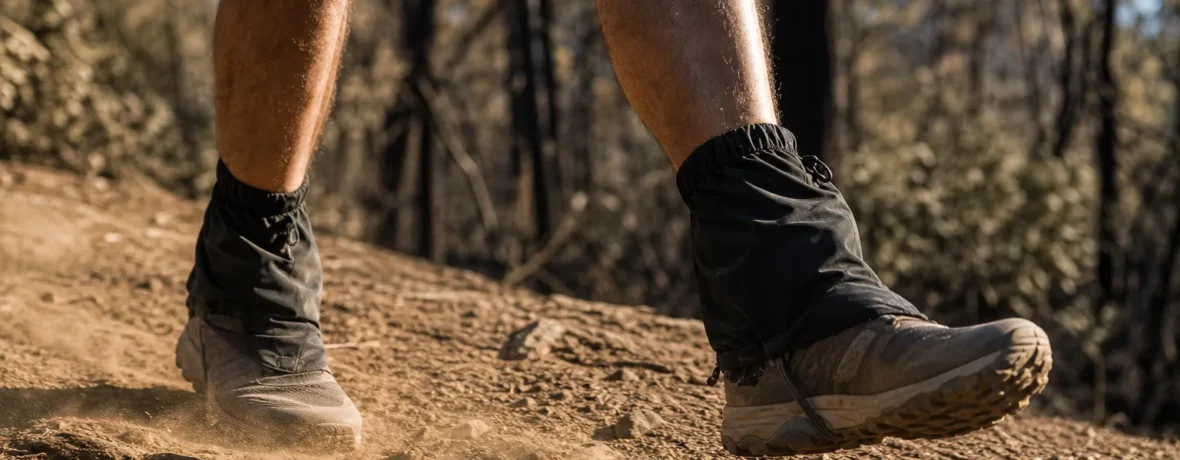
To walk faster, shorten your stride, raise your cadence to 120-140 steps per minute, keep your effort conversational, and train 3-5 days per week. Add one interval day, one hill or stair day, and one longer easy walk. Most walkers can improve pace within 4-8 weeks.
How do you walk faster without getting tired?
You walk faster without getting tired by making each step cheaper.
Speed is not just effort. It is efficiency. If you simply push harder, you spike your breathing, tighten your shoulders, overstride, and fade. The cleaner move is to keep the effort steady while your feet turn over faster.
Use this HowTo sequence on flat ground first, then carry it onto trails:
- Stand tall. Stack your head over your ribs and hips. Look 15-30 feet [5-9 m] ahead, not at your shoes.
- Shorten your stride. Land with your foot under your body, not way out in front. Long reaches act like brakes.
- Increase cadence. Count your right-foot strikes for 30 seconds, double it, then double again for total steps per minute. Aim for 120-140 steps per minute for brisk walking.
- Use your arms. Bend elbows near 90 degrees and swing from the shoulders. Hands move forward and back, not across your chest.
- Keep your jaw loose. Tension travels. A clenched face usually means tight shoulders and wasted energy.
- Breathe on purpose. Try 3 steps in, 3 steps out on easy ground. When climbing or pushing, shift to 2 in, 2 out.
- Hold a steady effort. You should be able to speak in short sentences on most training walks.
- Finish before you crack. Stop the fast portion while your form still looks sharp. Sloppy speed teaches sloppy movement.
The CDC lists brisk walking as moderate-intensity aerobic activity and recommends adults get at least 150 minutes of moderate-intensity activity each week, plus 2 days of muscle-strengthening work. Use that as your floor, then add speed carefully from there through the CDC adult physical activity guidelines.
What is good walking form for speed?
Good speed form is tall, compact, quick, and relaxed.
Think smooth, not heroic. Fast walking should feel like controlled forward flow. Your feet roll, your arms drive, your hips stay stable, and your upper body stays quiet. Mayo Clinic’s walking guidance points to posture, purposeful arm movement, and a smooth heel-to-toe roll as key pieces of fitness walking; the same basics apply when you are trying to move faster on pavement or packed trail through proper walking technique.
| Mistake | What it does | Fix |
|---|---|---|
| Overstriding | Brakes your body with each landing | Shorten the step and quicken cadence |
| Swinging arms across the body | Wastes energy and twists your torso | Drive elbows straight back |
| Looking down constantly | Rounds your shoulders and shortens breathing | Scan ahead, then glance down as needed |
| Climbing with huge steps | Burns quads and spikes heart rate | Use short steps and steady breathing |
Here is a quick drill. Walk 2 minutes at your normal pace. Then walk 2 minutes with shorter steps and quicker feet while keeping the same effort. If the second version feels smoother, you found free speed.
How do you train to walk faster?
Train speed with intervals, easy volume, hills, and strength.
You do not need a complicated plan. You need repeatable work. Fast walkers are not fast every day. They stack easy miles, sprinkle in sharper efforts, and build legs that can push without falling apart.
Start with 3 walking days per week if you are new or returning after time off. Move to 4-5 days when your feet, calves, hips, and knees handle the work without lingering soreness.
| Workout | What to do | Why it works |
|---|---|---|
| Easy walk | 30-45 minutes at a conversational pace | Builds aerobic base without beating you up |
| Speed intervals | 8 x 1 minute fast, 2 minutes easy | Teaches quicker turnover and better form |
| Hill or stair session | 10-20 minutes of short uphill repeats | Builds climbing strength and power |
| Long walk | 60-120 minutes easy | Improves endurance for longer hikes |
A simple week looks like this:
- Monday: Rest or mobility
- Tuesday: Speed intervals
- Wednesday: Easy walk
- Thursday: Strength training
- Friday: Rest or easy walk
- Saturday: Hill, stair, or trail session
- Sunday: Long easy walk
For strength, keep it basic: squats, step-ups, lunges, calf raises, glute bridges, side planks, and loaded carries. Two sessions per week is plenty for most hikers. Use clean form and stop 1-2 reps before your technique gets ugly.
How to hike faster on trails without burning out?
You hike faster by keeping effort even when the terrain changes.
Trail speed is not road speed with prettier views. Roots, rocks, mud, sand, altitude, heat, switchbacks, and pack weight all change the math. The best trail movers rarely surge. They manage effort like a dimmer switch.
Use these trail-specific habits:
- Shorten your stride on climbs. A steep uphill is not the place for big steps. Small steps protect your quads and lungs.
- Let your cadence stay alive. If the grade bites, keep the feet moving and reduce step length.
- Use poles when terrain fits. Poles can spread effort through your upper body and improve rhythm on climbs and descents.
- Pause with purpose. If you stop, make it count: drink, eat, adjust layers, check the route, then move.
- Descend lightly. Do not slam your heels. Quick, short steps reduce braking and save your knees.
- Look through the trail. Scan the next 10-20 feet [3-6 m] so your feet have a plan before they land.
The fastest sustainable hiking pace is usually the one that feels too controlled early. If you are gasping 15 minutes into a climb, you are borrowing speed from the next hour.
How much does pack weight slow you down?
Pack weight slows you down most on climbs and technical descents.
A light pack lets you move more naturally. A heavy pack changes posture, shortens your stride, makes foot placement clumsier, and turns small climbs into real work. You do not need to chase an ultralight spreadsheet to get faster, but you should remove dead weight.
Before your next hike, spread everything on the floor and sort it into three piles:
- Must carry: navigation, insulation, rain protection, water, food, light, first aid basics, emergency gear, sun protection
- Useful sometimes: extra camera gear, camp comfort items, large battery banks, spare clothing beyond the forecast
- Dead weight: duplicate tools, full-size packaging, extra “just in case” items with no clear job
Speed comes from removing friction. Trim pack weight, but do not cut safety gear just to win a pace number. Bad weather, darkness, injury, and wrong turns do not care how fast your training walks have been.
What pace should you aim for when walking or hiking?
Aim for a pace you can repeat, not one you can survive once.
On flat pavement, many brisk walkers settle into 15-20 minutes per mile [9-12 minutes per km]. Newer walkers may be closer to 20-24 minutes per mile [12-15 minutes per km], while trained fitness walkers may go faster than 15 minutes per mile [9 minutes per km]. Trails vary more. A smooth, flat path may feel close to road pace. A rocky climb can cut that pace in half.
Use effort zones instead of judging every outing by speed:
- Easy: You can talk in full sentences. Use this for long walks and recovery.
- Steady: You can speak in short sentences. Use this for most brisk walking.
- Hard: You can say a few words at a time. Use this for intervals and short climbs.
- Too hard: You cannot control breathing or form. Back off.
Track pace after the walk, not every 20 seconds during it. Constant watch-checking makes you choppy. Better: choose one familiar 1-mile [1.6 km] route and time it every 2-4 weeks under similar conditions.
What gear helps you walk and hike faster?
The right gear reduces drag, hot spots, and wasted effort.
Start with shoes. They should fit your foot shape, grip the terrain, and feel stable when you pick up the pace. For road walking, a flexible walking or running shoe can work well. For trails, use hiking shoes or trail runners with enough outsole bite for dirt, rock, and mud.
Your fast-moving checklist:
- Shoes with secure heel hold and room for toes
- Socks that manage moisture and do not bunch
- Layers that vent before you soak them with sweat
- A pack that rides close and does not bounce
- Water stored where you can drink without long stops
- Snacks you can eat quickly on breaks
- Trekking poles for climbs, descents, snow, loose dirt, or long days
Do not test brand-new shoes on a long hike. Use short walks first. If a shoe rubs after 2 miles [3.2 km], it will not become kinder at mile 12 [19.3 km].
How do you get faster on hills?
Get faster on hills by training strength and pacing the first minute.
Most hikers attack the base of a hill too hard. Then the hill attacks back. Instead, enter the climb at a pace that feels almost too easy. Shorten your stride right away. Keep your chest tall. If you use poles, plant them slightly behind your lead foot and push back, not down.
Try this hill workout once per week:
- Warm up for 10 minutes on easy ground.
- Find a hill that takes 45-90 seconds to climb.
- Walk uphill hard but controlled.
- Walk back down slowly.
- Repeat 6-10 times.
- Cool down for 10 minutes.
Keep the first repeat smooth. If repeat 2 is already a mess, the session is too hard. Hill training should leave your legs worked, not wrecked for three days.
When to see a doctor
See a doctor if exercise brings chest pain, faintness, unusual shortness of breath, or symptoms that feel wrong for you.
Speed training is still training. If you have heart disease, diabetes, high blood pressure, balance problems, a recent injury, or a long break from exercise, ask a health care professional what level of activity is safe before pushing intensity. MedlinePlus advises getting medical help for chest, shoulder, arm, or neck pressure or pain during exercise, severe pain, lightheadedness, or breathing trouble that continues after stopping through its outdoor fitness safety guidance.
Heat changes the risk picture. The Wilderness Medical Society describes heat exhaustion symptoms such as intense thirst, weakness, discomfort, dizziness, and syncope, and describes heat stroke as severe heat illness with central nervous system problems such as altered mental status, seizure, or coma. On hot hikes, slow down, seek shade, cool the person, and get urgent help for confusion, collapse, or suspected heat stroke using the Wilderness Medical Society heat illness guidelines.
Do not self-diagnose trail symptoms. Stop, cool down or warm up as conditions require, and seek medical help when symptoms are severe, sudden, repeated, or out of proportion to the effort.
Related reading
- How Many Miles Should You Walk a Day?
- Can You Walk on a Sprained Ankle? Getting Off the Trail Safely
- A Walk in the Woods: Bill Bryson's AT Story vs Reality
- Why Do People Walk the Camino?
FAQ
How can I walk faster in one week?
Shorten your stride, use your arms, and add 4-6 short fast intervals to two walks. One week is enough to feel smoother, but real pace gains usually need 4-8 weeks of consistent training.
Is it better to take longer steps or faster steps?
Faster, shorter steps are usually better. Long steps often make your foot land too far ahead of your body, which slows you down and adds impact.
How many days per week should I train for faster hiking?
Train 3-5 days per week. Use one speed day, one hill or stair day, one long easy day, and 1-2 easy walks if your body is recovering well.
Do trekking poles make you faster?
Trekking poles can make you faster on climbs, descents, loose surfaces, and long days if you use them well. On smooth flat ground, they may not add speed, but they can still help rhythm and reduce leg fatigue.
Why am I slow even though I walk often?
You may be walking at the same easy pace every time. Keep the easy walks, but add short intervals, hill work, strength training, and form practice so your body has a reason to adapt.
What is the fastest safe way to improve walking pace?
The fastest safe route is consistent training with gradual intensity. Add one hard session per week first, keep most walks easy, and increase total time or distance in small steps instead of changing everything at once.