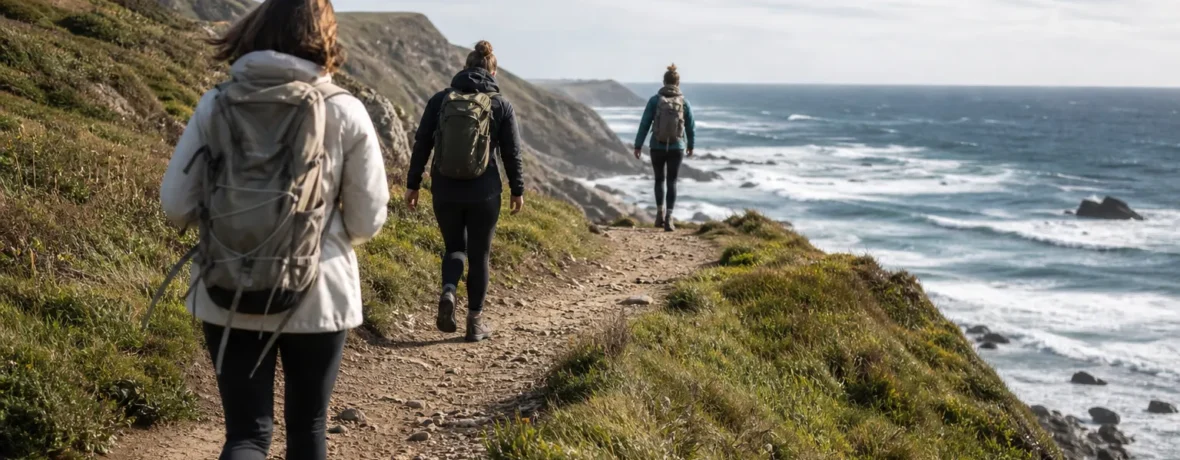
What is a good walking pace? For most adults, a good walking pace is 3 to 4 mph [4.8 to 6.4 km/h] on flat ground, or 15 to 20 minutes per mile [9:19 to 12:26 per km]. On trails, 2 to 3 mph [3.2 to 4.8 km/h] is solid because grade, footing, and pack weight slow you down.
What is a good walking pace for most adults?
A good walking pace is the fastest pace you can hold with clean form and steady breathing.
On pavement, many walkers land in the 3 to 4 mph [4.8 to 6.4 km/h] range. That equals 15 to 20 minutes per mile [9:19 to 12:26 per km]. The CDC lists brisk walking as a moderate-intensity activity and gives a 15-minute mile as an example of brisk walking on flat ground.
For hiking, cut yourself some slack. A 3 mph [4.8 km/h] walk on a bike path can turn into 2 mph [3.2 km/h] once you add rocks, roots, switchbacks, mud, heat, altitude, and a loaded daypack. That is not failure. That is terrain doing terrain things.
| Pace type | Speed | Mile pace | How it feels |
|---|---|---|---|
| Easy walk | 2 to 2.9 mph [3.2 to 4.7 km/h] | 20:40 to 30:00 min/mile | You can talk in full sentences. |
| Brisk walk | 3 to 4 mph [4.8 to 6.4 km/h] | 15:00 to 20:00 min/mile | You breathe harder but stay controlled. |
| Fast fitness walk | 4 to 4.5 mph [6.4 to 7.2 km/h] | 13:20 to 15:00 min/mile | You work. Short sentences only. |
| Trail hiking pace | 2 to 3 mph [3.2 to 4.8 km/h] | 20:00 to 30:00 min/mile | Effort depends on grade and footing. |
How fast is a brisk walking pace?
A brisk walking pace is usually 3 to 4 mph [4.8 to 6.4 km/h] for fit, healthy adults on flat ground.
The better test is effort. The CDC talk test says moderate intensity means you can talk but not sing. That is the sweet spot for many training walks: hard enough to build fitness, easy enough to repeat several times a week.
If you need a clean target, start with 20 minutes per mile. Once that feels comfortable, work toward 18 minutes, then 16 minutes. A 15-minute mile is moving with purpose. You are not strolling past shop windows. You are walking like there is coffee at the trailhead and the sky looks iffy.
What is a good walking pace for hiking?
A good hiking pace is 2 to 3 mph [3.2 to 4.8 km/h] on moderate trails.
Flat, smooth trails let you cruise near your road-walking pace. Steep climbs, loose rock, snow, sand, creek crossings, blowdowns, and route-finding can cut that speed sharply. A heavy pack does the same. So does heat.
Use pace as a planning tool, not a judgment. If a trail is 8 miles [12.9 km] with steady climbing, plan more time than you would for an 8-mile greenway walk. Add breaks for water, snacks, photos, layers, and the classic “where did the trail go?” pause.
For day hikes, a practical target is simple: move at a pace that lets you finish with energy left. The mountain does not care what your watch says. Your knees might.
How do I measure my walking pace?
Measure walking pace by timing one mile or using a GPS watch, phone app, treadmill, or mapped route.
For the cleanest outdoor check, pick a flat route with few stops. Avoid traffic lights. Avoid steep hills. Then walk naturally after a five-minute warm-up.
- Warm up for 5 minutes at an easy pace.
- Start your timer at a known mile marker or mapped starting point.
- Walk one full mile [1.6 km] at a steady, repeatable effort.
- Stop the timer at the mile mark.
- Record your time, effort, weather, shoes, and surface.
- Repeat on another day and average the two results.
To convert pace to speed, use this shortcut: 60 divided by your minutes per mile equals mph. A 20-minute mile is 3 mph. A 15-minute mile is 4 mph.
What affects walking pace on the trail?
Terrain affects walking pace more than motivation does.
You can be fit and still slow down on rough ground. That is smart movement, not weakness. Trails punish sloppy speed with rolled ankles, hot spots, and hard falls.
- Elevation gain: Climbing takes more effort per mile than flat walking.
- Footing: Rocks, roots, mud, snow, and sand force shorter steps.
- Pack weight: A heavier pack changes stride, balance, and fatigue.
- Altitude: Higher elevations can make familiar paces feel harder.
- Heat and humidity: Your body works harder to cool itself.
- Breaks: Snack stops, photos, and layer changes lower average speed.
- Navigation: Faint trails and junctions slow the day, even for strong hikers.
How can I improve my walking pace?
Improve your walking pace by building consistency first, then adding short faster efforts.
The CDC recommends at least 150 minutes of moderate-intensity aerobic activity per week for adults, plus muscle-strengthening activity on two days. Brisk walking can count toward that aerobic time.
Start with three to five walks per week. Keep most of them comfortable. Then add one pace-focused session after your body has adapted.
- Fix your baseline: Walk 20 to 30 minutes at an easy pace three times per week.
- Add brisk blocks: During one walk, alternate 2 minutes brisk with 3 minutes easy.
- Use hills: Walk uphill with short steps and tall posture; recover on the descent.
- Strengthen your legs: Add squats, step-ups, calf raises, and hip work twice weekly.
- Practice trail rhythm: Shorten your stride on climbs and keep your effort steady.
- Recover: Take easier days so your pace can actually improve.
Form matters too. The Mayo Clinic walking guide recommends upright posture, relaxed shoulders, a natural arm swing, and smooth heel-to-toe steps. Translation: do not hunch, flail, or overstride.
What is a good walking pace for weight loss?
A good walking pace for weight loss is a pace you can repeat often without getting hurt.
That usually means brisk but controlled: 3 to 4 mph [4.8 to 6.4 km/h] on flat ground, or a moderate-effort trail pace that raises your breathing. Faster is not always better. More consistent usually wins.
If fat loss is your goal, pace is only one piece. Total weekly activity, food intake, sleep, stress, strength training, and recovery all matter. Walking helps because it is repeatable. You can do it on Monday and still want to do it again on Wednesday.
When to see a doctor
See a doctor before increasing your walking intensity if you have symptoms, a known medical condition, or a long break from exercise.
Walking is safe for many people, but do not ignore warning signs. MedlinePlus advises checking with a health care provider if you have chest pain or shortness of breath with activity, dizziness, heart problems, or other health concerns before starting or changing an exercise program.
Stop walking and seek medical help if you feel chest pressure, pain spreading to the arm, shoulder, neck, or jaw, faintness, unusual shortness of breath, or sudden weakness. Do not try to “walk it off.” Get help.
Related reading
- What Is a Good Hiking Pace? Average Speeds and Naismith's Rule
- Are Hiking Shoes Good for Everyday Walking?
- How Many Calories Does Walking Burn vs Hiking?
- Is Walking Cardio? How Much Counts
FAQ
Is 3 mph a good walking pace?
Yes, 3 mph [4.8 km/h] is a good walking pace for many adults. It equals a 20-minute mile and often lands in a moderate, sustainable effort zone.
Is 4 mph walking fast?
Yes, 4 mph [6.4 km/h] is a fast walking pace for many people. It equals a 15-minute mile, which is brisk and purposeful on flat ground.
What is a normal walking pace by age?
Normal walking pace varies with fitness, health, stride length, terrain, and age. Many healthy adults walk 2.5 to 4 mph [4.0 to 6.4 km/h] on flat ground, while older adults or new walkers may feel best below that range.
How fast should I walk a mile?
A solid walking mile takes 15 to 20 minutes for many adults. On trails, a mile can take 20 to 30 minutes because climbing and rough footing slow your stride.
Should I walk by speed or heart rate?
Use effort first, then speed or heart rate as backup. The talk test works well: for moderate intensity, you should be able to talk but not sing.
Why is my hiking pace slower than my road pace?
Your hiking pace is slower because trails add grade, uneven footing, pack weight, weather, and stops. That slowdown is normal, and it often means you are moving safely.