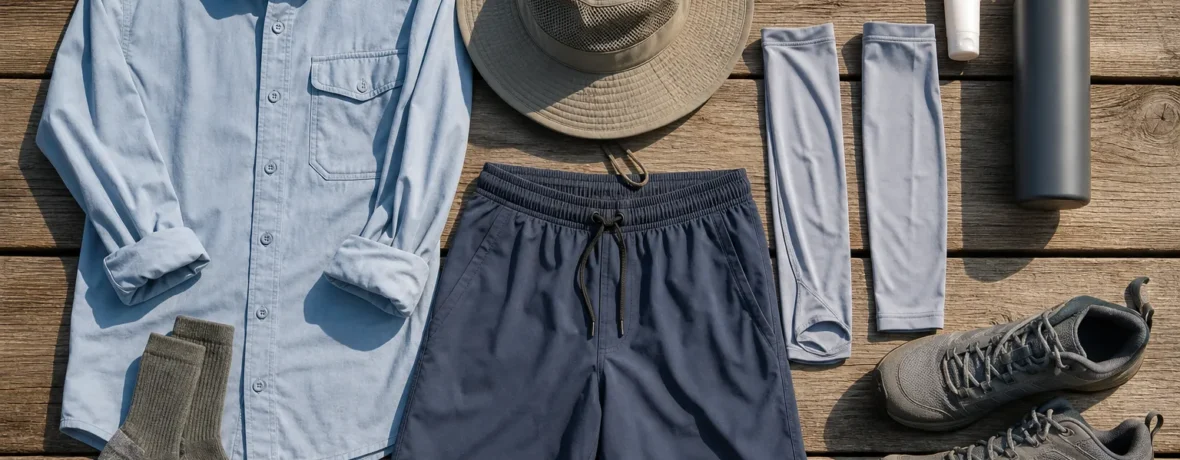
For summer hiking, choose a loose UPF sun shirt, breathable hiking pants or shorts, thin wool or synthetic socks, ventilated trail shoes, a wide-brim hat, UV-blocking sunglasses, and SPF 15+ sunscreen. Cover more skin in strong sun; ventilate more in humid heat.
What to wear hiking in summer from head to toe?
Wear light, breathable layers that block sun without trapping sweat.
Summer hiking clothes have one job: keep your body cooler while protecting your skin from sun, brush, bugs, rock, and pack rub. That usually means synthetic or merino wool fabric, a relaxed fit, pale colors, and enough coverage that you are not stopping every 30 minutes to fix sunburn, chafing, or blisters.
- Start with a sun hoodie or light hiking shirt. Pick polyester, nylon, or merino wool. Long sleeves sound hot, but a thin UPF shirt can feel cooler than bare skin under harsh sun because it gives you shade you can wear.
- Add hiking pants, shorts, or a skirt. Pants protect against sun, ticks, poison ivy, and scratchy desert plants. Shorts vent better. Choose based on the trail, not just the forecast.
- Wear thin hiking socks. Merino wool or synthetic socks move sweat better than cotton and dry faster after creek crossings.
- Choose breathable trail shoes or boots. For most summer day hikes, trail runners or low hiking shoes beat heavy boots unless you need ankle support, carry a heavy pack, or hike rough off-trail terrain.
- Cover your head and eyes. A wide-brim hat, cap with neck cape, or sun hoodie hood helps. Sunglasses should block UVA and UVB rays.
- Carry a light extra layer. A breezy ridge, thunderstorm, shaded canyon, or summit can chill you even when the trailhead feels like an oven.
What to wear hiking in hot weather?
Choose loose, light-colored, quick-drying clothing with sun coverage.
The hotter the day, the less you want tight clothes. Tight waistbands, compression tops, and heavy seams trap sweat and rub when salt dries on your skin. A slightly loose shirt lets air move. A button-up hiking shirt gives you easy venting. A sun hoodie gives you simple coverage over your arms, neck, and ears.
Fabric matters. Nylon is tough and dries fast. Polyester is common in sun shirts and base layers. Merino wool handles odor well and can feel comfortable across a wide temperature range, though thin merino wears faster than nylon. Cotton feels good at the trailhead, then turns heavy, clingy, and slow to dry once soaked.
Color matters too. Light gray, tan, white, pale blue, and soft green reflect more sunlight than black or navy. Dark clothes can still work if the fabric is thin and airy, but on exposed trails, pale colors are usually more comfortable.
Is it better to hike in shorts or pants in summer?
Pants are safer; shorts are cooler.
There is no single winner. Shorts feel great on clean, shaded trails with low brush. Pants earn their place on exposed routes, tick country, desert trails, overgrown paths, and rocky scrambles where one slip can chew up your shins.
| Option | Best for | Watch out for |
|---|---|---|
| Hiking shorts | Hot, maintained trails; humid forest hikes; fast day hikes | Sunburn, bug bites, scratches, thigh chafe |
| Light hiking pants | Desert sun, alpine exposure, ticks, brush, cool starts | Poor venting if the fabric is thick or tight |
| Convertible pants | Trips with changing weather or mixed terrain | Zippers can rub under pack straps or gaiters |
| Hiking skirt or skort | Ventilation, comfort, easy movement | Less lower-leg protection unless paired with gaiters or leggings |
If you choose shorts, use sunscreen on your thighs, knees, calves, and the backs of your legs. Those spots burn fast when you climb or stop for lunch. If you choose pants, look for mesh pockets, zip vents, articulated knees, and fabric thin enough to flutter when you shake it.
Should you wear cotton for summer hiking?
Usually, no.
Cotton absorbs sweat and dries slowly. On a blazing, low-risk day close to the car, a cotton tee may be merely annoying. On a long trail, shaded canyon, windy summit, or stormy afternoon, wet cotton can leave you clammy and cold when your pace drops.
Better choices are polyester, nylon, and merino wool. These fabrics dry faster and help move moisture away from your skin. That does not make them magic. You will still sweat. The goal is to avoid wearing a wet towel for the last 4 miles [6.4 km].
For underwear, skip cotton there too. Choose flat-seam synthetic or merino boxer briefs, briefs, or underwear made for running. Chafing ruins summer hikes quickly, especially when sweat, dust, and salt team up.
What socks and hiking shoes are best for hot trails?
Wear thin moisture-wicking socks with breathable trail shoes.
Your feet need airflow, but they also need protection from grit, hot rock, and repeated impact. A thin or medium-light merino wool sock is a strong summer choice because it cushions without turning bulky. Synthetic socks work well too, especially if they fit smoothly with no bunching at the toes or heel.
For footwear, match the shoe to the terrain:
- Trail runners: best for light packs, fast hiking, maintained trails, and hot conditions.
- Low hiking shoes: good for rocky trails when you want more structure than a running shoe.
- Mid boots: useful with heavier packs, loose rock, weak ankles, or rough terrain.
- Sandals: fine for camp, water crossings, or short mellow trails, but risky on rocky, thorny, or snake-prone routes.
Blisters often start when wet skin slides inside a shoe. Trim toenails, lace shoes snugly at the heel, and stop early if you feel a hot spot. A 2-minute sock adjustment beats a painful limp back to the trailhead.
How do you protect your skin and eyes from the sun while hiking?
Cover skin first, then use sunscreen on what is still exposed.
The CDC’s sun safety guidance recommends broad-spectrum sunscreen with SPF 15 or higher, plus shade, clothing, hats, and sunglasses. For hiking, that means sunscreen is not your only shield. Clothing stays put better when you sweat, brush against rock, or forget the clock.
A smart sun setup looks like this:
- UPF long-sleeve shirt or sun hoodie
- Wide-brim hat, cap with neck flap, or hood over a cap
- UV-blocking sunglasses with side coverage
- SPF 15+ broad-spectrum sunscreen on face, hands, legs, neck, and ears
- Lip balm with SPF
- Light gloves for high-elevation, desert, snowfield, or trekking-pole-heavy days
Do not forget the weird burn zones: under your chin from reflected light, the tops of your ears, the part in your hair, the backs of your hands, and the strip of skin between sock and hem.
How should you dress for humid heat versus desert heat?
Dress for sweat in humidity and sun exposure in desert heat.
Humid heat makes sweat less effective because it does not evaporate as quickly. Go loose. Go thin. Choose shirts with buttons, vents, or mesh-backed pockets. Shorts may feel better than pants on humid forest trails, but check for ticks and poison ivy before giving your legs the green light.
Desert heat is different. The air may feel dry, so sweat disappears fast and tricks you into thinking you are not losing fluid. In desert sun, long sleeves, light pants, a brimmed hat, and a neck covering often beat a tank top and shorts. You are building portable shade.
At elevation, UV exposure can be fierce even when the air feels cool. A 65°F [18°C] alpine hike can still burn your skin. If the trail crosses snow, pale granite, sand, or water, reflected sunlight adds another hit.
What should you pack to stay cooler on a summer hike?
Pack water, electrolytes, shade, and a dry backup layer.
Clothing helps, but it cannot fix poor planning. Heat safety starts before the first step: check the forecast, start early, choose a shaded route when possible, and turn around before the hottest part of the day if the trail is exposed.
- Water bottles or reservoir with enough capacity for the route
- Electrolyte drink mix or salty snacks for longer, sweatier hikes
- Bandana or neck gaiter you can wet at safe water sources
- Small blister kit and anti-chafe balm
- Light rain shell if thunderstorms are possible
- Dry shirt for the ride home or a chilly summit stop
- Emergency shade, such as a reflective blanket or small tarp, for remote hikes
The NIH MedlinePlus dehydration guide lists thirst, dry mouth, less urination, dark yellow urine, tiredness, dizziness, and confusion among dehydration warning signs. On trail, pay attention to changes in pace and mood too. If someone gets quiet, clumsy, nauseated, or unusually stubborn in the heat, stop and cool down.
What should you not wear hiking in summer?
Skip heavy, tight, dark, and slow-drying clothes.
Some clothing looks fine in town and performs badly on trail. Denim is the classic mistake. It holds sweat, restricts movement, and dries slowly. Heavy cotton hoodies are another poor choice unless they are sitting in the car for after the hike.
- Jeans or thick cotton pants
- Cotton socks
- Brand-new boots on a long hot hike
- Tight waistbands under a hip belt
- Dark heavy shirts on exposed trails
- Sports bras or underwear with rough seams
- Flip-flops on rocky, steep, or loose trails
- Heavy waterproof boots when the trail is dry and hot
Also be careful with rain jackets. A waterproof shell can turn into a sweat bag if you wear it while climbing in warm rain. Use pit zips, slow your pace, or accept getting wet if the air is warm and the storm is not cold or windy.
How do you layer for cool mornings and hot afternoons?
Use thin layers you can remove fast.
Summer hikes often start chilly and end blazing. The trick is to avoid wearing your warm layer so long that your base shirt gets soaked. Start slightly cool at the trailhead. After 10 minutes of climbing, your body will bring the heat.
A simple summer layering system:
- Base layer: sun shirt, hiking tee, or sun hoodie.
- Wind layer: featherweight wind shirt for ridges, summits, and early starts.
- Rain layer: breathable rain shell if storms are possible.
- Warm layer: light fleece or synthetic jacket for high elevation, long breaks, or late finishes.
Pack layers near the top of your bag. If you have to empty your pack to reach your shell, you will delay until you are already cold, wet, or annoyed.
When to see a doctor
Get medical help for severe or worsening heat symptoms.
Heat illness can move fast. The CDC’s heat and health guidance says heat stroke signs can include confusion, slurred speech, loss of consciousness, hot skin, heavy sweating or stopped sweating, seizures, and very high body temperature. Call 911 for suspected heat stroke. Move the person to shade or a cooler place and begin cooling while help is coming.
For heat exhaustion, stop hiking, loosen clothing, cool the person, and sip water if they are alert and able to drink. Seek medical help if symptoms get worse, vomiting occurs, or symptoms last longer than 1 hour. The Wilderness Medical Society heat illness guidelines stress rapid cooling for serious heat illness and treating heat stroke as a medical emergency.
Do not diagnose on the trail. If someone is confused, fainting, not acting like themselves, unable to keep fluids down, or getting worse despite rest and cooling, treat it as urgent.
Summer hiking clothing checklist
Bring clothing that keeps you cool, covered, and ready for weather changes.
- UPF sun hoodie or lightweight hiking shirt
- Light hiking pants, shorts, skirt, or skort
- Moisture-wicking underwear
- Thin merino or synthetic hiking socks
- Breathable trail shoes, hiking shoes, or boots
- Wide-brim hat or cap with neck protection
- UV-blocking sunglasses
- SPF lip balm
- Broad-spectrum SPF 15+ sunscreen
- Bandana, buff, or neck gaiter
- Light wind shirt or rain shell when weather calls for it
- Dry shirt for long drives, camp, or a cold summit
Related reading
- What to Wear Hiking in Any Season
- What to Wear Hiking in Winter
- Is Merino Wool Good for Summer Hiking?
- What to Wear on a Hiking Date
FAQ
Is black clothing bad for summer hiking?
Black clothing can feel hotter in direct sun. Light colors usually reflect more sunlight, but fabric weight, fit, and airflow matter too, so a loose black sun hoodie may beat a tight white cotton tee.
Are leggings good for hiking in hot weather?
Leggings can work if they are thin, breathable, and not compressive. In strong sun, loose hiking pants often feel cooler because they let more air move around your legs.
Should I wear a tank top hiking in summer?
A tank top is fine for short shaded hikes, but it leaves your shoulders, chest, upper back, and arms exposed. For long sunny trails, a lightweight sun shirt usually protects better and can keep you more comfortable.
What is the best hat for summer hiking?
A wide-brim hat gives the best all-around shade for your face, ears, and neck. A baseball cap works better with some packs and hoods, but pair it with a neck gaiter or sun hoodie when the sun is strong.
Do I need waterproof shoes for summer hiking?
Usually, no. Waterproof shoes trap more heat and dry slowly once water gets inside, so breathable non-waterproof footwear is often better for hot dry trails.
How can I stop chafing on summer hikes?
Wear moisture-wicking underwear, avoid rough seams, and use anti-chafe balm on thighs, underarms, waistbands, and sports-bra lines before you start. If rubbing begins, stop early, dry the area if you can, and adjust clothing before skin gets raw.