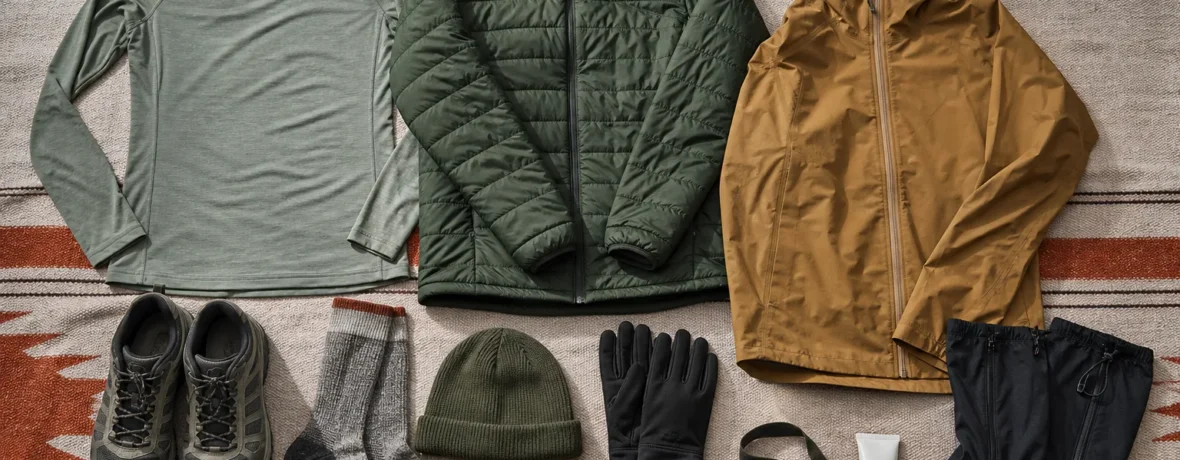
What to wear hiking: choose moisture-wicking layers, sturdy trail shoes or boots, wool or synthetic socks, sun protection, and a packable rain shell. In temps below 50°F [10°C], add insulation; above 75°F [24°C], wear breathable, light-colored clothing. Skip cotton when cold or wet because it dries slowly.
What should you wear hiking?
Wear clothing that manages sweat, blocks weather, and lets you move freely.
A good trail outfit is not about looking rugged. It is about staying dry, avoiding blisters, keeping your temperature steady, and protecting your skin from sun, wind, bugs, brush, and cold rock. The best pieces are simple: a wicking shirt, comfortable hiking pants or shorts, supportive footwear, good socks, a weather layer, and the right accessories for the season.
The National Park Service includes extra clothing in its Ten Essentials, specifically layers such as a jacket, hat, gloves, and rain shell. That is the mindset to use every time you get dressed for the trail. Dress for the hike you planned, then pack for the worst weather you could reasonably meet.
- Base layer: polyester, nylon, merino wool, or a wool blend.
- Bottoms: hiking pants, leggings, soft-shell pants, shorts, or a skort with stretch.
- Feet: trail runners, hiking shoes, or boots plus wool or synthetic socks.
- Weather protection: rain jacket, wind shell, or insulated jacket depending on conditions.
- Accessories: hat, sunglasses, gloves, buff, gaiters, or bug protection as needed.
What to wear hiking in each season?
Dress in layers that match the temperature, wind, rain, sun, and trail surface.
The same mountain trail can feel like three different climates in one day. A spring morning may start at 38°F [3°C], turn muddy by noon, and end with sleet on the ridge. Summer can mean sun exposure, soaked shirts, and afternoon thunderstorms. Fall brings chilly starts and warm climbs. Winter demands a system that keeps sweat under control before it chills you.
| Season | Best clothing system | Key extras |
|---|---|---|
| Spring | Wicking shirt, light fleece, rain shell, hiking pants | Waterproof footwear, gaiters, spare socks |
| Summer | Light-colored sun hoodie or tee, shorts or airy pants | Sun hat, sunglasses, bandana, bug protection |
| Fall | Long-sleeve base layer, fleece or puffy, wind or rain shell | Beanie, light gloves, warmer socks |
| Winter | Base layer, insulating midlayer, weather shell, warm pants | Gloves, hat, neck gaiter, traction, dry spare layers |
Spring hiking clothes
Spring calls for waterproofing and quick-drying layers.
Trails are often muddy, creeks run higher, and shaded patches can hold snow while sunny slopes feel warm. Wear hiking pants instead of jeans, because wet denim gets heavy and cold. Choose a light fleece or grid fleece over a synthetic or merino shirt, then carry a rain shell even if the forecast looks mild.
Footwear matters in spring. If the trail is sloppy, mid-height waterproof hiking boots can help keep mud and shallow puddles out. If conditions are warm and wet, breathable trail runners may be better because they dry faster after a soaking.
Summer hiking clothes
Summer clothing should be breathable, sun protective, and fast drying.
Loose, lightweight, light-colored clothing helps reduce heat stress; the CDC gives the same advice for hot-weather activity and travel in its hot climate guidance. Long sleeves can be cooler than bare skin when the sun is harsh, especially in desert, alpine, or exposed coastal terrain. Look for UPF-rated shirts, sun hoodies, wide-brim hats, and vented pants.
If bugs are bad, skip the tiny running shorts and tank top. Wear light pants, a long-sleeve shirt, and a head net if mosquitoes or black flies are thick. For brushy trails, woven nylon pants protect your legs better than soft cotton joggers.
Fall hiking clothes
Fall is all about layers you can add and remove fast.
Start cool. You should feel slightly chilly in the parking lot, because the first uphill mile warms you quickly. A long-sleeve base layer, light fleece, and wind shell handle most dry fall days. Add a puffy jacket for breaks, summits, and slow descents.
Fall weather swings hard. A calm 60°F [16°C] trailhead can turn into a windy 38°F [3°C] ridge. Pack a beanie and thin gloves. They weigh almost nothing and make cold snacks, map checks, and sunset finishes much more comfortable.
Winter hiking clothes
Winter hiking clothes must trap warmth without trapping too much sweat.
Start with a synthetic or merino base layer. Add fleece or wool insulation. Top it with a windproof or waterproof shell depending on snow, wind, and wetness. For pants, use soft-shell hiking pants over long underwear in dry cold, or waterproof-breathable shell pants in wet snow.
Cover skin that freezes fast: ears, nose, cheeks, fingers, and toes. The CDC says frostbite risk is highest on exposed areas such as the nose, ears, toes, cheeks, chin, and fingers, and recommends warm, dry clothing for winter exposure in its hypothermia and frostbite prevention guidance.
What to wear to a hike if you are a beginner?
Start with comfortable athletic clothes, then upgrade the pieces that touch your skin and feet.
You do not need a closet full of technical gear for your first easy trail. You do need to avoid the common mistakes: jeans, cotton socks, stiff new boots, and a jacket that soaks through in rain. If you already own workout clothes, you can build from there.
- Check the weather and trail conditions. Look at temperature, wind, rain, snow, and elevation change, not just the high for the nearest town.
- Pick a wicking top. Choose polyester, nylon, or merino wool. A gym shirt is fine for a dry day hike.
- Wear flexible bottoms. Hiking pants, leggings, or running shorts work better than denim because they move and dry faster.
- Choose socks before shoes. Wool or synthetic hiking socks reduce friction and handle sweat better than cotton tube socks.
- Wear broken-in footwear. Use trail runners, hiking shoes, or boots that already feel good after 1 to 2 miles [1.6 to 3.2 km] of walking.
- Pack one extra warm layer. Even on short hikes, bring a fleece, puffy, or rain shell if the weather could shift.
For a mellow local trail in dry weather, a beginner can wear trail runners, wool socks, athletic shorts or leggings, a wicking tee, a cap, and sunglasses. For a rocky, wet, or colder trail, add hiking pants, a fleece, and a rain jacket.
What is the best hiking outfit for comfort?
The most comfortable hiking outfit is the one that prevents rubbing, overheating, and damp chills.
Comfort starts with fit. Your clothes should move when you step high, squat, sit on a log, and reach overhead. Waistbands should not dig under your pack belt. Shoulder seams should not sit directly under backpack straps if they create pressure. Pants should not catch at the knee every time you climb.
Fabric matters too. Cotton can feel nice at the trailhead, but once it gets wet from sweat or rain, it dries slowly. That is annoying in summer and risky in cold weather. Synthetic fabrics dry quickly and are usually cheaper. Merino wool handles odor well and feels warm when damp, but it can cost more and wear faster in high-friction zones.
- For hot weather: loose sun hoodie, running shorts or vented pants, thin socks, breathable trail shoes.
- For cool weather: long-sleeve base layer, hiking pants, fleece, wool socks, trail shoes or boots.
- For wet weather: wicking base, rain shell, quick-dry pants, waterproof footwear or fast-drying trail runners.
- For cold weather: base layer, fleece, puffy jacket, shell, warm hat, gloves, winter socks.
What should you not wear on a hike?
Do not wear clothes that stay wet, rub your skin, restrict movement, or leave you exposed to the weather.
The wrong clothing can turn a simple day outside into a slog. Blisters, chafing, sunburn, soaked socks, cold fingers, and overheated climbs are usually fixable before you leave home. Your trail clothes should help you adapt, not trap you in one comfort zone.
- Jeans: They restrict movement, hold water, and get cold when wet.
- Cotton socks: They absorb sweat and increase friction when damp.
- Brand-new boots: Break them in before a longer hike.
- Heavy parkas for uphill hiking: They can make you sweat hard, then chill during breaks.
- Minimal sandals on rugged trails: They leave toes exposed to rocks, roots, cactus, and loose scree.
- Dark, tight clothing in extreme heat: It can feel hotter and slow cooling.
- No rain layer in unstable weather: Wet wind strips warmth fast, even in mild temperatures.
Should you hike in shorts or pants?
Wear shorts for hot, open trails and pants for brush, bugs, cold, sun, or rough terrain.
Shorts are cooler and give your legs freedom. They work well on maintained trails, warm forest paths, and dry summer routes. Pants give more protection. They shield your skin from sun, thorns, ticks, mosquitoes, poison ivy, abrasive rock, and cold wind.
Convertible hiking pants are practical if the day starts cold and ends hot. Leggings can be comfortable, but choose durable fabric for rocky trails because thin yoga leggings snag and abrade quickly. In snow, wear soft-shell or insulated pants instead of everyday joggers.
What shoes should you wear hiking?
Wear trail shoes, trail runners, or hiking boots that match the terrain and your pack weight.
Trail runners are light, flexible, and comfortable for many day hikes. Hiking shoes add more structure and protection. Mid or high hiking boots can help on rough trails, in snow, with heavier packs, or when you want more ankle coverage. The best choice is the one that fits your foot and the trail.
Your toes need room. On descents, they should not slam into the front of the shoe. Try hiking footwear with the socks you plan to wear, and check fit late in the day when feet are slightly swollen. If you use insoles, bring them when trying on shoes.
- Easy dry trails: trail runners or light hiking shoes.
- Rocky trails: hiking shoes with protective soles.
- Muddy spring trails: waterproof shoes or boots, or fast-draining trail runners.
- Snowy trails: insulated or waterproof boots with traction devices when needed.
- Backpacking: supportive shoes or boots that handle your loaded pack.
How do you layer clothes for hiking?
Use three layers: a base layer, an insulating layer, and a shell.
This system works because each layer has a job. The base layer moves sweat off your skin. The midlayer traps warmth. The shell blocks wind, rain, or snow. You add or remove pieces before you get soaked with sweat or chilled by wind.
- Base layer: Wear synthetic or merino wool next to skin. Choose short sleeves for heat, long sleeves for sun or cold.
- Midlayer: Add fleece, wool, or a light puffy jacket when temperatures drop or pace slows.
- Shell layer: Carry a rain jacket or wind shell when storms, exposed ridges, or cold wind are possible.
- Adjustment layer: Use hats, gloves, vents, zippers, and sleeves to fine-tune temperature without stopping often.
Do not wait until you are drenched to adjust. If you are sweating hard five minutes into a climb, unzip, push up sleeves, remove a hat, or drop a layer. If you stop for lunch or reach a windy overlook, put insulation on before you start shivering.
What should you pack for changing weather?
Pack one more layer than you think you will need.
Weather changes faster when you gain elevation, cross open ridges, hike near water, or stay out near sunset. A tiny daypack gives you room for safety layers without making the hike feel loaded down.
- Rain shell or wind shell
- Light fleece or puffy jacket
- Warm hat or sun hat, depending on season
- Thin gloves in fall, winter, and spring
- Spare socks in wet or cold conditions
- Neck gaiter or buff
- Emergency blanket or bivy on remote hikes
- Dry bag or pack liner for clothing
For cold or wet hikes, carry dry insulation in a waterproof stuff sack. A puffy jacket does little good if it is soaked at the bottom of your pack.
When to see a doctor
Get medical help right away for heat stroke signs, severe cold injury signs, or symptoms that do not improve after rest and shelter.
Clothing helps prevent heat and cold problems, but it cannot fix everything. The CDC describes heat stroke as a medical emergency and lists warning signs such as confusion, loss of consciousness, seizures, very high body temperature, and hot dry skin or heavy sweating in its heat-related illness guidance. Call emergency services if those signs appear.
For cold exposure, seek medical care immediately if a person has signs of hypothermia, such as intense shivering, confusion, slurred speech, drowsiness, or a body temperature below 95°F [35°C]. For frostbite concerns, the Wilderness Medical Society’s frostbite guidance summary describes frostnip and frostbite as cold injuries that can involve numbness, pale skin, and deeper tissue damage. Do not rub frozen skin, and do not continue hiking on numb feet unless you must move to safety.
Related reading
- What to Wear Hiking in Winter
- What to Wear Hiking in Summer and Hot Weather
- What to Wear on a Hiking Date
- How Long Is the Appalachian Trail? Miles, States and Time
FAQ
Can I wear leggings hiking?
Yes, leggings are fine for many hikes if they are comfortable and durable enough for the trail. Choose thicker hiking or running leggings for rocky routes, brush, or cool weather, and avoid thin cotton leggings in wet or cold conditions.
Are jeans OK for hiking?
No, jeans are a poor choice for most hikes. Denim restricts movement, holds moisture, dries slowly, and can make you cold when rain, sweat, or creek crossings soak the fabric.
Is it better to hike in boots or sneakers?
It depends on the trail. Sneakers may work on short, dry, smooth paths, but trail runners, hiking shoes, or boots give better grip, protection, and support on dirt, rocks, mud, roots, and descents.
What should I wear hiking in 50°F weather?
Wear a wicking long-sleeve shirt, hiking pants, wool socks, trail shoes, and carry a fleece plus a wind or rain shell. At 50°F [10°C], you may hike comfortably in light layers while moving, but you can cool down fast during breaks.
What should I wear hiking in the rain?
Wear quick-drying layers, a waterproof rain jacket, hiking pants, wool or synthetic socks, and footwear suited to the trail. In warm rain, fast-draining shoes can work; in cold rain, waterproof footwear and dry spare socks are safer and more comfortable.
What socks are best for hiking?
Wool or synthetic hiking socks are best. They manage sweat, reduce friction, and dry faster than cotton, which helps lower the chance of blisters and cold feet.