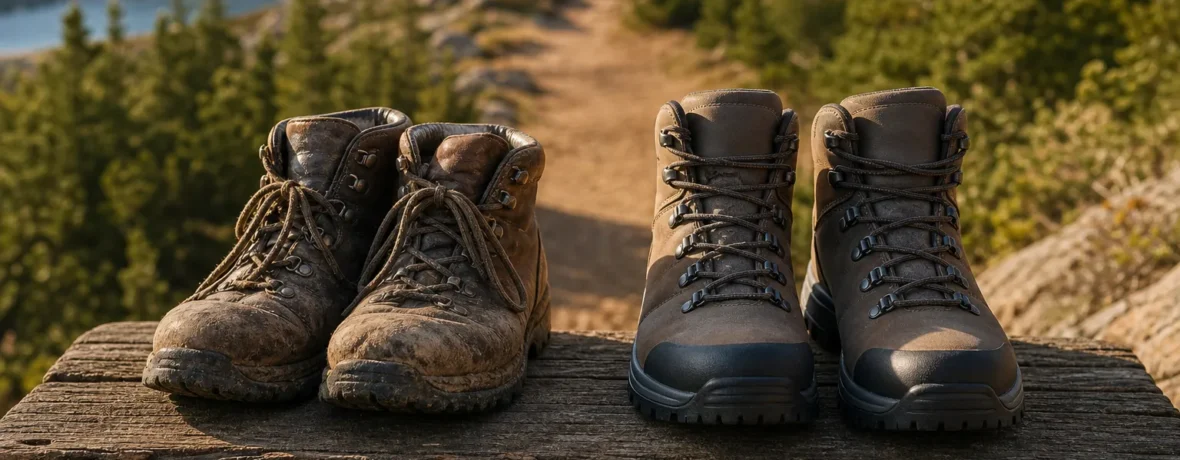
Most hiking boots last 500–1,000 trail miles [805–1,609 km]. Lightweight hiking shoes often land at 350–750 miles [563–1,207 km], while burly leather boots can push higher if they are cleaned, dried, and resoled. So, how long do hiking boots last? Until support, traction, waterproofing, or fit starts failing.
How long do hiking boots last in real trail miles?
The short answer: plan on 500–1,000 miles [805–1,609 km] for most hiking boots.
That range is wide because “hiking boots” covers everything from flexible day-hiking shoes to stiff backpacking boots with thick rubber, full-grain leather, and replaceable soles. A 12 oz [340 g] trail shoe used on granite will not age like a 2 lb [907 g] leather boot used on forest tread.
Use these ranges as a starting point, then inspect the boot. Mileage matters. Condition matters more.
| Footwear type | Typical lifespan | What usually fails first |
|---|---|---|
| Light hiking shoes | 350–750 miles [563–1,207 km] | Midsole cushion, outsole tread, mesh upper |
| Midweight hiking boots | 500–1,000 miles [805–1,609 km] | Outsole lugs, heel counter, waterproof lining |
| Heavy leather backpacking boots | 1,000+ miles [1,609+ km] with care | Sole wear, leather cracking, stitching |
When to replace hiking shoes?
Replace them when they no longer give you reliable traction, cushioning, support, weather protection, or a blister-free fit.
Do not wait for a dramatic blowout. A worn boot usually whispers first: your feet feel beat up earlier in the day, your heels slide on climbs, your knees complain on descents, or the sole feels slick on wet rock. That is the boot telling you the working parts are tired.
Check these signs before your next long hike:
- Flat lugs: If the tread blocks are rounded, shallow, or smooth under the ball and heel, grip is fading.
- Uneven outsole wear: Heavy wear on one edge can tilt your stride and make rocky trails feel sketchy.
- Dead midsole: If the boot feels harsh, packed down, or less stable than it used to, the foam may be compressed.
- Soft heel counter: Squeeze the back of the boot. If it collapses easily, heel control is gone.
- Cracked upper: Deep cracks in leather or torn mesh let in grit, water, and more damage.
- Waterproofing fails fast: If cleaned and treated boots still wet through quickly, the lining or upper may be done.
- New hot spots: Fresh rubbing in old boots often means the shape has broken down.
Do hiking boots expire if you do not use them?
Yes, hiking boots can age in storage, even with low mileage.
Foam, glue, rubber, and waterproof membranes do not freeze in time. Heat, humidity, direct sun, and damp garages speed up the damage. A boot that sat in a closet for six years may look clean, then shed its outsole on the first rocky descent. Brutal. Also common.
Before trusting stored boots, flex them by hand. Look for crumbling foam, sticky rubber, separated seams, cracked leather, and a sole that peels away near the toe or heel. Then take them on a short local hike before packing them for a backcountry trip.
How do you check hiking boots before a trip?
Give them a five-minute inspection at home, not at the trailhead.
Here is a simple pre-trip check:
- Clean the sole. Knock out mud and stones so you can see the tread.
- Measure the lugs by eye. Compare worn areas under the heel and forefoot with less-used tread near the arch.
- Twist the boot. A boot should flex, but it should not feel floppy if it was built for support.
- Press the midsole. Look for deep compression lines, cracks, or foam that feels brittle.
- Check the upper. Inspect mesh tears, leather cracks, loose stitching, and failed lace hooks.
- Test fit with trail socks. Lace up, walk stairs, and check for heel lift, toe bang, and new pressure points.
- Do a wet-grip reality check. If the outsole feels slick on damp pavement, do not trust it on wet roots.
Can you make hiking boots last longer?
Yes, regular cleaning, slow drying, and smart storage can add real life to your boots.
Mud pulls moisture into leather and fabric. Grit works like sandpaper in seams. Heat cooks glue and can warp materials. After dirty hikes, brush off mud, rinse with clean water, remove insoles, and let the boots dry at room temperature. Salomon’s footwear care guidance says to remove dirt and mud with a soft wet brush and dry shoes without external heat, including direct sun: Salomon footwear care.
REI’s boot care advice also recommends cleaning boots before applying waterproofing treatments: REI guide to waterproofing boots. That matters because waterproofing products work better on clean uppers than on a crust of dust, sweat, and trail grime.
Use this care checklist after wet or muddy hikes:
- Remove insoles and loosen laces.
- Brush off dry mud before rinsing.
- Use clean water and a soft brush; skip harsh detergents unless the boot maker allows them.
- Dry at room temperature, away from campfires, heaters, dryers, and hot dashboards.
- Re-treat leather, suede, nubuck, or waterproof uppers with the right product for that material.
- Store boots in a cool, dry place with airflow.
Can hiking boots be resoled?
Some hiking boots can be resoled; many lightweight hiking shoes cannot.
Traditional leather backpacking boots with stitched or cemented construction are the best candidates. Lightweight shoes with molded foam midsoles and glued-on outsoles are usually harder to repair in a durable way. If the upper is still strong, the fit is still good, and only the outsole is worn, resoling may be smart.
Rubber outsoles still need care after a resole. Vibram’s product care guidance warns against clothes dryers because excessive heat can damage footwear materials and structure: Vibram product care.
Replace instead of resole if the midsole is crushed, the upper is torn, the waterproof liner leaks everywhere, or the boot no longer fits your foot securely.
Why do hiking boots wear out faster than expected?
Hard terrain, heavy loads, wet conditions, poor drying, and rough storage shorten boot life.
Sharp rock chews lugs. Desert grit grinds stitching. Heavy packs compress midsoles faster. Wet leather that dries too quickly near heat can stiffen and crack. Salt from sweat can also build up inside the boot, especially on hot trips.
Your stride matters too. If you drag heels, pronate hard, or favor one side after an old injury, one boot may wear faster than the other. That does not mean the boot was bad. It means you should inspect both boots separately, not as a pair with one shared condition.
When to see a doctor
See a healthcare professional if foot or ankle pain is severe, persistent, swollen, infected-looking, or tied to numbness or an injury.
Boots can cause blisters and soreness, but they should not leave you limping for days. Mayo Clinic advises medical care for foot pain with signs such as severe pain, swelling, open wounds, infection signs, or pain that does not improve: Mayo Clinic foot pain guidance. For blisters, the American Academy of Dermatology says to avoid popping them and seek medical care if a blister looks infected: AAD blister care advice.
If you have diabetes, circulation problems, neuropathy, or reduced foot sensation, be more cautious. Do not use boot-fit guesswork to explain wounds, numbness, or recurring sores.
Related reading
- How to Clean Hiking Boots Without Ruining Leather or Membranes
- Hiking Shoes vs Hiking Boots: Which Should You Buy?
- How Should Hiking Boots Fit? The Thumb Rule and Other Checks
- How to Break In Hiking Boots (and How Long It Takes)
FAQ
How many years do hiking boots last?
Most hiking boots last 2–5 years for regular hikers. If you hike every weekend on rocky trails, judge them by miles and condition, not calendar age.
Is 10 years too old for hiking boots?
Often, yes. Ten-year-old boots can fail even if they look clean, because glue, foam, rubber, and waterproof materials age in storage. Test them on short walks before trusting them on a remote trail.
Should I replace boots if the tread is worn but the upper looks fine?
Yes, if traction is poor. A strong upper does not help when the outsole slips on rock, roots, mud, or steep descents. If the boot is resoleable, ask a qualified cobbler before replacing it.
Why do my old hiking boots suddenly give me blisters?
The fit has likely changed. Packed-out cushioning, stretched uppers, collapsed heel counters, or worn insoles can let your foot slide and rub. Try new insoles only if the boot is otherwise solid.
Do waterproof hiking boots wear out faster?
Not always. Waterproof boots can last well, but trapped sweat, repeated soaking, and poor drying can age linings and uppers faster. Clean them, dry them slowly, and refresh the outer water-repellent treatment when water stops beading.