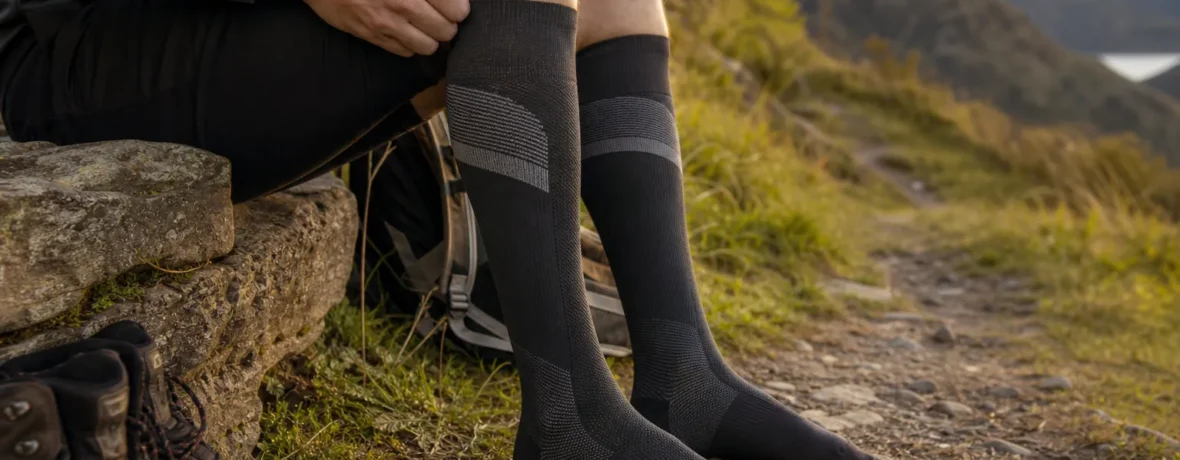
Yes, when they fit correctly: most hikers should start with light-to-moderate 10–20 mmHg compression, wear them below the knee, and remove them if toes tingle, turn pale, or feel cold. They can reduce lower-leg swelling and calf heaviness, but they will not fix bad footwear, dehydration, or an injury.
Are compression socks good for hiking on long trails?
Yes, for many hikers they are useful on long days.
Compression socks apply graduated pressure, usually firmest at the ankle and gentler up the calf. That squeeze can help support blood flow back toward the heart and reduce fluid pooling in the lower legs. Mayo Clinic describes compression stockings as garments that press on the legs and may help prevent fluid buildup in swollen limbs.
On trail, that can feel like less calf heaviness, less ankle puffiness, and better comfort after hours of steady climbing and descending. They are especially handy when your hike includes a long drive or flight to the trailhead, since sitting still for several hours is a separate circulation stressor.
But keep the promise realistic. Compression socks are not magic. They do not make your boots fit, they do not prevent all cramps, and they do not turn weak ankles into strong ones. Think of them as a fit-and-circulation tool, not a performance hack.
What are compression socks, exactly?
They are socks built to squeeze your lower legs in a controlled way.
Most hiking-friendly compression socks are knee-high and labeled in millimeters of mercury, written as mmHg. A higher number means more pressure. For trail use, mild and moderate levels are usually the most practical because you still need toe comfort, boot volume, and normal foot warmth.
| Option | Best use | Tradeoff |
|---|---|---|
| Regular hiking socks | Daily hikes, blister control, warmth, cushioning | No structured calf compression |
| Compression hiking socks | Long hikes, swelling control, calf support | Fit must be precise; too tight is a problem |
| Calf sleeves | Runners or hikers who want calf squeeze with separate socks | No foot compression; can bunch at the ankle |
What are the benefits of compression socks for hiking?
The main benefits are comfort, swelling control, and lower-leg support.
Here is where they make the most sense:
- Long climbs and descents: Calves work hard on grade changes, and light compression can make them feel more supported.
- Swollen feet or ankles after hiking: If your lower legs puff up after several hours, compression may help manage fluid buildup.
- Long travel before the hike: The CDC says long-distance travel over 4 hours can raise blood clot risk for some people, and some travelers may benefit from graduated compression stockings after talking with a doctor.
- Varicose veins or vein-related leg heaviness: NIH/NHLBI describes compression therapy as one tool used to help prevent swelling in people with varicose veins.
- Back-to-back hiking days: Some hikers like wearing them on the second or third day because their calves feel fresher and less puffy.
The key word is “may.” Your legs, boots, pack weight, pace, temperature, and medical history all matter.
When should you not wear compression socks for hiking?
Skip them if they cause numbness, pain, cold toes, or color changes.
A hiking sock should never feel like a tourniquet. If your toes tingle, your foot feels colder than usual, or the sock leaves a deep groove at the top band, take it off. A tight sock inside a tight boot is double trouble.
Be extra cautious in cold weather. The Wilderness Medical Society frostbite guidelines recommend minimizing blood-flow restriction from constrictive clothing or footwear. That matters on snowy trails, shoulder-season alpine hikes, and wet cold days when your feet are already fighting to stay warm.
You should also talk with a clinician before using compression socks if you have circulation disease, diabetes with reduced foot sensation, nerve problems, unexplained leg swelling, skin wounds, or a history of blood clots. No sock is worth masking a medical issue.
What compression level is best for hiking?
Most hikers should start with 10–20 mmHg.
That range gives you noticeable squeeze without making your foot fight for space inside the boot. If you already wear medical compression, follow your clinician’s guidance rather than trail advice from a gear shelf.
| Compression level | Trail use | Best fit |
|---|---|---|
| 10–15 mmHg | Mild support | Short hikes, warm weather, first-time users |
| 15–20 mmHg | Moderate support | Long day hikes, travel days, mild swelling |
| 20–30 mmHg | Firm support | Experienced users or clinician-recommended use |
| 30–40 mmHg | Medical-grade pressure | Use only with professional guidance |
For backpacking, lean conservative. Your feet swell as the day goes on, and a sock that felt snug at breakfast can feel harsh at mile 12 [19 km].
How should compression socks fit in hiking boots?
They should feel snug, smooth, and boring.
Good fit is quiet. No pinching. No wrinkles under the arch. No sausage-toe feeling. Use this quick checklist before trusting a pair on a long route:
- The heel cup sits exactly on your heel.
- The toe box has room to wiggle your toes.
- The calf band stays up without biting into your skin.
- There are no folds behind the knee or across the ankle.
- Your boot still laces normally with no new pressure points.
- The fabric is synthetic, merino wool, or a blend that manages sweat.
Avoid stacking thick compression socks under tight boots. If your boots already run snug, choose a thinner model or stay with regular hiking socks.
How do you use compression socks on a hike?
Test them before the big trip.
- Try them at home first. Wear them for 1–2 hours while walking, climbing stairs, and sitting.
- Use them on a short hike. Start with 3–5 miles [5–8 km], not a full-day sufferfest.
- Check your toes early. After 15 minutes, look for tingling, coldness, numbness, or color change.
- Keep them dry. Change socks if they get soaked from sweat, rain, or stream crossings.
- Remove them at camp if they feel restrictive. Your legs need comfort and warmth when you stop moving.
- Wash them after hard use. Compression fabric loses performance faster when sweat and grit sit in the fibers.
When to see a doctor
Get medical help for sudden, one-sided leg swelling or symptoms that feel wrong.
Do not try to “walk off” sudden calf pain, warmth, redness, or swelling in one leg. The CDC lists leg swelling, pain, tenderness, redness, and warmth as possible signs of deep vein thrombosis. Chest pain, trouble breathing, coughing blood, or a fast heartbeat after leg symptoms needs emergency care.
Also make an appointment if your legs swell often after easy hikes, if swelling does not go down overnight, or if you have varicose veins that ache, itch, or worsen. Compression socks can help some problems feel better, but they should not be used to ignore a pattern your body keeps repeating.
Related reading
- Is Merino Wool Good for Summer Hiking?
- Are Timberlands Good for Hiking? An Honest Trail Test
- Are Trail Running Shoes Good for Hiking? Pros, Cons and When to Switch
- Can You Hike in Running Shoes? What Actually Changes on the Trail
FAQ
Do compression socks prevent blisters?
No, not by themselves. Blister prevention comes from fit, moisture control, low-friction fabric, trimmed nails, and boots that do not rub; compression can help only if the sock also fits smoothly with no wrinkles.
Can I wear compression socks all day hiking?
Yes, if they stay comfortable and your feet remain warm with normal feeling. Take them off if you notice numbness, tingling, pain, cold toes, or deep marks at the calf band.
Are compression socks too hot for summer hiking?
Some are, especially thick knee-high models. For hot trails, choose thin synthetic or lightweight merino blends and carry a dry backup pair.
Are calf sleeves good for hiking?
They can be, but they solve a narrower problem. Calf sleeves squeeze the lower leg while letting you use your favorite hiking socks, but they do not manage foot swelling and may bunch near the ankle.
Should I sleep in compression socks after hiking?
Usually no, unless a clinician told you to. For typical hikers, taking them off at camp or bedtime lets you check your skin, warm your feet, and switch into clean dry socks.