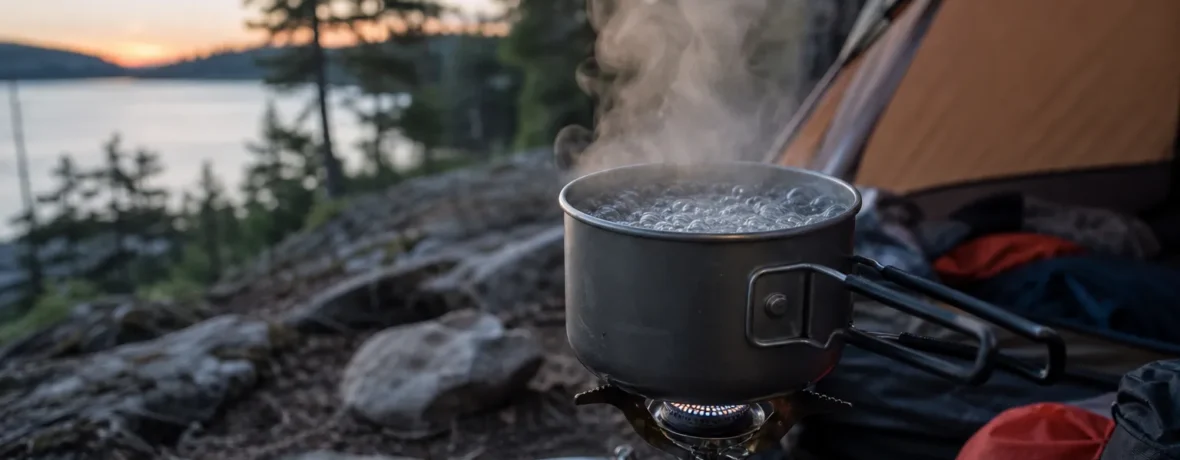
No. Boiling disinfects water by killing disease-causing bacteria, viruses, and parasites when you hold a rolling boil for 1 minute, or 3 minutes above 6,500 feet [1,981 m]. It does not remove dirt, sediment, salt, heavy metals, fuel, pesticides, or algal toxins.
Does boiling water filter it or purify it?
No, boiling water does not filter it; boiling disinfects it.
That difference matters when you’re standing beside a silty creek with one bottle left and dinner waiting. A filter physically removes particles and many microorganisms by pushing water through tiny pores. Boiling uses heat to kill or inactivate germs. Those are not the same job.
As of November 2026, the CDC’s water treatment guidance for hiking, camping, and travel says boiling is the most reliable way to kill germs in untreated water, but it also says boiling will not make water safe if it contains harmful chemicals, toxins, or radioactive materials.
| Method | What it does well | What it misses |
|---|---|---|
| Boiling | Kills bacteria, viruses, and parasites | Sediment, chemicals, metals, salt, fuel, algal toxins |
| Backpacking filter | Removes sediment, protozoa, and many bacteria | Viruses unless rated as a purifier; dissolved chemicals |
| Chemical treatment | Kills many germs; light and compact | Sediment, bad taste, many chemicals; some protozoa need longer contact time |
| Activated carbon | Improves taste and can reduce some chemicals | Germs unless paired with another treatment |
What does boiling water remove?
Boiling removes no meaningful trail contaminants by filtration.
It may drive off a small amount of some volatile compounds, but that is not a dependable backcountry treatment plan. In normal hiking use, think of boiling as a germ-killer, not a cleaner. If the water has pine needles, glacial flour, mud, ash, or floaties, those will still be there after the pot cools.
Boiling also does not remove dissolved minerals. If you boil salty water, you do not get fresh water. You get hot salty water, and as steam leaves the pot, the remaining water can become more concentrated. Same deal with many heavy metals and agricultural chemicals. Heat does not magically take them out.
What germs does boiling water kill?
Boiling kills the main biological threats hikers worry about.
That includes bacteria, viruses, and parasites such as Giardia and Cryptosporidium when the water reaches a full rolling boil for the recommended time. The CDC boil water advisory guidance says to bring water to a full rolling boil for 1 minute, or 3 minutes at elevations above 6,500 feet [1,981 m].
Why longer at elevation? Water boils at a lower temperature as you climb. The extra time adds a safety buffer when your stove is hissing in thin air and your pot is rattling on a rock.
The Wilderness Medical Society water treatment guidelines describe heat as an effective one-step disinfection method, while also pointing out that boiling does not improve taste, smell, cloudiness, or protect water from recontamination after it cools.
How do you boil water safely on the trail?
Bring clear water to a rolling boil, hold the boil, then keep it clean while it cools.
Here’s the simple trail process:
- Choose the cleanest source you can: flowing water beats stagnant water.
- If the water is cloudy, let sediment settle first or strain it through a clean bandana, coffee filter, or prefilter.
- Pour the clearest water into your pot.
- Bring it to a full rolling boil, not just a few lazy bubbles on the edge.
- Boil for 1 minute below 6,500 feet [1,981 m].
- Boil for 3 minutes above 6,500 feet [1,981 m].
- Let it cool with a lid on the pot.
- Pour it into a clean bottle or bladder. Do not dip a dirty bottle mouth into clean water.
Gear check: boiling takes fuel. If your trip plan depends on boiling every ounce of drinking water, carry enough canister gas or liquid fuel for drinking, cooking, and bad weather delays. A tiny upright canister stove can do the job, but wind, cold, and wide pots change fuel use fast.
When should you filter water before boiling?
Filter or strain first when the water is cloudy, gritty, or full of organic debris.
Clear water heats faster, tastes better, and is less likely to leave grit in your bottle. More than that, particles can shelter microorganisms from treatment. A filter, prefilter, or even a careful settle-and-pour routine helps the boil do its job cleanly.
Use this quick checklist before you fire up the stove:
- Cloudy water: let it settle, then decant the clearer top layer.
- Silty water: prefilter through cloth or use a dedicated sediment prefilter.
- Cold alpine water: boiling works, but fuel use climbs when water starts near freezing.
- Group trips: a gravity filter plus a stove is often faster than boiling pot after pot.
- Long dry stretches: carry extra treated water instead of counting on a questionable source.
When is boiling water not enough?
Boiling is not enough when the water may contain chemicals, fuel, mine drainage, salt, or algal toxins.
Skip the source if you see an oily sheen, chemical smell, dead fish, bright green scum, livestock waste concentrated at the edge, or drainage from mines, roads, farms, or burned areas. Boiling can kill germs, but it cannot make every ugly source safe.
Red flags for “do not treat, choose another source” include:
- Blue-green algae blooms or pea-soup surface scum
- Fuel, solvent, or sewage odor
- Water below abandoned mines or tailings piles
- Runoff from heavy agriculture or industrial areas
- Brackish or salty water
- Floodwater in towns, campgrounds, or road corridors
If you cannot identify the contaminant, do not gamble. Carry water, backtrack, melt clean snow if conditions allow, or use an alternate source marked on your map.
Is boiling better than a backpacking water filter?
Boiling is better for viruses; filters are better for speed, taste, and dirty-looking water.
Most popular squeeze, pump, and gravity filters are built to remove protozoa and bacteria. Many are not rated to remove viruses, which are smaller. That usually matters more in areas with human waste contamination, floodwater, or international travel than at a high mountain spring, but “usually” is not a treatment plan.
For typical US backpacking, a filter is fast and fuel-free. For sketchier sources, pair methods: filter first for sediment and larger organisms, then boil or chemically disinfect for broader protection. That combo gives you cleaner water and stronger germ control.
Can you boil water instead of using purification tablets?
Yes, boiling can replace tablets when you have a stove, fuel, time, and a safe source.
Tablets are lighter and easier when you’re moving hard, but they need contact time and work best in clear water. Boiling is quick once the water reaches a rolling boil, but it burns fuel and gives you hot water when you may want cold water now. In freezing conditions, tablets can be slow, filters can clog or freeze, and boiling becomes a dependable backup.
When to see a doctor
Get medical care if stomach illness after untreated or poorly treated water becomes severe, bloody, dehydrating, or persistent.
Do not self-diagnose trail gut problems. Many infections overlap: diarrhea, cramps, nausea, vomiting, fever, and fatigue can come from different organisms or from food, water, or person-to-person spread. The Mayo Clinic guidance on traveler’s diarrhea recommends seeking care for signs such as moderate to severe dehydration, ongoing vomiting, high fever, bloody stools, severe belly or rectal pain, or diarrhea lasting longer than a few days.
On trail, watch for dry mouth, dizziness, very little urination, confusion, weakness, or inability to keep fluids down. Those are not “walk it off” signals.
Related reading
- How to Filter Water in the Wild: Filters, Tablets and Boiling
- How to Make an Emergency Water Filter in the Wild
- How to Filter Rainwater to Drink Safely
- Is Creek Water Safe to Drink?
FAQ
Does boiling water make it safe to drink?
Yes, if the problem is germs and you boil it long enough. Use 1 minute at a rolling boil, or 3 minutes above 6,500 feet [1,981 m], then keep the water from being recontaminated.
Does boiling water remove chlorine?
Boiling can reduce chlorine taste and smell, but that is not the same as full water treatment. It will not remove many dissolved contaminants, and it will not filter particles from the water.
Does boiling water remove lead?
No. Boiling does not remove lead and can concentrate it as water evaporates. If lead is a concern, use a filter certified for lead reduction or choose a different water source.
Can I boil muddy water and drink it?
You can disinfect muddy water by boiling, but you should strain, settle, or filter it first. Mud and organic debris make water unpleasant and can interfere with treatment.
Is boiled water the same as filtered water?
No. Boiled water has been heat-treated to kill germs; filtered water has passed through a medium that removes particles and some organisms. For rough sources, using both is stronger than either one alone.
How long does boiled water stay safe?
Boiled water stays safe only if it is stored in a clean, covered container. Dirty bottle threads, hands, caps, or hydration hoses can recontaminate it fast.