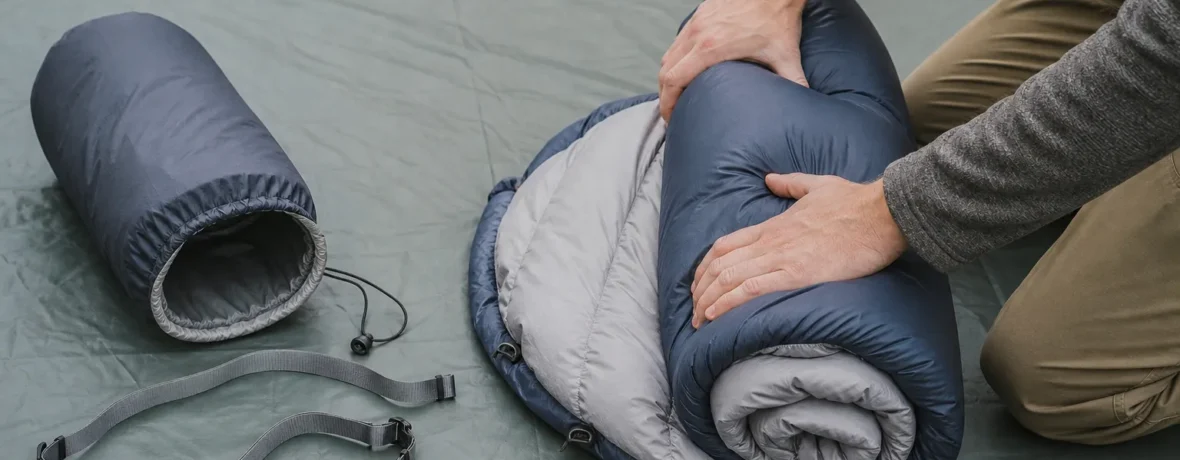
Usually, don’t. Stuff down or synthetic bags foot-first into a 6-20-liter stuff sack for packing; roll only bulky car-camping rectangles or when the maker tells you to. Store every bag loose, dry, and uncompressed at home.
Should you roll or stuff a sleeping bag?
Stuff it for backpacking; roll it only when the bag is designed to roll.
A sleeping bag is not a yoga mat. The insulation needs loft, and loft comes from thousands of tiny air spaces trapped inside down clusters or synthetic fibers. When you roll the same bag the same way every time, you can create repeated crease lines. That matters most with synthetic insulation, which can break down along folds and create thin, cold spots.
Stuffing spreads the bends around. One trip the shoulder area folds one way, the next trip it folds another. That randomness is good. It also works better with mummy bags, quilts, and tapered backpacking bags that fight you when you try to make a perfect burrito.
Several gear makers give similar guidance: pack the bag compactly for the trip, then store it loose afterward. REI’s sleeping bag storage guide says to keep a bag out of stuff-sack confinement between trips, while NEMO’s care guidance says not to store a sleeping bag in its compression sack long term.
| Method | Best for | Use it when | Avoid it when |
|---|---|---|---|
| Stuffing | Down and synthetic backpacking bags | You are packing for a hike, bikepack, paddle trip, or flight | The bag is wet and you have time to dry it first |
| Rolling | Large rectangular car-camping bags | The bag came with straps or a roll-style sack | You are packing a mummy bag into a tight stuff sack |
| Folding | Short-term sorting at home | You are moving it to a storage sack or laying it under a bed | You plan to leave it sharply folded for months |
| Loose storage | All sleeping bags | The trip is over and the bag is completely dry | You are actively hiking and need pack space |
How do you learn how to roll up a sleeping bag the right way?
Roll from the foot end, keep the edges straight, and use body weight instead of yanking straps.
Use this method for big rectangular bags, kids’ camp bags, and older square sleeping bags that came with attached straps. It is also useful when you are returning a rental bag that arrived rolled, or when a car-camping bag simply will not fit its carrier unless it becomes a cylinder.
- Dry the bag first. Shake off frost, crumbs, pine needles, and damp grass. If the shell feels clammy, give it air before packing.
- Zip it almost shut. Leave 6-8 inches [15-20 cm] open near the top so trapped air can escape as you roll.
- Fold it lengthwise if needed. Match the long edges. For a double-wide bag, fold it into thirds if that matches the carry sack.
- Start at the foot box. The foot end is narrower and easier to control. Kneel behind it and make the first roll tight and even.
- Press air forward. Use forearms, knees, and steady pressure. Do not twist the shell fabric.
- Keep the roll square. If one side creeps ahead, stop and pull the lagging edge forward. A crooked roll becomes a lumpy mess near the end.
- Use straps gently. Buckle or tie the roll snug enough to hold shape, not tight enough to crush the insulation flat.
- Pack it low in the car or pack. A rolled bag is bulky. Put it where it will not snag, bounce loose, or soak up spilled cooler water.
Rolling is tidy, but tidy is not the same as best. For trail bags, the better move is usually stuffing.
How do you stuff a sleeping bag into a stuff sack?
Start with the foot box and feed the bag in by handfuls.
This is the standard backpacking move. It looks rough the first time you do it. Good. The bag can take normal stuffing. What it hates is being stored compressed in a closet for months.
- Open the stuff sack fully. Loosen drawcords and compression straps. If it has a waterproof roll-top, unroll it all the way.
- Grab the foot box. Put the foot end into the bottom of the sack first. This puts the part you need last at the bottom and helps air move out through the head opening.
- Stuff in small handfuls. Push one fistful at a time into the corners of the sack. Rotate the sack as you go so the bag fills the space evenly.
- Do not fold panels neatly. Random folds are the point. Let the insulation bend in different places each time.
- Pause to burp air. If the sack balloons, press down with a palm or knee and let air escape through the opening.
- Finish with the hood or collar. Tuck loose fabric inside before cinching so nothing gets trapped in the drawcord.
- Compress only as much as needed. Tighten compression straps evenly. Stop when the sack fits your pack. Smaller is not always smarter.
A slightly larger stuff sack is easier on cold hands and faster in bad weather. REI also recommends using a slightly larger stuff sack to make stuffing easier in its sleeping bag care advice. If your bag barely fits with a two-handed wrestling match every morning, the stuff sack is too small for real trail use.
How to fold a sleeping bag if you must?
Fold it loosely, move the fold lines, and do not leave it compressed.
There are times when folding makes sense. Maybe you are laying a bag under a bed. Maybe you are slipping it into a big cotton storage sack. Maybe you are packing a rectangular family-camping bag into a long duffel. Fine. Just keep the folds broad and lazy.
Here is the low-damage way: zip the bag, shake it flat, fold it once lengthwise, then loosely fold it in half or thirds. Do not press sharp creases into the insulation. Next time, change the direction. If you folded left over right this time, fold right over left next time.
For down bags, a loose fold for storage is less of a problem than long-term compression. For synthetic bags, repeated hard creases are the bigger concern. Either way, a big breathable storage sack beats a tight cube on a closet shelf.
How do you pack a sleeping bag in a backpack?
Pack it low, dry, and protected from sharp gear.
Your sleeping bag is one of the bulkiest pieces in your pack, and it is also one of the pieces you least want wet. Most hikers put it at the bottom of the main pack bag, inside a liner or dry bag. That gives the pack a soft base and keeps the bag out of the way until camp.
The classic setup is simple: trash compactor bag or waterproof pack liner inside the backpack, sleeping bag stuffed at the bottom, clothing around it, food and shelter above, small items in pockets. If your pack has a sleeping bag compartment, use it only if the zipper does not create dead space. Many backpackers get a cleaner fit by removing the divider and using one tall main compartment.
Use this packing checklist before the bag goes in:
- The sleeping bag is dry to the touch.
- The stuff sack has no grit, thorns, food crumbs, or leaking sunscreen on it.
- The bag is inside a pack liner, dry bag, or water-resistant stuff sack.
- Stove fuel, tent stakes, and cookware are not pressing into the shell fabric.
- The sack is compressed only enough to fit, not crushed into a rock-hard ball.
- You can reach rain gear without unpacking the sleeping bag.
Down needs more moisture protection than synthetic fill because wet down loses loft fast and dries slowly. Synthetic insulation handles damp conditions better, but “better” does not mean “immune.” A soaked synthetic bag still makes for a grim night.
How do you keep a sleeping bag dry before packing?
Air it out, wipe the shell, and never pack visible moisture if you have a better option.
Morning camp is a race between coffee, weather, and condensation. Your bag may pick up moisture from breath, tent walls, damp clothing, or frost. Give it a few minutes before you stuff it. Shake it hard. Turn it inside out if the liner feels damp. Lay it across a tent, branch, clean rock, or pack while you eat breakfast.
If rain is moving in, pack fast and dry it later. A little trapped humidity for a few hours is normal on backpacking trips. A wet bag forgotten in a stuff sack after the drive home is where the trouble starts: odor, mildew, clumped insulation, and a sad surprise on the next trip.
For multi-day trips, build a drying habit:
- Sleep in clean base layers to keep body oils off the liner.
- Use a sleeping bag liner if you run warm or sweat at night.
- Vent the tent to reduce condensation.
- Do not breathe into the bag for warmth; moisture collects inside.
- Fluff the bag when you reach camp so it can regain loft before bedtime.
Sea to Summit’s gear-care advice also favors stuffing synthetic bags rather than folding and rolling them the same way each time, because repeated folds can damage synthetic fibers and lead to cold spots.
How should you store a sleeping bag after a trip?
Store it dry, loose, and breathable.
This is where many good bags get wrecked. The trip ends. The pack lands in a garage. The sleeping bag stays smashed in its compression sack for three months. Then the first cold weekend arrives and the bag looks thin, tired, and less warm than you remember.
Do this instead:
- Unpack it the same day if you can. Pull the bag out of its stuff sack as soon as you get home.
- Dry it completely. Hang it over a railing, lay it across chairs, or use a large drying rack. Give it overnight if the trip was damp.
- Check for dirt and damage. Look at the foot box, zipper, hood, draft collar, and shell fabric.
- Spot clean small grime. Dirt and body oils shorten the clean, fluffy life of the bag.
- Move it to a storage sack. Use the big mesh or cotton sack that came with it, a king-size pillowcase, or a breathable storage bag.
- Store it in a cool, dry place. Skip hot attics, damp basements, and sealed plastic tubs if the bag is not bone dry.
Rab’s guidance on storing a sleeping bag recommends a roomy storage setup or hanging when space allows, which helps the insulation keep its loft. The same idea applies across brands: the stuff sack is for travel, not hibernation.
What mistakes ruin sleeping bag loft?
Long-term compression, moisture, dirt, and rough handling do the most damage.
Sleeping bags are tougher than they look, but they are not indestructible. Treat the shell fabric like lightweight gear, because that is what it is. Treat the insulation like warmth you paid for.
- Leaving it compressed for months: This is the big one. A weekend in a stuff sack is normal. A season in a compression sack is asking for lost loft.
- Packing it wet and forgetting it: Moisture can lead to odor, mildew, and clumped fill.
- Using a tiny stuff sack every trip: If stuffing takes full-force wrestling, size up slightly.
- Rolling a synthetic bag the same way every time: Repeated crease lines can weaken insulation and create thin spots.
- Pulling hard on stuck zippers: Back the slider up, free the fabric, then continue. Do not rip your way out.
- Storing it in a plastic tote while damp: Breathable storage only works when the bag is dry; sealed storage traps problems.
- Letting pets nest in it: Claws, hair, drool, and chewing do not improve ultralight fabric.
If the bag looks flat after storage, shake it hard and let it loft for several hours. Down bags often respond well to patient airing and proper cleaning. Synthetic bags may recover some shape, but crushed fibers do not always spring fully back.
Can you use a compression sack for a sleeping bag?
Yes, use it for travel, then remove the bag when the trip is over.
A compression sack is a tool, not a permanent home. It can save real pack space on a backpacking trip, especially with bulkier synthetic bags or winter bags. Use it when volume matters. Loosen it when volume does not.
Waterproof compression dry bags add protection in wet places, but they also trap moisture inside if the bag is damp. That means you need discipline. Open the sack at camp, let the bag loft early, and dry it whenever sun or breeze gives you a chance.
For most three-season backpacking, a non-compression stuff sack inside a waterproof pack liner is easier on the bag and easier to pack around. The soft bundle fills gaps. A hard compressed cylinder can create awkward dead space in a backpack.
Related reading
- How to Choose a Sleeping Bag: Temperature Ratings, Fill and Shape
- How to Wash a Sleeping Bag at Home Without Damaging It
- How to Wash a Down Sleeping Bag and Restore the Loft
- How to Attach a Sleeping Bag to a Backpack
FAQ
Is it better to roll or stuff a sleeping bag?
Stuffing is better for most backpacking sleeping bags. It avoids making the same fold lines every time and usually packs mummy bags faster and smaller than rolling.
Can I leave my sleeping bag in its stuff sack?
Yes, for a trip or short travel window. No, for long-term storage; once you are home, dry it and move it to a large breathable storage sack or hang it loosely.
Should I compress my down sleeping bag?
Compress it only as much as needed while traveling. Down rebounds well, but long-term compression and moisture can reduce loft, so store it loose and dry between trips.
Why won’t my sleeping bag fit back in the sack?
The bag is probably trapping air or the sack is too small for easy use. Start with the foot box, stuff by handfuls, pause to press air out, and consider a slightly larger sack for trail sanity.
Can I pack a damp sleeping bag in the morning?
Yes, if weather or timing forces you to move. Dry it at the first good chance that day, and never leave it damp in a stuff sack after the trip.
Where should a sleeping bag go in a backpack?
Put it low in the main compartment, protected inside a pack liner or dry bag. Keep sharp items, fuel, and wet shelter fabric away from it.