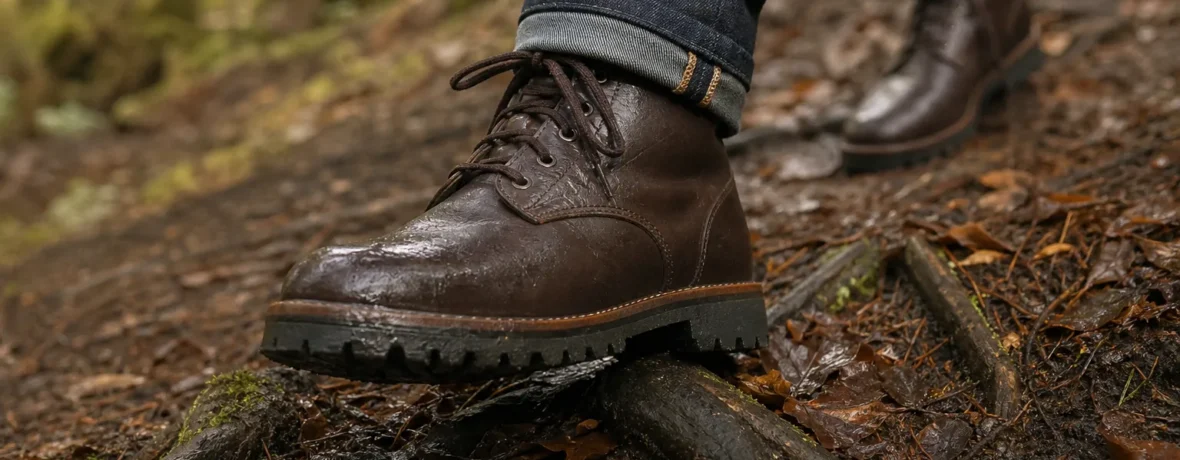
Are Doc Martens good for hiking? No for most real hikes; yes only for short, dry, easy paths under 3 miles (5 km). Classic Docs have tough leather and style, but they lack the trail traction, flex, rock protection, and secure heel hold you want on steep, wet, rocky ground.
Are Doc Martens good for hiking on real trails?
No, not for real trail hiking. Classic Dr. Martens boots were built as durable lifestyle and work-inspired boots, not as technical hiking footwear.
The problem is not that Docs are “bad” boots. They’re just the wrong tool once the trail gets loose, steep, muddy, slick, or long. A standard 1460-style boot has a flat-ish sole pattern compared with hiking boots that use deeper lugs, firmer midsoles, and trail-focused rubber. REI’s hiking boot guide points to outsoles, midsoles, support, and fit as key pieces of hiking footwear. That’s exactly where classic Docs start to fall behind.
On a packed dirt park loop, they can get by. On wet roots, talus, granite slabs, loose pea gravel, or a descent with a loaded pack, you’ll feel the difference fast. The sole can feel clunky, the leather can crease into pressure points, and the heel can lift if the fit is not dialed.
What are Doc Martens actually good for outdoors?
They’re good for casual walking, travel days, campground wear, and dry urban paths. That’s the sweet spot.
Docs shine when you want durability, ankle coverage, and a boot that handles pavement, gravel parking lots, breweries after the hike, and chilly shoulder-season errands. The classic Dr. Martens 1460 boot is an 8-eye boot with the brand’s air-cushioned sole, grooved edge, yellow welt stitching, and recognizable leather upper. Great look. Tough build. Not a mountain boot.
Use them for:
- Dry nature trails with minimal elevation gain
- Camp shoes when you still want ankle coverage
- Travel where you’ll mix city walking and light dirt paths
- Cold-weather casual wear around town
- Photo-friendly outdoor stops where traction is not the priority
Skip them for long backcountry days, backpacking trips, scrambling, wet creek crossings, snow travel, and anything where a slip has real consequences.
Are dr martens hiking boots different from classic Docs?
Some models are more trail-adjacent, but most are still not true hiking boots. Dr. Martens makes winter, waterproof, slip-resistant, and hiker-style boots, yet the category is still more lifestyle than backcountry.
For example, the brand’s winter boots collection includes features like waterproof DryWair protection, insulated WarmWair linings, and WinterGrip soles on select models. Those features help in cold streets, slush, and slick sidewalks. They do not automatically turn the boot into a lightweight, supportive hiking boot with aggressive lugs and a trail-tuned midsole.
If you already own a pair of rugged Docs with a deeper outsole, they may work for short, dry hikes. But if you’re buying footwear mainly for hiking, start with hiking shoes or hiking boots from brands that build around trail movement first.
| Feature | Classic Doc Martens | Trail hiking boots |
|---|---|---|
| Traction | Better on pavement and casual surfaces | Deeper lugs for dirt, mud, rock, and descents |
| Break-in | Can be stiff and blister-prone at first | Usually designed to flex while walking uphill and downhill |
| Support | Ankle coverage, but limited trail stability | Built for uneven terrain and pack weight |
| Best use | Town, travel, camp, easy paths | Day hiking, backpacking, rough trails |
Do Doc Martens have enough traction for hiking?
Usually, no. The traction is fine for sidewalks and hard-packed dirt, but not ideal for wet rock, mud, steep descents, or loose gravel.
Good hiking traction comes from lug depth, lug spacing, rubber compound, sole shape, and how the boot flexes under your foot. Classic Docs can feel planted on flat ground, then sketchy when the trail tilts or gets polished by rain. That matters most on the way down. Your toes hit the front, your heel tries to lift, and every step asks the outsole to bite. If it smears instead of grips, the boot is not doing you any favors.
WinterGrip and slip-resistant Docs may improve grip on certain slick surfaces, but read the product page carefully. “Slip-resistant” is not the same as “built for alpine trails.”
Are Doc Martens comfortable enough for hiking?
Only if they are fully broken in and the hike is short. Fresh Docs and long trails are a bad pairing.
The classic leather upper can start stiff. That stiffness can rub the heel, top of the foot, ankle bones, or pinky toe. Once your feet swell during a hike, small pressure points turn loud. Fast.
Watch for these fit red flags before using Docs on any trail:
- Your heel lifts more than a little when you walk uphill
- Your toes hit the front when walking downhill
- The tongue or vamp presses into the top of your foot
- The ankle collar bites when you flex forward
- You feel hot spots within the first 20 minutes
If any of those happen around the block, they will not magically disappear 2 miles (3.2 km) from the trailhead.
How do you make Doc Martens safer for a short hike?
Keep the route easy and prep the boots like gear, not fashion. Small changes can prevent a miserable walk back.
- Break them in first. Wear them for short walks on pavement before any trail use.
- Use hiking socks. Choose wool or synthetic socks, not cotton gym socks.
- Lock the heel. Lace snugly through the instep so your foot does not slide forward on descents.
- Pack blister supplies. Bring tape, blister bandages, or moleskin and use them at the first hot spot.
- Pick a dry trail. Avoid mud, wet rock, snow, and steep grades.
- Cap the distance. Keep it under 3 miles (5 km) until you know how your feet respond.
When should you choose real hiking boots instead?
Choose real hiking boots when the trail is rough, wet, steep, remote, or longer than a casual walk. Your feet and knees will thank you.
Reach for hiking footwear if your plan includes:
- More than 3 miles (5 km) on uneven ground
- Rocky trails or rooty forest paths
- Steep climbs or long descents
- A loaded daypack or overnight pack
- Rain, mud, snow, or creek crossings
- Limited bailout options if your feet start hurting
For many hikers, a modern hiking shoe beats a heavy boot. You get better trail grip, quicker drying, and less fatigue. If you carry a heavier pack or hike rough terrain, a mid-height hiking boot can add structure without the stiff, fashion-boot feel.
When to see a doctor
See a doctor if foot pain is severe, worsening, or changes how you walk. Do not try to “tough it out” if a blister looks infected or a foot injury keeps getting worse.
For blister care, Mayo Clinic advises seeking medical care when a blister shows signs of infection, such as increasing pain, warmth, pus, or spreading color change. MedlinePlus also notes that friction and pressure commonly cause blisters, and that the skin over a blister helps protect against infection.
Get medical help sooner if you have diabetes, poor circulation, reduced sensation in your feet, immune system concerns, or an open wound that is not healing. This article cannot diagnose foot injuries. It can only tell you when your boots are sending a clear message: stop, adjust, and don’t make it worse.
So, should you hike in Doc Martens?
For a mellow dirt path, sure. For a real hike, no. That’s the blunt answer.
Docs are stylish, durable, and perfectly fine for outdoor-adjacent life. But hiking asks footwear to do specific jobs: grip dirt, protect from rocks, flex naturally, manage moisture, and hold your heel on descents. Classic Docs only check some of those boxes.
If you love them, wear them to the trailhead, around camp, or on the easy loop near town. If you’re heading into the hills, wear hiking footwear. Your feet get one vote each, and they usually vote for traction.
Related reading
- Is Merino Wool Good for Summer Hiking?
- Are Timberlands Good for Hiking? An Honest Trail Test
- Are Trail Running Shoes Good for Hiking? Pros, Cons and When to Switch
- Can You Hike in Running Shoes? What Actually Changes on the Trail
FAQ
Can you wear Doc Martens on a hike?
Yes, but only on short, easy, dry trails. Keep the route simple and turn around if you feel heel rub, toe pressure, or hot spots.
Are Doc Martens waterproof?
Some models are waterproof or water-resistant, but classic Docs are not the same as waterproof hiking boots. Check the exact product page before assuming they can handle rain, puddles, or wet grass.
Are Doc Martens good for walking long distances?
They can be good for city walking once broken in, but they are not ideal for long trail miles. The weight, stiffness, and limited trail traction can wear on your feet over distance.
Do Doc Martens have ankle support?
They have ankle coverage, but that is not the same as hiking support. On uneven trails, sole stability, heel hold, and underfoot structure matter just as much as boot height.
What should I wear instead of Docs for hiking?
Wear hiking shoes for most day hikes and hiking boots for rough terrain, heavier packs, or ankle-sensitive feet. Look for a secure heel, roomy toe box, grippy lugs, and comfort right out of the box.