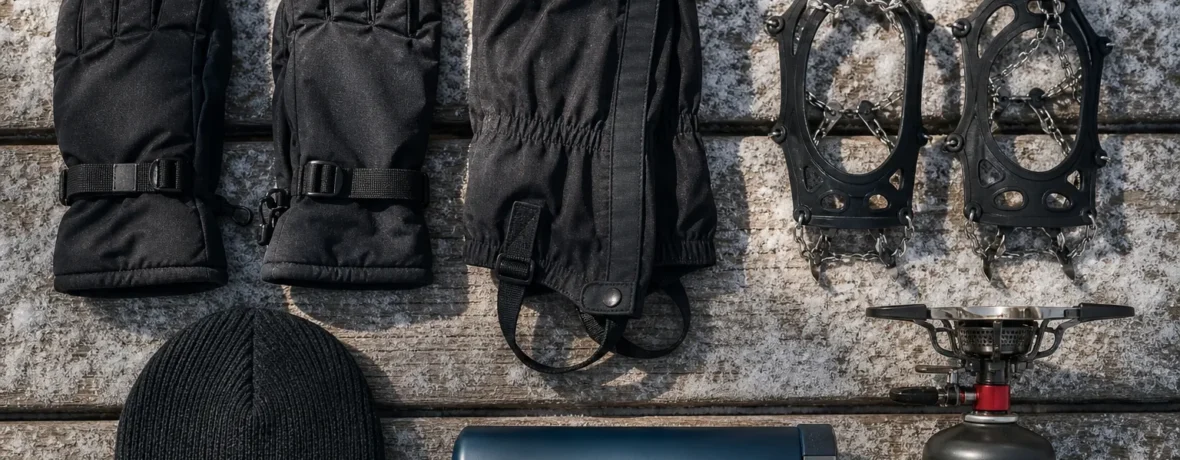
The best winter hiking gear starts with warm, waterproof layers, insulated footwear, traction, gloves, poles, and emergency backup. Our top overall pick is the REI Co-op Stormhenge 850 Down Hybrid Jacket because it combines 850-fill down, synthetic insulation, waterproof protection, pit zips, and a hike-friendly 1 lb. 13.6 oz. [839 g] weight.
We may earn a commission when you buy through links on this page.
Quick Picks
| Category | Model | Weight | Key feature |
|---|---|---|---|
| Best overall | REI Co-op Stormhenge 850 Down Hybrid Jacket | 1 lb. 13.6 oz. [839 g] | Waterproof shell plus down/synthetic insulation |
| Best base layer | Patagonia Capilene Thermal Weight Zip-Neck | 6.1 oz. [173 g] | Polartec Power Grid warmth and fast venting |
| Best women’s winter boot | Oboz Bridger 7" Insulated Waterproof | 20.5 oz. [581 g] each | 200 g insulation and winter rubber |
| Best light winter boot | Salomon X Ultra Snowpilot Waterproof Women’s | 14 oz. [397 g] each | Snow-focused grip in a lighter mid boot |
| Best traction | Kahtoola MICROspikes | 11.9 oz. [338 g] pair, size M | 12 stainless spikes per foot |
| Best snowshoes | MSR Lightning Ascent | 4 lb. 2 oz. [1.87 kg] pair, 22 in. | 360-degree frame traction |
| Best trekking poles | Black Diamond Distance Carbon FLZ | 10.9–12.8 oz. [308–364 g] pair | Carbon folding poles with adjustability |
| Best gloves | Outdoor Research Arete II GORE-TEX Gloves | 8.8 oz. [249 g] | Waterproof shell with removable liner |
| Best winter socks | Darn Tough Mountaineering OTC Heavyweight Socks | 6.9 oz. [195 g] pair, size M | Full-cushion merino over-the-calf build |
How we chose
We chose by comparing specs, materials, current availability, verified owner feedback patterns, and expert reviews.
No hands-on testing is claimed here. The picks favor gear that solves the real winter problems: sweat management, wet snow, packed ice, wind, cold stops, deep powder, frozen laces, numb fingers, and the awkward moment when a sunny trail turns into a polished bobsled run. We also checked for practical fit details: wide sizes where available, venting, glove liners, snow-basket compatibility, traction tooth design, and weight that makes sense for day hiking.
The result is a cold weather hiking gear list built for normal winter day hikes first, with a few stronger pieces for steeper, snowier routes.
REI Co-op Stormhenge 850 Down Hybrid Jacket – Best for most winter hikers
This suits you if you want one warm outer jacket that handles wind, snow, sleet, and stop-and-go hiking without turning your pack into a gear closet.
- Price tier: mid-range
- Weight: 1 lb. 13.6 oz. [839 g]
- Insulation: 850-fill goose down plus recycled synthetic insulation in moisture-prone zones
- Weather protection: waterproof/breathable shell, windproof build, adjustable hood, pit zips
The Stormhenge works because winter hiking is messy. You heat up on climbs, chill fast on breaks, brush against snow-loaded trees, and sometimes get hit with wet flakes that soak a normal puffy. This jacket blends a real shell with real insulation, so it covers more weather than a plain down jacket.
It is not the lightest option. It is not the most breathable option. That’s the trade. You carry more weight and bulk, but you get a jacket that can stay on longer when conditions are ugly.
- Pros: warm for its weight, waterproof, pit zips help dump heat, hood adds real protection
- Cons: bulkier than a separate shell and puffy, can run warm on steep climbs, not ideal for ultralight packs, nylon shell can sound crinkly
Skip it if… you already carry a premium rain shell and a separate belay-style puffy and prefer a modular system.
Patagonia Capilene Thermal Weight Zip-Neck – Best for a breathable base layer
This suits you if you run warm while moving but still need a serious winter next-to-skin layer.
- Price tier: premium
- Weight: 6.1 oz. [173 g]
- Fabric: Polartec Power Grid recycled polyester/spandex
- Best use: active winter hiking, snowshoeing, shoulder-season backpacking
Winter layers fail when they trap sweat. The Capilene Thermal Weight Zip-Neck gives you a warm grid interior, a smooth face for layering, thumb loops, and a deep zipper. That zipper matters. It lets you cool down before sweat wets out your insulation.
This is a synthetic layer, so it dries faster than heavy merino and works well under a wind shell. It also resists the clammy feel you get from cotton. Leave cotton at home. Once soaked, it steals warmth.
- Pros: excellent venting, low bulk under shells, dries quickly, soft enough for all-day wear
- Cons: less odor-resistant than merino, fitted cut may not suit everyone, premium price tier, not windproof by itself
Skip it if… you want the natural odor resistance and feel of 100% merino wool.
Oboz Bridger 7" Insulated Waterproof – Best for women’s winter boot support
This suits you if you want a warm, sturdy winter hiking boot with a wider forefoot option and enough structure for snowshoes.
- Price tier: mid-range
- Weight: 20.5 oz. [581 g] each
- Insulation: 200 g recycled synthetic insulation
- Fit: regular and wide widths
The Bridger 7" is built for snowy trails, not just walking across a salted parking lot. You get a waterproof membrane, insulated upper, thermal insole, and winter-specific rubber compound. The 7-inch height also plays nicely with gaiters when snow gets deeper.
The boot has a medium-high-volume fit, which is good news if your toes hate narrow winter footwear. Still, try it with your actual winter socks. Thick socks can turn a perfect boot into a circulation problem fast.
- Pros: supportive underfoot, warm without being expedition-heavy, wide sizes available, snowshoe-friendly shape
- Cons: heavier than fast-hiking boots, may feel stiff at first, too warm for mild rainy hikes, leather needs basic care
Skip it if… you want a light, flexible boot for fast-packed trails and short winter walks.
Salomon X Ultra Snowpilot Waterproof Women’s – Best for light winter hiking boots
This suits you if you want a lighter insulated boot for packed snow, mixed trail, and faster winter day hikes.
- Price tier: mid-range
- Weight: 14 oz. [397 g] each
- Weather protection: waterproof membrane, PU-coated upper, molded toe cap
- Support: stable mid-height build with advanced chassis
This is the quicker-feeling boot in the lineup. The Snowpilot keeps Salomon’s hiking-shoe DNA but adds winter insulation, snow-focused traction, and a cozy collar. It is a strong pick for hikers who do not want the blocky feel of heavy winter boots.
The lighter build has limits. If you stand around in deep cold or hike slowly in loose powder, a warmer and taller boot makes more sense. For rolling trails and steady movement, this one hits a nice balance.
- Pros: light for an insulated boot, stable on uneven trail, roomy forefoot, easy walking feel
- Cons: less ankle coverage than taller boots, not the warmest pick here, regular width only, limited flotation in deep snow
Skip it if… your winter hikes involve long stops, very cold temps, or frequent postholing.
Kahtoola MICROspikes – Best for icy packed trails
This suits you if your winter trail turns to packed snow, refrozen slush, or hard ice.
- Price tier: mid-range
- Weight: 11.9 oz. [338 g] pair, size M
- Traction: 12 heat-treated stainless steel spikes per foot
- Spike length: 3/8 in. [1 cm]
MICROspikes are the piece you carry even when you think you will not need them. Packed winter trails can look harmless until the grade kicks up and every footstep slides. These pull over boots or shoes and bite with chains and spikes, giving far more grip than standard rubber lugs.
They are not crampons. Do not treat them like mountaineering gear for steep alpine ice. For normal winter hiking on frozen trails, they are one of the most useful items in your pack.
- Pros: strong bite on ice, packable, fast to put on, durable stainless steel traction
- Cons: overkill on dry trail, can ball up in sticky snow, not for technical ice climbing, sizing must match boot bulk
Skip it if… you only hike soft powder or dry dirt and rarely touch packed snow.
MSR Lightning Ascent – Best for steep snowshoe routes
This suits you if you hike in deeper snow, rolling mountains, or steep terrain where cheap recreational snowshoes feel sloppy.
- Price tier: premium
- Weight: 4 lb. 2 oz. [1.87 kg] pair, 22 in.
- Sizes: 22, 25, and 30 in. [56, 64, and 76 cm]
- Best feature: perimeter-style 360-degree traction frame
The Lightning Ascent is made for control. The frame grips on traverses, the binding spreads pressure across the boot, and the heel lift helps on sustained climbs. If your winter trails stay mellow, you can spend less. If you hike steeper terrain, better traction is worth carrying.
Snowshoe sizing depends on body weight, pack weight, and snow density. Shorter shoes are easier to maneuver. Longer shoes float better. Dense coastal snow and powdery mountain snow do not behave the same.
- Pros: excellent sidehill traction, strong binding, heel lifts for climbs, multiple lengths
- Cons: premium tier, noisier than tubular frames, more shoe than flat parks require, 30-inch size is bulky on tight trails
Skip it if… you only need snowshoes for flat golf courses, groomed paths, or rare backyard use.
Black Diamond Distance Carbon FLZ – Best for lightweight winter poles
This suits you if you want packable poles for traction, balance, and snow-basket compatibility without hauling heavy aluminum sticks.
- Price tier: premium
- Weight: 10.9–12.8 oz. [308–364 g] per pair, depending on length
- Construction: 100% carbon fiber shaft
- Adjustment: folding design with FlickLock+ length adjustment
Winter poles do more than save knees. They test snow bridges, steady you on ice, help you stand back up in snowshoes, and make steep descents less sketchy. The Distance Carbon FLZ packs small, swings light, and adjusts for climbing or descending.
Carbon has a clean, quick feel, but it is less bash-proof than heavy aluminum. If you wedge poles between rocks or abuse gear hard, choose durability over low weight.
- Pros: very light, folds short, adjustable length, compatible with snow baskets
- Cons: premium tier, carbon can fail from sharp impacts, narrow grip may not fit every hand, baskets may need upgrading for deep snow
Skip it if… you want the toughest pole for hard rental-style abuse or frequent rock jams.
Outdoor Research Arete II GORE-TEX Gloves – Best for modular hand warmth
This suits you if you want one glove system that can handle snow, wind, wet brush, and finger-fumbling transitions.
- Price tier: mid-range
- Weight: 8.8 oz. [249 g]
- Waterproofing: GORE-TEX insert
- Insulation: 100 g EnduraLoft with removable wool-blend liner
Hands are hard in winter. Thin gloves climb well but freeze on breaks. Big mitts are warm but clumsy. The Arete II lands in the practical middle with a waterproof outer, leather palm, cinchable gauntlet, removable liner, and leash.
For very cold hikers, add a spare liner or backup mitt in the pack. Gloves get wet from sweat, snow, and snack breaks. A second dry pair can save a hike.
- Pros: waterproof, modular liner, good cuff coverage, leather palm grips poles well
- Cons: not as warm as expedition mitts, bulkier than softshell gloves, liners can bunch if rushed, slower drying than simple fleece
Skip it if… you need maximum dexterity for camera work or maximum warmth for standing still.
Darn Tough Mountaineering OTC Heavyweight Socks – Best for cold feet
This suits you if your winter boots have enough room and you want serious sock warmth with over-the-calf coverage.
- Price tier: mid-range
- Weight: 6.9 oz. [195 g] pair, men’s size M
- Height: over the calf
- Cushion: full cushion throughout
Good winter socks should warm without strangling your feet. This Darn Tough sock uses a heavy, fully cushioned knit that works well in winter hiking boots, pac boots, and mountaineering-style footwear with enough volume.
The catch is space. If the sock makes your boot tight, your feet may feel colder because circulation gets pinched. Fit the boot first, then choose sock thickness.
- Pros: warm, durable merino blend, full cushioning, tall enough for winter boots
- Cons: too thick for snug boots, can run hot on mild days, over-the-calf height is not for everyone, slower drying than thinner socks
Skip it if… your boots are already snug with midweight socks.
What winter hiking gear do you really need?
You need layers, waterproof footwear, traction, hand protection, navigation, light, water, food, and emergency insulation.
The National Park Service winter hiking guidance recommends layers, warm outer clothing, sunglasses, sunscreen, water, snacks, traction, poles, map, first aid, and emergency signaling items. That is the baseline. Your exact kit changes with trail conditions, but the job stays the same: keep moving safely, manage sweat, and survive a delay.
- Moisture-wicking base layer
- Warm midlayer or active insulation
- Waterproof or windproof outer layer
- Insulated waterproof boots or winter-ready shoes
- Traction devices for ice
- Snowshoes for unconsolidated snow
- Warm hat, neck gaiter, gloves, and spare hand layer
- Headlamp with extra power
- Map, compass, GPS, or downloaded offline map
- Emergency bivy or blanket, first aid kit, fire starter, food, and water
How should you layer for winter hiking?
Start slightly cool and add warmth before you stop.
- Base layer: wear synthetic or merino. Never cotton.
- Active layer: use fleece, grid fleece, or light synthetic insulation while moving.
- Weather layer: carry a wind shell, rain shell, or insulated waterproof jacket.
- Stop layer: pack a warmer puffy for breaks if the temperature, wind, or remoteness demands it.
- Spare layer: carry dry gloves, socks, or a base layer on longer hikes.
Your best winter system vents early. Unzip, push sleeves up, remove your hat, or slow down before sweat soaks your base layer. Dry warmth beats heroic sweating every time.
Do you need waterproof boots or insulated boots?
Use waterproof boots for wet snow, and insulated boots when cold lasts longer than your body heat can overcome.
| Condition | Best footwear | Why it works |
|---|---|---|
| Packed snow above 20°F [-7°C] | Waterproof hiking boot or light insulated boot | Blocks slush while keeping weight reasonable |
| Deep snow or slow travel | Insulated winter boot with gaiters | More warmth and better snow coverage |
| Wet, muddy winter trails | Waterproof boot with aggressive outsole | Keeps water out and handles mixed ground |
| Very cold standing time | Warmer boot with room for thick socks | Prevents compression and keeps toes warmer |
What should winter hiking boots women use for snow and ice?
Choose women’s winter boots with waterproofing, insulation, winter rubber, toe room, and enough stiffness for traction devices.
The best fit leaves wiggle room at the toes with your actual winter sock. Too tight is bad. Too loose is bad. You want your heel held, your toes free, and your laces secure without crushing the top of your foot. If you use snowshoes, check that the heel shape and toe box sit cleanly in the binding.
When do you need microspikes, crampons, or snowshoes?
Use microspikes for icy trails, crampons for steeper technical ice, and snowshoes when you sink into soft snow.
Microspikes are the normal hiker’s winter traction tool. They shine on packed snow and low-angle ice. Crampons require skill and compatible boots. Snowshoes help with flotation, but they do not replace traction on hard ice unless they have aggressive teeth.
How much should weight matter?
Weight matters most on your feet, hands, and every step you repeat thousands of times.
Do not buy the warmest, heaviest item by default. Heavy boots slow you down. Oversized parkas soak with sweat. Giant gloves make zippers impossible. Pick the lightest gear that still protects you from the coldest realistic conditions of your route.
When to see a doctor
Get medical help fast for suspected hypothermia, serious frostbite, confusion, loss of coordination, or skin that stays numb, hard, gray, white, blue, or waxy after warming.
Cold injuries can escalate quickly. The CDC lists shivering, exhaustion, confusion, fumbling hands, memory loss, slurred speech, and drowsiness as signs of hypothermia. The CDC frostbite guidance also flags redness or pain as an early warning sign. If symptoms are severe, call 911 or local emergency services.
Do not rub frostbitten skin, do not use direct dry heat, and do not thaw tissue if it may refreeze. Wilderness Medical Society frostbite guidance emphasizes preventing refreezing and getting the person out of the cold; see the Wilderness Medical Society frostbite practice guidelines for clinician-level detail. This article cannot diagnose or treat you. When in doubt, end the hike and get help.
How do these winter hiking picks compare?
Here is the short version: buy the piece that solves your biggest winter failure point first.
| Model | Best role | Weight | Skip if |
|---|---|---|---|
| REI Co-op Stormhenge 850 Down Hybrid Jacket | Warm waterproof outer layer | 1 lb. 13.6 oz. [839 g] | You prefer separate shell and puffy layers |
| Patagonia Capilene Thermal Weight Zip-Neck | Breathable base layer | 6.1 oz. [173 g] | You want 100% merino |
| Oboz Bridger 7" Insulated Waterproof | Supportive women’s winter boot | 20.5 oz. [581 g] each | You want a very light boot |
| Salomon X Ultra Snowpilot Waterproof Women’s | Light winter boot | 14 oz. [397 g] each | You need maximum warmth |
| Kahtoola MICROspikes | Icy trail traction | 11.9 oz. [338 g] pair, size M | You hike technical ice or dry trails only |
| MSR Lightning Ascent | Steep snowshoe hikes | 4 lb. 2 oz. [1.87 kg] pair, 22 in. | You only walk flat packed paths |
| Black Diamond Distance Carbon FLZ | Light poles for winter balance | 10.9–12.8 oz. [308–364 g] pair | You need maximum impact durability |
| Outdoor Research Arete II GORE-TEX Gloves | Waterproof modular gloves | 8.8 oz. [249 g] | You need expedition mitt warmth |
| Darn Tough Mountaineering OTC Heavyweight Socks | Warm winter boot socks | 6.9 oz. [195 g] pair, size M | Your boots fit snug already |
Related reading
- Best Hiking Gear Under $200
- What to Wear Hiking in Winter
- Dog Hiking Gear Checklist
- Overrated Hiking Gear You Can Skip
FAQ
What is the most essential gear for winter hiking?
Traction, warm layers, waterproof footwear, gloves, navigation, light, food, and emergency insulation are the essentials. If trails are icy, traction devices move to the top of the list because one short fall can end the day.
Are microspikes enough for winter hiking?
Yes, microspikes are enough for many packed-snow and low-angle icy trails. They are not a substitute for crampons on steep, technical ice or mountaineering terrain.
Should winter hiking boots be insulated?
Yes, if you hike in sustained cold, deep snow, or slower conditions. For fast hikes in mild winter weather, a waterproof non-insulated boot with warm socks can work better because it breathes more and feels lighter.
How should winter hiking boots fit?
They should hold your heel while leaving enough toe room for circulation and thick socks. If your toes press the front or the boot squeezes your forefoot, size up or try a wider model.
Do I need snowshoes for winter hiking?
You need snowshoes when you sink repeatedly into unconsolidated snow. If the trail is packed firm, microspikes and poles may be more useful than snowshoes.
What should I avoid wearing on a winter hike?
Avoid cotton base layers, tight boots, fashion gloves, and untested new footwear. Cotton holds moisture, tight footwear can make feet colder, and weak gloves fail fast when snow gets wet.