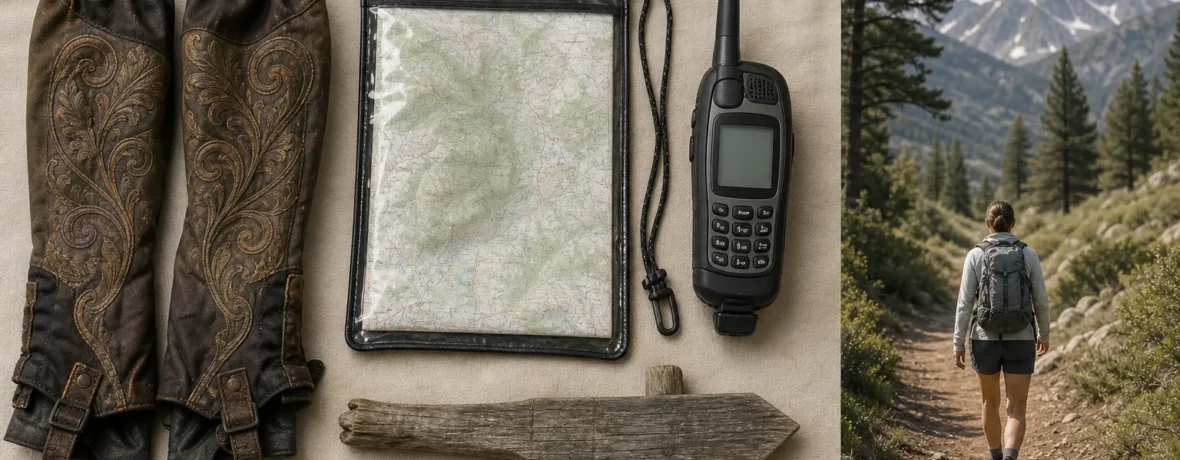
You can skip plenty of overrated hiking gear: huge boots, giant knives, solar chargers, heavy camp gadgets, tactical extras, and “just in case” duplicates. Keep the 10 essentials, match gear to the route, and cut anything that adds more than 8 oz [227 g] without solving a real trail problem.
What hiking gear is actually overrated?
The most overrated gear is the stuff that looks useful at home and feels useless after mile 3 [4.8 km].
That usually means heavy, single-purpose, overbuilt, or fear-based gear. A 12-inch [30 cm] survival knife. A camp chair for a 4-mile [6.4 km] lunch hike. A massive first-aid kit packed like you are staffing a field hospital. The problem is not that these items never work. The problem is that they steal weight, space, and attention from the gear that matters.
Good hiking gear has a job. It keeps you warm, dry, hydrated, fed, oriented, visible, protected from sun, or able to handle a delay. The National Park Service outdoor gear checklist points hikers toward the Ten Essentials as basic items to carry on hikes, which is a better starting point than whatever the algorithm is selling this week.
The clearest way to spot dead weight is simple: if you cannot name the exact trail problem an item solves, leave it home.
Are expensive hiking boots overrated?
Yes, expensive hiking boots are overrated for many maintained day hikes.
Stiff leather boots still have a place. If you are carrying a heavy overnight pack, hiking loose scree, kicking steps in shoulder-season snow, or moving through cactus and sharp rock, real boots can earn their keep. But for many marked trails, a lighter hiking shoe or trail runner is more comfortable and less punishing over distance.
The old advice said boots prevent ankle injuries. That became trail gospel. But boots are not magic braces. Fit, traction, foot strength, fatigue, pack weight, and how you move downhill all matter. A boot that gives you blisters on mile 2 [3.2 km] is not safer than a lighter shoe that fits well.
Skip the $250 boot flex if your hikes are mostly dry, maintained trails with a light daypack. Spend that money on socks that fit, blister care, rain protection, and navigation. Your feet will vote fast.
| Overrated item | Why you can skip it | Better choice |
|---|---|---|
| Heavy leather boots | Too stiff and hot for many easy day hikes | Trail runners or light hikers with good traction |
| Big survival knife | Heavy, dramatic, rarely needed on normal trails | Small folding knife or mini multitool |
| Solar charger | Slow, weather-dependent, awkward while moving | Small power bank and airplane mode |
| Oversized first-aid kit | Bulky kits often carry supplies you do not know how to use | Compact kit plus training and personal meds |
Do you really need a big hiking backpack?
No, you do not need a big pack unless your route, weather, or group role calls for it.
A pack can trick you. Give yourself 35 liters, and you will find 35 liters of stuff. Give yourself 18 to 24 liters, and suddenly your choices get cleaner. For most fair-weather day hikes, a smaller daypack has enough room for water, snacks, layers, a headlamp, map, first-aid basics, rain shell, sun protection, and emergency items.
The danger is going too small and leaving safety behind. The answer is not a purse-sized pack with one granola bar and optimism. The answer is a pack that fits your essentials without inviting a garage sale onto your shoulders.
- For short local trails: use a small daypack with water, insulation or rain layer, snacks, phone, light, and basic safety items.
- For mountain weather: carry a larger pack so warm layers and shell layers are not crushed or skipped.
- For hiking with kids or newer hikers: leave extra space for group gear, food, and backup clothing.
- For winter or desert routes: size up because cold protection or water volume changes everything.
Is ultralight hiking gear overrated?
No, but chasing ultralight gear before learning your needs is overrated.
There is a difference between going lighter and buying fragile bragging rights. Dropping pack weight is smart. Paying premium prices to save 1 oz [28 g] while carrying three camera lenses, a full-size deodorant, and a hardback book is comedy.
Start with the cheap weight cuts. Carry the right water amount for the route instead of panic-packing gallons. Repackage food. Ditch duplicate clothing. Leave the hatchet at home. Then, once your habits are tight, consider lighter shelter, pack, sleep system, or cooking gear if you backpack.
For day hikers, the best “ultralight” move is judgment. Check the forecast. Read the map. Know the turnaround time. Carry the Ten Essentials in lean form. The National Park Service Leave No Trace guidance also pushes planning ahead and preparing, which is the least flashy and most useful weight-saving tool you have.
What hiking gadgets are not worth carrying?
The gadgets not worth carrying are the ones that need perfect conditions or duplicate something simpler.
Solar chargers sound brilliant until you are under trees, in cloud cover, hiking north-facing switchbacks, or trying to strap a floppy panel to a moving pack. A compact power bank is boring. Boring wins.
Bluetooth speakers are worse. They add weight, burn battery, and spray your playlist across everyone else’s morning. Leave No Trace lists being considerate of others as one of its seven principles, and quiet is part of trail manners. Use earbuds at low volume if you must, and keep enough awareness to hear people, bikes, animals, water, and weather.
Camp lanterns can be overkill on day hikes. A headlamp is more useful because it leaves your hands free. A full-size multitool is usually more tool than trail. A mini tool or small knife handles food packaging, tape, splinters, and simple fixes without dragging half a toolbox uphill.
How do you decide what gear to leave at home?
Use a job-based packing system.
Do not pack by fear. Do not pack by vibes. Pack by function. Every item should earn its ride.
- Name the route. Distance, elevation gain, surface, exposure, water access, and cell coverage all shape the kit.
- Name the forecast. Heat, wind, rain, lightning risk, and overnight lows matter more than the season on the calendar.
- Name the consequence. Ask what happens if you are delayed 3 hours, not what looks cool in a gear photo.
- Pack the essentials first. Navigation, light, sun protection, insulation, first aid, fire starter, repair tool, food, water, and emergency shelter belong before luxuries.
- Cut one-purpose comfort items. If it only helps at lunch and weighs more than 8 oz [227 g], question it hard.
- Review after the hike. If you carried it five times and never touched it, downgrade it, shrink it, or remove it.
What hiking gear should you not skip?
Do not skip safety gear just because this column is telling you to cut the fluff.
The point is not to go minimalist for the ego hit. The point is to carry the right things. The Leave No Trace Seven Principles start with planning ahead and preparing, and that is exactly where smart packing begins.
- Navigation: map, offline map, compass, or GPS device you know how to use
- Headlamp: plus spare power if the hike could run late
- Sun protection: sunglasses, hat, sunscreen, and protective clothing
- Extra layer: enough insulation for a stop, delay, or weather shift
- Rain protection: shell or poncho when conditions call for it
- Water: carried water, filter, tablets, or a plan that matches the route
- Food: more than your planned snack if the route is long or remote
- First-aid basics: blister care, bandages, tape, personal medications, and knowledge
- Emergency shelter: space blanket, bivy, or similar light backup for exposed terrain
- Repair and fire basics: small knife or tool, tape, lighter, and fire starter where legal and sensible
What is the worst reason to buy hiking gear?
The worst reason is anxiety dressed up as preparation.
Marketing loves your worry. It whispers that real hikers need tougher boots, bigger packs, tactical knives, satellite everything, four redundant stoves, and a jacket rated for weather you will never see. Some gear earns its place. Much of it is a costume.
Here is the straight line: skill beats stuff. A good map habit beats a second GPS app you have never opened. A practiced layering system beats a giant emergency parka you resent carrying. A realistic route plan beats a survival gadget clipped to your sternum strap.
Buy less. Learn more. Walk farther. That is the better bargain.
Related reading
- Underrated Gear That Earns Its Weight
- Best Hiking Gear Under $200
- Best Winter Hiking Gear
- Dog Hiking Gear Checklist
FAQ
What is the most overrated hiking gear?
The most overrated hiking gear is the oversized survival knife. On normal trails, it adds weight and rarely does more than a small folding knife, scissors, or mini multitool can handle.
Are hiking poles overrated?
No, trekking poles are not overrated if you use them well. They help with balance, creek crossings, steep descents, and long climbs, but they are skippable on short, flat trails where your hands would rather be free.
Do beginners need expensive hiking gear?
No, beginners do not need expensive gear. Start with comfortable footwear, a sensible pack, weather protection, water, food, navigation, a headlamp, and basic safety items before buying premium upgrades.
Is a GPS watch necessary for hiking?
No, a GPS watch is not necessary for most marked trails. It is useful for tracking distance and pace, but it should not replace a map, route knowledge, or a charged phone with offline maps.
Should you carry a first-aid kit on every hike?
Yes, carry a small first-aid kit on every hike. Keep it realistic: blister care, bandages, tape, wound-cleaning supplies, and personal medications are more useful than a bulky kit full of items you do not know how to use.