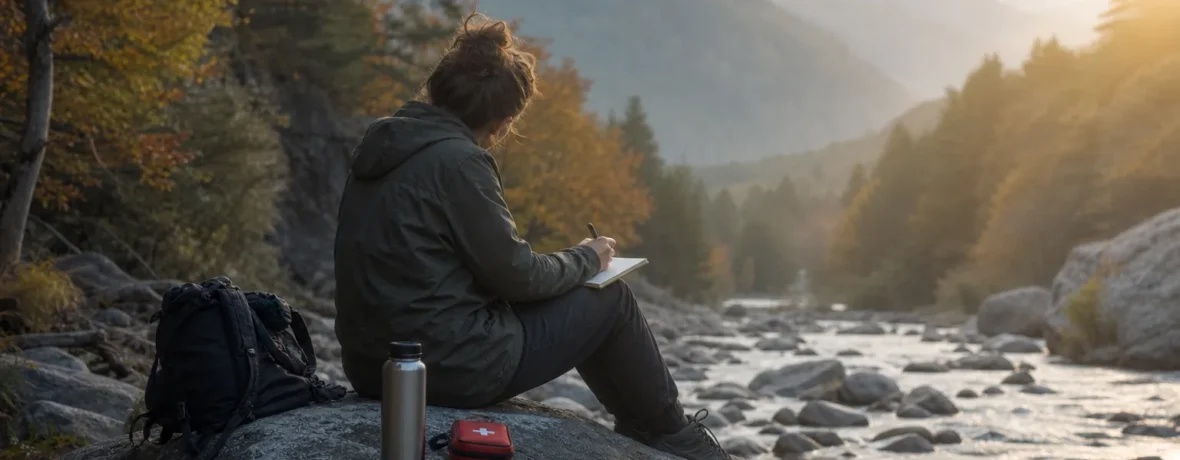
The best lessons from hiking are practical: pace yourself, prepare before you start, respect conditions, carry your share, and turn around before pride makes the call. If you hike even 3 to 5 miles [5 to 8 km] with attention, the trail gives you a working manual for a better life.
What are the biggest lessons from hiking?
The biggest lesson is this: steady beats flashy.
That sounds too plain for a column, so here is the sharper version: the trail does not care how inspired you felt at the trailhead. It cares how you move after the first climb, after the weather shifts, after your snack supply looks thin, after your knees start talking back on the descent.
That is why hiking is such a clean teacher. It strips away performance. You can post the overlook later, but you still have to earn the steps. You still have to manage sweat, water, heat, cold, daylight, morale, and that one friend who packed three cotton hoodies and no lunch.
The trail rewards the same things life rewards when nobody is clapping:
- Pacing: Start slower than your ego wants.
- Preparation: Bring what you hope you will not need.
- Humility: Weather, terrain, and fatigue get a vote.
- Attention: Small mistakes become big ones when ignored.
- Stewardship: You are not the owner of every place you enjoy.
My position is simple: hiking does not make you wise by default. Plenty of people walk through wild places and learn nothing except how to buy lighter gear. The real lessons from hiking land only when you let the trail correct you.
How does hiking teach patience?
Hiking teaches patience by making rushing expensive.
You can sprint the first mile [1.6 km]. Fine. Then comes mile 4 [6.4 km], the exposed climb, the loose rock, the hot switchback, the long descent that makes your quads feel like wet rope. The mountain cashes every check you wrote early.
Patience on trail is not passive. It is not drifting along with a dreamy look on your face. It is active restraint. You shorten your stride before your lungs force you to. You stop for water before your head aches. You put on a layer before your hands go numb. You take the extra minute to check the junction instead of gambling on confidence.
That carries over. A career, a relationship, a recovery, a house project, a hard season with your family—none of it improves because you redline for the first hour. You make progress because you find a pace you can repeat tomorrow.
The National Park Service tells hikers to plan ahead, carry essentials, and remember that some backcountry areas do not have cell service in its Hike Smart guidance. That is not fear talking. That is grown-up patience in plain clothes.
What does hiking teach you about preparation?
Hiking teaches that hope is not a plan.
This may be the least romantic lesson and the most useful one. The trail exposes lazy optimism fast. “It’ll probably be fine” is not a weather layer. “Someone else has a map” is not navigation. “We’re only going a few miles” is not a reason to leave water in the car.
Good preparation is not about packing for disaster every time you step onto dirt. It is about matching your plan to the trail, the season, the group, and your own limits. A short hike can still punish sloppy choices if heat, rain, ice, darkness, or injury show up.
Use this simple trail-to-life checklist:
- Know the route. Read the map before you need it.
- Check the conditions. Weather and closures can change the whole day.
- Carry the basics. Water, food, layers, light, first aid, and navigation are not decoration.
- Tell someone your plan. Especially if you are hiking alone or somewhere remote.
- Set a turnaround point. Decide before pride gets loud.
That same list works off trail. Know what you are walking into. Check reality. Bring tools. Tell the right people. Decide your limits before stress starts negotiating.
How does hiking build humility?
Hiking builds humility by reminding you that nature does not owe you comfort.
You can be strong and still get slowed by mud. You can be experienced and still miss a turn. You can own expensive boots and still get a blister the size of a quarter. The trail is not impressed by your spreadsheet, your job title, your follower count, or your heroic self-image.
Good. You need that.
Humility is not self-insult. It is accurate sizing. It lets you say, “This is bigger than I thought,” without shame. It lets you turn around when the ridge is iced over. It lets you accept that a 10-mile [16 km] day with 3,000 feet [914 m] of climbing is not the same as 10 flat miles [16 km] on a bike path.
Hiking humbles you in useful ways because the feedback is immediate. If you underpack, you feel it. If you ignore your feet, you limp. If you leave late, darkness comes anyway. The trail does not nag. It just keeps score.
What can the trail teach about responsibility?
The trail teaches that your choices do not end with you.
This is where hiking graduates from self-improvement to citizenship. You are not just learning grit out there. You are learning how to move through shared space without making it worse.
That means you do not cut switchbacks because your calves are tired. You do not blast music because silence makes you twitchy. You do not leave orange peels, dog bags, micro-trash, food scraps, summit confetti, or “biodegradable” wishful thinking behind. You do not stack rocks in a creek because your photo needs a little personality.
The Leave No Trace Seven Principles page from the National Park Service lays out the baseline: plan ahead, travel on durable surfaces, dispose of waste properly, leave what you find, minimize fire impacts, respect wildlife, and be considerate of others.
That is not trail etiquette trivia. It is a moral stance. The land should not pay for your good time. Neither should the hiker behind you.
Why does hiking make decisions clearer?
Hiking makes decisions clearer because consequences are easier to see.
On trail, choices get stripped down. Keep going or turn back. Add a layer or get cold. Drink now or fade later. Step carefully or roll an ankle. Push the group or protect the slowest person.
Life often hides consequences behind delay. Hiking shortens the gap. That makes it a fine training ground for judgment.
| Trail choice | Life lesson | Better move |
|---|---|---|
| Starting too fast | Early intensity can steal later strength | Choose a pace you can hold |
| Ignoring weather | Reality beats optimism | Adjust before conditions force you |
| Carrying too much | Extra baggage has a cost | Bring what serves the goal |
| Leaving trash | Freedom without responsibility is selfish | Pack out what you pack in |
The trail does not make every decision easy. It makes excuses harder to hide behind.
What does hiking teach about fear and risk?
Hiking teaches that fear is information, not an order.
You should listen to fear. You should not always obey it. There is a difference between the nervous flutter before a steep climb and the clear warning that lightning, heat, exposure, injury, or fading daylight has changed the plan.
Smart hikers do not worship risk. They manage it. They ask better questions: What is the consequence if this goes wrong? How far are we from help? Does the group still have water, layers, light, and energy? Is turning around a failure, or is it the best decision of the day?
Tick exposure is another plain example. The CDC says ticks are found in grassy, brushy, and wooded areas and recommends steps such as walking in the center of trails, checking for ticks after being outdoors, and using prevention measures described in its tick bite prevention guidance. That is not paranoia. That is respect for small risks that can become real problems.
The lesson is bigger than ticks. Mature courage is not charging ahead. Mature courage is seeing the risk clearly and acting with discipline.
How can you apply trail lessons to everyday life?
You apply trail lessons by turning them into habits, not slogans.
Do not come home from a hike and reduce it to a bumper-sticker thought about the journey. Use it. Let the trail make you harder to fool and easier to rely on.
Try this:
- Before a hard week: Pack the “Ten Essentials” version of your life—sleep, food, calendar space, money plan, support, tools, and backup options.
- During conflict: Slow the pace. You do not need to win the first mile.
- When plans change: Stop blaming the weather. Adjust the route.
- When you succeed: Leave the place better for the next person.
- When ego flares: Ask if continuing is wise or just loud.
The trail’s best lesson is not that you can do hard things. That is true, but incomplete. The deeper lesson is that you can do hard things better when you prepare, pay attention, respect limits, and care about who and what comes after you.
That is the column. Not hiking as escape. Hiking as rehearsal.
Related reading
- Las Vegas to Zion: Distance, Drive and Day-Trip Plan
- Glacier to Yellowstone Road Trip: Distance and Route
- Seattle to Olympic National Park: Routes and Ferries
- How Long Does It Take to Recover From Dehydration?
FAQ
What are the main lessons from hiking?
The main lessons are pacing, preparation, humility, responsibility, and clear decision-making. Hiking teaches them fast because poor choices have physical consequences.
Can hiking change your mindset?
Yes, if you pay attention instead of treating the trail like an outdoor treadmill. It can train patience, resilience, and better judgment through repeated, honest feedback.
Why is hiking good for personal growth?
Hiking is good for personal growth because it gives you manageable hardship. You practice discomfort, planning, focus, and restraint in a setting where each choice matters.
What does hiking teach about resilience?
Hiking teaches that resilience is steady adjustment, not dramatic toughness. You keep moving by eating, drinking, layering, resting, rerouting, and knowing when to turn back.
How do beginners learn life lessons from hiking?
Beginners learn fastest by starting with short trails, carrying the basics, and noticing what the trail corrects. A 3-mile [5 km] hike done with attention can teach more than a rushed epic.