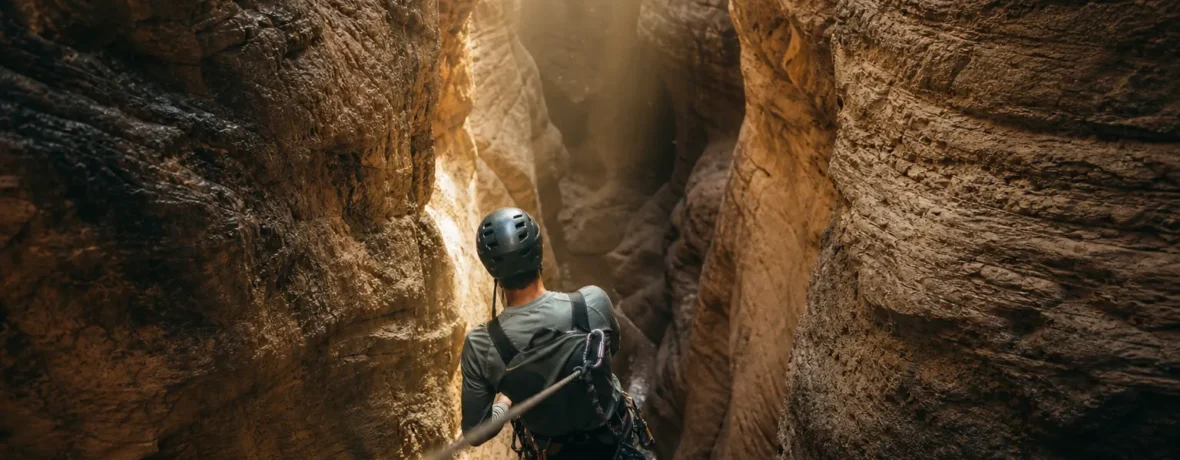
What is canyoneering? Canyoneering is descending a canyon on foot using hiking, scrambling, rappelling, downclimbing, swimming, wading, and route-finding. A simple canyon may take 2 hours; a technical route can take a full day and require ropes, helmets, wetsuits, permits, and a team that knows rescue basics.
What is canyoneering, really?
Canyoneering is not just hiking in a pretty slot canyon.
That is the first mistake hikers make. They see sandstone walls, a ribbon of light, maybe a waist-deep pool, and think, “Cool hike.” Sometimes it is. Often it is not.
Canyoneering asks you to move through a canyon the way the canyon allows. That might mean walking a dry wash. It might mean stemming above a pothole, sliding into cold water, clipping into a rope, rappelling 80 feet [24 meters], and pulling the rope behind you because the only way out is down.
Here is the straight position: canyoneering deserves its own respect. Treating it as hiking with accessories gets people into trouble. Treating it as a technical mountain sport, even on beginner routes, keeps the day fun.
In the United States, the sport is closely tied to the canyon country of Utah, Arizona, Colorado, Nevada, and California. But the basic idea shows up anywhere water has carved steep terrain. The American Canyoneering Association’s canyon rating system breaks routes down by technical difficulty, water exposure, time commitment, and seriousness. That is a clue. The route is not defined only by distance.
How is canyoneering different from hiking?
Hiking is usually optional movement; canyoneering often becomes committed movement.
On a hike, you can usually turn around when weather shifts, your feet hurt, or the group gets spooked. In a canyon, the hardest move may be behind you. Once you pull your rappel rope, that drop is no longer your exit. You keep going.
| Activity | Main movement | Typical risk | Turnaround options |
|---|---|---|---|
| Hiking | Walking on trail or rough ground | Weather, falls, dehydration, getting lost | Often simple |
| Scrambling | Hands-and-feet movement on rock | Falls, loose rock, exposure | Variable |
| Canyoneering | Descending canyon terrain with rope, water, and problem-solving | Flash floods, rappels, cold water, entrapment, poor anchors | Often limited |
The distance can fool you. A 3-mile [4.8-kilometer] canyon can feel bigger than a 10-mile [16-kilometer] trail day if it includes rappels, pools, rope management, and slow group movement. Mileage is not the boss. Terrain is.
What skills do you need for canyoneering?
You need movement skills, rope skills, water judgment, and the humility to back off.
Start with movement. You should be comfortable hiking off trail, stepping on slick rock, downclimbing short drops, and moving with a pack that may be wet and awkward. You do not need to be a world-class climber. You do need steady feet and a calm head.
Technical canyoneering adds rope work. That means knowing how to rappel, inspect anchors, communicate clearly, manage rope length, avoid hair and clothing getting caught in a device, and help a teammate who freezes mid-rappel. Those are not YouTube-only skills. Learn them from a qualified instructor or a vetted guide before you enter a canyon where a rope is mandatory.
Water adds another layer. Cold pools can drain strength fast. Moving water changes everything. A canyon that is playful when dry may become a trap after rain. The National Park Service warns that flash floods can happen even when the storm is not directly overhead; check local forecasts and park guidance before entering narrow canyons, including resources like the NPS page on monsoon season and flash flood risk.
What gear do beginners need for canyoneering?
Beginners need protective gear first, technical gear only when they know how to use it.
Do not buy a shiny rack of rope hardware and mistake that for competence. Gear is not a shortcut. Gear is a contract: if you carry it, you must know what problem it solves and what problem it can create.
- Helmet: Non-negotiable in rockfall terrain and on rappels.
- Sticky approach shoes: Choose shoes that grip wet rock and drain better than standard hiking boots.
- Pack that drains: A waterlogged pack becomes a brick.
- Dry bags: Protect warm layers, first aid supplies, phone, headlamp, and car key.
- Warm layers: Synthetic or wool, not cotton.
- Wetsuit or drysuit: Route-dependent, especially where cold pools are expected.
- Harness, rappel device, locking carabiners, rope, and anchor materials: For technical routes only, and only with training.
- Navigation tools: Map, downloaded route information, compass or GPS, and enough battery.
- Emergency kit: First aid, headlamp, lighter, emergency bivy, whistle, and a way to call for help where service exists.
How do you start canyoneering safely?
Start with a guided beginner canyon or a nontechnical canyon with reliable information.
The smart path is boring. Good. Boring keeps your bones intact.
- Pick the right canyon. Choose a beginner-friendly route with no mandatory rappels if you lack rope training.
- Go with competent people. A strong hiker is not automatically a safe canyon leader.
- Read the current route conditions. Water depth, anchor condition, recent storms, and access rules matter more than old trip reports.
- Check the weather beyond the trailhead. Look at the whole drainage, not just the sky above you.
- Know the permit rules. Some parks require permits for technical canyons; for example, Zion National Park technical canyoneering permits are handled through Recreation.gov, as of November 2026.
- Set a hard turnaround time. If the route allows retreat, use the clock before pride starts talking.
- Keep the group small and honest. Match the route to the least experienced person, not the boldest one.
The best beginner decision is often hiring a guide. Not because you are weak. Because a good guide teaches systems: how to move, where to stand, what not to touch, when to wait, when to go, and when to call the whole thing off.
Is canyoneering dangerous?
Yes, canyoneering can be dangerous when water, weather, ropes, or judgment go bad.
That does not mean you should avoid it. It means you should stop treating risk as a vibe. Canyons are physical systems. Water carved them. Gravity runs through them. Your job is not to conquer the canyon. Your job is to pass through without needing a rescue.
The big hazards are clear:
- Flash floods: Narrow canyons can fill violently and quickly.
- Rappel errors: Bad rigging, poor communication, loose brake hands, and rope-length mistakes can be severe.
- Hypothermia: Cold water and shade can chill you even when the desert rim is hot; the CDC explains that hypothermia can occur at cool temperatures when a person is wet.
- Heat illness: Approaches and exits can be exposed, steep, and dry; the CDC advises planning strenuous activity for cooler parts of the day in hot climates on its heat illness guidance.
- Entrapment: Potholes, hydraulics, logjams, and keeper pools can stop forward progress.
- Navigation mistakes: The wrong drainage can put you above drops you did not plan to descend.
When to see a doctor
Seek medical care promptly after a canyoneering trip if symptoms are severe, worsening, or linked to a fall, head hit, near-drowning, heat illness, or cold exposure.
Do not self-diagnose a serious outdoor injury in the parking lot. Get help if someone has confusion, fainting, chest pain, trouble breathing, repeated vomiting, severe headache after a head impact, uncontrolled bleeding, suspected broken bones, or persistent numbness.
After cold-water exposure, watch for shivering that stops, clumsiness, slurred speech, unusual behavior, or drowsiness. After high heat, take confusion, collapse, and very high body temperature as emergencies. Use professional medical care, not group optimism.
Should hikers try canyoneering?
Yes, hikers should try canyoneering if they respect that it is a separate skill set.
That is the sweet spot. Hikers already bring useful strengths: fitness, route awareness, weather sense, foot care, pacing, and comfort being outside for hours. Those habits transfer well.
But the canyon does not care how many trail miles you logged last year. It cares whether you can evaluate a rappel, stay warm after a swim, read the sky, move safely over polished rock, and speak up when the plan is wrong.
So here is the line: nontechnical canyon hiking is a natural next step for many hikers. Technical canyoneering is not. Technical routes demand instruction, practice, partners, and conservative judgment. Earn your way in. The reward is huge: sculpted stone, hidden chambers, water-polished corridors, and a kind of movement no regular trail can match.
Related reading
- Type 2 Fun: Why Hard Hikes Feel Good Later
- The Seven Summits Explained
- What Is Geocaching?
- What Is Hiking, Really? A Definition Worth Arguing About
FAQ
Is canyoneering the same as canyoning?
Yes, the words often describe the same sport. “Canyoneering” is more common in the United States, while “canyoning” is commonly used in Europe and other regions.
Do you need ropes for canyoneering?
Not always. Some canyons are nontechnical hikes, while technical canyons require ropes for rappels, handlines, or rescue situations.
Can beginners go canyoneering?
Yes, beginners can go canyoneering on appropriate routes. Start with a guide, class, or nontechnical canyon rather than a route with mandatory rappels or cold swims.
What should you wear canyoneering?
Wear quick-drying layers, sticky shoes, and a helmet. Add a wetsuit or drysuit when the route has cold water, long swims, or deep shaded pools.
Do you need a permit to go canyoneering?
Sometimes. Permit rules vary by park, forest, route, and season, so check the official land manager before you go and avoid relying only on old trip reports.
What is the biggest mistake new canyoneers make?
The biggest mistake is underestimating commitment. A canyon can look short on a map but still require technical skill, cold-water tolerance, rope competence, and a full day of focused movement.