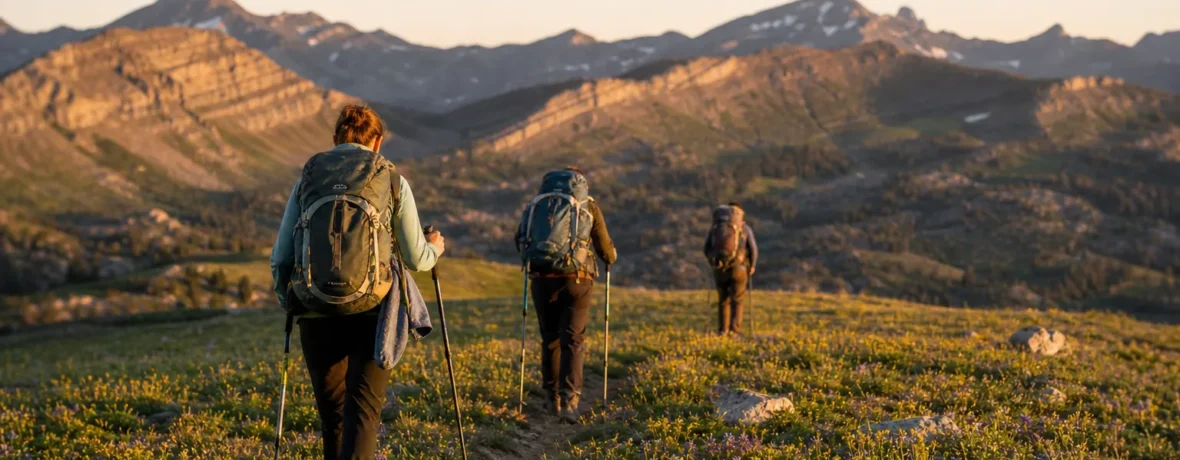
A trek is a long, multi-day walking journey, usually 2 days or more, where the route, terrain, weather, food, and overnight logistics matter as much as the miles. A hike can be short or long; a trek means sustained travel on foot with planning, endurance, and self-management.
What is a trek?
A trek is a walking trip that asks you to live with the route, not just visit it.
That is the cleanest line. A trek is not defined by a single distance, a specific elevation gain, or a passport stamp. It is defined by commitment. You move through country on foot for multiple days. You carry or arrange the gear, food, water, shelter, clothing, permits, maps, and backup plans needed to keep going when the easy exit is behind you.
Here is the position: calling every nice trail walk a trek waters the word down. A 4-mile [6.4 km] loop with a coffee stop after it is a hike. A 3-day route where you manage storms, tired legs, water sources, a sleep system, and tomorrow’s climb is a trek. Both are good. They are not the same animal.
The word also has a cultural flavor. In the U.S., hikers often say “backpacking trip” for what many parts of the world call a trek. In Nepal, Peru, Tanzania, and the Alps, “trek” often means a guided or self-supported journey from village to village, hut to hut, camp to camp, or valley to valley. The label changes. The bones stay the same.
What is trekking?
Trekking is the act of traveling on foot for several days through outdoor terrain, with planned overnight stops and trail logistics.
That answers what is trekking without dressing it up. Trekking is not mountaineering unless ropes, glaciers, technical summits, or climbing gear enter the picture. It is not trail running. It is not a stroll. It is sustained walking with consequences.
A trek may follow a marked national park trail, an old pilgrimage route, a remote desert wash, a jungle path, a high pass, or a village-to-village footpath. You may sleep in a tent, a hut, a lodge, a hostel, or a simple guesthouse. You may carry all your food or buy meals along the way. None of those details alone decides the word. The multi-day foot journey does.
Good trekking has rhythm. Wake. Pack. Walk. Eat. Filter water or refill. Check the sky. Adjust layers. Reach camp or lodging. Recover. Do it again. That repetition is the point. A trek strips travel down to the pace of your own legs.
What is the difference between hiking and trekking?
Hiking is usually a single outing; trekking is a journey.
Yes, the terms overlap. Language is messy. But on the trail, the distinction is useful because it changes how you prepare. A hard day hike can punish you. A poorly planned trek can strand you.
| Feature | Hiking | Trekking |
|---|---|---|
| Typical duration | 1 day, though it can be longer | 2 days or more |
| Main focus | A trail, viewpoint, summit, loop, or out-and-back | A continuous foot journey from one stage to the next |
| Gear load | Day pack with safety basics | Overnight kit, food plan, water plan, layers, navigation, sleep system or lodging plan |
| Risk profile | Often easier to turn around or exit | More exposure to fatigue, weather changes, route errors, and cumulative stress |
A long day hike can be harder than an easy trek stage. A 14-mile [22.5 km] day with 4,000 feet [1,219 m] of gain may crush you more than a gentle hut-to-hut day. But effort alone does not make a trek. Continuity does.
The National Park Service tells hikers to file an itinerary, carry essentials, pack out trash, and drink water before thirst becomes a problem on warm days; those basics matter even more when your “walk” becomes a chain of days instead of a single outing. See the NPS guidance on hiking safety.
How many days make a walk a trek?
Two days is the practical minimum for a trek.
One day is a hike, even if it is long, muddy, steep, and glorious. Add an overnight, and the math changes. You now have to manage recovery, warmth, food, sleep, and the next day’s route. That is the threshold.
A 2-day trek can be simple: trailhead to backcountry camp, then out by a different ridge. A 5-day trek becomes more involved: meals, fuel, foot care, weather windows, water availability, resupply, and bailout options. A 2-week trek is a small expedition, even when the walking itself is nontechnical.
Distance still matters. A 2-day walk of 6 miles [9.7 km] total may feel more like a camping trip than a trek. A 3-day route covering 30 miles [48.3 km] with real navigation and changing terrain fits the term better. Still, duration is the first gate. If you sleep out or move between overnight stops and continue on foot, you are in trekking territory.
Is trekking harder than hiking?
Trekking is usually harder because fatigue stacks up.
That is the piece new trekkers underestimate. Day one may feel fine. Day two introduces tender feet, damp socks, poor sleep, sore hips, and a pack that somehow feels heavier even after you ate dinner. Day three asks whether your planning was honest.
The hard part is not always the steepest climb. It is the repeated decision-making:
- Can you reach the next water source safely?
- Do you push over the pass before weather builds?
- Is that hot spot on your heel turning into a blister?
- Do you have enough calories for tomorrow?
- Can you still follow the route when the trail fades?
That is why trekking deserves its own word. It is not elitist. It is practical. The word reminds you to plan for the full journey, not just the prettiest section.
What gear do you need for a trek?
You need gear that keeps you moving, warm, hydrated, fed, oriented, and able to handle a rough night.
Do not start with gadgets. Start with needs. The best trekking kit is boring until the weather turns. Then boring becomes beautiful.
- Navigation: map, compass, downloaded offline maps, and the skill to use them.
- Water: bottles or reservoir, plus a filter, purifier, or treatment method suited to the route.
- Food: trail meals and snacks you will actually eat when tired.
- Layers: rain shell, insulating layer, hat, gloves, and dry sleep clothing when conditions call for it.
- Shelter or lodging plan: tent, tarp, bivy, hut booking, guesthouse plan, or other confirmed overnight setup.
- Sleep system: sleeping bag or quilt and pad matched to expected temperatures.
- Light: headlamp with backup power.
- First aid and foot care: blister care, personal medications, bandaging supplies, and a small repair kit.
- Sun and insect protection: sunglasses, sunscreen, brimmed hat, and repellent where needed.
- Waste plan: bags for trash and the right method for human waste on that route.
For trail ethics, the NPS summary of the Leave No Trace Seven Principles is the right baseline: plan ahead, stay on durable surfaces, pack out waste, leave what you find, minimize campfire impacts, respect wildlife, and respect other visitors.
How do you plan your first trek?
Plan your first trek shorter than your ambition.
Your goal is not to prove toughness. Your goal is to finish with enough margin that you would do it again. Pick a route with clear water sources, manageable elevation, legal campsites or lodging, and at least one sensible exit.
- Choose a 2- or 3-day route. Keep daily mileage modest, especially with a loaded pack.
- Check the season. Snow, heat, monsoon rain, wildfire smoke, and river crossings can turn a simple line on a map into a bad idea.
- Confirm overnight rules. Some routes require permits, reservations, bear canisters, or specific campsites. Use the land manager’s official site before you go.
- Build a water plan. Mark every reliable source and carry enough capacity for dry stretches.
- Test your shoes and pack. Do not let day one of the trek be day one for new footwear.
- Pack, then remove extras. Comfort items are fine. Dead weight is not.
- Leave an itinerary. Tell a reliable person your route, camps, exit time, and what to do if you do not check in.
The right first trek should feel slightly intimidating on paper and steady underfoot. If it looks heroic before you start, shrink it.
When to see a doctor
Seek medical help fast if symptoms suggest a serious cold, heat, altitude, breathing, chest, head, or allergic problem.
This is not a diagnosis checklist. It is a line in the sand. On a trek, “wait and see” can become “too late” because distance slows every response.
At altitude, the CDC says people with altitude illness should not go higher until symptoms are gone, and worsening symptoms at the same elevation call for descent. Confusion, loss of coordination, severe fatigue, shortness of breath, weakness, or cough at altitude are red flags; read the CDC’s high-altitude travel guidance before sleeping high.
Cold exposure deserves the same respect. Mayo Clinic describes hypothermia as a medical emergency and lists warning signs such as shivering, slurred speech, slow breathing, confusion, and drowsiness; see Mayo Clinic’s hypothermia symptoms and causes page.
Get professional medical guidance before a strenuous trek if you have heart disease, lung disease, diabetes, pregnancy, a history of severe allergic reactions, recent surgery, or any condition that could be worsened by exertion, altitude, heat, cold, or remote travel.
So, is “trek” just a fancy word for hike?
No. It gets used that way, but it should not be.
Words shape preparation. If you call a 5-day route a “hike,” you may pack like a day hiker with a bigger lunch. If you call it a trek, you are more likely to think in systems: route, sleep, weather, water, food, feet, recovery, and exit plans.
That does not make trekking superior. A sharp day hike can be purer, faster, and more fun than a plodding trek. But a trek asks for a different kind of respect. It is less about one trail objective and more about carrying yourself through a landscape day after day.
Use the word when the walk becomes a journey. Use it when the overnight logistics are part of the challenge. Use it when you must manage the chain, not just the link.
Related reading
- Type 2 Fun: Why Hard Hikes Feel Good Later
- The Seven Summits Explained
- What Is Geocaching?
- What Is Hiking, Really? A Definition Worth Arguing About
FAQ
What is a trek in simple words?
A trek is a multi-day journey on foot. It usually includes overnight stops, route planning, food and water logistics, and enough distance or terrain to require real preparation.
What is the main difference between hiking and trekking?
Hiking is usually a single trail outing, while trekking is a longer foot journey over 2 days or more. Hiking can be hard, but trekking adds repeated days, overnight planning, and cumulative fatigue.
Can a beginner go trekking?
Yes, a beginner can go trekking if the route is realistic. Start with 2 days, modest mileage, clear navigation, known water sources, and an easy exit option.
Do you need special shoes for trekking?
You need footwear that fits, grips, and works with your pack weight and terrain. Trail runners, hiking shoes, or boots can all work; the bad choice is brand-new footwear on day one.
Is backpacking the same as trekking?
Backpacking and trekking often overlap. In the U.S., backpacking usually means carrying overnight gear on a hiking route; trekking can also include huts, lodges, guides, porters, or village-to-village travel.
How long is a typical trek?
A typical trek lasts 2 days to several weeks. The defining feature is not a fixed mileage number; it is a continuous walking journey with overnight logistics and repeated days on the route.