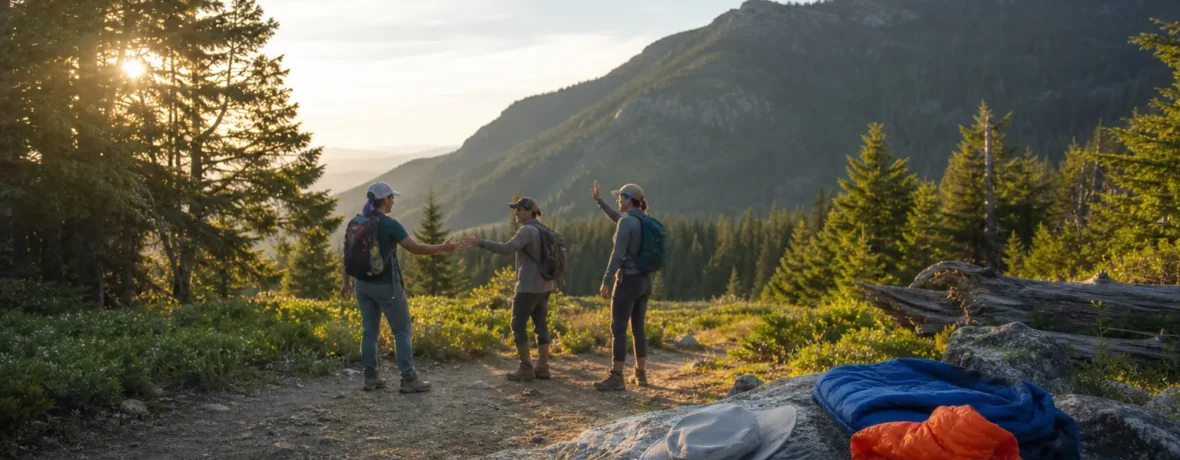
To find hiking buddies, start with organized group hikes, local outdoor clubs, classes, and trusted friend-of-friend networks; then screen people with a 3- to 5-mile [5- to 8-km] low-risk trail before planning remote trips. Say yes only when pace, goals, safety habits, and communication match.
How do you find hiking buddies without making it awkward?
Ask for a specific, low-pressure hike instead of asking for a vague future plan.
People dodge fuzzy invitations. “We should hike sometime” puts the other person in charge of choosing the trail, day, distance, pace, and commitment level. Make it easy. Try: “I’m hiking the Cedar Loop on Saturday at 9 a.m. It’s 4 miles [6 km], steady but not steep. Want to join?”
The best first invitation has four parts:
- Trail: Name the exact route or trailhead.
- Distance: Give miles and metric, especially if your group includes international hikers.
- Pace: Say relaxed, moderate, fast, photo-heavy, training, or summit-focused.
- Plan: Include start time, expected finish window, and where you’ll meet.
Keep the first hike short enough that nobody feels trapped. A 3- to 5-mile [5- to 8-km] route with cell service, clear signage, and an easy exit beats a big mountain day with a stranger. You are not auditioning for an expedition team. You are checking for fit.
Where can you meet hikers near you?
Start with places where hikers already gather: clubs, classes, volunteer days, local shops, and organized group hikes.
Good hiking friendships rarely come from one perfect post. They come from repeated contact. You see the same person at a trail-work morning, then again at a navigation class, then again on a beginner backpacking trip. Trust grows faster when you both show up more than once.
| Place to look | Best for | What to check first |
|---|---|---|
| Local hiking clubs | Steady group hikes and mixed skill levels | Trip rating, pace, carpool rules, guest policy |
| Outdoor stores and gear shops | Classes, clinics, and community boards | Class size, instructor background, required gear |
| Trail-maintenance groups | Meeting reliable outdoorsy people | Work difficulty, tools provided, start time |
| Social apps and neighborhood groups | Fast local connections | Public profiles, mutual friends, clear plans |
| Fitness groups | Training hikes and consistent schedules | Speed, distance, elevation gain, expectations |
Look beyond “hiking” labels too. Birding groups, climbing gyms, running clubs, conservation nonprofits, photography walks, and nature centers can all lead to trail friends. The shared interest gives you something better than small talk. It gives you a reason to meet again.
If you join an online group, read the last several posts before you comment. Are people kind to beginners? Do organizers give complete plans? Do hikes get canceled with no warning? The tone of the group tells you plenty.
How do you choose the right hiking partner?
Choose the person whose pace, risk tolerance, trail manners, and planning style match yours.
Fitness matters, but it is only one piece. A fast hiker who leaves you at every junction is a bad match. A friendly hiker who forgets water, ignores weather, and changes the plan mid-trail can turn a simple day into a headache. The right match is steady, clear, and honest before the hike starts.
Pay attention to these fit points:
- Pace: Can you walk together without one person constantly waiting?
- Start time: Are they punctual when daylight is limited?
- Goal: Are you both there to train, wander, take photos, reach a viewpoint, or finish fast?
- Comfort with terrain: Scrambles, snow, stream crossings, and exposure are not “minor details.”
- Decision style: Can they turn around without drama if weather, daylight, or energy changes?
- Group attitude: Do they wait at junctions and check on the slowest person?
A great trail buddy does not need identical speed. They need compatible expectations. If one person wants a quiet dawn hike and the other wants a speaker, three dogs, and a summit selfie sprint, neither is wrong. They are just not the same trip.
What should you ask before hiking with someone new?
Ask direct questions before the trail, not halfway up the climb.
You do not need to interrogate anyone. You do need enough detail to avoid mismatched plans. Ask by text so everyone can refer back to the same plan.
- What pace do you usually hike? Ask for plain language, not bragging. Relaxed, steady, fast, or training pace works.
- What distance and elevation gain feel good right now? Current fitness beats past glory.
- Do you prefer breaks, photos, or continuous movement? This one prevents half the friction.
- What gear are you bringing? You are checking for basics: water, layers, food, light, map, and weather-ready clothing.
- Are you comfortable turning around? The only good answer is yes.
- Do you have allergies, medical concerns, or emergency contacts the group should know? Keep it practical and private.
- How are we handling transportation? Meet at the trailhead for the first outing when possible.
Use a simple script if you hate making things formal: “Before we pick a trail, I like to check pace, distance, gear, and turnaround plans so nobody gets surprised. What kind of hike sounds good to you this week?”
How do you plan the first hike with a new trail buddy?
Make the first hike short, public, well-marked, and easy to leave if the fit is off.
Pick a popular trail with a clear map, predictable terrain, and enough other users that you are not isolated. Save remote trailheads, long ridgelines, off-trail routes, and difficult scrambles for later. The first hike is a meet-and-greet with boots.
Use this first-hike checklist:
- Choose 3 to 5 miles [5 to 8 km] unless you already know the person well.
- Meet at the trailhead instead of sharing a car.
- Send the route link, start time, and expected finish time the day before.
- Check weather the morning of the hike.
- Agree on turnaround time before starting.
- Tell a non-hiking contact where you are going and when you expect to return.
- Carry your own essentials; do not rely on the other person’s kit.
The National Park Service Hike Smart guidance recommends completing a trip plan that includes where you are going, when you plan to arrive and return, and who is with you. That advice works on local trails too, not just national parks.
After the hike, do a quick debrief. Not a corporate meeting. Just a real check: “That pace worked for me. Next time I’d start earlier,” or “Fun route, but I’m looking for slower hikes right now.” Clean feedback saves future weirdness.
How do you stay safe when meeting hiking buddies online?
Keep the first meeting public, keep your own transportation, and share your plan with someone who is not on the hike.
Online groups can be excellent. They can also create false trust. A smiling profile photo and a list of peaks do not prove judgment. Treat a new contact like any other person you have not met yet: friendly, open, and careful.
Follow these guardrails:
- Meet in daylight at a busy trailhead or public place.
- Do not share your home address for the first hike.
- Drive yourself or arrange your own ride.
- Tell a trusted person the trail, start time, expected finish time, and who you are meeting.
- Send a check-in when you are finished.
- Leave if the plan changes in a way that feels wrong.
- Trust rude behavior as data. You do not owe anyone a second chance on trail safety.
The National Park Service outdoor emergency planning page lists details that help in an emergency, including the trail or area, route, expected return time, and group information. Build that habit early. It is simple and useful.
Red flags are usually clear: pressure to change trails, jokes that make you uneasy, refusal to discuss pace or gear, showing up unprepared, pushing past your stated limits, or mocking turnaround plans. Leave. No debate required.
What if your hiking pace does not match?
Talk pace before the hike and set regroup points before anyone walks away.
Pace mismatch is normal. Trouble starts when nobody says anything. A faster person may think waiting every 20 minutes is generous; the slower person may feel abandoned. Fix it with expectations.
Try one of these plans:
- Stay-together hike: The group moves at the pace of the slowest person.
- Regroup hike: Faster hikers wait at every junction, water crossing, and signed turn.
- Training hike: Everyone agrees in advance that speed is the point.
- Photo hike: Stops are part of the plan, not interruptions.
For mixed groups, use a sweep. That person stays behind the final hiker so nobody ends up alone. Rotate the role if the group hikes together often.
If the pace mismatch keeps happening, be honest without making it personal: “I like hiking with you, but our speeds are different. Let’s pick shorter trails together and save longer days for separate plans.” That is better than resentment at mile 7 [11 km].
How do you build a regular hiking crew?
Be reliable, communicate clearly, and make it easy for people to say yes again.
A hiking crew forms when people trust the pattern. Same kind of invite. Same honest trail descriptions. Same respect for time. You do not need a huge group chat with 30 people and endless polls. You need a few dependable hikers who like similar days outside.
Here is a simple system:
- Pick one repeating window. First Saturday morning, Wednesday after work, or one Sunday per month.
- Post a complete plan. Trail, distance, elevation style, meeting spot, start time, and expected finish window.
- Use clear ratings. Easy, moderate, strenuous, or training pace. Define what those mean for your group.
- Cap the group when needed. Smaller groups move cleaner, park easier, and make fewer trail impacts.
- Rotate leaders. One person should not carry every map, message, and decision forever.
- Share expectations. Dogs, kids, carpools, no-shows, weather calls, and turnaround rules need plain answers.
Good trail culture keeps the group alive. Respect private land and closures. Pack out trash. Give uphill hikers room. Keep noise down around wildlife and other visitors. The National Park Service summary of Leave No Trace covers the seven basic principles for reducing your impact outdoors.
Also: invite the quiet reliable people. Not every strong hiking friend is loud in the group chat. Some of the best trail companions simply show up on time, carry what they need, and make good decisions when the weather turns.
How can beginners find people who will not make them feel slow?
Join beginner-labeled hikes and be honest about your current comfort level.
Beginners often worry they will hold everyone back. The fix is not pretending. The fix is choosing the right setting. Look for words like beginner, social pace, no-drop, intro, family-friendly, nature walk, or skills clinic. Avoid anything labeled training, fast, sufferfest, peak-bagging, or aggressive unless that is truly what you want.
When you message an organizer, be specific: “I’m comfortable with 4 miles [6 km] on rolling terrain and I’m working up to longer hikes. Would this trip fit?” A good organizer will answer plainly. A bad one will make you feel silly for asking. That tells you where not to go.
Start with the basics and own them:
- Bring your own water and snacks.
- Wear shoes that already feel comfortable.
- Carry a light layer, rain layer when needed, and a small light.
- Tell the group if you need a short break.
- Ask questions at the trailhead, not after the turnoff.
You do not need to be the strongest hiker in the group. You need to be prepared, honest, and considerate. That is enough to get invited again.
How do you know when to stop hiking with someone?
Stop hiking with someone when their choices repeatedly make you feel unsafe, rushed, ignored, or disrespected.
One off day happens. A pattern is different. If someone leaves the group without warning, pushes beyond agreed limits, ignores weather, pressures you into terrain you did not agree to, or treats slower hikers as baggage, cut the cord.
You can keep the message short:
- “I’m looking for a different pace, so I’ll pass on this one.”
- “That route is outside my comfort level.”
- “I’m going to make separate plans this weekend.”
- “I don’t think our hiking styles match.”
No courtroom argument needed. The trail is not the place to prove you are easygoing. Good buddies respect limits the first time.
Related reading
- Best Hiking Trails Near Me: How to Find Great Local Trails in 2026
- A Walk in the Woods: Bill Bryson's AT Story vs Reality
- Kids' Hiking Boots: How to Size and When to Buy
- Mountain Porters: The People Who Carry Expeditions
FAQ
What is the safest way to find hiking buddies?
The safest way is to meet through organized groups, public events, classes, or mutual friends, then start with a short daylight hike. Keep your own transportation, share your route with someone else, and avoid remote trails until trust is earned.
How do I ask someone to go hiking with me?
Ask with a specific plan. Say the trail name, distance, day, time, pace, and expected finish window so the other person can give a clear yes or no.
Are hiking apps and online groups safe for meeting people?
They can be safe if you use basic screening. Meet in public, choose a busy trail, check the person’s group history, and do not let a stranger change the plan to something more isolated.
What should I do if I am slower than the group?
Say so early and ask if the hike is no-drop or pace-flexible. If the group wants a fast training day, choose a different outing instead of suffering through a bad match.
How many people should be in a hiking group?
A small group of three to six is easiest for most day hikes. It gives you company without turning every stop, junction, and parking decision into a project.
Can I find hiking buddies if I am brand new?
Yes. Look for beginner hikes, nature walks, skills clinics, and trail volunteer days where learning is expected. Be honest about your current ability and show up prepared.