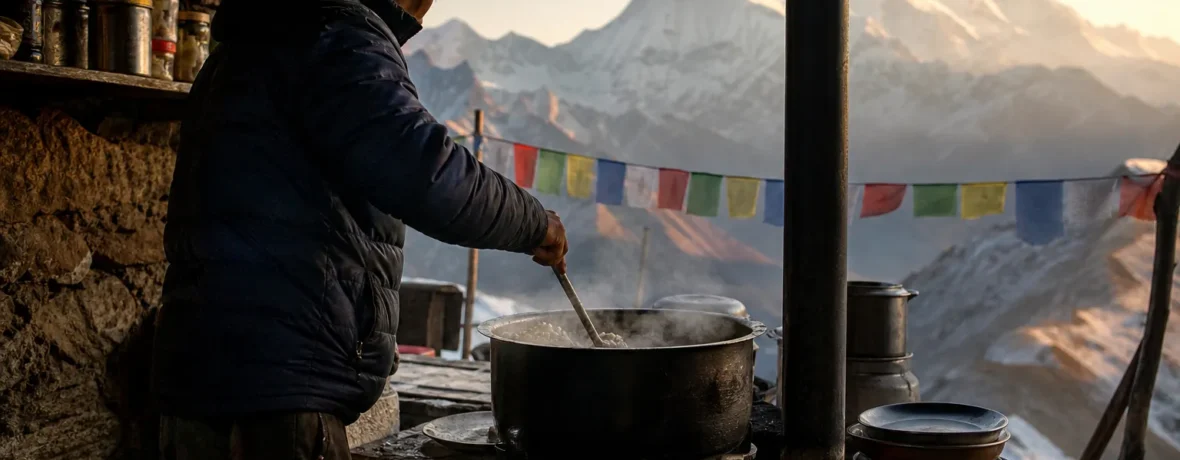
What do Sherpas eat at altitude? Sherpas typically eat carbohydrate-heavy, warming foods: potatoes, rice, lentils, barley flour, noodle soups, dumplings, stews, tea, and dairy from yak-cow hybrids. On expeditions, menus expand to eggs, porridge, biscuits, chocolate, instant noodles, canned fish, and other compact foods that are easier to carry and cook.
What do Sherpas eat in the mountains?
Sherpas eat practical food that works in cold, high places.
Forget the fantasy of some secret Himalayan superfood. The backbone is simple: starch, salt, fat, warmth, and repeatable meals. In Khumbu, the Everest region, potatoes became a major staple because they grow where many grains struggle. The UC Press e-book on Sherpa subsistence in Khumbu describes potatoes as central to local food production, with adult Sherpas traditionally eating more than 2.2 lb [1 kg] of potatoes per day in some households.
That does not mean Sherpa food is only potatoes. A normal mountain table may include rice, lentils, barley, buckwheat, greens when available, dairy, chili, garlic, onions, noodles, and meat on special days or when access allows. Tea is constant. So is soup.
Common foods include:
- Potatoes: boiled, fried, stewed, or shaped into local dishes.
- Dal bhat: rice with lentil soup, often served with vegetables or pickle.
- Tsampa: roasted barley flour, mixed with tea, butter, or water.
- Thukpa: hot noodle soup with vegetables, egg, or meat when available.
- Momos: dumplings filled with potato, vegetables, cheese, or meat.
- Butter tea: salty tea with butter, prized for warmth and calories.
- Shyakpa or stew: a filling mix of potatoes, dough, vegetables, and sometimes meat.
Why do Sherpas eat so many carbs at altitude?
Carbs are easier fuel when the air gets thin.
At altitude, hiking and carrying loads feel harder because every breath delivers less oxygen than it would near sea level. Your body can still use fat and protein, but carbohydrate is fast, familiar trail fuel. It is also easier to chew and swallow when your appetite drops, which happens to many people above 8,000 ft [2,438 m].
The CDC Yellow Book chapter on high-altitude travel lists loss of appetite and nausea among acute mountain sickness symptoms. That matters at dinner. A greasy, heavy meal may sound good in Kathmandu and awful at 16,000 ft [4,877 m]. A bowl of soup, rice, lentils, or potatoes usually goes down better.
For working Sherpas, carbs also make logistical sense. Rice, flour, noodles, and potatoes are cheaper, familiar, and easier to cook in volume than fresh meat or delicate produce. At high camps, every ounce must be hauled by people, yaks, helicopters, or a mix of all three. Food has to earn its place.
| Food | Why it works at altitude | What hikers can copy |
|---|---|---|
| Potatoes | Dense comfort food; grows in cold mountain regions | Instant mashed potatoes, potato flakes, hash browns |
| Dal bhat | Carbs plus lentil protein; easy to refill | Rice and lentil backpacking meals |
| Tsampa | Roasted flour; fast to prepare | Oatmeal, granola, powdered meal mixes |
| Thukpa | Hot liquid, salt, noodles, and easy calories | Ramen upgraded with olive oil, egg powder, or vegetables |
Do Sherpas eat dal bhat?
Yes, Sherpas eat dal bhat, especially in villages, lodges, and trekking corridors.
Dal bhat is not exclusive to Sherpa culture; it is a Nepal-wide staple. But in the Everest region, it has become a standard workhorse meal for guides, porters, lodge owners, trekkers, and climbers. It is filling, repeatable, and usually served with refills in teahouses.
The basic plate is rice, lentil soup, vegetables, and pickle. Sometimes there is meat, papad, greens, or curried potatoes. For a hard day on trail, the magic is not fancy. It is a hot plate with salt, fluid, carbs, and enough protein to keep you moving.
If you are planning your own high-altitude menu, dal bhat teaches a clean lesson: build meals from a starch, a legume or protein, salt, and something flavorful. Rice plus lentils. Couscous plus chickpeas. Noodles plus peanut sauce. Simple wins when your stomach gets picky.
What is tsampa, and why is it good trail food?
Tsampa is roasted barley flour, and it is one of the great mountain convenience foods.
Because the barley is already roasted, tsampa does not need long cooking. It can be mixed with tea, butter tea, milk, water, or sugar and shaped into a dough-like paste. That makes it ideal in places where fuel is precious and weather is mean.
Tsampa belongs to the wider Tibetan and Himalayan food world, and Sherpa communities have long used it alongside potatoes, tea, and stews. The eHRAF World Cultures summary on Sherpa life lists potatoes, barley, wheat varieties, and butter tea among traditional food staples and drinks.
For you, the modern trail version might be instant oats, powdered hummus, couscous, instant rice, or a shake mix. The principle is the same: carry dry food that becomes a meal with hot water and minimal fuss.
What do Sherpas drink at altitude?
Sherpas drink tea constantly, with plain tea, milk tea, and butter tea all common.
Butter tea sounds strange if you grew up on black coffee and sports drink powder. In cold mountain weather, it makes hard sense. It is hot. It contains salt. It brings fat calories. It keeps hands wrapped around a warm cup, which counts for morale when the wind is punching the lodge walls.
Sweet milk tea is also common in trekking lodges. So is hot water. At altitude, cold air is dry, breathing rates rise, and you lose fluid without sweating buckets. Still, forcing water is not the answer. The Wilderness Medical Society altitude illness guidelines warn that overhydration has not been shown to prevent altitude illness and can raise hyponatremia risk. Drink steadily. Eat salty food. Watch your body.
What do Sherpas eat on Everest expeditions?
On expeditions, Sherpas eat a mix of traditional foods, lodge foods, and lightweight climbing rations.
Base camp is not the same as a village kitchen. Lower on the route, cooks can serve rice, lentils, vegetables, eggs, pancakes, noodles, soups, pasta, fried potatoes, momos, and tea. Higher on the mountain, food gets simpler because stoves, fuel, weather, and carry weight control the menu.
At high camps, Sherpas and climbers may rely on foods such as:
- Instant noodles or noodle soup
- Rice, pasta, or porridge
- Biscuits and crackers
- Chocolate and candy
- Tea, hot water, and drink powders
- Canned fish or meat when carried
- Energy bars or gels on summit pushes
The higher you go, the more food becomes a negotiation. You need calories, but your appetite may vanish. You need water, but melting snow takes time and fuel. You need food that will not freeze into a brick. That is why soups, noodles, tea, and soft snacks keep showing up.
How can hikers eat more like Sherpas at altitude?
Copy the pattern, not the costume.
You do not need yak butter in your pack. You need warm, salty, carb-forward food that you will actually eat when tired, cold, and slightly nauseous. A good high-altitude menu is boring in the best way: reliable meals, easy snacks, and drinks that keep you sipping.
- Start with carbs. Pack rice, noodles, instant potatoes, tortillas, oats, couscous, or pasta.
- Add protein that cooks fast. Use lentils, tuna packets, jerky, powdered eggs, nut butter, cheese, or freeze-dried beans.
- Bring fat for calories. Olive oil packets, ghee, nuts, and peanut butter help when your portions shrink.
- Make dinner soupy. Broth, ramen, miso, or lentil soup adds salt and fluid in one bowl.
- Pack snacks you crave. Candy, cookies, dried fruit, chips, and bars beat “perfect” food left untouched.
- Keep breakfast simple. Oats, tea, instant coffee, cocoa, or a tortilla with nut butter gets you moving fast.
What should you avoid eating at high altitude?
Avoid meals that are huge, greasy, unfamiliar, or hard to digest.
Altitude already suppresses appetite for many hikers. Do not make dinner a contest. If you know spicy food wrecks your stomach at home, do not test a chili-loaded freeze-dried meal at 12,000 ft [3,658 m]. If a giant cheese-and-salami dinner makes you sluggish, save it for a lower camp.
Use this checklist before a high route:
- Choose meals you have eaten before.
- Carry two easy backup dinners, such as ramen and instant potatoes.
- Bring salty snacks if you sweat heavily.
- Limit alcohol before and during altitude gain.
- Do not depend on appetite; schedule small snacks during the day.
- Keep one “sick meal” ready: soup, crackers, tea, or plain rice.
When to see a doctor
Get medical help fast if altitude symptoms are severe, worsening, or include trouble walking, confusion, or shortness of breath at rest.
Food can support your body, but it does not cure altitude illness. The National Park Service Denali medical guidance, based on Wilderness Medical Society recommendations, says adequate food and fluid intake help performance and prevent dehydration or malnutrition from mimicking altitude sickness, but they do not directly prevent acute altitude illness.
Talk with a clinician before high-altitude travel if you have heart disease, lung disease, sleep apnea, sickle cell trait, diabetes, or another condition that could be affected by thin air. During a trip, stop ascending if you develop a headache with nausea, unusual fatigue, poor appetite, dizziness, or sleep trouble. Descend and seek urgent care for confusion, loss of coordination, blue lips, chest tightness, a wet cough, or breathlessness while resting.
Related reading
- How Much Do Sherpas Get Paid?
- What to Eat Before a Hike
- A Walk in the Woods: Bill Bryson's AT Story vs Reality
- Kids' Hiking Boots: How to Size and When to Buy
FAQ
Do Sherpas eat meat?
Yes, Sherpas eat meat, but it is not always an everyday food. Yak, nak, sheep, goat, chicken, or dried meat may appear depending on location, season, cost, religion, and household preference.
Do Sherpas eat yak butter?
Yes, yak butter or butter from yak-cow hybrids is traditionally used in tea and cooking. In many places today, cow butter or packaged butter may also be used because it is easier to buy.
Why do Sherpas drink butter tea?
Butter tea provides heat, salt, fluid, and fat calories in cold mountain conditions. It is also a social drink, served repeatedly in homes, lodges, and camps.
Is Sherpa food healthy for hikers?
Yes, the basic Sherpa-style pattern is useful for hikers: hot meals, steady carbs, soups, tea, and simple ingredients. For your own trip, match portions and ingredients to your stomach, medical needs, and workload.
What is the best Sherpa-inspired meal for backpacking?
Instant potatoes with lentils or ramen with extra vegetables and protein is the easiest Sherpa-inspired trail meal. It copies the real mountain logic: starch, salt, warmth, speed, and enough calories to keep walking.